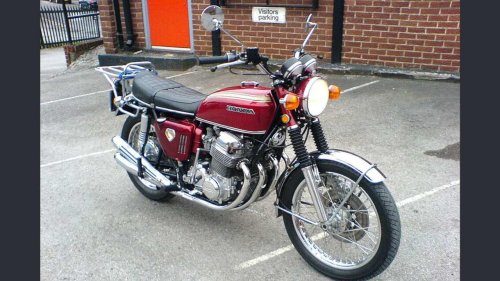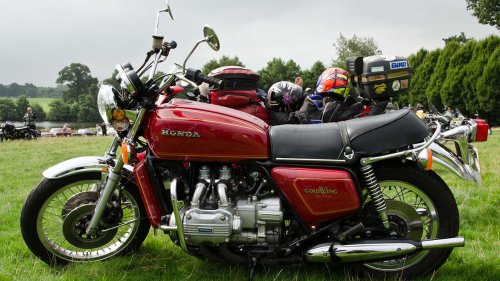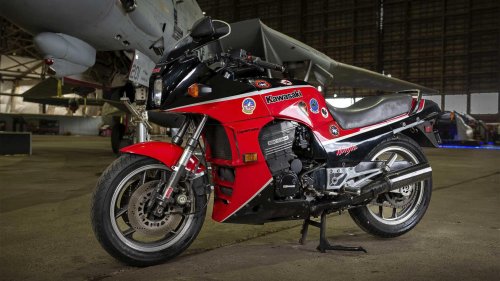
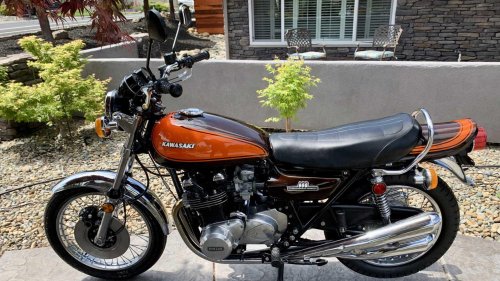
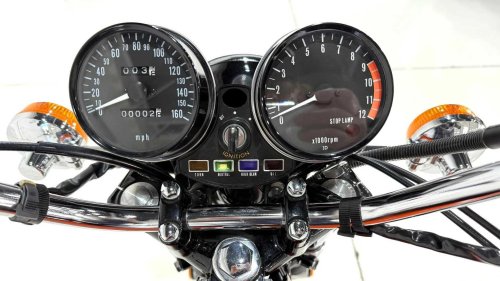
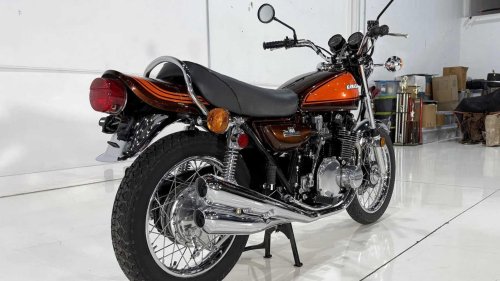
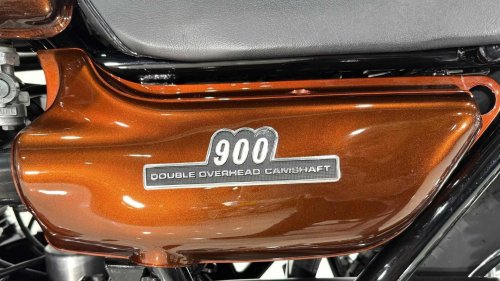
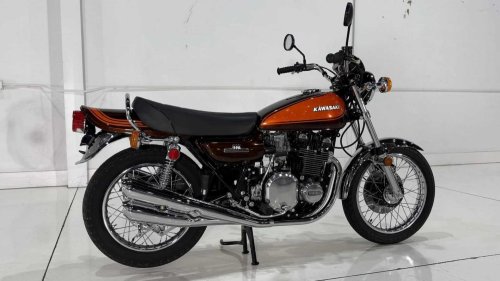
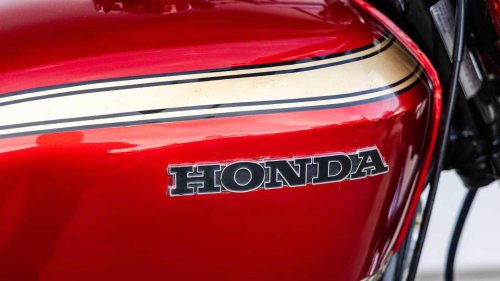
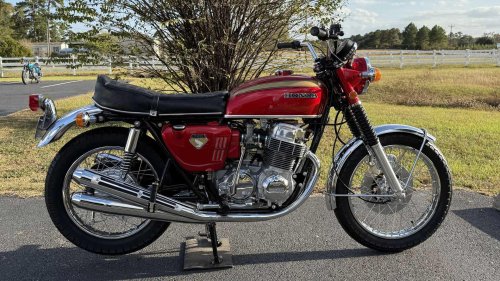

















The 1970s turned motorcycles into missiles – in the late ’60s, 100 mph still sounded like a headline, but just a few years later, riders already expected it. Big Japanese factories wanted more power, better brakes, and engines that started on a button instead of a prayer. Magazines timed quarter miles like they timed breakfast – often, loudly, and with a grin. That was the decade when street bikes stopped acting like warmed-over race bikes and started acting like fast, reliable machines anyone could buy, even if the tires and shocks still lived in the past.One Japanese company helped trigger that shift with a four-cylinder project that arrived after Honda fired the first shot. Instead of rushing a copy, the company went back, made it bigger, and aimed it at America’s need for speed. The result set fresh records, embarrassed rivals, and taught a generation that “fast” meant more than a quick blast between stoplights. Kawasaki Hit Second, But Harder MecumHonda's CB750 arrived like a mic drop at the 1968 Tokyo Motor Show. Meanwhile, Kawasaki had its own big four-stroke in the works, but nobody throws a party for the band that plays the same song later. So the firm froze the program and went back to the whiteboard – that delay stung, but it also bought time to leapfrog instead of follow.Inside the company, the big-bike effort carried the N600 code, and planners treated the United States like the main stage for it. Kawasaki talked to dealers and tried to build what they said Americans wanted – big displacement, four-stroke manners, and real-world torque. One account describes the project lead visiting around 30 dealers to hear it straight from the people who had to sell the thing. The moment also forced Kawasaki to face its own image, since the company had leaned hard on rowdy two-stroke triples while more riders started asking for flexible torque and cleaner running.Mecum Then the displacement talk changed. Kawasaki wanted to beat Honda and engineers stretched the concept until it landed on 903cc, with double overhead cams as the headline feature. Prototype work got real, fast. Reports from the era describe development bikes making big power in testing, including a 95-horsepower figure and a 141 mph run at Japan’s Yatabe test track.Secrecy came with the program, too. When prototypes hit U.S. roads for brutal testing, Kawasaki dressed them up like Honda machines, down to the badges, to keep the press from sniffing around. Later accounts describe punishing days that piled on about 500-600 miles per day at an average speed around 80 mph, plus a Los Angeles-to-Daytona-and-back loop that racked up over 12,000 miles with only the rear chains replaced. It takes confidence to disguise a bike as a rival’s product and then ride it hard for weeks. It also takes a sense of humor, which makes the whole thing feel very on-brand. The Z1 900 Made "Fast" Mean Something New Bring a Trailer Kawasaki finally pulled the cover off and called it the Z1 900. It looked wide, serious, and a little smug, like it already knew the ending. The engine sat square in the frame, the pipes ran four-in-a-row, and the tail wore that little “duck” kick that later became a Kawasaki calling card. The company even pointed out that this kind of tail piece looked rare on mass-produced bikes before the Z era made it familiar, and restorers still treat it like a signature.The manufacturer ramped up production in 1972 and showed the bike to the public in late 1972 at major shows in Europe, including Cologne. The company sold it as fast touring, not as a twitchy race special, and that pitch fit the moment. Riders wanted speed they could use every day.The numbers still spoke loud – 903cc, DOHC, and a factory claim of 82 horsepower. Period testing put it in the low-12-second quarter-mile range and pushed top-speed claims into the 130-mph neighborhood. Those figures shocked riders then because most street bikes still felt happiest well below triple digits, and this one treated triple digits like a warm-up.Kawasaki also knew how to prove a point in public. In March 1973 at Daytona, the company ran a high-speed endurance record attempt that piled up a ridiculous stack of marks. The plan used Yoshimura-prepped bikes and leaned on racer Yvon Duhamel to lead the charge. The team set 52 world and American records, including a 24-hour average of 109.602 mph over 2,630.4 miles, and it set a one-lap AMA closed-course record of 160.199 mph. The Numbers That Changed The Conversation BaTThe engine made the legend here. Kawasaki built it square – 66 mm by 66 mm bore and stroke, 8.5:1 compression, and a DOHC layout that looked serious sitting next to the SOHC rivals of the day. Under the skin, Kawasaki added details that don’t show up in bench racing – sintered valve seats to handle unleaded fuel and a crankcase ventilation setup that recirculated vapors, with a claim of cutting hydrocarbons by 40 percent. A massively built bottom end with a crank pressed together from multiple pieces and needle-roller bearings was also part of the package. Fast, yes, but also built for the next rulebook and the long haul.Fueling came from four 28 mm Mikuni carbs, one for each cylinder. The touring pitch showed up in the day-to-day equipment – full gauges, plus both electric and kick starting. That “either way” starter setup feels quaint now, but it mattered when a dead battery could ruin a whole weekend. The bike also ran on regular gas in period reporting, which feels almost rude given how fast it could go. Add a 12-volt system with points ignition, and it becomes clear why owners still call it simple, not primitive.The chassis kept it simple – a steel double-cradle frame, telescopic forks, and twin rear shocks. Brakes mixed the new and old, with a front disc and a rear drum. Wet weight sat around 542 pounds, and wheelbase measured around 1,490 mm, which helped the bike feel steady at speed. Kawasaki priced it at $1,895 in the early ’70s, right in the fight with the Honda it wanted to outgun. It Actually Felt Faster Than The Numbers BaT Probably the best part was that the Z1’s speed arrived without drama – a smooth shove that just kept building. Testers talked about linear pull, easy starting, and a calm feel at big mph, which sounds boring until a rider realizes “calm at 120” used to be science fiction. Kawasaki used rubber mounting in several spots to keep vibration from turning mirrors into abstract art, though the mirrors still blurred enough to turn traffic into watercolor.That smoothness also fooled riders. A peaky two-stroke scares people because it hits like a prank. The Z1 did the opposite – it pulled hard everywhere, so speed crept up fast, and riders looked down and found a number that would get them a long talk with a state trooper. The steady feel on sweepers encouraged “just a little more,” and the broad powerband kept the engine from feeling fussy.Of course, the rest of the bike came from the early ’70s, and it acted like it. Many testers complained about rear shocks, chains, and the rear tire wearing out too soon. Some riders also chased stability fixes with tires and shocks, and one report even blamed a scary high-speed weave on swapping the original tires for British Dunlop K81s. That mismatch became part of the charm – a rocket engine in a chassis that still tried to smoke a cigarette after lunch. The Z1 Is Both Collectible And Usable BaT Collectors chase the Z1 because it sits at a turning point – old-school simplicity with modern-ish performance. The bike still uses carbs and points, but the core package feels tough. The engine delivered smooth power and earned a reputation for durability, which explains why so many examples racked up miles instead of hiding under blankets. People rode these bikes hard because they could.It’s also very usable even by today’s standards. The riding position stays upright, the tank holds about 4.76 gallons, and the motor doesn’t need high drama to move. In modern traffic, the bike still pulls cleanly off idle and cruises without feeling strained, even if the single front disc brake asks for a little planning and a little faith. Owners can ride it to a show, ride it home, and then spend the evening staring at the paint like it’s a campfire. Gearheads do that. Non-gearheads will never understand it, and that’s fine.The maintenance reality also stays manageable, with one asterisk – the valves. Kawasaki used shim-type adjusters for precision, which sounded advanced at the time but can make a modern owner work harder than expected. Miss a shift on a race bike, and a shim can pop loose, which feels like the mechanical version of spitting out a sunflower seed. It’s rare on street use, but it’s exactly the sort of detail that makes owners read the manual twice. What It Costs And Why Prices Swing Hard BaT Prices swing because not every Z1 tells the same story. A clean, stock bike with its correct four-into-four exhaust and original-style paint sits on a different planet than a chopped-up cafe project. Kawasaki experts call the exhaust and the fighter-jet-style gauge pods signature design tells, and those pieces don’t come cheap. The ducktail and candy paint schemes pull extra attention because people can spot them from half a parking lot away, and buyers pay for that instant recognition.Hagerty’s valuation tool lists a “good” condition 1973 Z1 at about $16,000, and it anchors the bike as a real collector item, not a $3,000 beater. Auction results back up the idea that the market moves fast – a 1973 example on Bring a Trailer sold for $17,250 in late 2024, and that bike wasn’t even a time-capsule original. Motorcycle Classics also frames a broad modern range that can climb into the tens of thousands for the best examples. Other Bikes That Belong In The "Fast" Hall Of Fame Mecum The Z1 didn’t invent speed, of course, and it didn’t end the arms race. It simply raised the stakes so high that everyone else had to bring bigger numbers, better handling, or a better story. Three other machines earn a spot in any speed scrapbook for doing exactly that, each in a totally different way.Honda’s CB750 deserves respect because it lit the fuse. Engineers aimed for 67 horsepower in the late 1960s, and common specs put top speed around 125 mph. More importantly, the CB750 made a big, smooth four feel normal. It helped turn “superbike” from a weird European idea into something a normal dealer could sell to a normal rider with a normal paycheck, and it set the baseline that everyone else had to chase.Mecum Kawasaki’s own two-stroke H2 750 also belongs here, even if it behaved like it drank too much coffee. The H2 made a claimed 74 horsepower from a 748cc triple and could rip the quarter mile in about 12 seconds in stock form. Riders nicknamed it the “Widowmaker” for a reason, and it proved that acceleration alone could sell bikes, even when the chassis begged for counseling. It served as the loud reminder that the 1970s weren’t only about refined speed. The decade also chased chaos, sometimes on a front tire that barely touched the ground.Then Honda dropped the CBX at the end of the decade and reminded everyone that cylinder counts could turn into a flex. Independent testing recorded an 11.36-second quarter mile at 118.11 mph. With a claimed 105 horsepower and a top speed quoted in the mid-130s to 140 range, it marked the moment when “superbike” stopped meaning “big four” and started meaning “anything goes.” It also sounded like six angry sewing machines, which somehow counted as a compliment.Source: Kawasaki, Honda, Motorcycle Classics, Bring a Trailer