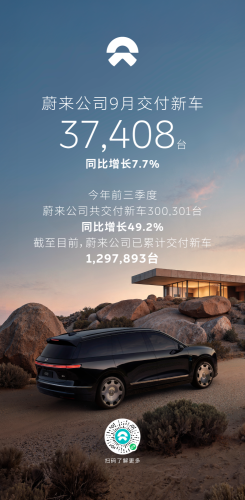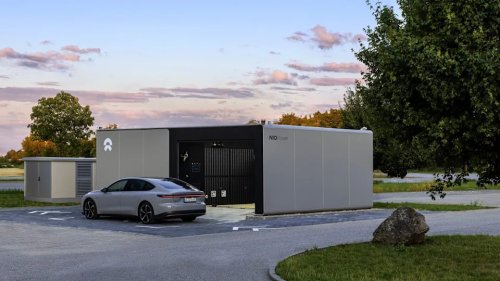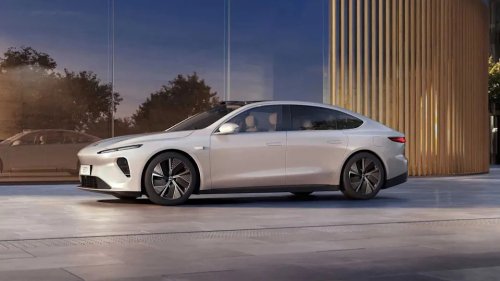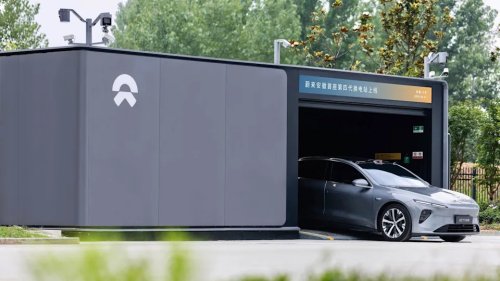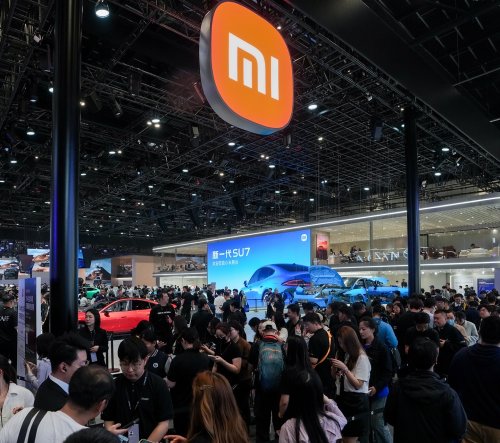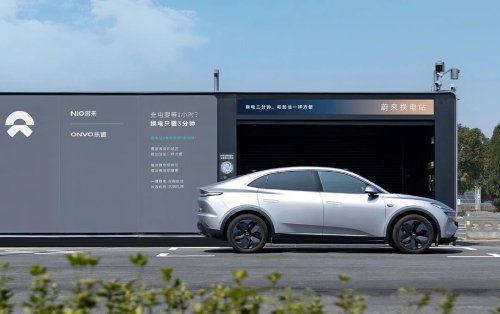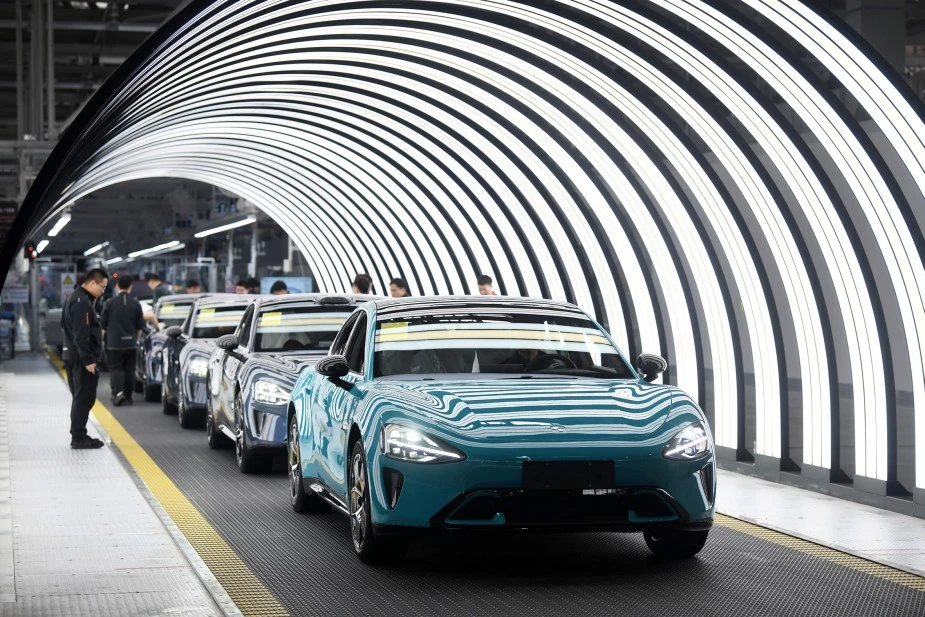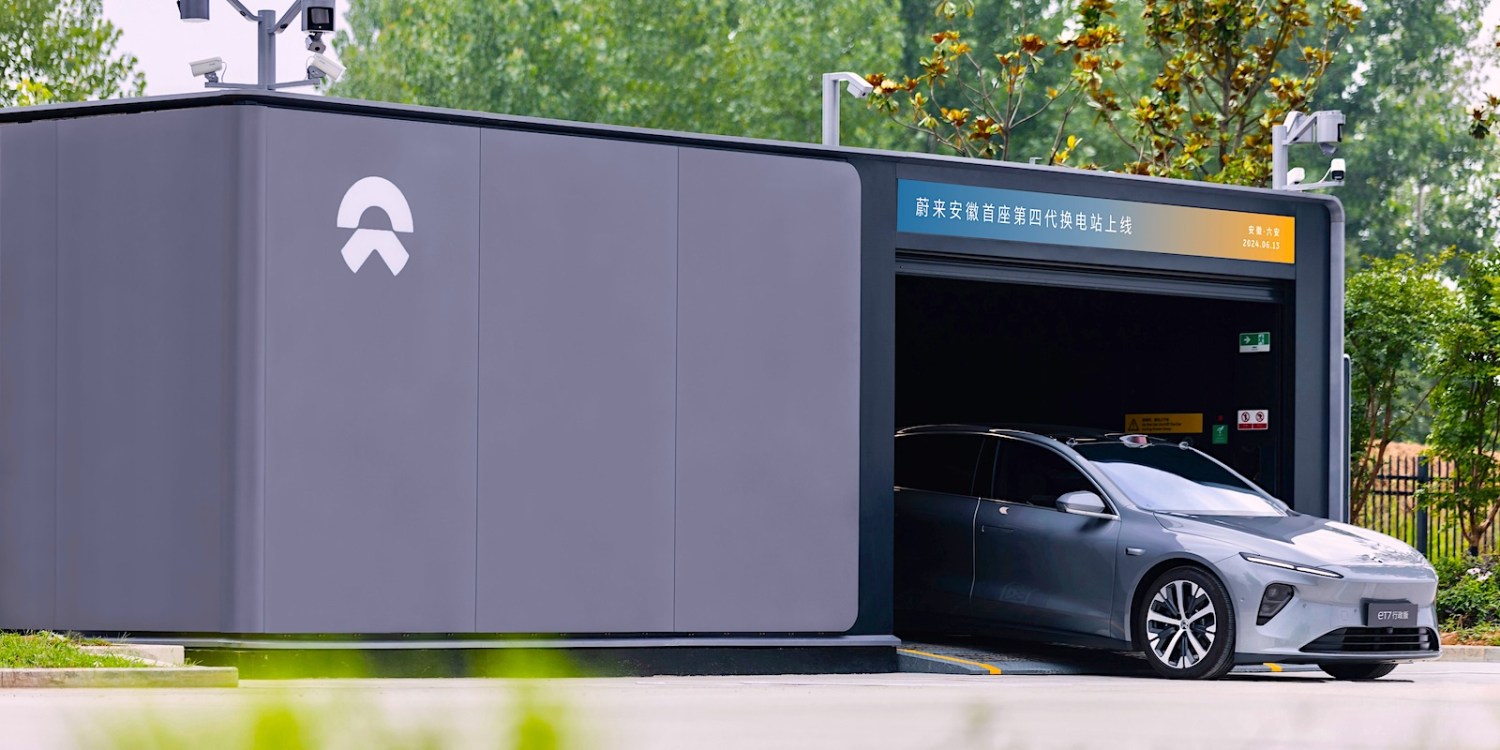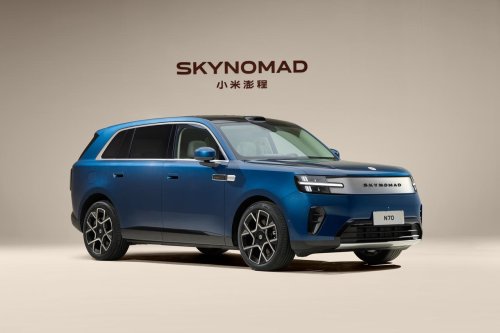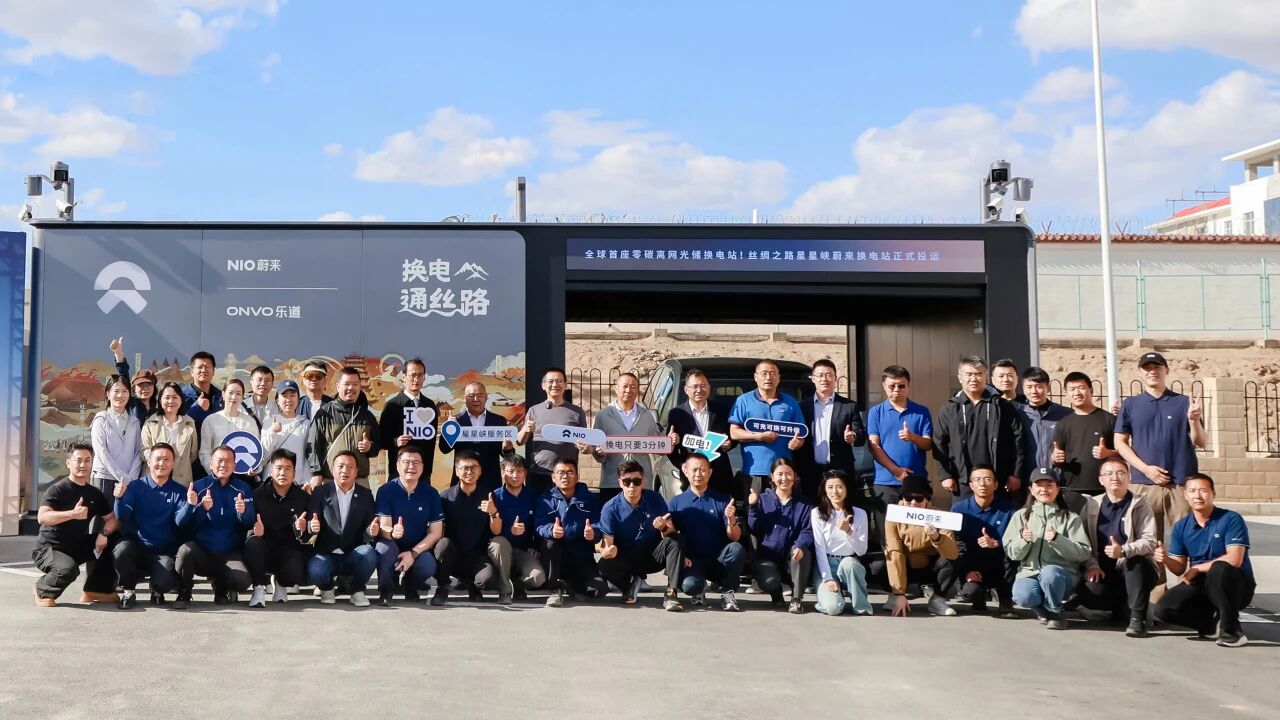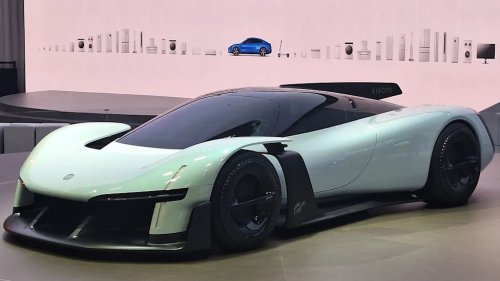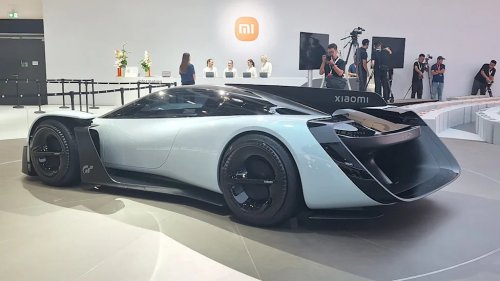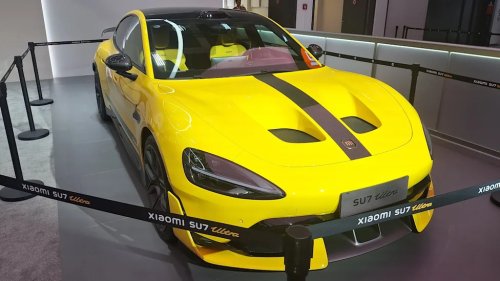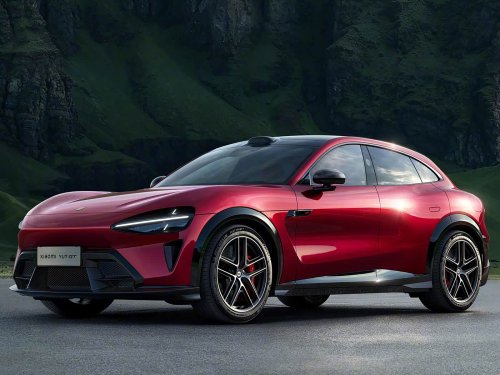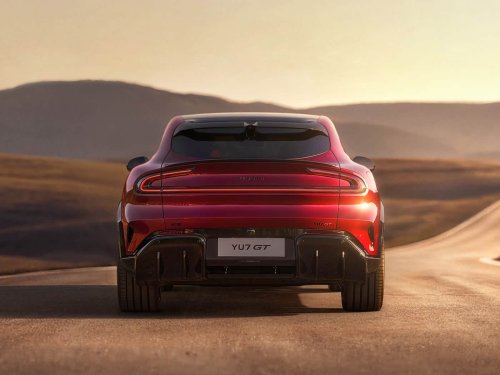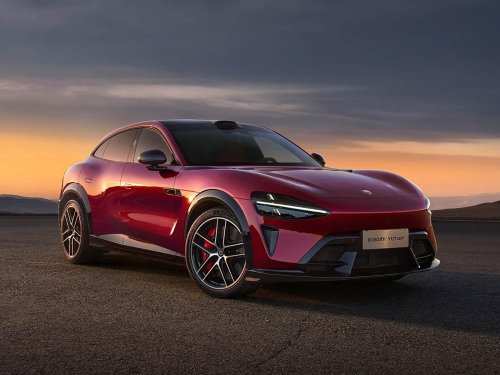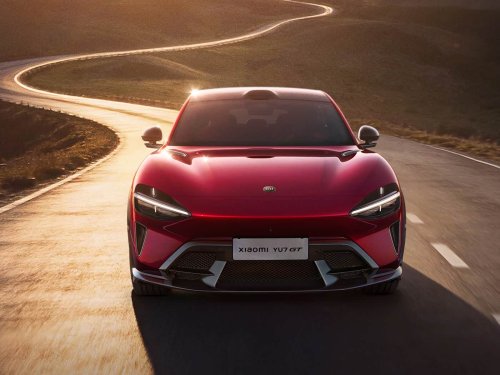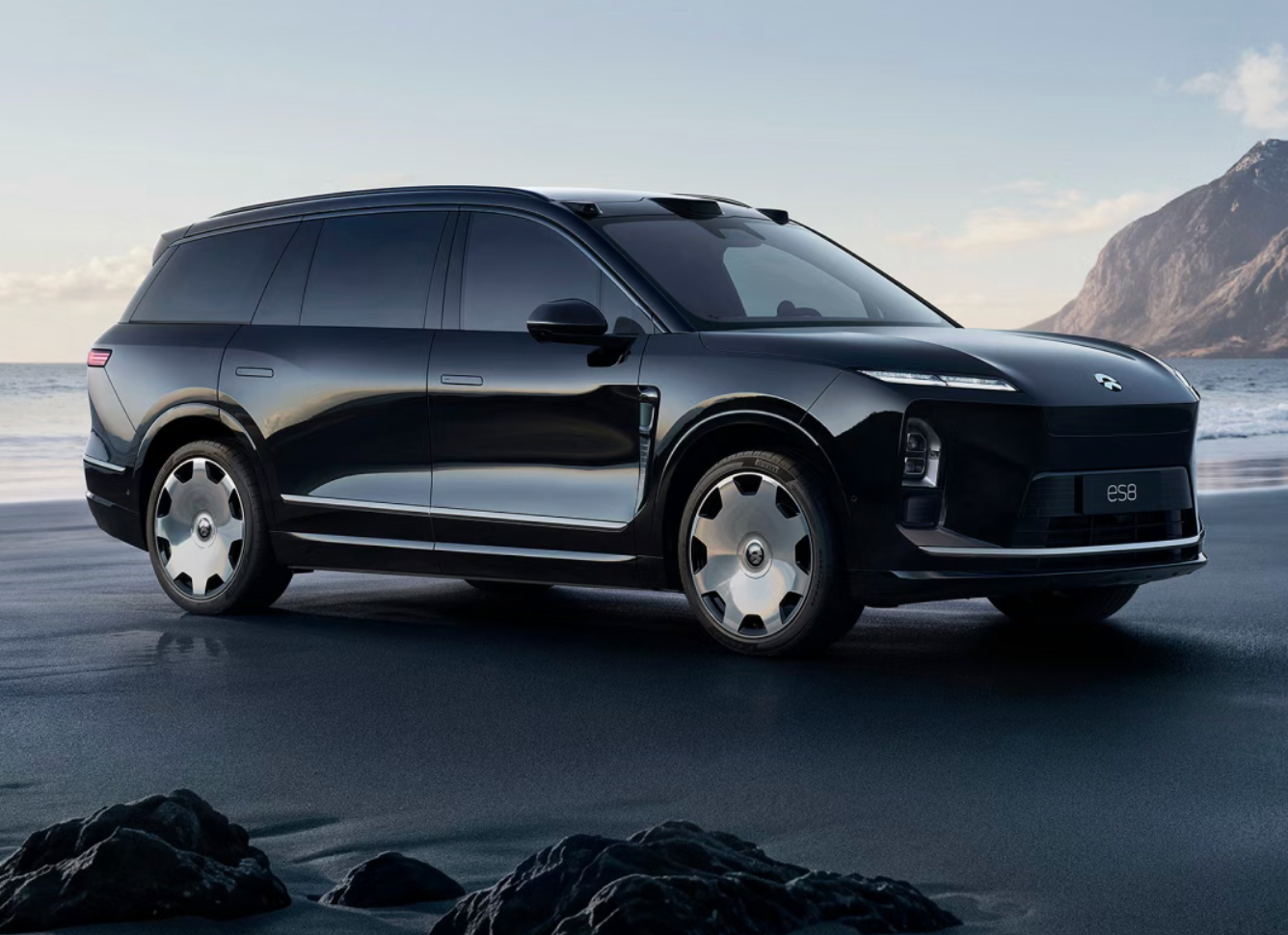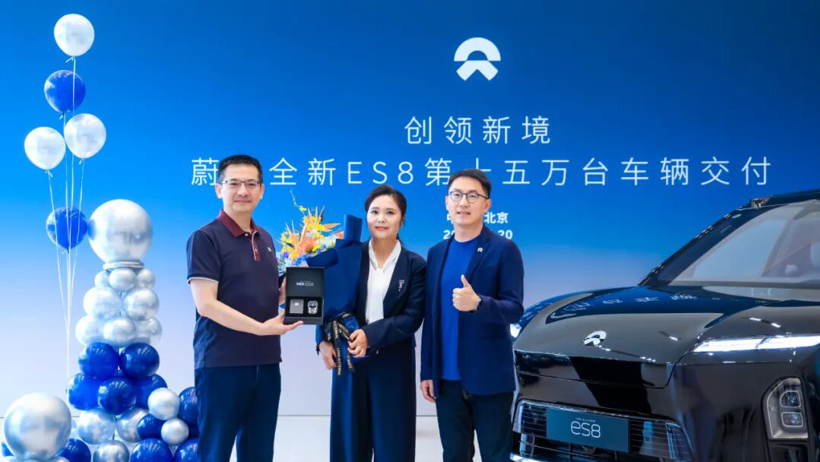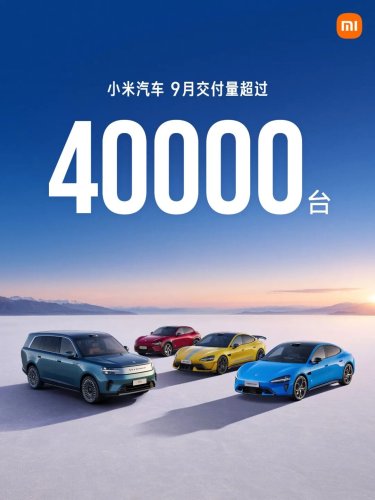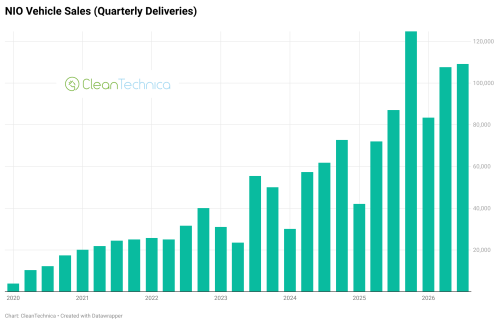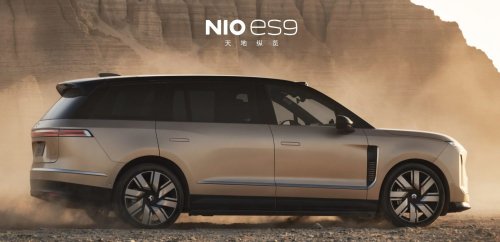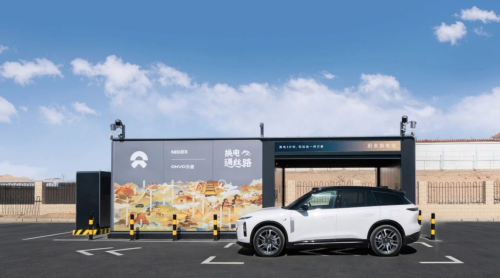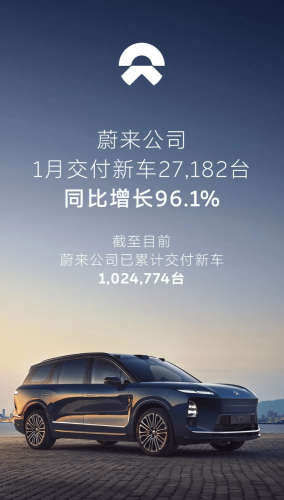
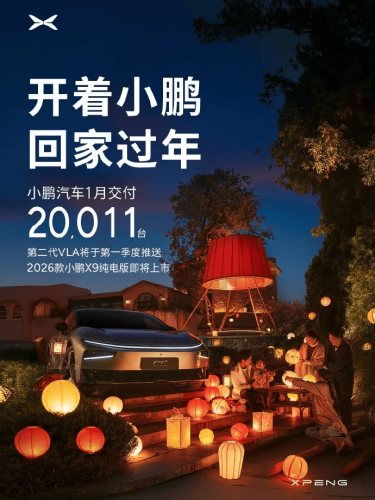
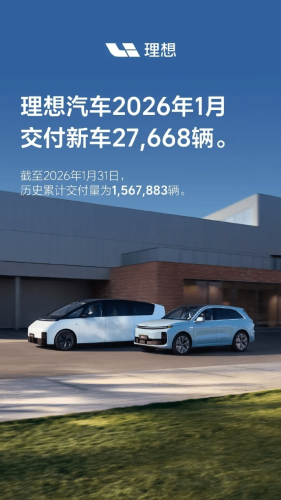
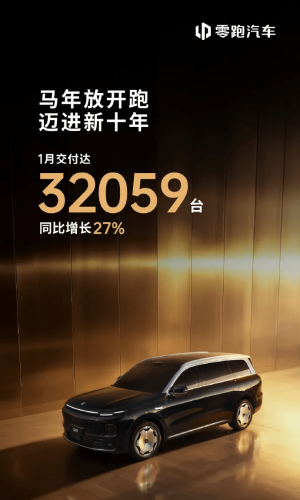
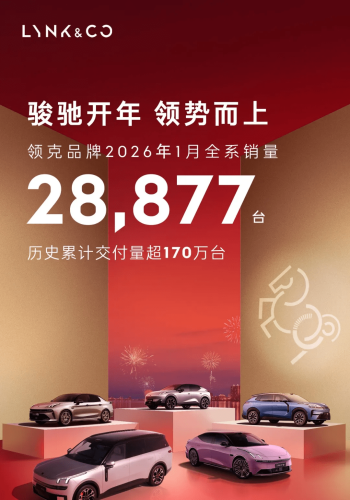
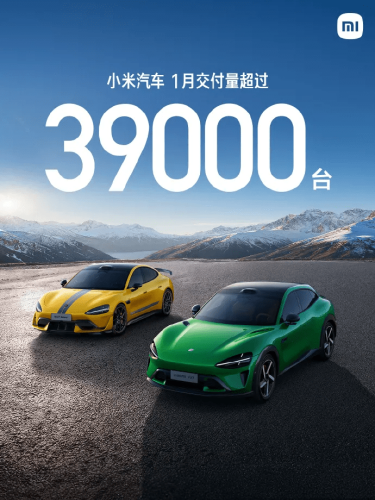
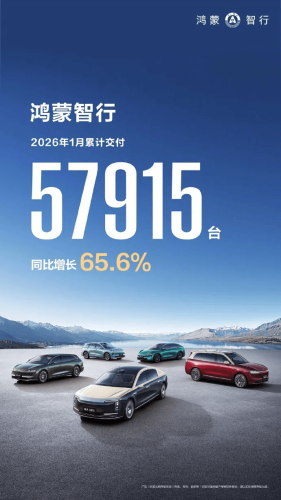
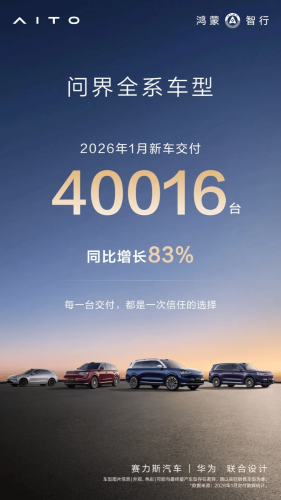
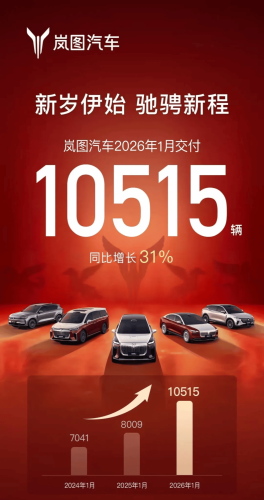
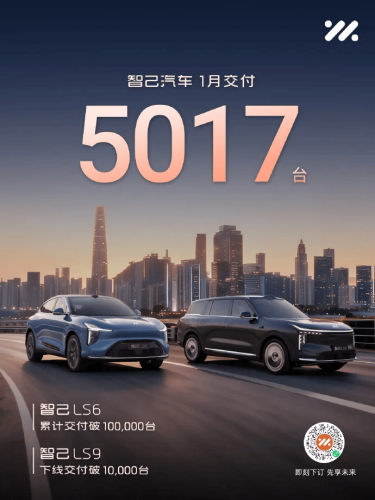
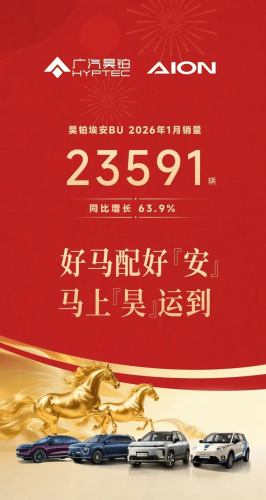
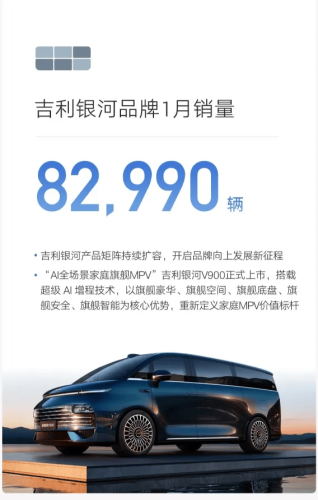
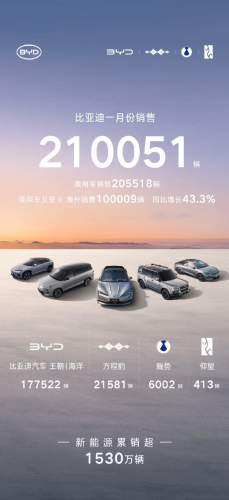


















January sees auto industry declines, but many brands report strong year-on-year growth, signaling varied market performance. Each January, sharp month-on-month declines in vehicle deliveries and sales have become a widely accepted pattern in the auto industry. The fading impact of year-end sales pushes, gaps created by policy transitions, and the early release of demand due to national subsidies have together driven this seasonal correction. As a result, year-on-year comparisons provide a more meaningful lens than month-on-month swings when assessing whether the market is truly entering a downturn. In January this year, most automakers still delivered stable or even strong year-on-year growth. New energy vehicle makers including NIO, Xiaomi Auto, Huawei-backed Harmony Intelligent Mobility Alliance (HIMA), and GAC’s Hyptec Aion BU all recorded year-on-year growth exceeding 50%, positioning themselves for a series of competitive battles throughout 2026. At the same time, brands such as Li Auto, Xpeng, Lynk & Co and BYD saw varying degrees of year-on-year decline, largely due to product transition cycles and other factors. In a month marked by universal sequential declines but broadly positive annual growth, which brands demonstrated strong internal momentum, and which are entering a period of consolidation? These early-year results mark the opening chapter of a new round of market elimination. NIO Inc In January, NIO Inc delivered 27,182 vehicles, down 44% month on month but up 96% year on year. The all-new ES8 was the clear delivery pillar. In January, deliveries of the new ES8 reached 17,646 units, accounting for 65% of total volume. Just yesterday, NIO announced that the all-new ES8, launched on Sept. 20, 2025, reached cumulative deliveries of 60,000 units in 134 days. The company said retail sales of the model hit 22,258 units in December 2025, making it the top-selling large SUV that month. The ES8’s role as the delivery backbone has bolstered NIO’s confidence in launching the higher-positioned ES9. Earlier, president Qin Lihong said NIO will hold the ES9 product launch on April 10, with deliveries expected to begin in the second quarter. Beyond the ES8 and ES9, NIO has also rolled out seven-year low-interest financing for its 5566 models and the ONVO brand to further stimulate sales. On the assisted driving front, NIO released NWM 2.0 on Jan. 28, saying it has been deployed to more than 460,000 vehicles running the Banyan system, with Cedar and Cedar S to follow in later updates. In January 2026, NIO reached the milestone of 1 million cumulative deliveries. As the company enters a new phase, can it deliver more stable performance throughout 2026? Xpeng In January, Xpeng delivered 20,011 vehicles, down 47% month on month and 34% year on year. The Xpeng X9 extended-range version stood out, with 4,219 units delivered. Xpeng also said in its delivery announcement that the 2026 all-electric X9 will soon be launched. Even so, despite unveiling 2026 model-year updates for the P7+, G6, G7 and G9 on Jan. 8, Xpeng was unable to offset the impact of policy transitions and the rollback of purchase tax incentives. This may reflect market wait-and-see sentiment toward the 2026 M03, which entered China’s regulatory catalog late last year, but has yet to see any official follow-up signals from Xpeng. Beyond the M03, Xpeng plans to launch an SUV under its MONA series this year to expand into the mainstream SUV segment, while also introducing the extended-range G01, expected to become its new flagship. Li Auto Li Auto delivered 27,668 vehicles in January, down 37% month on month and 8% year on year. Despite declines on both measures, Li Auto remained the earliest among the “NIO-Xpeng-Li” trio to release monthly results. Market attention has been focused on a major facelift of the L-series lineup. Toward the end of January, interior spy shots believed to show updated L-series models surfaced, suggesting the removal of the steering interaction screen, a shift to physical buttons concentrated on the steering wheel, and a smaller, rounder three-spoke wheel. Just as expectations were building for an L-series refresh to revive momentum, founder Li Xiang shifted focus to AI at a company-wide meeting on Jan. 26. He outlined ambitions in embodied intelligence and humanoid robotics, with a goal of becoming one of the world’s top three AI companies. Even with Tesla and Xpeng previously repositioning themselves as AI-driven companies, the success of such a transition remains uncertain. As the market looks to the L-series refresh for recovery, Li Auto’s decision to make a bold pivot toward AI raises questions over whether it can pursue both paths and still carve out a differentiated position. Leapmotor Leapmotor delivered 32,059 vehicles in January, down 47% month on month but up 27% year on year. In January, Leapmotor’s external communications centered on the D19 and A10. At CES 2026 on Jan. 5, Leapmotor and Qualcomm jointly unveiled a dual-Snapdragon 8797 cross-domain integration solution. The company said the D19 will be the world’s first model to feature a central domain controller based on dual Snapdragon 8797 chips. On Jan. 9, the Leapmotor A10 entered China’s regulatory catalog. A10 measures over 4.2 m in length with a wheelbase exceeding 2.6 m, is equipped with a 53 kWh battery, delivers a CLTC-rated range of 500 km, and features a motor with a peak output of 90 kW. The D19 is expected to launch after China’s Lunar New Year and will be Leapmotor’s first major release of 2026, pairing with the D99 MPV to spearhead its push into the RMB 300,000 ($42,000) segment. As consumers scrutinize Leapmotor’s move into a higher price band, the company also faces the challenge of reaching annual sales of 1 million units. With 32,000 deliveries in January, Leapmotor must average at least 87,994 units per month over the next 11 months to meet that goal. Will overseas markets provide the surprise Leapmotor needs this year? Zeekr Technology Zeekr Technology recorded January sales of 52,729 vehicles, down 18% month on month. The Zeekr brand delivered 23,852 units, up 100% year on year, while Lynk & Co sold 28,877 units, down 4% year on year. Much of Zeekr’s strong annual growth can be attributed to the Zeekr 9X. In December last year, the Zeekr 9X sold 9,482 units, overtaking the long-dominant AITO M9 to become the top-selling SUV in the RMB 500,000 ($70,000) segment. To address delivery pressure, Zeekr introduced compensation of 1,000 points per day for delays beyond the promised delivery date, capped at 80,000 points. In January, it escalated incentives further, offering RMB 200 ($28) per day in cash compensation, capped at RMB 12,000 ($1,680), deductible from the final payment. Following the 9X, Zeekr plans to launch the 8X in the first half of the year, a high-performance hybrid SUV positioned around RMB 450,000 ($63,000), expected to help ease delivery pressure. Xiaomi Auto Xiaomi Auto delivered more than 39,000 vehicles in January, down about 22% month on month but up roughly 95% year on year. With the first-generation SU7 no longer accepting new orders and production fully shifted toward the YU7, CEO Lei Jun said in a social media post that deliveries are currently focused on the YU7, meaning the vast majority of January deliveries came from that model. To support future YU7 orders, Xiaomi Auto rolled out a seven-year low-interest financing program across the YU7 lineup in January. For orders placed between Jan. 16 and Feb. 28, the plan offers a down payment starting at RMB 49,900 ($6,986) and monthly payments from RMB 2,593 ($363). Current delivery lead times are 14–17 weeks for the YU7 Standard and Pro versions, and 28–31 weeks for the Max variant. Unlike the past two years, Xiaomi Auto’s product offensive will intensify in 2026. Beyond the next-generation SU7 scheduled for April, the company is expected to introduce an executive SU7, an extended-range SUV codenamed “Kunlun,” and a five-seat extended-range SUV, pushing deeper into the most competitive segments. Lei Jun’s increasingly frequent livestreams also signal Xiaomi Auto’s efforts to build momentum ahead of the new SU7 and subsequent launches. Can an expanding lineup continue to deliver blockbuster order volumes? HIMA HIMA delivered 57,915 vehicles in January, down 35% month on month but up 66% year on year. Among the five brands, AITO remained the core driver. AITO delivered 40,016 vehicles in January, down 31% month on month but up 83% year on year. That means the combined January deliveries of Luxeed, Stelato, Maextro and Shangjie totaled 17,899 units. To navigate the early-year sales lull, AITO, Shangjie and Luxeed introduced varying levels of limited-time purchase tax incentives, including a RMB 15,000 ($2,100) subsidy for the AITO M9 and RMB 9,000 ($1,260) in cash discounts for the Shangjie H5. Beyond financial incentives, Huawei’s long-awaited ADS 4.1 driver assistance system began rolling out at the end of January, potentially becoming a key branding milestone for HIMA. New model launches remain central to volume growth. HIMA is expected to introduce around 13 new vehicles, including confirmed models such as the Shangjie Z7, Luxeed V9 and AITO M5, as well as rumored offerings like a Maextro MPV, Stelato off-road and sedan models, and Luxeed R6, R9 and S7T. The breadth of its pipeline shows HIMA entering multiple new segments this year. Amid a multi-brand, multi-product offensive, which model will emerge as its next breakout hit? Voyah Voyah delivered 10,515 vehicles in January, down 34% month on month but up 31% year on year. On Jan. 28, Voyah announced its 2026 product roadmap: Taishan Ultra deliveries to begin in March; the large five-seat Taishan X8 SUV to launch in the first half; an FUV model codenamed FE to debut midyear; and a RMB 500,000 ($70,000) MPV codenamed Zhufeng to arrive by year-end. The lineup and teaser images suggest Voyah’s focus this year will be on rolling out L3-level assisted driving and further moving the brand upmarket. Meanwhile, Voyah’s Yunfeng plant began a comprehensive upgrade on Jan. 16. The company said the revamped facility will work alongside its Golden Plant to achieve an average output of one vehicle every 40 seconds. Huawei’s intelligent technologies, combined with Dongfeng Group’s engineering foundation, have helped Voyah sustain monthly deliveries above 10,000 units. Models like the Huawei-enabled Voyah Dreamer have consistently topped the brand’s sales charts. As more brands adopt Huawei’s smart systems, can the Taishan Ultra, billed by Voyah as the world’s first mass-produced L3 SUV, still leverage its first-mover advantage? IM Motors IM Motors delivered 5,017 vehicles in January. Thanks to updates to the LS6 and the launch of the LS9, IM posted monthly sales above 10,000 units from September to December last year and achieved full-cost profitability for the first time in December. As of Jan. 22, cumulative deliveries of the LS6 reached 100,000 units. Earlier, LS9 deliveries surpassed 10,000 shortly after launch, confirming both models as IM’s current volume pillars. Between the LS7 and LS9, IM plans to debut the LS8 in the first quarter. Positioned against mainstream midsize-to-large SUVs, the LS8 will offer flexible five-, six- and seven-seat layouts and deliver a combined range of up to 1,000 km with an extended-range powertrain. Can IM achieve consistently monthly deliveries above 10,000 units this year? Hyptec Aion BU Hyptec Aion BU, under GAC Group, sold 23,591 vehicles in January, down 41% month on month but up 64% year on year. As part of GAC’s “Panyu Action,” the newly established unit delivered its second monthly report card. Segment data from December 2025 show that the Aion i60, launched in November 2025, contributed meaningfully to sales and is emerging as a potential volume driver. However, reliance on a single model may not be sufficient for Hyptec Aion BU to establish its position amid internal competition. This year, the unit plans to launch five new vehicles, including the Aion N60 and Hyptec A800 and S600, along with a deeply co-developed model with Huawei. On the retail front, Hyptec Aion BU completed dual-brand integration upgrades at 254 stores across 147 cities nationwide by Jan. 31. Geely Galaxy Geely Galaxy sold 82,990 vehicles in January, down 18% month on month and 11% year on year. The annual decline reflects the brand’s rapid expansion pace. On Jan. 16, Geely Galaxy announced it had surpassed both 1 million cumulative sales and 1 million users, becoming the fastest new energy vehicle brand to achieve the milestone. Despite January’s year-on-year decline, Galaxy ranked second only to Geely’s China Star series, which sold 134,448 units, remaining a standout performer within the group. In 2026, Geely Galaxy will continue to strengthen its lineup. On Jan. 20, it launched the Galaxy V900 MPV with a limited-time guide price of RMB 269,800–329,800 ($37,772–$46,172), claiming orders exceeded 10,000 units in the first week. Geely’s total new energy vehicle sales reached 124,252 units in January. As the “One Geely” strategy deepens, Galaxy’s growth potential will be closely watched. BYD BYD sold 210,051 vehicles in January, down 49% month on month and 30% year on year. The Dynasty and Ocean series accounted for 177,552 units, Fangchengbao sold 21,581 units, Denza delivered 6,002 units, and Yangwang sold 413 units. Notably, BYD exported 100,009 passenger vehicles and pickups in January, implying domestic sales of about 110,000 units, far below the 300,538 units recorded in January 2025, when exports stood at 66,336 units. BYD’s domestic passenger vehicle sales have declined month on month for several consecutive months. At an extraordinary shareholders’ meeting last November, chairman Wang Chuanfu said one reason was a narrowing technology lead compared with previous years, adding that major technology launches are forthcoming. Although BYD introduced 210 km extended-range versions for models such as the Qin family and Seal 05 and 06 in January, the sales impact appears limited. As a result, Geely Auto, which posted a 14% month-on-month increase to 270,167 units, claimed the top spot among Chinese brands in January. Once the early-year lull passes, can BYD regain momentum with new products and technologies?