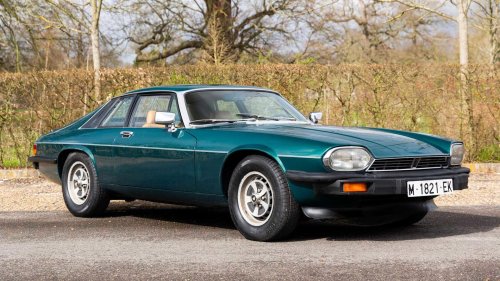
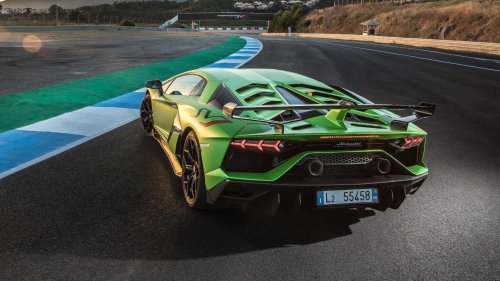
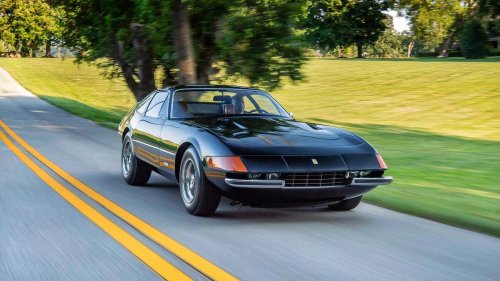
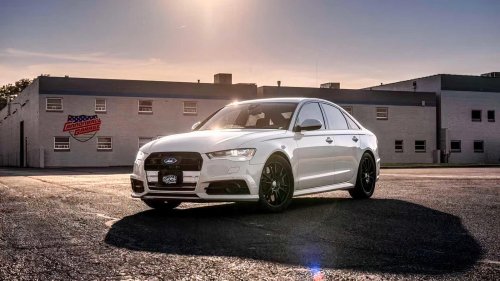
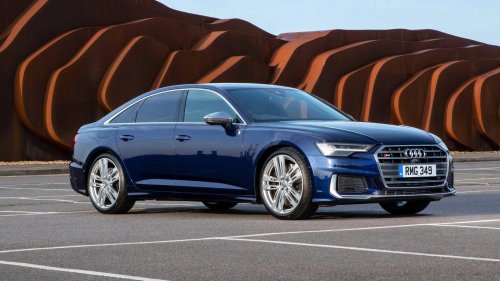
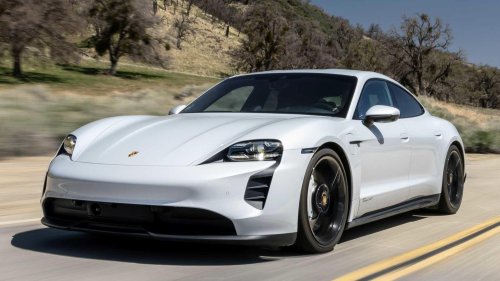
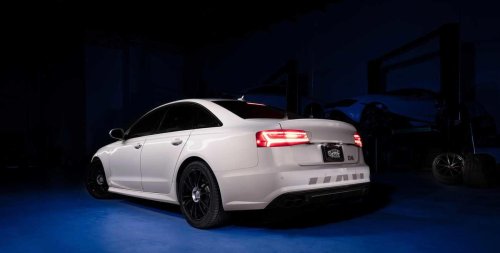
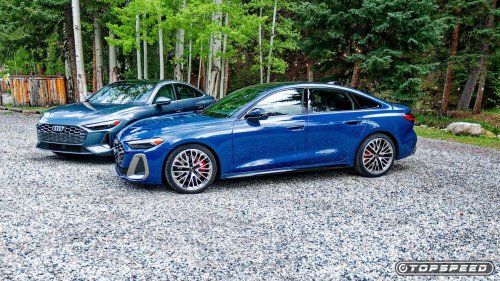
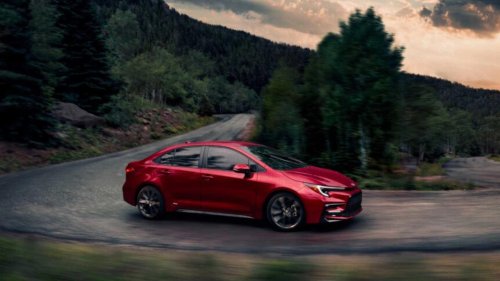
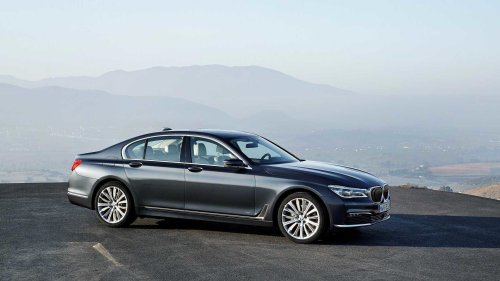
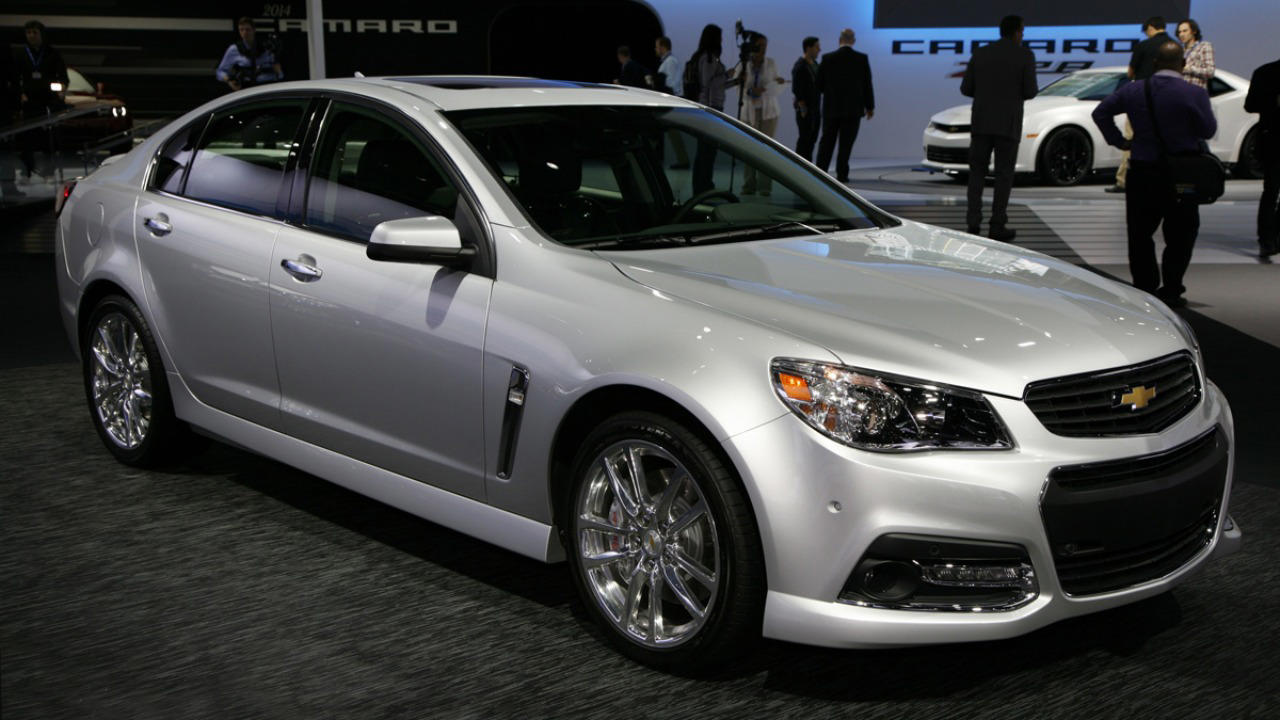
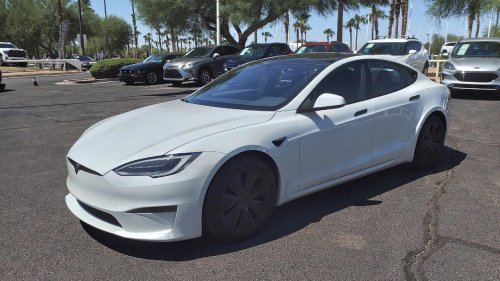
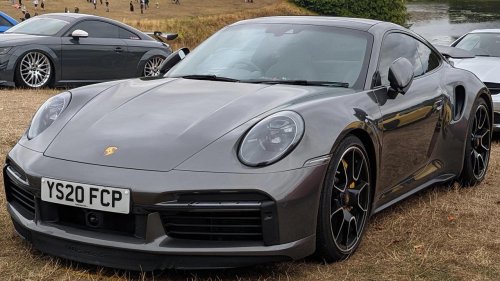
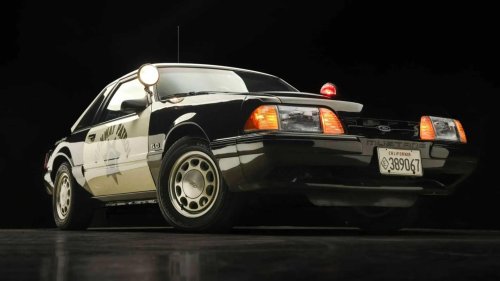
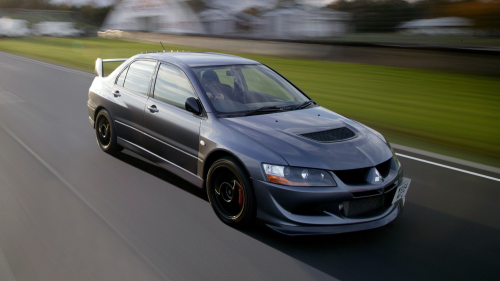
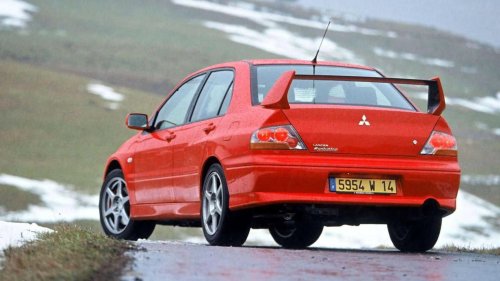
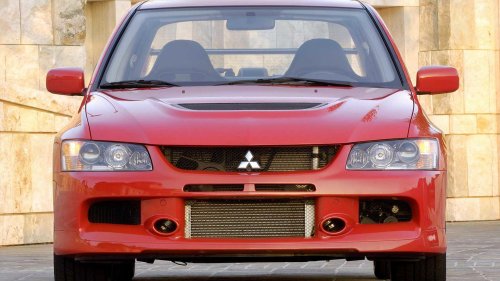
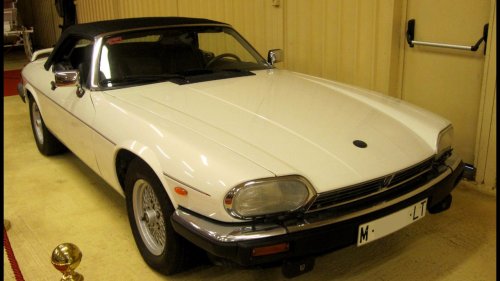
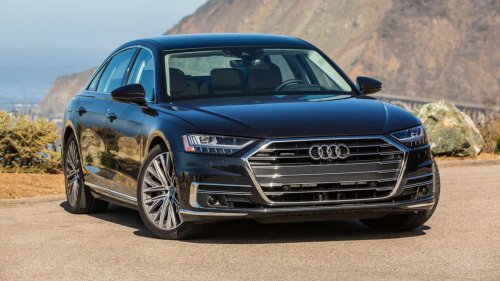
Everyone loves a sleeper car, especially a sleeper sedan. Since the turn of the millennium, fast sedans and wagons have been a staple of the major German and American automotive brands. The E55, E63, C63, S6, S8, RS6, Chevy SS, Taurus SHO, CTS-V, and plenty of other unassuming vehicles with gobs of power and performance have littered the market. While some of the top-trim performance stuff has been designed with more visual noise in recent years to better distinguish it from less powerful, less expensive trims, it can still easily fly under the radar with the right color. In fact, I recently saw a late-model Audi RS6 in “Daytona Pearl Gray Effect,” and despite my excitement over seeing one, it was actually pretty hard to spot in traffic. A super sedan (or wagon in the case of the RS6) that can blend in with regular traffic has become the go-to choice for those brave and/or crazy enough to attempt the Cannonball Run.The Cannonball Run is a highly dangerous and illegal 2,800-mile race from New York City to Redondo Beach, California. The goal is to hustle across the country while maintaining the highest possible average speed and making as few stops as possible. Given it’s illegal, the record runs over the last 25 years have largely been made possible by inconspicuous vehicles that can happily cruise at 100+ mph for hours on end. The current record holder was so invisible that, during its 25-hour and 38-minute run, it was called in to the police only once. What Is The Cannonball Run? via: MagnetoOriginally run in 1971, the timed cross-country event was held multiple times throughout the 70s, with the last “official” run occurring in 1979. The inspiration for the name came from Erwin George Baker, aka “Cannon Ball Baker,” who raced cross-country in 1915 and 1933, setting a record of 53 hours and 30 minutes in 1933. Brock Yates, an automotive journalist for Car and Driver, is considered the creator of the race and was a driver during the first run in 1971. Yates, along with his son and friends Steve Smith and Jim Williams, completed their inaugural run in a 1971 Dodge Custom Sportsman van. Despite some mechanical issues limiting their speed, they still managed a time of 40 hours and 51 minutes. Later that year, during the first competitive run, Yates teamed up with Formula 1 driver Dan Gurney and a 1971 Ferrari Daytona 365 GTB/4, and set a much faster time of 35 hours and 54 minutes.Via: Collecting Cars After 1979, a few runs were attempted, but nothing in the more “official” capacity of the 70s. The final race winner in 1979 recorded a time of 32 hours and 51 minutes in a 1978 Jaguar XJ-S. Other races inspired by the Cannonball Run have popped up over the years, like the U.S Express, Four Ball Rally, and the Gumball 3000, but it wasn’t until 2006 that Alex Roy and Dave Maher took a 2000 BMW M5 and beat the Jag's time by nearly two hours. Unlike the U.S. Express, which was longer than the Cannonball Run, Alex Roy and all driver teams since have raced a distance nearly identical to the original runs. Why No Supercars? LamborghiniThe modern era of the Cannonball Run is when car choice became a more important aspect of the race. With more traffic, a greater police presence, and cameras to potentially capture illegal activity, staying under the radar became a much higher priority. That and by the 2000s, you didn’t need a Ferrari to maintain a high rate of speed for hours at a time. The Yates era races actually included quite a few exotic cars that are surprisingly conspicuous, given what cars have been utilized since 2006. While the final record holder, the Jaguar XJ-S, isn’t especially exotic, the second run by Yates and Dan Gurney featured the now extremely collectible Ferrari Daytona. An absolute legend of a car, now worth an average of nearly $750,000. It was 1 of only 1,284, after all. Those early races also featured a Dino 246 GTS and, during the U.S. Express in 1983, a Ferrari 308, which set a time of 32 hours and 7 minutes.Bring a TrailerIt’s certainly not that supercars and purpose-built sports cars don’t excel at fulfilling many of the modern Cannonball necessities, but they don’t really do subtle. Even a 911 Turbo S is still pretty noticeable in traffic, despite its relatively restrained styling. Ultimately, being easily identifiable is non-negotiable, so step one is to avoid any car that could be easily described and identified by the police. While it may not have been easy to find such a car in 1971, by 2006, there was already a wonderful selection of sleepers well-suited to the task of an illegal high-speed cross-country race. Audi S6: The Ultimate Escape Artist The current record holder is a C7-generation Audi S6. This generation of S6 follows the monstrous 5.2L V10 version, which was one of the only V10 sedans ever made. While the C7-gen doesn’t have the heart of a Lamborghini, it does have a 4.0L biturbo V8 producing 444 horsepower and 406 lb-ft of torque. Being a 2016 facelift car, it benefits from a healthy power bump, up from 414 horsepower on the 2012 to 2015 cars. Not only can the facelifted S6 hit 60 mph in less than 4.5 seconds, but it can also cruise at very high speeds with the utmost stability.Via: Arne Toman Arne Toman, Doug Tabutt, and spotter Dunadel Daryoush made up the team that ripped across the country at an average speed of 112 mph. They actually held the pre-COVID record of 27 hours and 25 minutes, a record they initially thought would stand for many years. To achieve this, they used a highly modified 800 horsepower Mercedes E63 AMG. Unfortunately, not only was their record beaten once the COVID-19 runs began, but their E63 was unceremoniously destroyed shortly after their record was bested in early 2020. They opted to press forward with the now infamous S6.Modifications included radar detectors, multiple GPS units, police scanners, a 45-gallon auxiliary fuel cell, along with various power mods, including turbos from an RS7. That said, the most clever modifications were to the exterior. In the pursuit of invisibility, they opted to make the German sports sedan look like a Ford Taurus pursuit vehicle. It more than paid off, as they crushed the record by an hour, finishing in 25 hours and 39 minutes. They averaged 110 mph and at one point topped out at 175 mph. You Can Have Your Own S6 For The Price Of A Base Camry AudiMuch like with other fast Audis, these are a bargain on the used market. If you look at classic.com, you'll find S6 values hovering in the mid-$20k range all day long. If you're okay with a pre-facelift (2012-2014), that number can go as low as $15k. And when you consider that post-facelift C7 S6 models have enormous power and performance, along with modern amenities like Apple CarPlay and Android Auto, it starts sounding like a bargain, even at $30k for an especially nice, low-mileage example. Ultimately, while this generation Audi S6 made history in 2020, these aren't exactly designed for typical enthusiast "fun." While fast, stable, and extremely confidence-inspiring, they aren't especially playful and are primarily designed to carry you comfortably at high speeds, which they do very well, clearly. Audi claims a 4.4-second time to 60 MPH, but many owners report sub-4-second times are consistently achievable. In other words, there are far more entertaining cars to buy if you’re searching for engagement or driving joy, but if you need a fast, comfortable commuter, the C7 S6 is a must-have on your list. Will An EV Ever Win The Cannonball Run? PorscheUnless you watch Kyle Conner on YouTube, you may not know that there is a separate record for EVs. While the start and end points are not exactly the same for every run, the quickest cross-country EV blast was set by Kyle Conner and the Out Of Spec team in 2024, with a time of 39 hours and 29 minutes. They achieved this blistering (for an EV) time with a 2025 Porsche Taycan. While that is a far cry from the internal combustion record, it marks an impressive jump from previous EV records. The 2010s saw the first proper EV attempts with cars like the Tesla Model S, Tesla Model 3 Long Range, and the Lucid Air. The record was between 45-60 hours until 2021, when Ryan Levenson and Will Wood took a 2021 Tesla Model S Long Range from NYC to Redondo Beach, CA, in only 42 hours and 17 minutes.Via: Arne Toman With the record now firmly under 40 hours, many of us wonder if an EV will ever be able to best an internal combustion car. EVs have the speed, high-speed stability, and subtlety required to break the record, but it all comes down to charging times. While charge times will be reduced and the infrastructure will continue to improve year after year, there is still a long way to go to achieve the energy density of a 45-gallon auxiliary fuel tank, even for the thirstiest of engines. In many of these runs, these EVs have spent as much as 12-15 hours charging along the way. It just so happens that 12-15 hours is almost exactly the difference between the EV record and the 25-hour time the police-disguised S6 achieved. Admittedly, we are still only 14 years into the world of mainstream EVs, so while it may be a few decades off, it’s very possible one of these silent sedans may hold the record one day. For now, it seems as though the S6 will remain the record holder for many years to come. What Car Wins Next? Bring a TrailerWhile it seems reasonable to assume the 25-hour and 39-minute time achieved during a global pandemic might be unbeatable, you just never know. And though traffic conditions may never allow for such a time again, you can be sure more people will attempt it regardless. What is required of a competitive Cannonball car hasn’t changed, so what do you think will be the next car to run the race? EVs may be decades away from truly competing, but there remains a plethora of fast, under-the-radar performance sedans well-suited to the task at hand. If I had to speculate, I’d guess that another German sports sedan will still provide the best hope of being crowned the new Cannonball Run king. That said, with the automotive industry rapidly changing, we might all be surprised by what car finally bests the Audi S6.