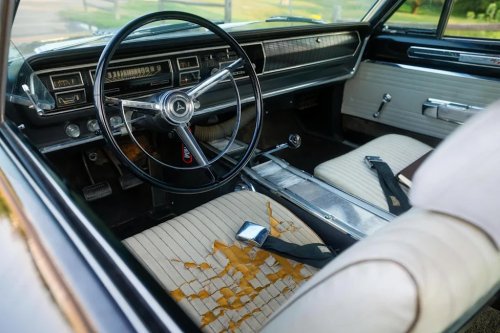
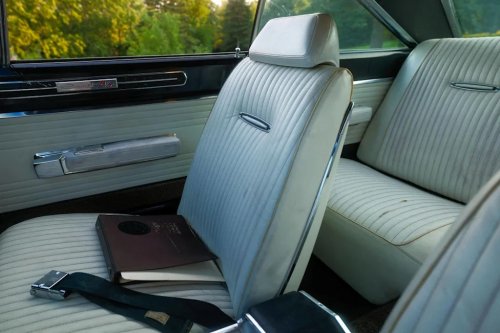
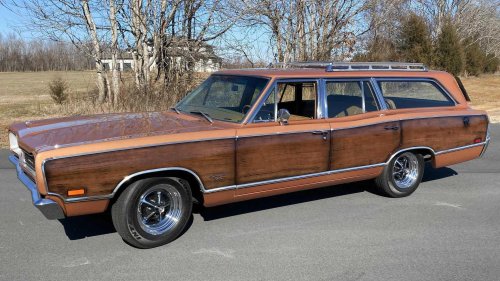
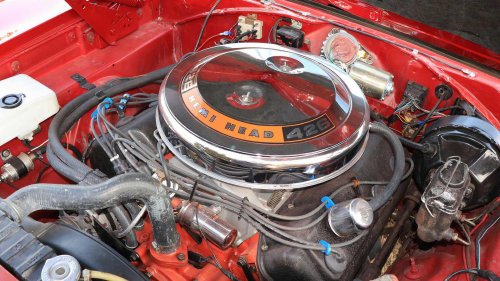
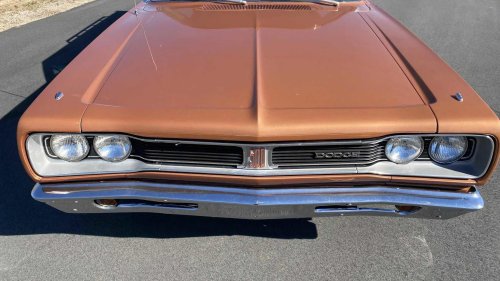
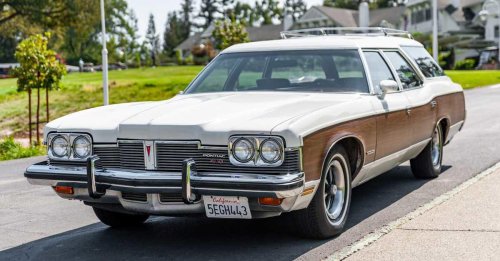
In the golden age of American muscle cars, Dodge was not shy about experimenting. The brand's lineup in the 1960s and 70s was wide and ambitious, covering everything from compacts to full-size cruisers, with performance sprinkled liberally across the board. But in a sea of Chargers and Challengers, one curious vehicle flew under the radar. It had the heart of a muscle car but the body of a family hauler. And it came from a time when automakers were willing to take chances on wild ideas.What if a station wagon could go toe-to-toe with a street machine? Dodge quietly answered that question. The result was something no one really expected – a V8 muscle wagon that remains one of the rarest of its kind today. It wasn't a marketing gimmick or a special edition with stripes and stickers. It was a real performance vehicle hiding in plain sight. The Dodge Coronet R/T Is An Ultra-Rare Wagon Muscle Car 1969 Dodge Coronet 500 Station Wagon static photoThe Dodge Coronet first appeared in 1949 as a full-size family car. It cycled through several identities over its lifetime, adapting to changing tastes and needs. But by the mid-1960s, the Coronet had taken a bold step into performance territory.The model’s fifth generation, launched in 1965, is where things started to heat up. Dodge was deep in the muscle car game, and the Coronet didn’t miss out. While it was available as a sedan, coupe, convertible, and yes, a station wagon, Dodge offered the same powertrains across the board, with very few exceptions. That meant even the wagon could get a serious V8.By 1966, the Coronet could be optioned with engines as powerful as the 440 Magnum V8 – a race-bred powerplant that turned any Dodge into a street terror. Though it was better known in the Charger and Super Bee, the Magnum was technically available in the Coronet wagon. Most buyers never ticked that box, but it was there for those who dared. Classic American Muscle In Disguise Hotrod Dodge Coronet Muscle Wagon Key Specs Source: DodgeAt the heart of the Coronet wagon's performance capability was a lineup of serious V8 engines. While most were equipped with the more pedestrian 318 or 383 cubic-inch V8s, Dodge allowed buyers to spec up to the monstrous 440 Magnum.The 440 Magnum, in particular, was a standout. Producing 375 horsepower and 480 lb-ft of torque, it was one of the most potent engines Dodge offered in a non-HEMI package. With a single four-barrel carburetor and a 10.1:1 compression ratio, it gave the Coronet wagon impressive acceleration for a vehicle of its size and weight. Paired with a heavy-duty Torqueflite automatic transmission or an optional four-speed manual, it was a true sleeper.To handle the extra power, the Coronet wagon could be equipped with upgraded suspension components, including heavy-duty leaf springs in the rear, front sway bars, and beefier shocks. While it wasn’t a track car, it delivered a surprisingly tight ride for a long-roof cruiser. The braking system also received attention, with optional front disc brakes for added stopping power.Visually, there was little to distinguish the muscle version from a regular wagon. This subtlety is part of what makes it so special. From the outside, it looked like a regular family hauler. Underneath, it was a beast. Even the interior remained mostly utilitarian, with basic vinyl seating and analog gauges. That sleeper aesthetic only adds to the car’s charm today. Did The Coronet Wagon Get A Hemi 426? The existence of HEMI-powered Dodge Coronet wagons, however, is a topic of debate among enthusiasts and historians. While Dodge offered the 426 HEMI engine as an option across various Coronet body styles in 1966, including sedans and hardtops, there is limited documented evidence of factory-produced HEMI-powered Coronet wagons. Most known HEMI Coronets from that era are sedans or coupes.However, it's worth noting that during the muscle car era, some dealers and individuals customized vehicles extensively, including installing high-performance engines like the 426 HEMI into body styles not commonly associated with such powertrains. Therefore, while factory-produced HEMI wagons are exceedingly rare or possibly nonexistent, custom-built versions may have been created by enthusiasts or specialty shops. The Dodge Coronet Was A Rare Gem, And It's Even Rarer Today 1969 Dodge Coronet 500 Station Wagon static photoDespite its performance pedigree, the Coronet muscle wagon was never produced in large numbers. Most buyers who wanted speed opted for the Charger or Super Bee. Wagons were seen as utilitarian, not exciting. Because of this, few were ordered with the high-performance engine options.Exact production numbers are hard to come by, especially for specific engine configurations in the wagon body. But experts estimate that fewer than 300 were built with the 440 Magnum. Survivors today are even scarcer, with most lost to time, neglect, or conversion. Dodge Coronet Average Price By Model Year According To Hemmings Source: HemmingsOn the collector market, these wagons are nearly unicorns. When they do appear, they command serious money – often exceeding six figures for well-documented, restored examples with original high-performance powertrains. Even non-Magnum versions are gaining value, especially those in good condition with factory V8s, like a 1969 Dodge Coronet 500 sold for $20,500 three years ago.The rarity isn't just about production numbers. It's about the uniqueness of the concept. A muscle wagon from a major American manufacturer is a niche within a niche. And the Coronet was perhaps the most honest of them all – no flashy badging, no fake scoops, just real muscle in a long-roof body. Other Muscle Car Wagons From The '60s And '70s Via: BringaTrailer The Dodge Coronet wasn't the only muscle wagon of its era, but it was among the rarest and most underappreciated. A few other manufacturers dipped their toes into this odd but thrilling segment. Pontiac Safari 428 HO Specs Source: PontiacPontiac offered the Safari with the 428 HO engine in the late 60s. It was powerful and fast for its size, with plenty of performance borrowed from the GTO. Like the Coronet, it flew under the radar. The Safari wagons had clean, understated styling and shared much of their underpinnings with Pontiac’s full-size muscle offerings. With the 428 HO, these wagons could easily surprise sports cars of the day, yet they remained practical and spacious for families. Chevrolet Chevelle 300 Deluxe Wagon Specs Source: ChevroletChevrolet had its own version of the muscle wagon in the form of the Chevelle 300 Deluxe wagon, which could be optioned with a 396 big-block V8. Though not heavily marketed, these cars offered genuine performance in an unlikely package. The 396 engine, especially in L78 trim, pushed out 375 horsepower, which gave the wagon serious performance chops. With minimal badging and clean lines, it was another sleeper on the streets that could serve as both daily driver and a dragstrip threat. Ford Country Squire Wagon Specs Source: FordFord also got in on the action with its Country Squire wagons. When equipped with the 429 Cobra Jet engine, these massive wagons could move quickly despite their bulk. They never gained muscle car status in the public eye, but the power was real. The Cobra Jet engine gave the Country Squire unexpected acceleration, and paired with Ford’s heavy-duty C6 transmission, it was capable of highway speeds that defied its size. Enthusiasts today appreciate these wagons as oddball bruisers with serious pedigree. AMC Rebel 390 V8 Specs Source: AMCAMC deserves a mention, too. The Rebel wagon could be ordered with a 390 V8, giving it respectable muscle. As with others, production was low, and survivors are even rarer. The Rebel wagon wasn't flashy, but it brought AMC's trademark practicality and punchy performance to the table. Equipped with the "Go Package," it could be surprisingly quick, and its light weight made it nimble for its size. It remains a cult favorite for fans of American muscle done differently. These muscle wagons were anomalies, built in a time when automakers weren’t afraid to try new ideas. They may not have sold in big numbers, but they earned a special place in the hearts of enthusiasts who love the unexpected.



















 +2 others