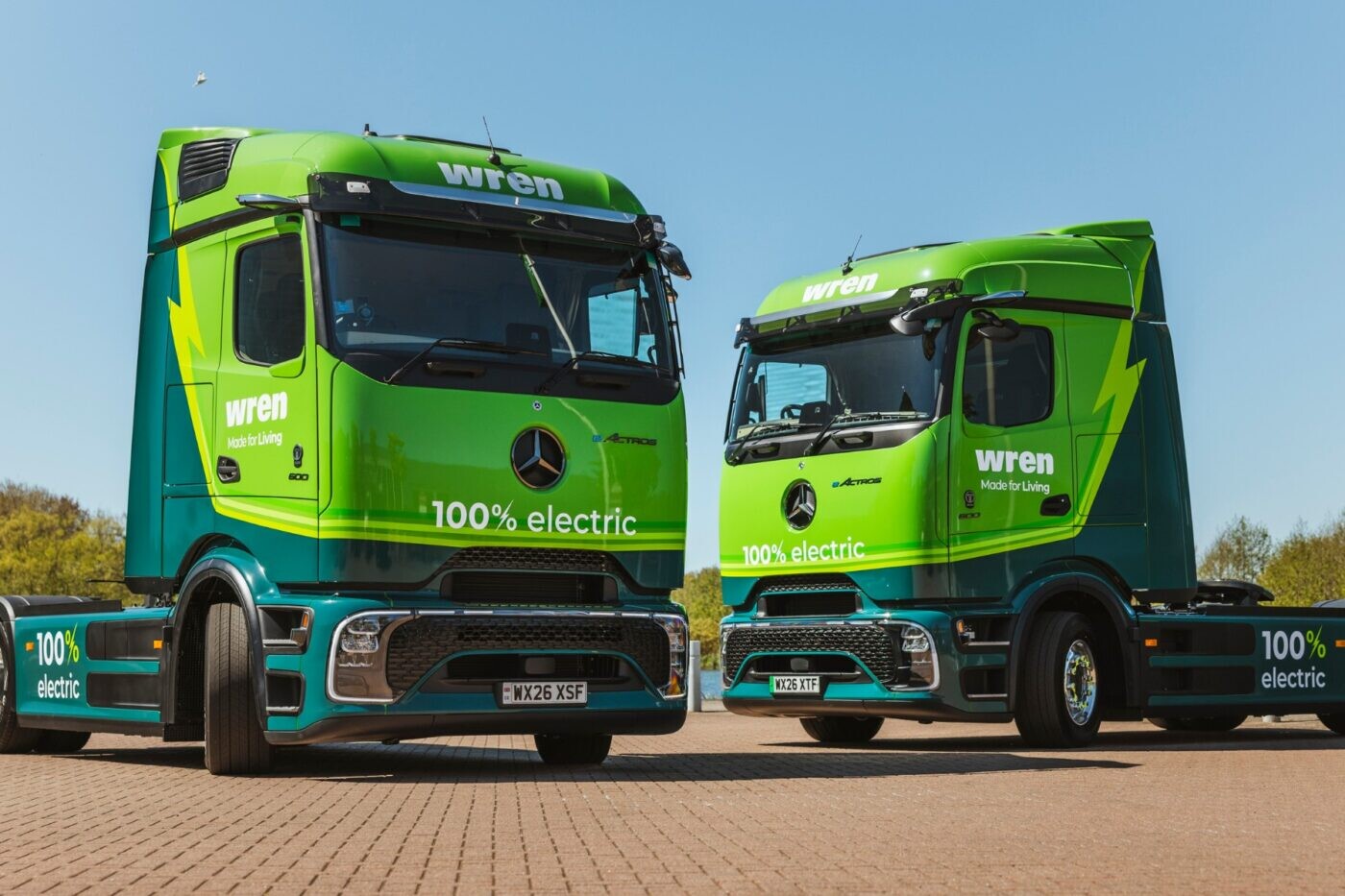
Image: Daimler TruckDaimler Buses has announced plans to invest €200 million in Europe over the coming years to establish new service locations, modernise existing facilities, and expand its range of services. The sum, reserved exclusively for the service division, is ‘more than ever before,’ as Daimler Buses CEO Till Oberwörder emphasised this week during a press briefing that we attended.“Service makes the difference,” he said. “To ensure this, our customers need a partner who supports them from vehicle selection and the right infrastructure through to fast and reliable maintenance.”MAN recently pledged around €300 million to expand its European service network by 2030 – the largest such investment in the company’s history. Unlike Daimler Buses, however, MAN is channelling the funds into both its bus and truck divisions, while Daimler is focusing solely on buses.The direction is clear: German OEMs are strengthening their service footprint to defend market share. Both MAN and Daimler Buses already run dense service networks across Europe and are moving to protect this edge. Service continues to serve as a key differentiator for local manufacturers, particularly against new competitors from China.Daimler Buses launches charging service team and hotlineDaimler Buses currently operates around 630 service locations across Europe, most of them run by partners, with 36 owned sites. Alongside expanding its network, the company is broadening its service portfolio with a clear focus on charging infrastructure.The Daimler Truck subsidiary expects rising demand for turnkey e-infrastructure solutions. “We anticipate growing customer interest in both the installation and operation of e-infrastructure from a single source,” a spokesperson at its Leinfelden-Echterdingen headquarters said.In response, Daimler Buses is launching a dedicated hotline and a specialised charging service team. The rollout will start in Germany before expanding to further European markets in the coming years.Daimler Buses set up its subsidiary Daimler Buses Solutions in early summer 2023 to focus on charging services. Since then, the unit has concentrated on designing and building infrastructure for battery-electric buses, aiming to deliver turnkey solutions across Europe together with partners. According to CEO Till Oberwörder, the company has already completed around 70 projects.The newly announced service push is set to further expand Daimler Buses Solutions, Oberwörder confirmed to electrive. The strategy reflects a broader shift: in the electric era, OEMs must support customers during operations just as strongly as they develop and sell vehicles.“Buses only earn money when they are in operation,” Oberwörder stated. “The same applies to charging stations: if they fail, operations come to a standstill. Daimler Buses is therefore becoming a provider of service ecosystems, enabling companies to focus fully on their core business. This is exactly what sets us apart from others in our competitive environment.”130 service hubs employ high-voltage expertsAround 130 of Daimler Buses’ 630 European service locations now handle electric buses, with certified high-voltage experts on site – and the number is growing. The new charging hotline will be available in eight languages and aims to resolve around 85% of cases remotely. A nationwide German service team will back it up, deploying trained electrical specialists for on-site support.Daimler Buses is ramping up e-mobility services in line with its roadmap: in Europe, the manufacturer aims to sell only locally CO₂-neutral new vehicles by 2039, and already by 2030 in the city bus segment. The Mercedes-Benz eCitaro has been on the market since 2018, with a fuel-cell range extender variant added in 2023. In other segments, Daimler Buses is preparing the launch of the Mercedes-Benz eIntouro in the second half of 2026, while planning its first battery-electric coach by the end of the decade.Daimler Buses’ eCoach gains momentumSpeaking of which, there is also news about its predecessor: a technology demonstrator dubbed the ‘eCoach’ by Daimler Buses will soon begin test drives.The vehicle is based on the conventionally powered Setra 516 HD but has been converted into an electric coach under the leadership of Daimler Buses as part of a federally funded project called ELCH (Electrified Coach). Development is taking place in Neu-Ulm, according to Till Oberwörder. The upcoming test drives will subject the vehicle’s new powertrain to its first road trials.At this early stage, the company is not yet disclosing technical details. However, Oberwörder revealed in response to a query that the technology demonstrator is initially expected to achieve ranges similar to those of the intercity bus eIntouro (‘around 500 km’) and that, much like the eIntouro, synergies between trucks and buses will be leveraged for the future electric coach.The aforementioned electric intercity bus is known to use CATL batteries, which are also used in Daimler Truck’s current generation of electric trucks. The eCoach is gaining momentum. The vehicle, based on a SETRA, serves as a technology demonstrator within the Daimler Truck Group and is still in an early phase of development.Image: Daimler Truck AGInterestingly, Daimler Buses’ decision to prioritise a battery-electric coach over fuel-cell coaches is a recent development. The latter will still be introduced, but ‘later,’ as the company states. In this context, ‘later’ means no earlier than the beginning of the next decade (in line with the H2 truck GenH2 Truck). Even the battery-electric coach, with its launch horizon set for the end of the decade, is not exactly imminent. For comparison: MAN plans to introduce an ‘early fleet’ of electric coaches as early as this year. Other manufacturers are also already positioning themselves in this space.However, Daimler Buses notes that it ‘continues to see insufficient charging and hydrogen infrastructure for long‑distance operations.’ For this reason, the company announced at the end of 2025 that it will also install public charging stations at high-traffic tourist locations and transport hubs – including in Munich and Cologne. This is a first for the manufacturer, which has previously only been responsible for private or semi-public charging facilities.By developing public chargers, Daimler Buses is deliberately entering the charge point operator market.As mentioned earlier, Daimler Truck AG already has extensive experience in building charging infrastructure. The company is also involved in the joint venture Milence, which constructs high-power chargers suitable for commercial vehicles along motorways and freight corridors. While some Milence charging parks near motorways may also be suitable for buses, a charging stop at the port of Antwerp-Bruges is hardly ideal for tourist coach operations.That is why Daimler Buses Solutions GmbH will no longer focus solely on electrifying bus depots but will also develop publicly accessible charging points at attractive locations.daimlertruck.com