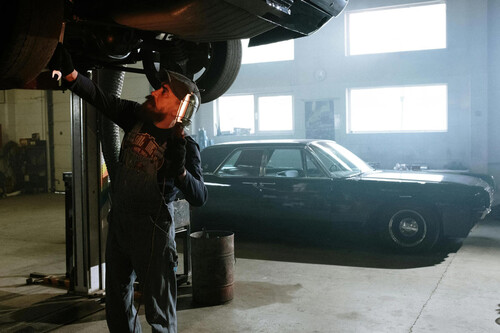
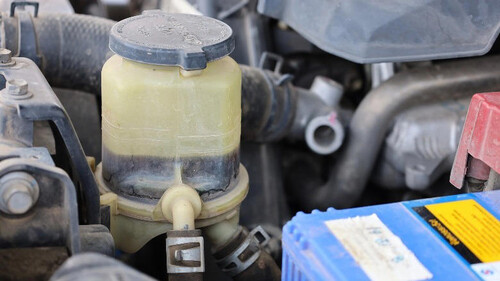
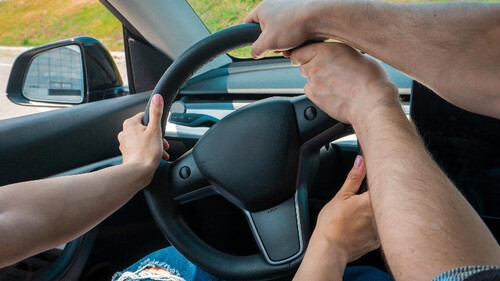
It’s one of those oddly deflating moments: you finally carve out time, get the car to the shop, explain the steering feels “off”… and the service advisor comes back with a shrug in sentence form. “We drove it, and it drives normally.” Not “you’re imagining things,” not “nothing’s wrong,” just that maddeningly neutral version of “we can’t reproduce it.” If you’ve ever left a service drive feeling a little silly and a little worried at the same time, you’re not alone. Steering issues can be subtle, intermittent, and heavily dependent on speed, road surface, weather, and even how you hold the wheel. And yes, sometimes the car behaves perfectly the moment someone else takes the keys—like it’s trying to keep its reputation intact. Why “drives normally” can still mean something’s going on “Drives normally” usually means the technician didn’t experience the symptom during a short test drive and didn’t find anything obviously broken during a quick inspection. That’s not the same as “everything is perfect” or “nothing will ever fail.” It’s closer to “we don’t have enough evidence yet to justify a repair.” Steering complaints often fall into that frustrating category where the car’s behavior depends on exact conditions. A pull that only happens on grooved pavement, a shake that shows up at 65–75 mph, or a “sticky” steering feel on cold mornings can be completely absent during a 10-minute drive on smooth roads. If the symptom isn’t repeatable, the shop is basically trying to catch fog in a net. The most common steering complaints that come and go Drivers usually describe steering problems in a few familiar ways: it pulls left or right, it vibrates, it feels loose, it feels heavy, it doesn’t return to center, or it feels like it “sticks” and then releases. Any of those can be real even if they’re mild. And some are more likely to hide during a quick test drive than others. A pull can disappear if tire pressures are adjusted, if the road crown changes, or if the car is driven on a different route than your daily commute. A vibration might only happen at a specific speed range or when braking. That “wandering” feeling on the highway can show up only in crosswinds, after hitting a pothole, or when the tires are worn in a particular way. Road crown, tires, and alignment: the usual suspects Before anyone panics about major steering components, it’s worth remembering how much influence the basics have. Most roads are crowned for drainage, which naturally nudges cars slightly to the right. If your commute includes a lot of heavily crowned lanes, it can feel like the steering is fighting you even when the car is technically within spec. Tires are the other big wildcard. A slightly low tire, uneven wear, or a tire with a shifted belt can make the car drift, shake, or feel “floaty.” A quick way to test this is a tire rotation or swapping front tires side to side (if the tread pattern allows it) to see if the pull changes direction—something a shop can do faster than an alignment deep-dive. Alignment is often blamed, and sometimes it’s guilty. But alignment numbers can be “in the green” while still not matching side to side in a way that feels right to you. If you’re sensitive to steering feel, a technician may need to look beyond pass/fail specs and aim for a more balanced setup. Power steering systems can be moody, especially when warm, cold, or low on fluid Hydraulic power steering (common on older vehicles) can act up if the fluid is low, aerated, or contaminated. It might feel heavy at parking lot speeds, groan when turning, or feel inconsistent from one turn to the next. Electric power steering (common on newer vehicles) can have its own quirks—intermittent heaviness, odd feedback, or a “notchy” sensation that comes and goes. Some issues only show up after the vehicle warms up, after a long drive, or during quick steering inputs like merging or dodging potholes. If the shop test drove it cold for a few miles, they may have missed the exact conditions that trigger your complaint. Steering systems are a little like coffee: temperature changes the whole personality. When “normal” might still be a safety issue Most vague steering complaints aren’t immediate emergencies, but a few patterns deserve extra urgency. If the steering suddenly gets very heavy, if the wheel has a lot of free play, if the car darts unpredictably, or if you hear clunks when turning, you don’t want to wait weeks hoping it resolves itself. Those can point to worn suspension/steering joints, a failing assist system, or loose hardware. Likewise, if the steering wheel shakes hard under braking or the vehicle pulls sharply when you brake, that’s a different category than a mild drift on the highway. It could be tires, brakes, or suspension components, but it’s not something to shrug off. “It drives normally” should never mean “ignore the scary part.” How to make the shop actually feel what you’re feeling The easiest way to get past the “can’t duplicate” wall is to turn your experience into usable clues. Note the speed, the road type, the weather, and whether you’re accelerating, coasting, or braking when it happens. Even a simple note like “only at 70 mph on the concrete highway near my exit” is gold compared to “steering feels weird.” If you can do it safely, take a short video from the driver’s seat showing the steering wheel behavior and the speedometer. A quick clip of the wheel shaking, the car drifting with the wheel centered, or a noise during low-speed turns can save a ton of back-and-forth. Many shops will also do a ride-along if you ask—often that’s the moment the symptom magically appears, because of course it does. Questions worth asking when they say it’s normal You don’t need to argue, but you can ask for specifics. What route did they drive, how long was the test drive, and at what speeds? Did they check tire pressures and tread condition, and did they measure alignment or just do a visual look-over? It also helps to ask what they did inspect: tie rod ends, ball joints, control arm bushings, wheel bearings, struts, steering rack mounts, and any software updates or fault codes (for electric steering). If the answer is “we drove it and it felt fine,” you’ve learned something important about how much investigation actually happened. What to do next if you still don’t trust the steering If the issue is mild but persistent, start with the simple, high-impact checks: tire pressures set to the door-jamb spec, a careful look at tire wear patterns, and a tire rotation if it’s due. If the symptom changes after rotating tires, you’ve narrowed it down dramatically. If it doesn’t, alignment and suspension inspection move up the list. If you’re still uneasy, getting a second opinion is completely reasonable. Different technicians notice different things, and some shops are better at chasing intermittent “feel” complaints than others. Bring your notes, your video, and a clear description of what “normal” would feel like to you—because you’re the one driving it every day, not just for a quick lap around the block. And if your gut says something’s off, it’s worth respecting that. Cars don’t always fail loudly or on schedule; sometimes they start with tiny hints. The goal isn’t to “win” against the advisor—it’s to make sure the steering feels predictable, safe, and boring, which is exactly how steering should be. More from Fast Lane Only Unboxing the WWII Jeep in a Crate 15 rare Chevys collectors are quietly buying 10 underrated V8s still worth hunting down Police notice this before you even roll window down The post I brought my car in for a steering issue, but the service advisor said it drives normally appeared first on FAST LANE ONLY.