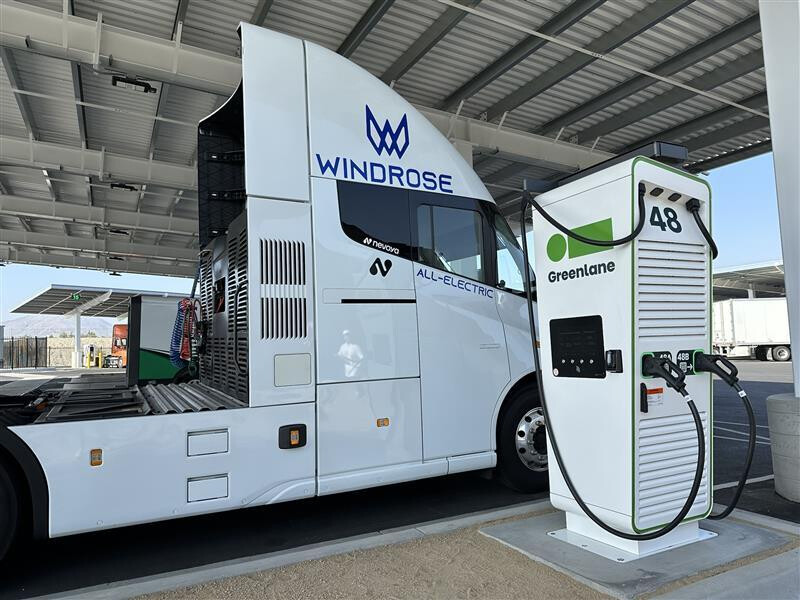
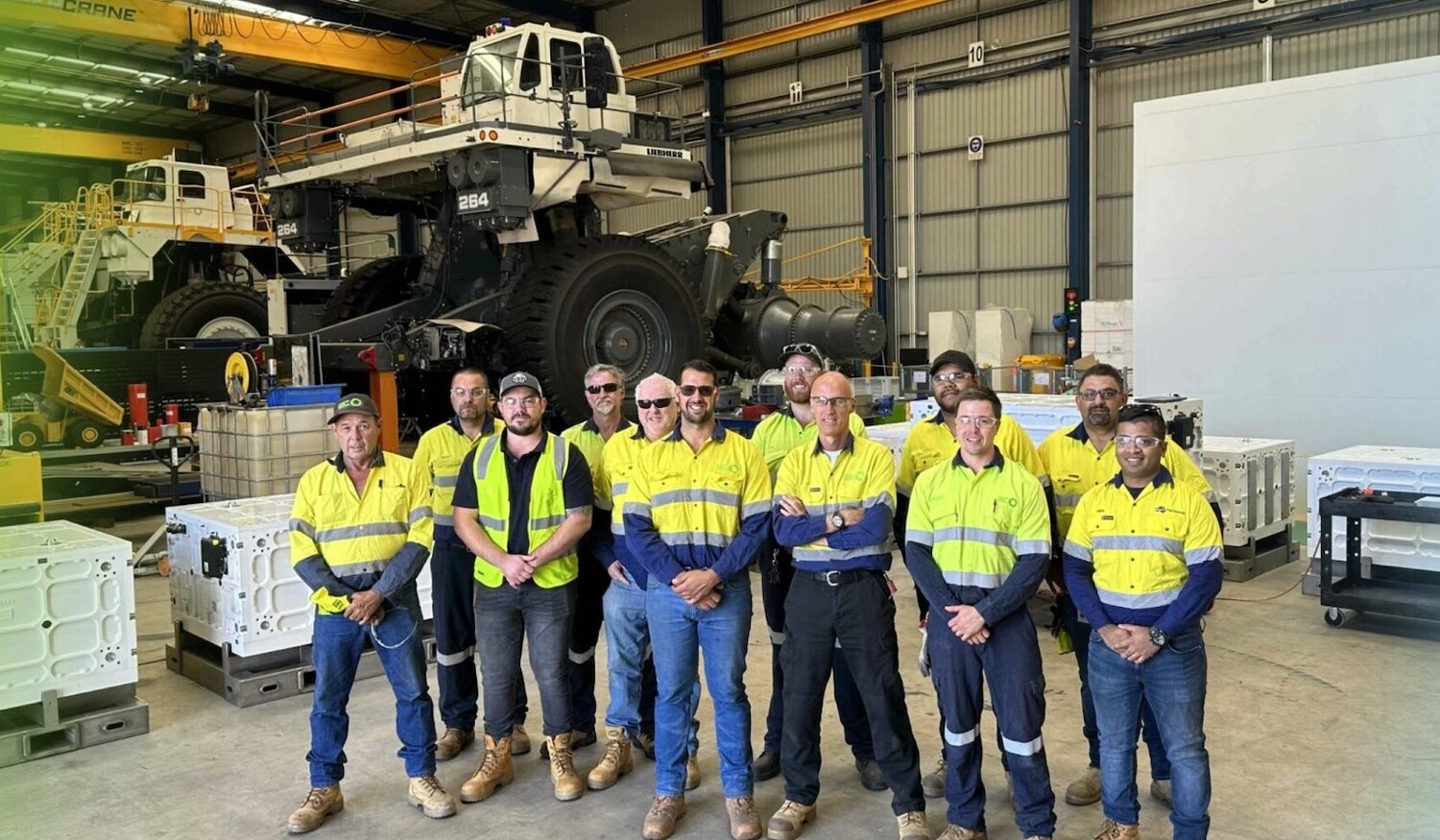
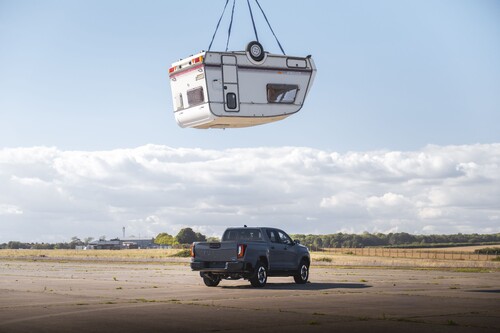
Fresh from losing the argument that electric vehicles would ruin your weekend, Australia’s conservative politicians and their media enablers are now hell bent on attacking battery-powered semi-trailers. Of course, they have not admitted that they were wrong about the weekend, and won’t when Twiggy Forrest wins the heavy trucking argument also. All this in the middle of a fuel crisis which has seen diesel prices surge, threatening inflation and thus the entire Australian economy. One wonders if they are willfully ignorant or just stupid? Or maybe they think the general public is? Heavy BEV vehicles already in service. Image from Andrew Forrest’s LinkedIn Page. On his LinkedIn page, Dr Forrest juxtaposed a picture of a “truckie” filling his rig from the front page of the Daily Telegraph (owned by the Murdoch family) with one of his many electric haul trucks, with caption “Yes we can.” He was mocking the Murdoch tabloid stories dismissing electric trucks. Forrest aims to achieve real zero emissions by 2030 in his massive mining operations. You can read about it here and here. Here are Forrest’s comments on LinkedIn: “I’ve never understood why some argue it’s in Australia’s interests to rely on other nations for our most precious commodity: energy. This relationship means our country is controlled by others — a subservient nation whenever supply is cut or challenged. In 2022, Fortescue committed US$6.2 billion to eliminate that risk from our business. “We are now accelerating delivery. “Last month, when gas supply tightened across the Pilbara, our solar delivered 1.2GWh over four days, slicing exposure to these costs and keeping our operations running hard. We are building the world’s first off-grid heavy industry green grid, a fully integrated, firmed power system operating at the scale of cities. “This system is being built now, and it will change how industry powers itself for the better — both economically and for the climate.” In another post, he adds: “You think semi-trailers can’t run on batteries? We could load more than 5 of them onto this electric truck. ‘Experts’ say heavy vehicles going electric will take decades. We say years. “Our first Liebherr T 264 battery electric haul truck arrives in months, and our entire fleet — hundreds of vehicles — will be electric by 2030.” You can watch the video here: Other mining companies appear to be following Fortescue’s example at a distance, as it becomes obvious what is possible and how it affects their bottom line. Converted Janus semi. There has been much about electric semi-trailers in the news in the last month in Australia. Here are a couple of examples: Janus electric, which specialise in converting semi-trailers from diesel to BEV has reported that their shares have jumped over 60% since the US-Israel-Iran war started, and global enquiries have increased. Recent funding from ARENA means that they able to expand their production. Australia is heavily dependent on its 800,000 diesel semi-trucks. So far, there are approximately 1,000 BEV trucks in the fleet. Ben Hutt, CEO of Janus Electric, says: “The technology works, the range is there, the power and torque is there and economically they’re much cheaper to run.” More drivers are also becoming accepting of electric trucks, he said. Our second example in the news is New Energy Transport’s semi-trailer demonstration. It was on the news, as a NET semi completed a load delivery from Sydney to Canberra (460 km). In a humorous twist, the Chinese made Windrose prime mover was carrying a load of Who Gives A Crap toilet paper. That should be on the front page of the Telegraph. To top it off, the last-mile delivery to supermarkets was carried out by electric delivery trucks. It won’t take years; it is already happening. “Yes we can.” Note: For many years, newspaper was used as an alternate toilet paper. Windrose BEV semi. Not only was the Windrose battery electric prime mover cheaper to operate than a diesel alternative; it was also faster. The 700 kWh battery allowed it to compete the trip on one charge, without slowing down on the hills. No wonder Daniel Bleakley, co-CEO of New Energy Transport, can announce his electric trucking company is receiving a wave of inquiries. “We’ve seen a surge in interest from major transport buyers in Australia as well as investors,” he said. None of this will work without charging infrastructure. The Australian Renewable Energy Agency has commissioned a report into the needs of the intrastate and interstate trucking sector. It provides “the nation’s first comprehensive blueprint for decarbonising the sector.” You can read the full report here. “The report outlines a first of kind national overview of a future electrified freight network, with up to 165 future freight charging hubs collocated with existing port, road, and intermodal infrastructure.” And it identifies that the issue will NOT be electricity generation, but transmission. On a micro level: to support last-mile delivery in the capital city of NSW, Zenobe has opened its charging hub in Sydney. Of course there are doubters. Here is one of those experts: Professor John Rose, of the University of Sydney’s Institute of Transport and Logistics Studies, said electric trucks were being increasingly used for last-mile logistics and city routes, but use for long-haul transport would take “many, many years. “We’re seeing the electrification in certain parts of the sector and not in others. The benefits of this are quite widespread if we can actually make it happen. This (the war) is definitely going to push it much quicker.” Fortescue heavy mining truck. For Australia, the long, red dirt road is looking a bit perilous as diesel prices rise weekly. Some smaller trucking companies are saying “It’s electric or bust.” The usual stoic Aussie approach of “No Worries” and “She’ll be right mate” won’t cut it this time. The obvious answer is electrification; the obvious problem is time. Hopefully sharp-eyed bean counters will notice the advantages and take immediate action before electric competitors undercut them, or fuel prices force them out of business.