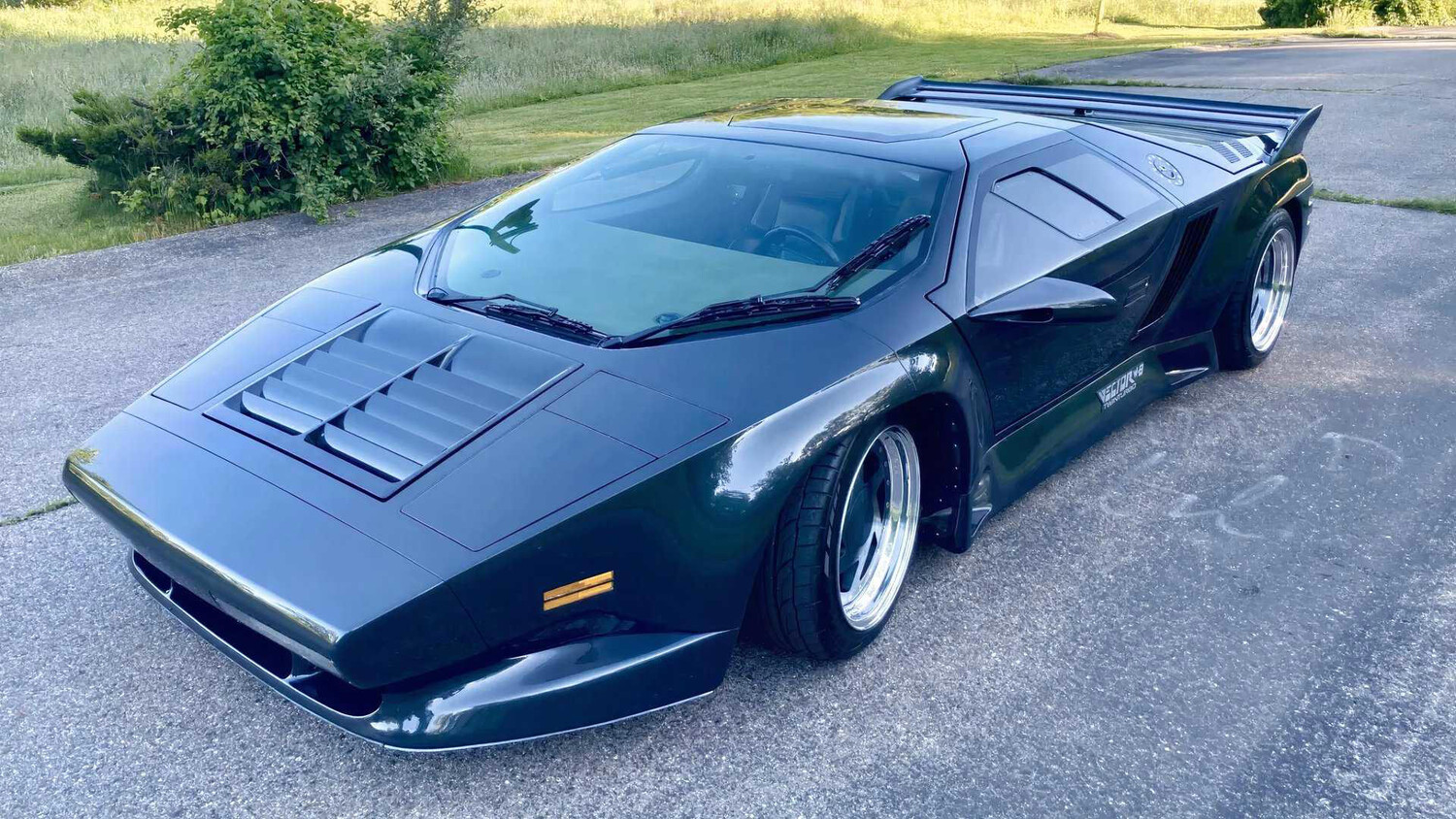
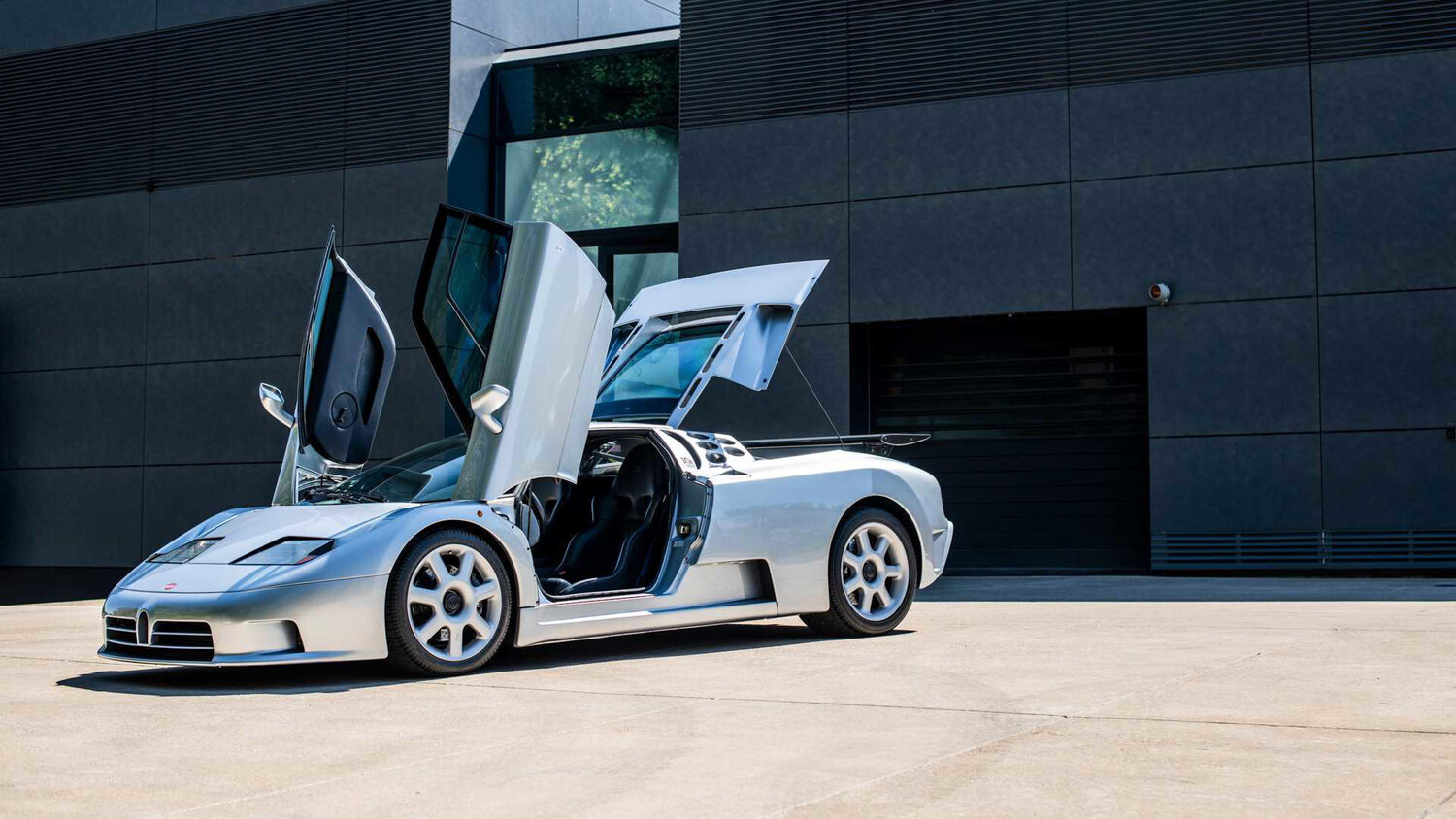
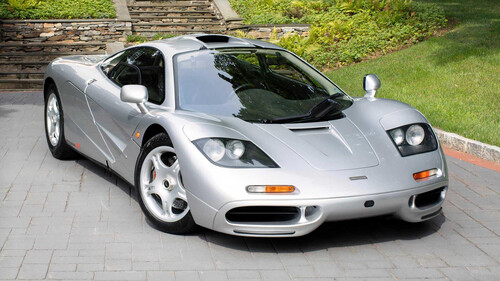
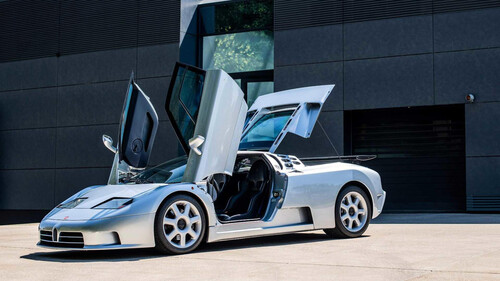
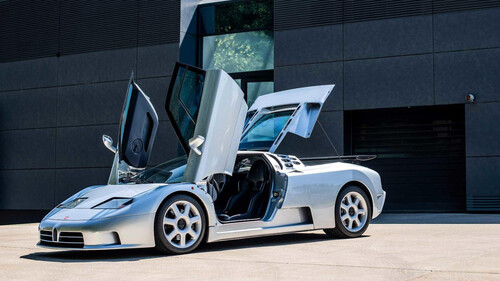
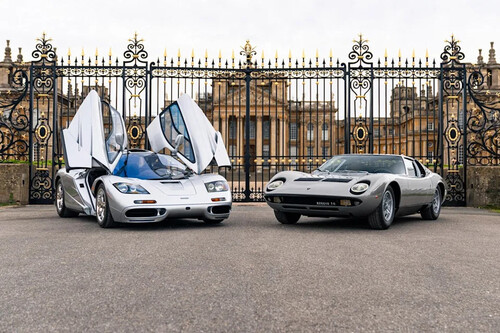
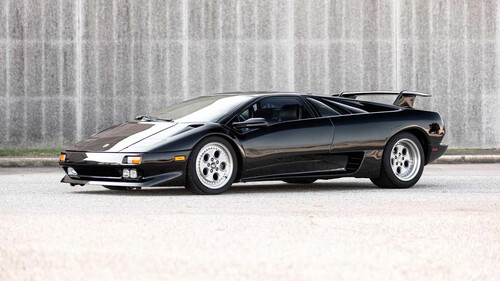
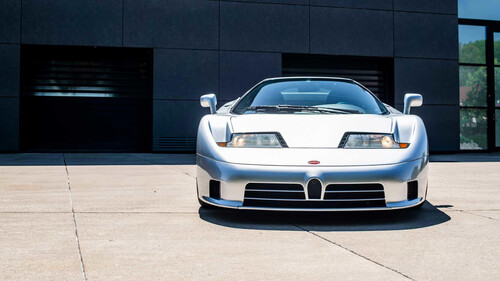
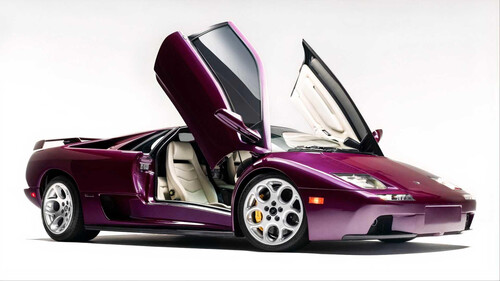
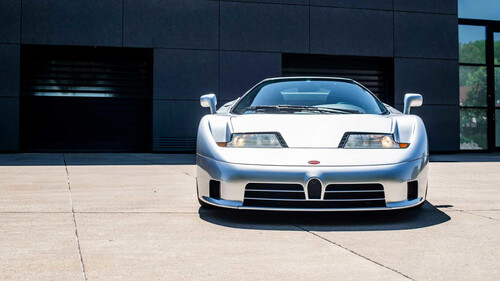
In the late 1980s, when American performance cars were still defined by V8 muscle and cost-driven compromises, one small, yet bold, manufacturer set out to do something radically different than the Big Three. But make no mistake, the goal wasn’t to outplay Detroit at its own game as much as it was to throw the rulebook out entirely.This powerhouse of a machine was conceived as a clean-sheet supercar built around aerospace materials, extreme power targets, and a cockpit designed more like an aircraft than a traditional road car. On paper, its specs were in line with many of the world’s best exotics. But beyond that, it was decades ahead of its time. You see, this forgotten supercar embraced ideas that wouldn’t become mainstream among other automakers until decades later, with its carbon composites, advanced systems integration, and performance figures that bordered on implausible.So, why does this powerhouse remain forgotten all these years later? Well, the problem certainly was never hinged on imagination because this car had more than enough to go around. Thus, what emerged was a supercar that felt futuristic, yet misunderstood. Today, it’s remembered less for what it promised than for how far ahead it dared to think. The Vector W8 Didn’t Follow Detroit’s Performance Playbook Introduced in 1989, the Vector W8 was developed in the late 1980s and produced in extremely limited numbers into the early 1990s. While there is some dispute over exactly how many W8 were produced, the majority of the documentation points to a grand total of 19 W8 models having ever been produced.That scarcity was not part of some grand marketing plan, as much as it was the byproduct of an ambitious engineering program colliding with the realities of small-scale manufacturing. You see, the Vector W8 wasn’t conceived as a super-fast '80s Corvette rival or a refined muscle car. It was built to give the cold shoulder to the bigwigs, as Vector set out to build a low-volume, aerospace-inspired supercar that prioritized systems thinking over familiarity.via Bring A TrailerVector Aeromotive founder Gerald Wiegert envisioned the W8 as an American answer to Ferrari and Lamborghini, but he had no intention of straight-out copying the European powerhouses. Instead of the lightweight European chassis philosophy or Detroit’s cost-conscious engineering, the W8 design centered heavily around aircraft design principles.Now, decades later, it’s easy to see that what truly separated the W8 from Detroit’s, or even Europe’s, performance playbook was intent. Unlike the well-established, well-funded automakers, the Vector W8 emphasized control systems and capability, even if that meant sacrificing ease of ownership. Yes, you needed very deep pockets to own and operate one of these things because it was engineered more like a prototype brought to market than a conventional production vehicle. In that sense, the Vector W8 wasn’t trying to modernize Detroit performance. It was trying to bypass it entirely. The Vector W8’s Engineering Was Years Ahead Of What Most Supercars Used via Bring A TrailerWhere most supercars of the late 1980s refined proven formulas, the Vector W8 was engineered around ideas that wouldn’t become common until decades later. Its structure relied on composite materials, including carbon fiber and Kevlar bonded over an aluminum honeycomb chassis, a construction approach closer to aerospace and racing prototypes than contemporary road cars. At a time when even exotic manufacturers were still heavily dependent on steel or aluminum, Vector was already prioritizing stiffness, strength, and theoretical performance over manufacturing simplicity.The W8’s interior reinforced that philosophy. The cockpit-style layout grouped controls tightly around the driver, borrowing visual and ergonomic cues from aircraft rather than traditional automotive dashboards. Digital readouts, layered switchgear, and a strong emphasis on driver focus set it apart from the analog dials and leather-wrapped familiarity that defined most supercars of the era. It reflected Vector’s belief that performance cars should operate as integrated systems rather than loosely connected mechanical components. Twin-Turbo V8 Performance Numbers via Bring A Trailer Power came from a twin-turbocharged 6.0-liter V8 derived from Chevrolet's small-block architecture but heavily modified. At a minimum, this supercar was pushing 625 ponies, while other testing points to figures closer to over 700 horsepower, depending on configuration and boost levels, of course.Vector paired that power with a three-speed automatic transmission adapted for extreme torque loads, offering 630 lb-ft of torque, which prioritized durability over driver engagement. In terms of acceleration, the W8 could launch itself from 0 to 60 in just 3.8 seconds. And its theoretical top speed will send any gearhead into a tailspin, locking in at an impressive 242 mph, though its maximum verified top speed reamins 218 mph. I mean, come on, it was the early ‘90s for crying out loud. Yes, It Used An Oldsmobile Toronado Transmission Mecum One of the most radical details of the Vector W8 is that it featured a 3-speed automatic transmission, whereas other supercars leaned on 5- or 6-speed manuals. No, it wasn’t some space-age gearbox. It was a regular old GM Turbo-Hydromatic 425 unit.Classic Oldsmobile nuts recognize that as the same transmission that was used in their beloved front-wheel-drive Toronados of yesterday. In many ways, this unit held the W8 back. However, the engineers ultimately needed it because not many gearboxes of the time offered the same packaging and torque-handling abilities that the TH 425 did. The good news is that despite having fewer gears than most, the W8 could keep up with the pack and even surpass many of the best contenders within it. Why The W8 Struggled To Deliver On Its Ambition via Bring A TrailerNow, let’s get one thing straight: the W8 did not fail because Vector didn’t have clear goals for this supercar. You see, in actuality, the Vector struggled with the W8 because its ambition far exceeded what a small, independent manufacturer could reliably execute. Gearheads can appreciate the fact that building an aerospace-inspired supercar is one challenge, and turning that concept into a consistent, serviceable road car is another uphill battle entirely.And, as seasoned gearheads might suspect, Vector lacked the production infrastructure and supplier depth enjoyed by manufacturers with long histories and bank accounts with lots of zeros behind them. The W8’s drivetrain itself reflected this tension between the blueprint and the actual execution of that blueprint. While the twin-turbo V8 was engineered for extreme output, managing that power proved challenging. Combined with early engine management and evolving turbo technology, the result was a supercar that demanded constant attention.via Bring A TrailerGearheads also can’t forget that business instability also compounded any engineering obstacles at play, and Vector’s limited production run meant revenue was inconsistent. Not to mention that internal changes during the W8’s short production run disrupted continuity, as the company’s funds were often redirected toward future projects before the W8 was fully sorted, leaving unresolved issues behind.Ultimately, the W8 struggled not because its ideas were flawed, but because it attempted to compress decades of technological progress into a single, low-volume vehicle. As gearheads can see, Vector simply bit off more than it could chew, and what remains is a machine that demonstrated what was possible, even if it could not fully deliver on everything it promised at the time. How The Vector W8 Became America’s Forgotten Supercar via Bring A TrailerIn hindsight, the Vector W8 didn’t disappear because it was slow or irrelevant. No, this forgotten supercar faded because it existed outside the systems that usually preserve automotive legacy. With fewer than two dozen examples built, no racing program, and no sustained production run, the W8 never had the opportunity to embed itself into enthusiast culture the way Ferraris, Lamborghinis, or even later American exotics did. It arrived early, struggled publicly, and then vanished just as the supercar world began catching up to its ideas.Gearheads should also note that timing played a major role in the Vector W8's downfall. The early 1990s were not kind to ultra-low-volume performance machines, and even worse for those without global dealer networks or factory-backed support. As newer supercars emphasized refinement and reliability, the W8 became viewed less as a breakthrough and more as an outlier. Without consistent visibility or continued development, it slipped into obscurity, remembered more as a curiosity than a benchmark. Comparable Supercars With Similar Thinking BugattiSeasoned gearheads might remember machines that are actually quite comparable to the Vector W8. Just take the Bugatti EB110 and the McLaren F1. Documentation shows that fewer than 150 Bugatti EB110 models were produced between 1991 and 1995. And just over 100 McLaren F1’s were produced between 1992 and 1998.While this is still an extremely limited production rate, the real difference between both of these machines and the Vector W8 is that both the Bugatti EB110 and the McLaren F1 benefited from stronger financial backing and production processes capable of actually bringing concepts into fruition consistently. Vector was simply not afforded the same margin for error as the Bugatti EB110 or the McLaren F1, it just didn’t have the same level of safety net.Via: RM Sotheby'sSpeaking of how it compared to other supercars, the Vector W8 truly held its own against some of the best of the era, including the McLaren F1, Bugatti EB110, and Lamborghini Diablo. As a matter of fact, of these four, it delivered the most power output with the second-largest engine and the fewest cylinders. It also outran the Bugatti and the Lamborghini from 0-60 and at the top end. Only the McLaren surpassed it with a 0 to 60 mph time of 3.2 seconds, but is just barely outrun by the W8 with a slightly-slower top speed of 240 mph. On all counts, the Vector W8 was a serious threat in terms of performance. A True Trend Setter In It's Segment RM Sotheby's The McLaren F1 being so close in terms of performance is an interesting outcome, considering it adopted some of the design elements that made the W8 ahead of its time. The F1 was the first production road car to feature a carbon monocoque, an evolutionary successor to what was featured in the W8. Today, this is the standard for supercars and hypercars of all makes.Other design features of the W8, like aerospace honeycomb aluminum structures, fighter jet cockpits would become staples of the industry as well, famously used on world-renowned machines like the Lamborghini Reventón, Ferrari LaFerrari, and Jaguar XJ220.The death of the W8 wasn’t the end of the line for the leading man behind it. Gerald Wiegert went on to found the Vector Motors Corporation. There, he would continue to work on wild production supercars and prototypes that pushed innovation, including the Vector M12, WX-3, and W-8. Unfortunately, it often faced financial troubles and never quite found its footing. Still, Vector Motors would remain in operation until 2021, officially shutting its doors after Wiegert’s passing. What A Vector W8 Is Worth Today Via: RM Sotheby'sToday, the Vector W8 occupies a narrow but growing niche among collectors. Values are difficult to pin down because of the car’s rarity, condition sensitivity, and mechanical complexity. When examples do change hands, prices typically reflect historical significance and scarcity rather than usability.One 1990 Vector W8 Twin Turbo actually went up for sale pretty recently, as it was listed on Bring a Trailer just a couple of years ago. Finished in graphite gray, one gearhead with some deep pockets bid this 1990 W8 up to a whopping $740,000. Unfortunately for them, luck was not on their side that day, as the reserve was not met and the supercar did not end up changing handsWhile this forgotten supercar is undoubtedly cool, gearheads should remember that the W8 is not collected as a driving supercar so much as a technological artifact, representing a moment when American engineering attempted something radically different.And now, over three decades later, its legacy is no longer defined by what it failed to become, but by how clearly it anticipated where the supercar world was headed.Sources: Classic.com, Hagerty, McLaren Cars.