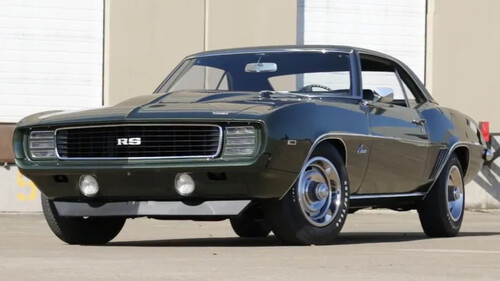
A few COPO Camaros slipped through and became instant legendsSome factory race cars are born into legend. A handful of COPO Camaros had to sneak through the back door first, using Chevrolet’s own bureaucracy to turn a humble pony car into something closer to a secret weapon. Those few cars, built outside the usual order books, became myths on the street and at the strip long before collectors started chasing them with six-figure checks. To understand how a limited run of special-order machines turned into instant icons, it helps to trace how the Central Office Production Order system collided with drag racing, corporate politics, and a few determined dealers who refused to take no for an answer. The quiet loophole inside Chevrolet The story starts with paperwork. COPO, short for Central Office Production Order, was simply a way for internal departments and fleet buyers to request unusual combinations that did not appear in the public catalog. As one detailed History explains, the system let Chevy stitch together paint codes, options, and hardware that regular customers could never select from a showroom floor. At first, the COPO system handled mundane tasks. A rental company needed a batch of identical sedans. A government agency wanted heavy-duty cooling on a work truck. The paperwork flowed through Central Office, boxes were checked, and cars rolled down the line with little fanfare. The magic happened when performance-minded insiders realized that the same process could also slip race engines and beefed-up drivetrains into otherwise ordinary-looking cars. Within that context, the first COPO Camaro was not a flashy marketing project. It was a quiet experiment. As initially documented history notes, the 1969 ZL-1 COPO Camaro was born from this special-order system, not from a glossy brochure. Dealers and racers used internal codes to request combinations that Chevrolet’s standard option sheets technically did not allow. From paperwork to secret NHRA warrior Chevrolet had introduced the Camaro to chase pony car buyers, but drag racers quickly saw more potential. A detailed look at the History of the describes how performance-focused dealers pushed for a factory package that could dominate NHRA classes. They wanted a Faster Pony, a car that could show up at the strip already engineered for the quarter mile. Within that framework, COPO became Chevrolet’s Secret NHRA Warrior. Rather than leaving racers to cobble together parts from catalogs, the factory itself could install big-block engines, stronger suspensions, and heavy-duty drivetrains under a relatively plain body. The Camaro shell stayed familiar. The hardware underneath did not. That factory blessing mattered. NHRA rules often favored cars that appeared on production order sheets, and COPO paperwork turned what might have been one-off experiments into documented builds. The result was a small but potent run of Camaros that were legal for key classes yet far more capable than anything a casual buyer could order. The 1969 COPO 427 and the birth of a myth The best known of these early cars is the 1969 COPO 427 Camaro. Enthusiasts who thought the SS was the baddest version quickly learned otherwise. A detailed video breakdown of the 1969 Chevrolet Camaro walks through the unusual options and engineering choices that separated it from ordinary big-block models. Under the hood, the most exotic variant used the ZL1 427, an all-aluminum engine that dramatically cut weight while adding power. One enthusiast overview of the 1969 COPO Camaro notes that the real unicorn was the COPO 9560 Camaro, fitted with this ZL1 427 engine, which was lighter, rarer, and more powerful than the iron-block alternatives. That combination pushed the car into a different league on the strip and set the template for how a COPO package could rewrite expectations for a production Camaro. These cars were not built in huge numbers, yet they were real production vehicles with documented codes. That combination of scarcity, factory backing, and raw capability is why the 1969 COPO 427 still anchors so many conversations about Chevrolet’s most extreme muscle cars. Factory freaks and one-off legends Within the already rare world of COPO Camaros, a few examples stand out as true anomalies. One investigation into The Factory Freak describes Uncovering the Rarest Big Block Camaro Ever Built, a car that emerged from the golden age of American muscle with a configuration so unusual that it defied easy categorization. These factory freaks often combined COPO hardware with dealer-installed tweaks or late-production changes. A car might carry a big-block engine that did not officially belong in that trim, or it might mix options in a way that only a handful of buyers ever managed to secure. Because the COPO system was flexible and the performance arms race intense, some Camaros left the line with combinations that even Chevrolet insiders struggled to explain years later. Stories about such cars spread quickly. A single COPO Camaro that dominated local drag strips could become a regional legend, its build sheet passed around like contraband. When collectors and historians later traced the VINs and production orders, they often discovered that these whispered legends were, in fact, unique or nearly unique builds. Why COPO means “rarest of the rare.” Part of the mystique around COPO Camaros comes from how few were built. A modern overview of why these are points out that in a market where a 500-unit production run already counts as scarce, COPO numbers were far lower. The fact that these cars were never aimed at the mass market, and often could not be ordered by a typical retail customer, only deepened that aura. COPO, in other words, became shorthand for the most exclusive hardware Chevrolet was willing to bolt into a Camaro. While the acronym simply describes a Central Office Production Order, enthusiasts now associate it with the rarest Chevrolets ever built. That reputation spans both the original 1960s runs and the modern continuation cars. Reinventing COPO for a new drag era Decades after the original COPO Camaros left showrooms, Chevrolet revived the concept for dedicated drag racing. A detailed feature on COPO Camaro History notes that the modern program followed the same basic philosophy. Like the earlier specials, this COPO Camaro offered a powertrain combination that was otherwise unavailable through Chevrolet’s standard ordering channels. The modern COPO Camaro was not a street car at all. One factory description of the COPO Camaro explains that it cannot be registered, licensed, or driven on public streets or highways, and that it represents the first purpose-built race car sold directly by Chevrolet for this segment. The company built these cars specifically for drag strips, with safety equipment and engine packages tailored to sanctioned racing. Chevrolet Performance also kept production extremely tight. A social media post on the modern program notes that Chevrolet Performance only built 69 COPO Camaros each year from 2012 to 2023, a figure chosen to echo the 1969 origin story. That number, 69, became both a tribute and a limiter, ensuring that the new drag cars would remain as scarce as their 1960s ancestors. From showroom secrets to auction darlings Cars that once slipped out of the factory with little public attention now sit at the center of high-profile auctions. A recent feature on Low Miles, Big describes a 1969 COPO Camaro that attracted intense bidding, illustrating Why Collectors Are Fighting Over It. Low mileage, documented COPO codes, and original drivetrains can push prices into territory that would have seemed unimaginable when these cars were new. Collectors are not just paying for performance numbers. They are buying into a story that starts with hidden order codes and ends with a car that might be one of a handful ever built in that exact configuration. Documentation that once lived in dealer file cabinets now serves as proof that a given Camaro is not just another restored muscle car but a genuine COPO machine. That same logic extends to modern cars. Limited production, factory race intent, and clear lineage back to the original program make contemporary COPO Camaros attractive to buyers who see them as instant collectibles, even if they never turn a wheel in anger. The drag racers who refused to keep them stock Not every COPO owner treats the car as a museum piece. A widely shared video about Legend status tells the story of a COPO Camaro that started as a $200,000 fully restored example, then was turned into an old school drag car. That decision horrified some purists but thrilled racers who believe these machines belong at the track. In that case, the owner chose to risk a significant investment for the sake of performance and nostalgia. The car became a rolling argument that COPO Camaros are more than static artifacts. They were built to launch hard, shift at redline, and chase time slips, not just sit under soft lighting on a show floor. Similar tension surrounds modern COPO drag cars. Some buyers immediately send them to race shops for tuning and class-specific modifications. Others keep them in climate-controlled garages, betting that untouched examples will command a premium in future decades. Both camps rely on the same underlying fact: COPO Camaros, past and present, are rare enough that any decision about how to use them carries long-term consequences. Video lore and the rise of the COPO story online Digital media has amplified the mystique around these cars. Enthusiast channels regularly feature the Chevrolet Camaro Capo ZL1, walking viewers through casting numbers, trim details, and period-correct parts. Another popular clip on why the 2020 Chevrolet COPO Camaro is a special muscle car breaks down how the modern drag package fits into the broader history of Chevrolet performance. These videos do more than entertain. They teach a new generation how to read COPO codes, spot authentic components, and understand why a specific combination of options can double or triple a car’s value. They also keep the stories of individual cars alive, from barn finds to fully restored showpieces. Social media snippets play a similar role. A short clip titled Legendary COPO Camaro frames the car as one of the most sought-after muscle cars of all time, reinforcing how widely the COPO brand now resonates beyond hardcore collectors. How COPO shaped Chevrolet’s performance identity COPO Camaros also influenced how Chevrolet thinks about performance programs. A detailed feature on Chevrolet Performance describes how the company eventually sent the final COPO Camaro ever built to GM’s Heritage Collection, treating it as a corporate heirloom rather than just another product. That decision signals how central COPO has become to the brand’s performance narrative. Internal performance divisions now routinely create limited-run models, crate engines, and factory-backed race cars. The COPO experience showed that there is an enthusiastic audience for cars that sit outside normal showroom logic, provided the factory is willing to support them with parts, documentation, and technical expertise. At the same time, the COPO story underscores how much of Chevrolet’s performance legacy came from partnerships with dealers, racers, and engineers who were willing to push internal systems to their limits. The Central Office Production Order was never designed as a performance program, yet it became the backbone of one of the most storied muscle car lineages in American history. More from Fast Lane Only Unboxing the WWII Jeep in a Crate 15 rare Chevys collectors are quietly buying 10 underrated V8s still worth hunting down Police notice this before you even roll window down