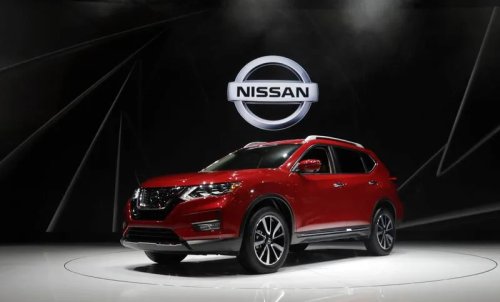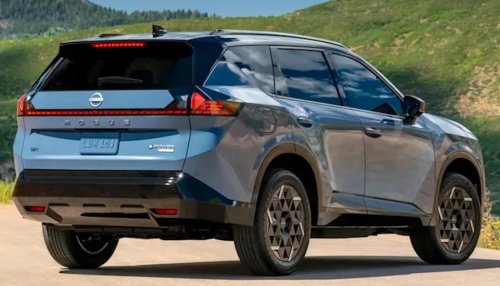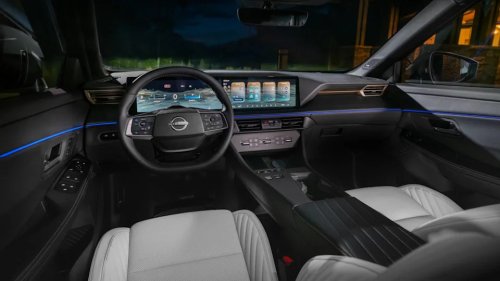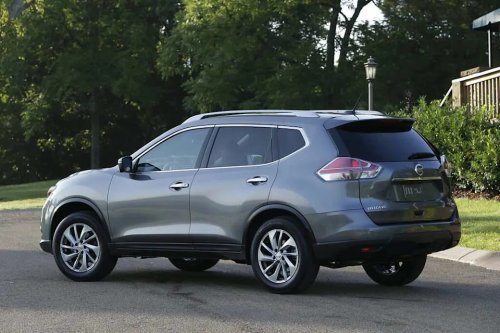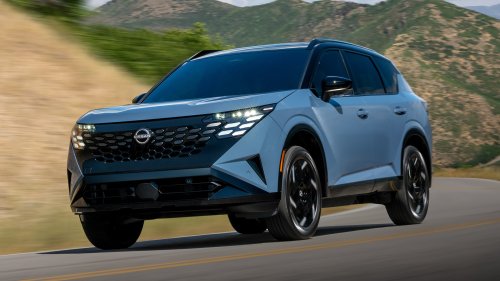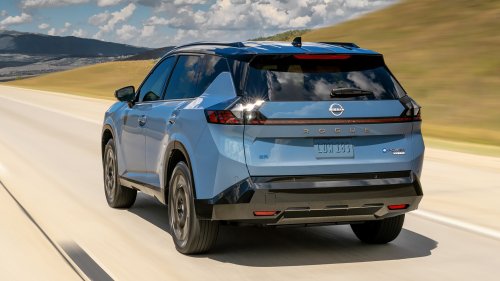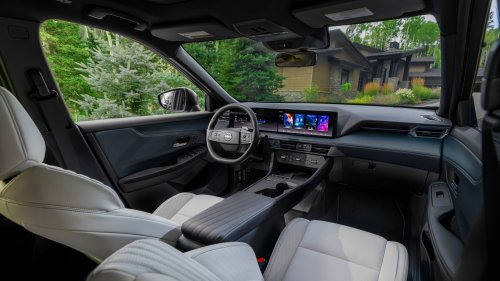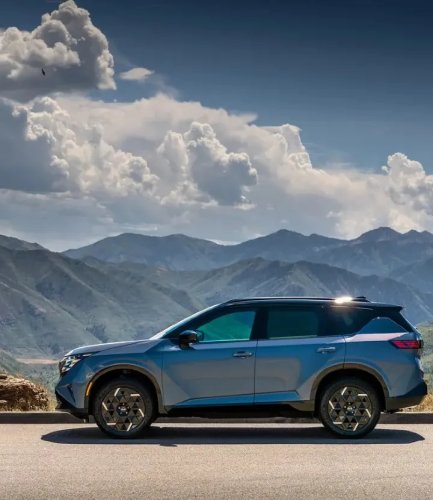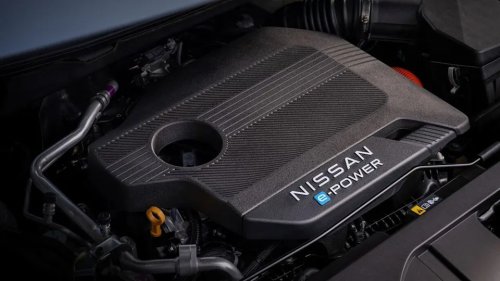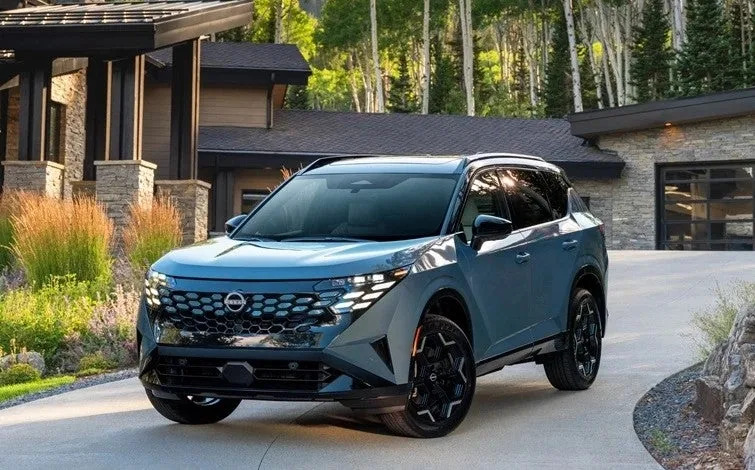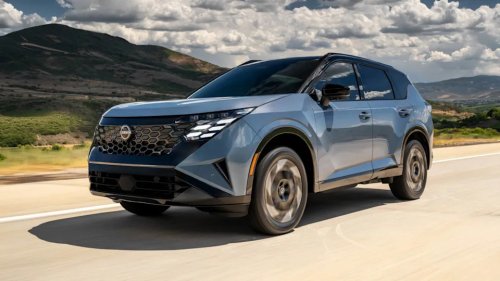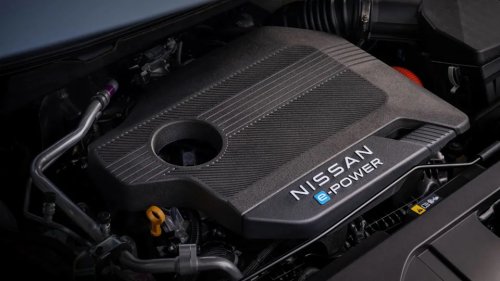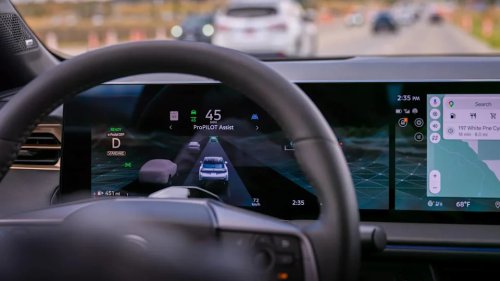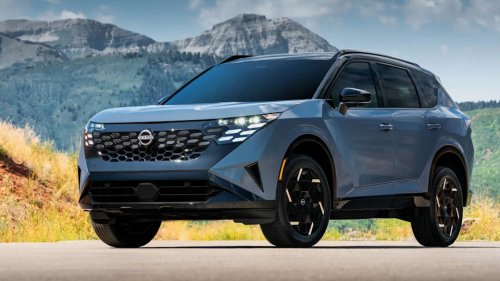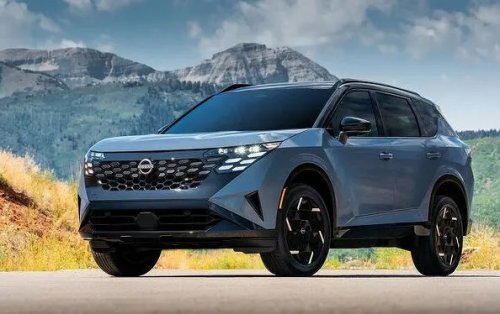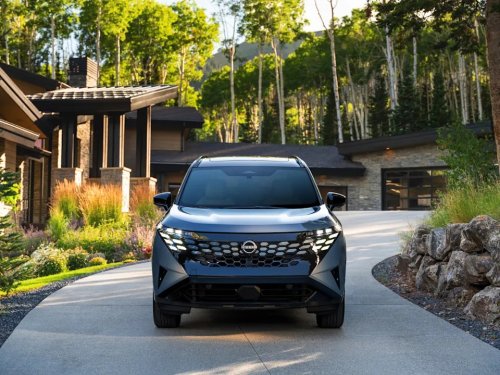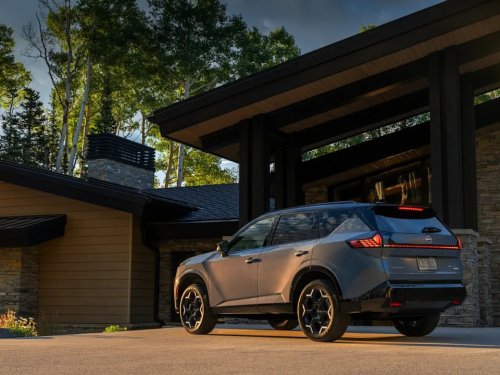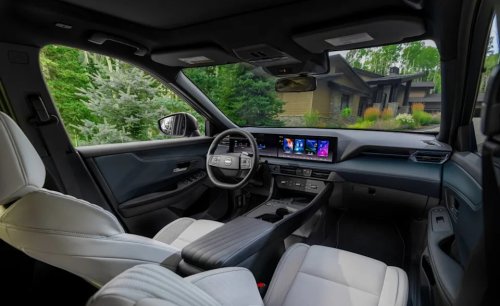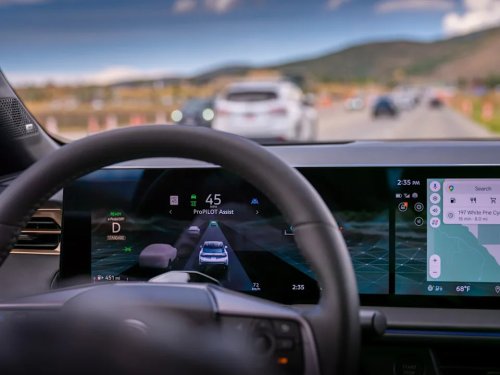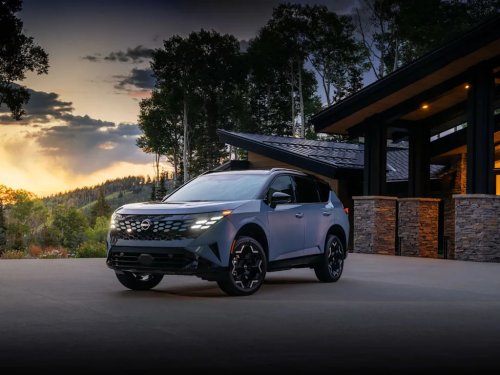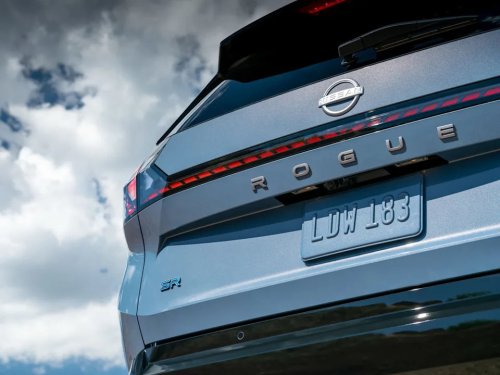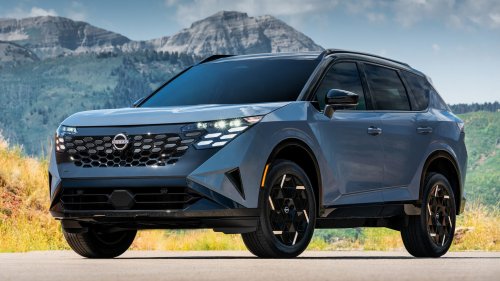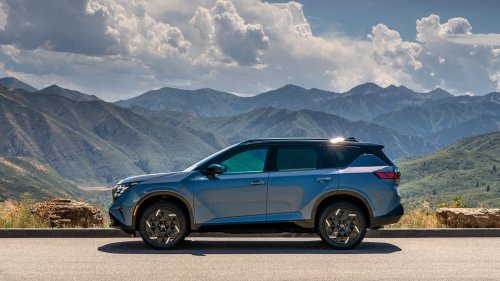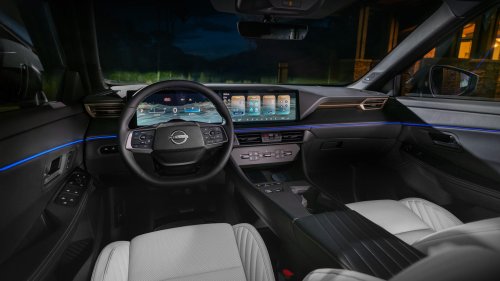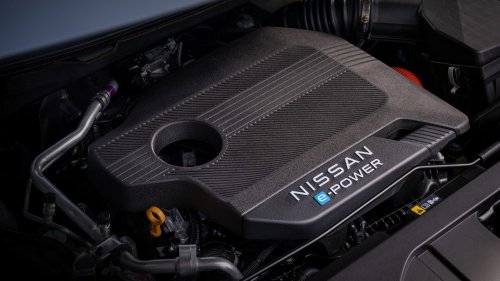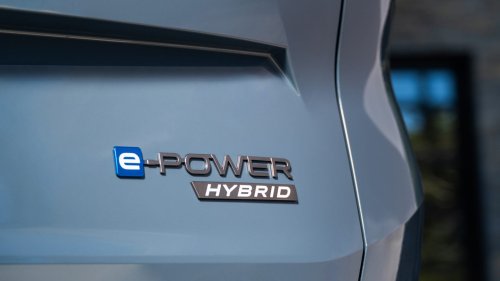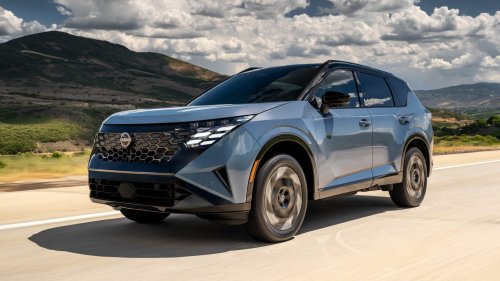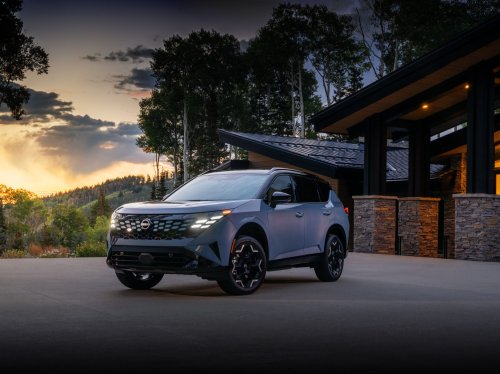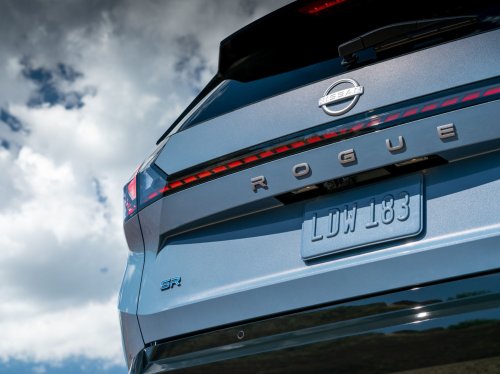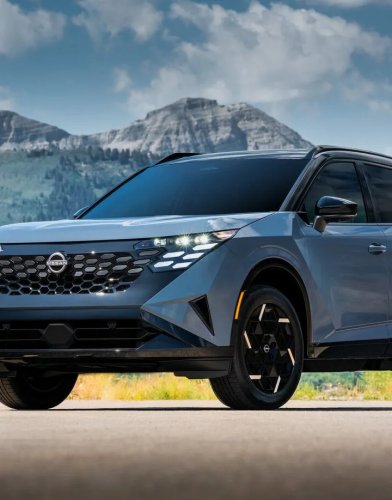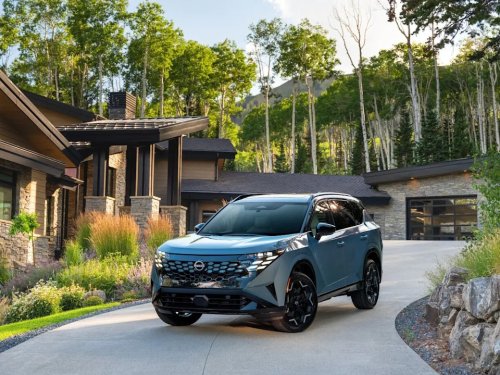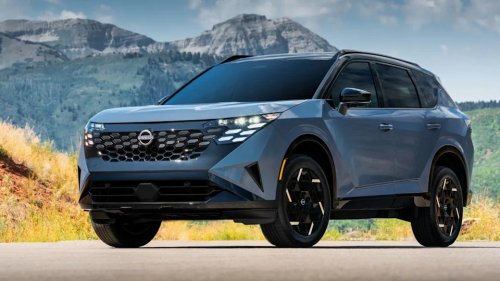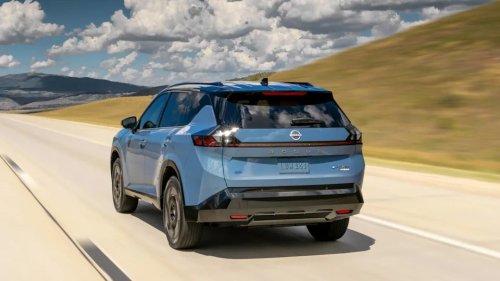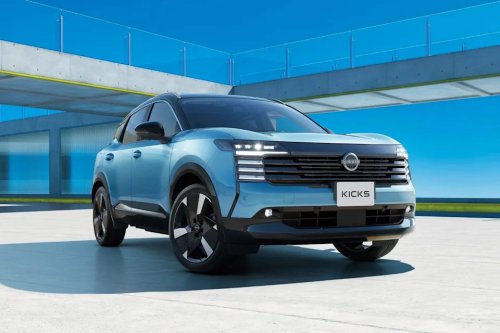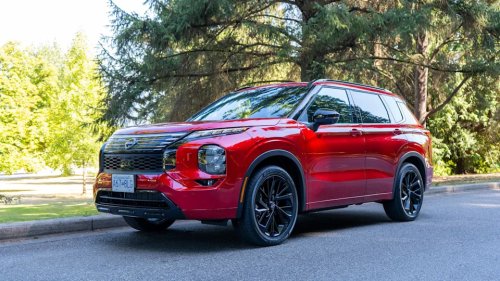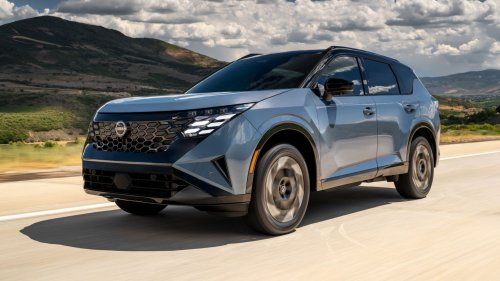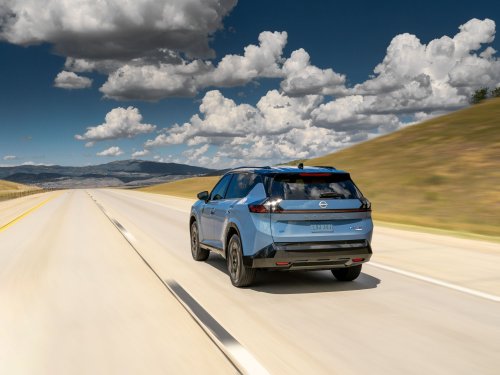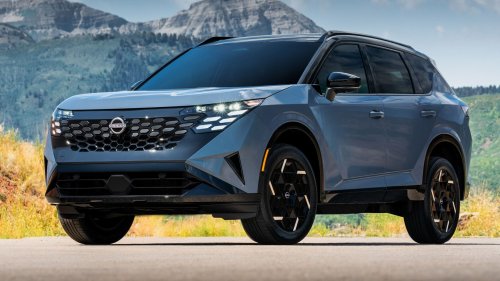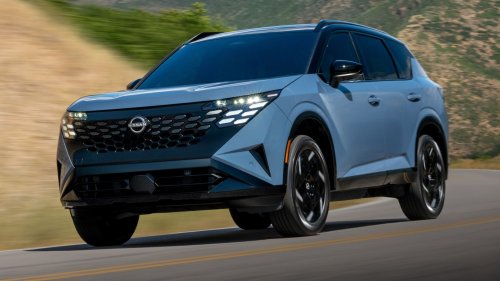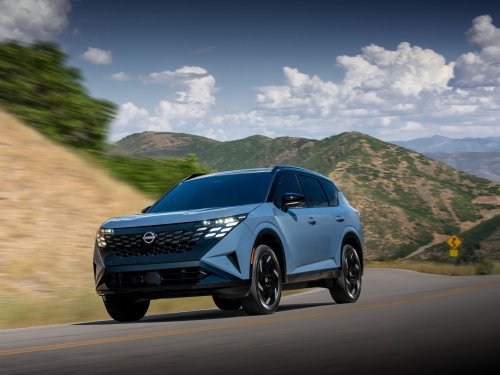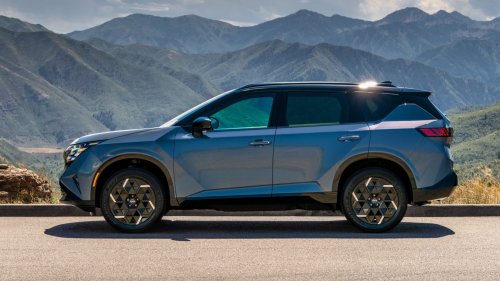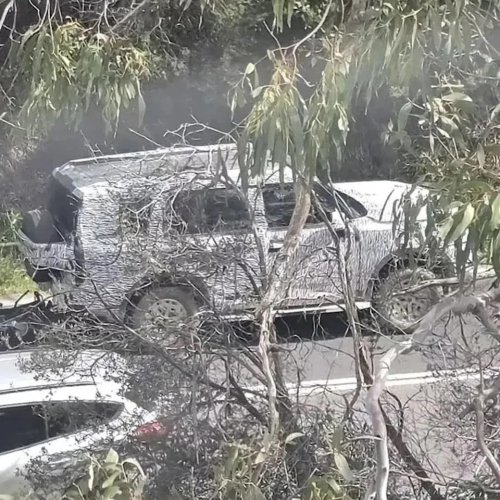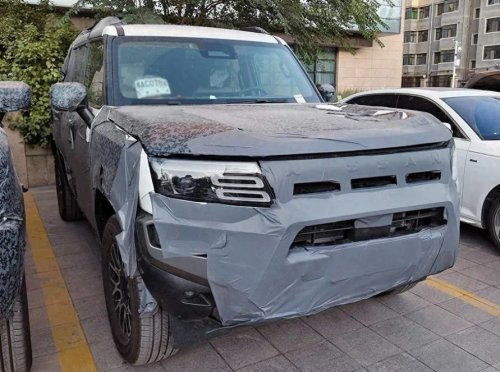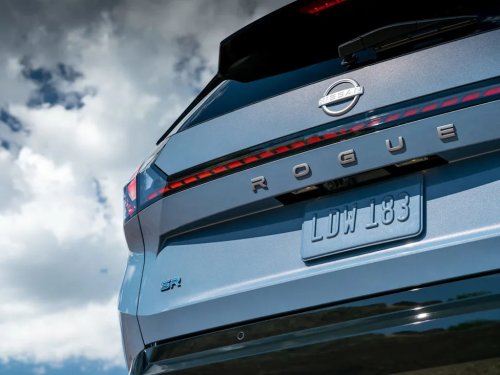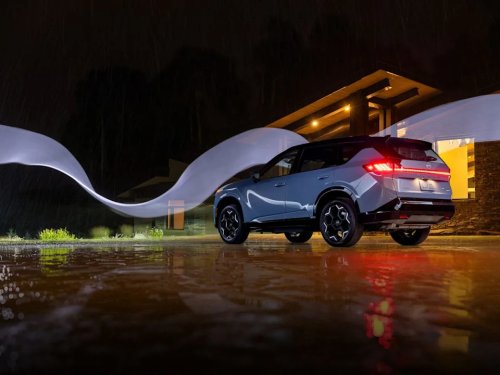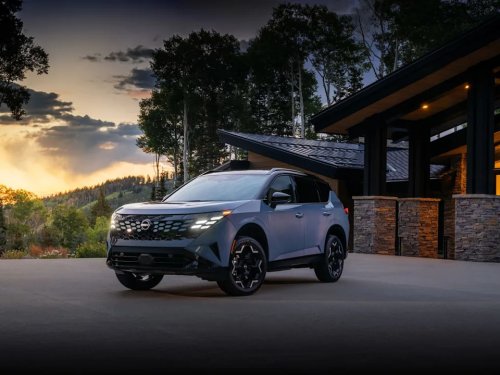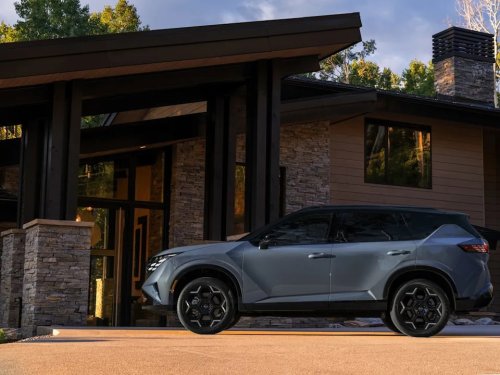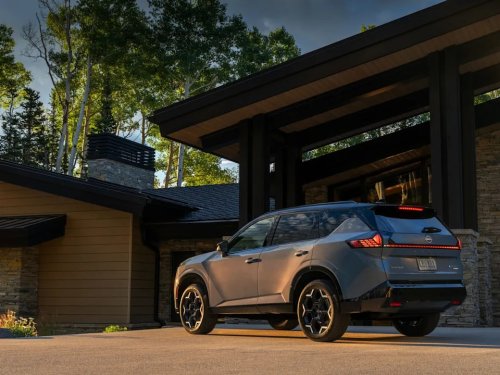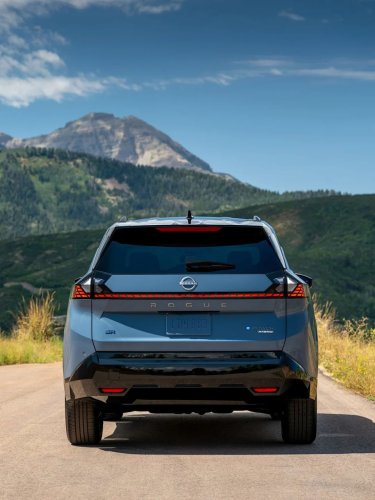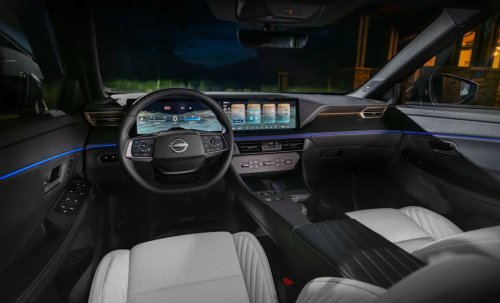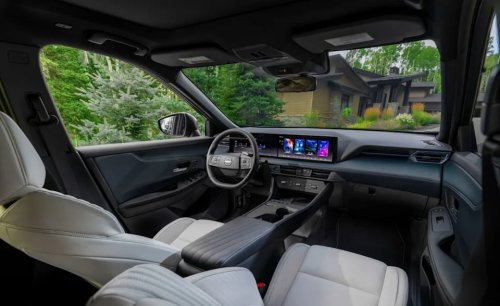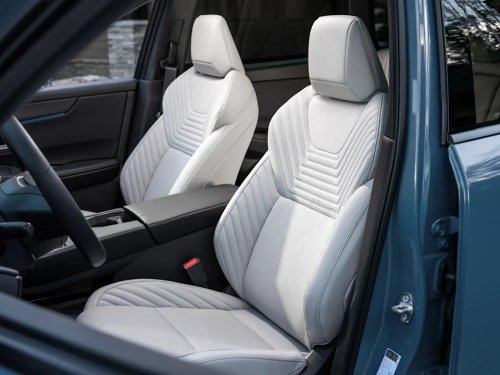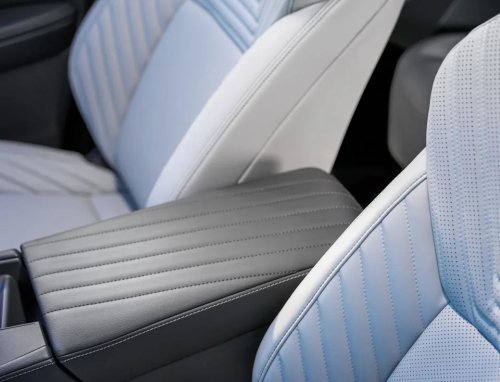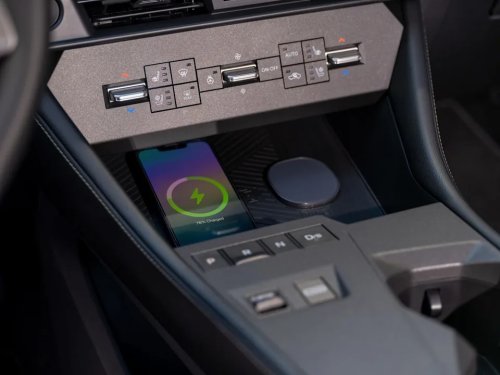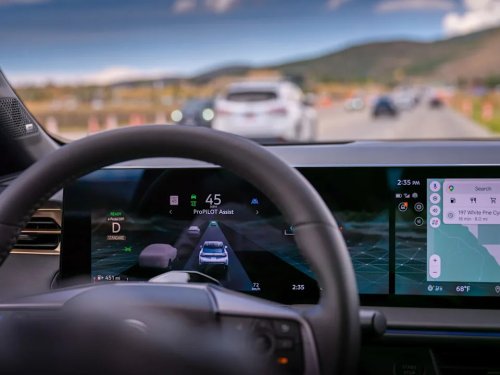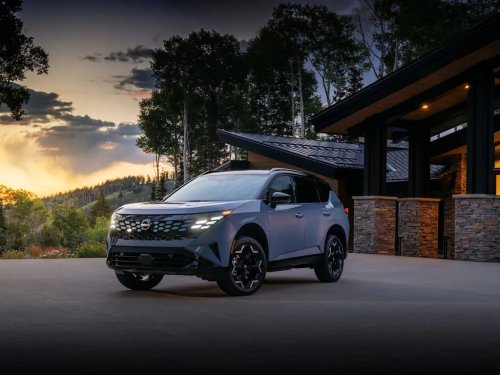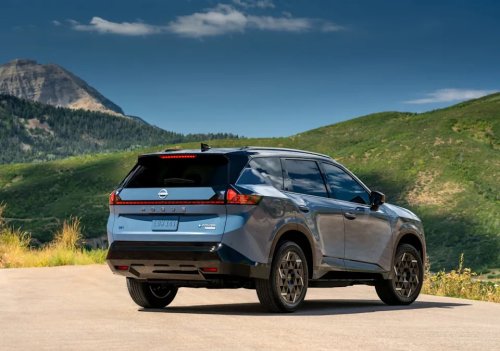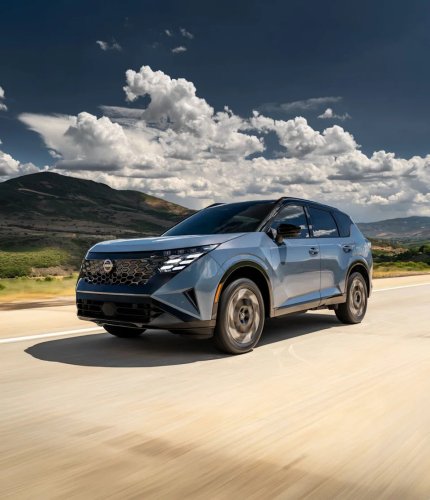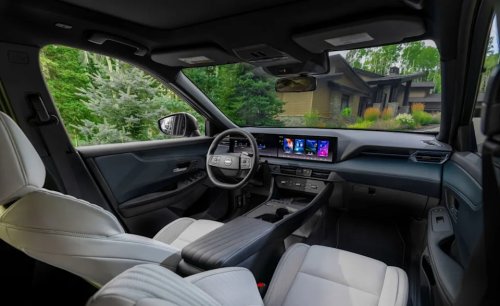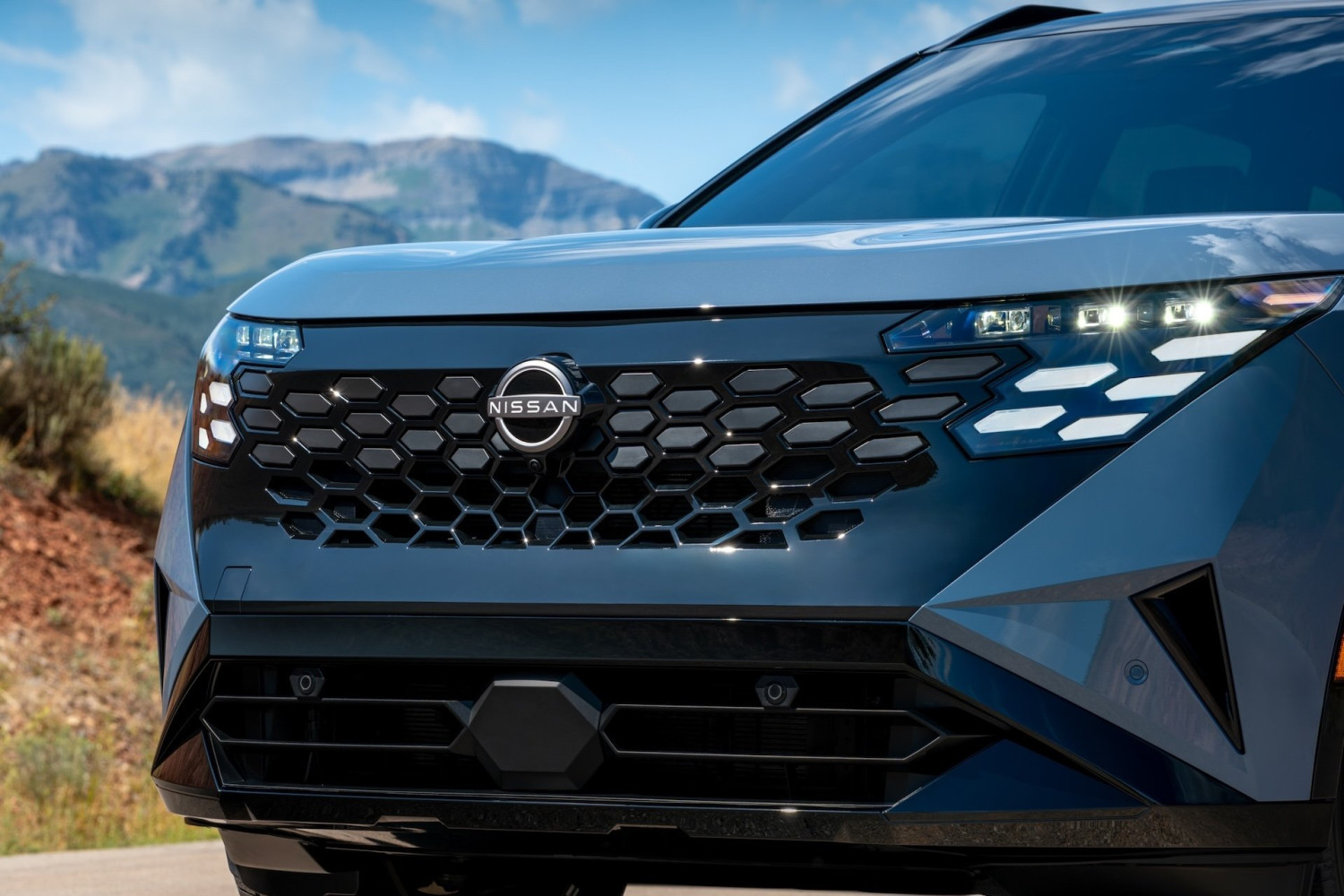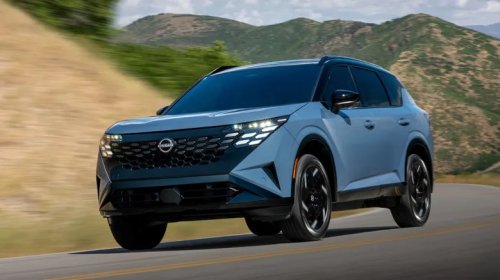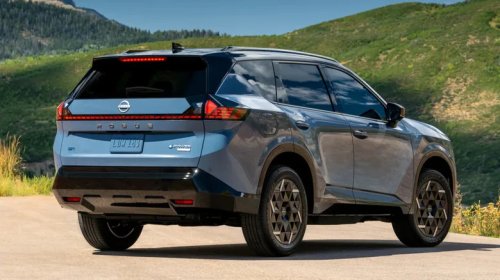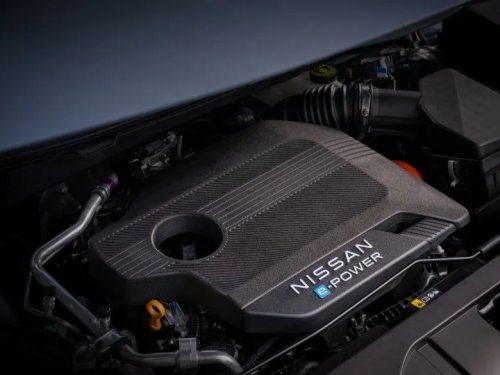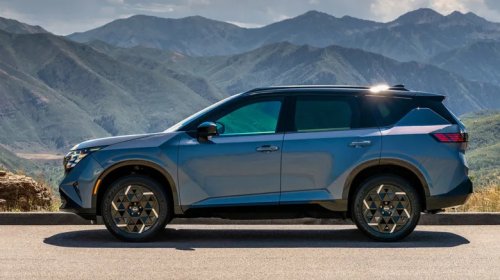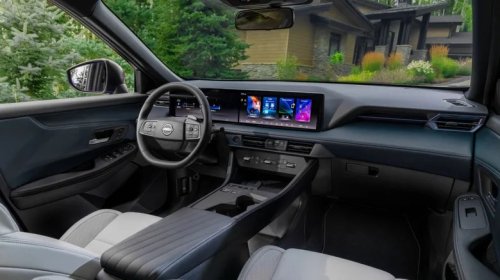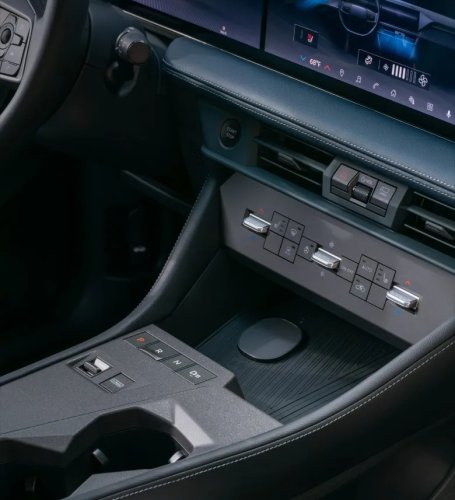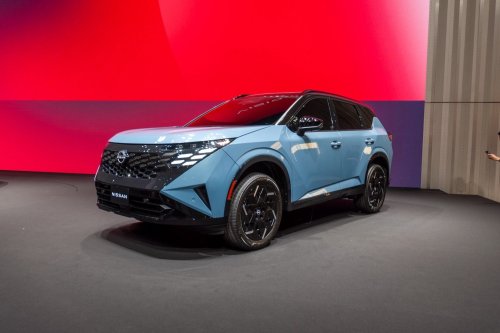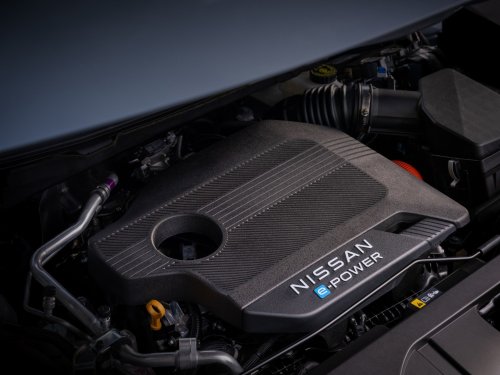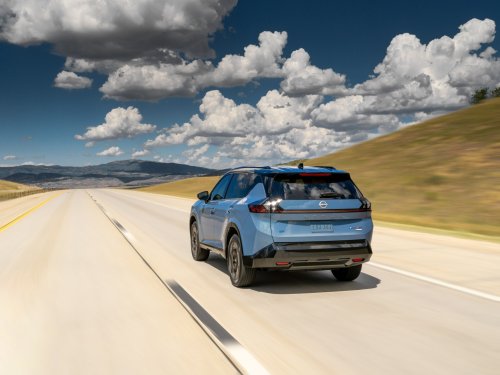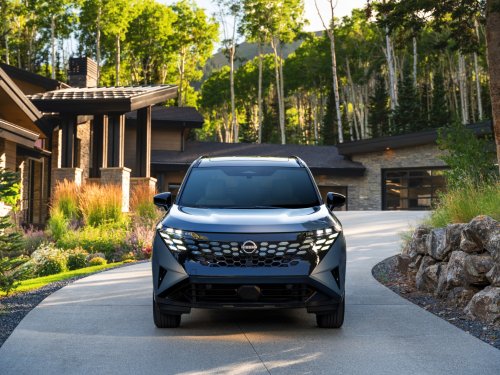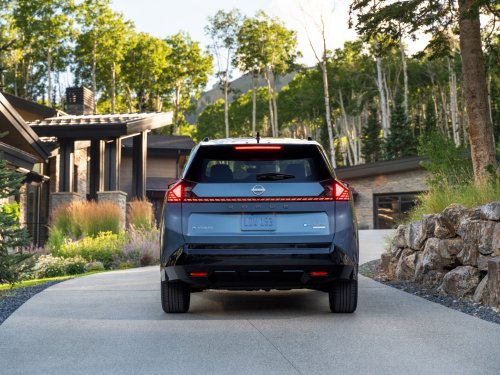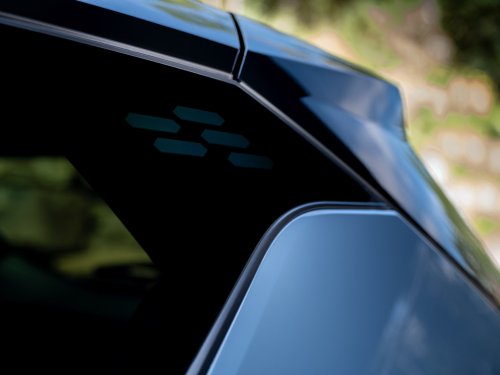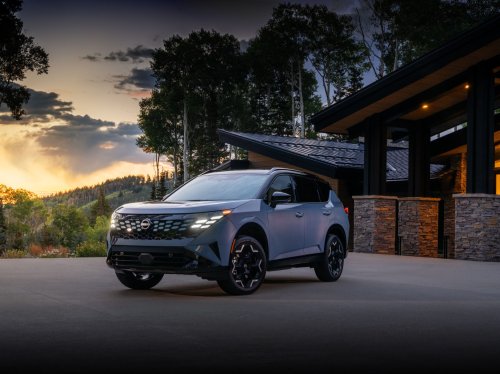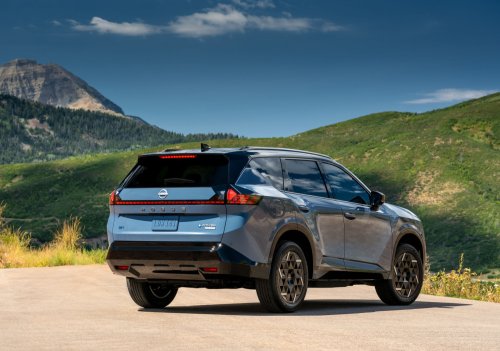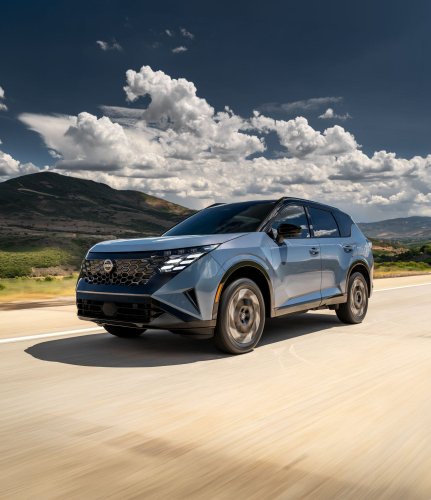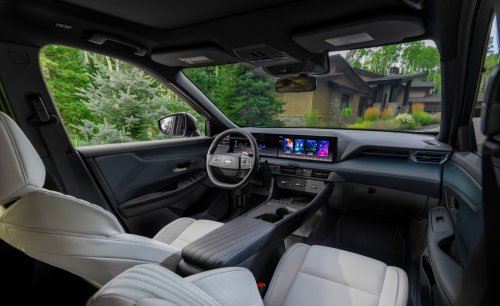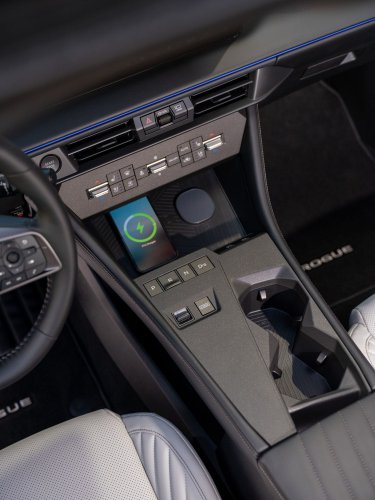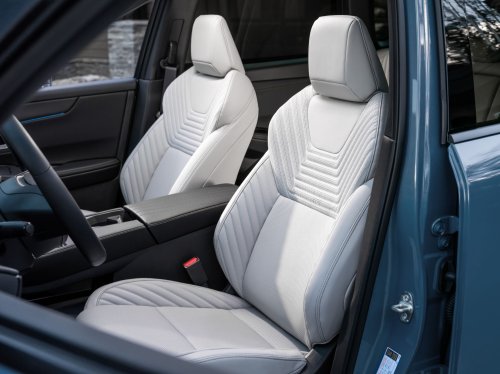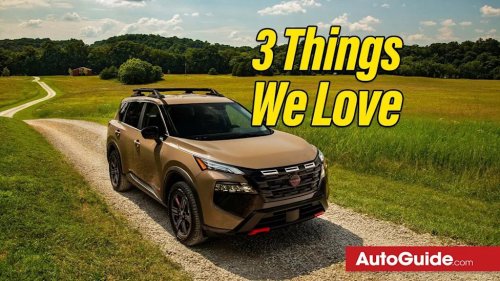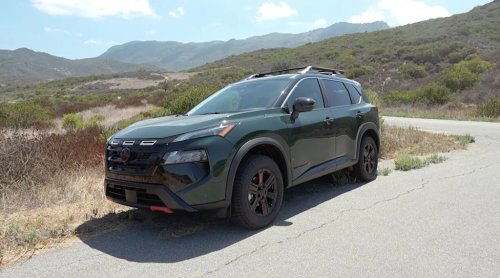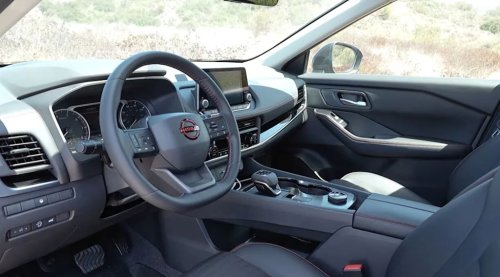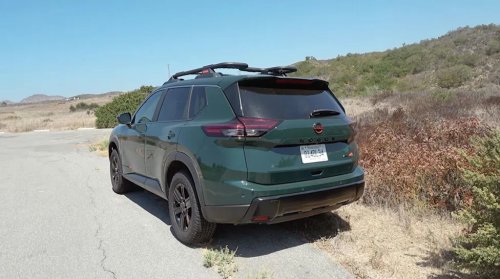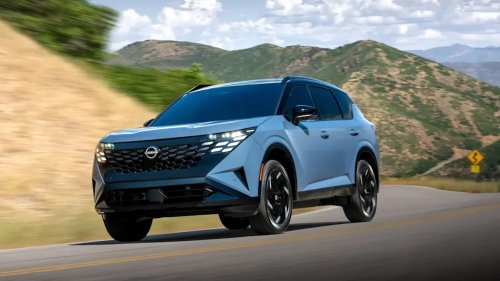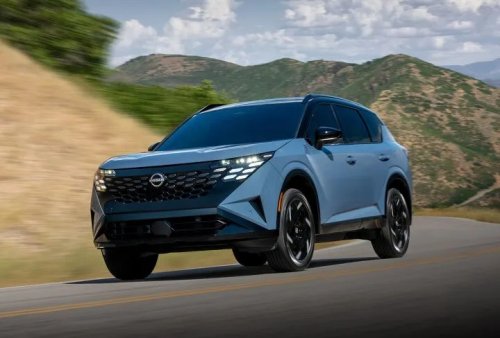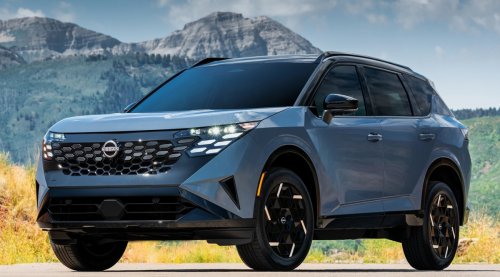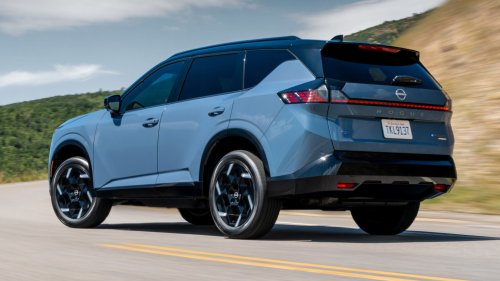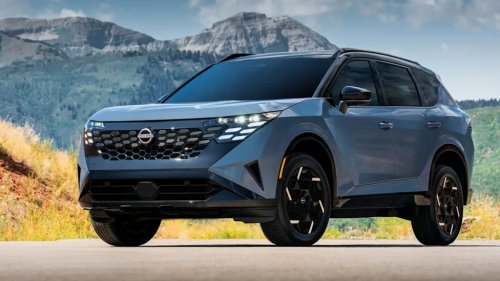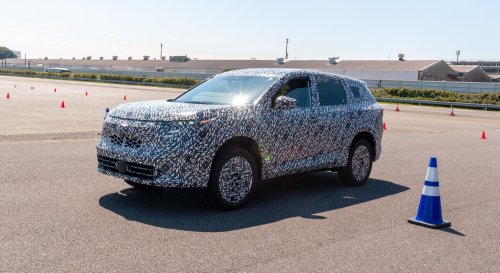
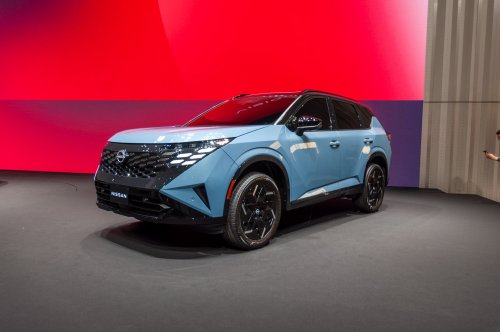
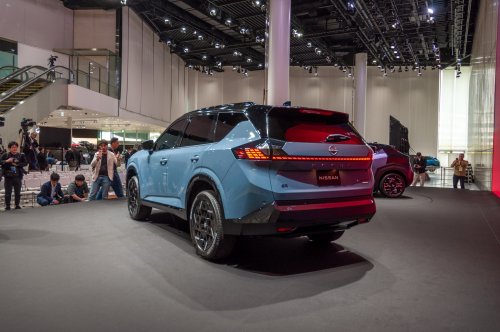
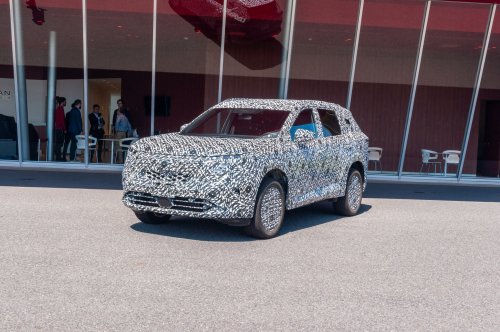
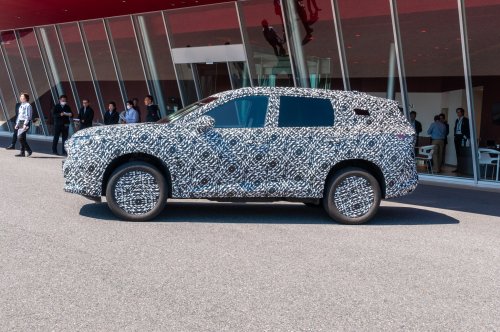
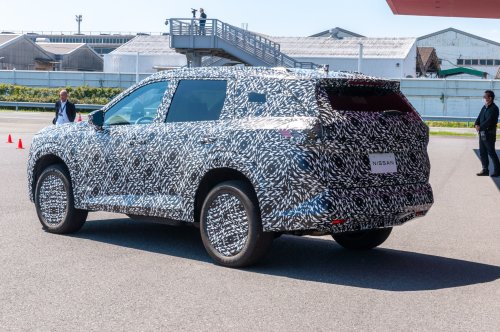
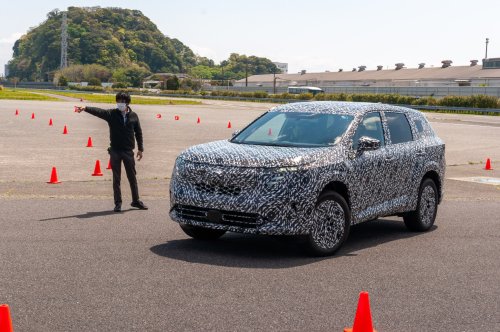
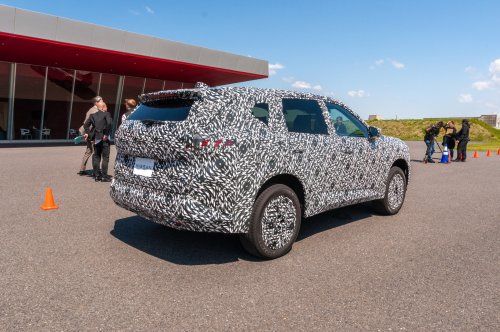



















Joel Feder Nissan’s making moves to redefine itself and its image as quickly as a massive corporation possibly could. A linchpin to this will be the new Nissan Rogue, and it seems to hold a lot of promise. Last week, Nissan unveiled the new 2027 Rogue with a futuristic yet familiar design, a hybrid powertrain unlike anything the competition has done, and the promise of delivering a bridge to the electric future. Nissan brought me to one of its private testing facilities and let me drive a prototype of the new Rogue so I could get a tiny taste of what’s to come. The initial takeaway? This is not the Rogue we all know as the budget rental car, and it could be the start of a new era for the automaker if it can execute on some bold promises. The new Rogue is a good mass-market start, I think. Joel Feder Exterior and Interior The Rogue I drove in Japan was completely covered in camouflage both inside and out, though you can see photos of it at the debut above. We don’t have dimensions yet, but the new Rogue looks a little wider than the current car, though it could be a visual trick thanks to its new grille. The entire design is familiar and evolutionary, yet futuristic and bold, with scattered LED daytime running lights bleeding into the front grille, sharply creased sheet metal that’s punched out at the fenders, a geometric wheel design with a star formation, and a full-width LED taillight. It’s sharp and looks less economy than today’s Rogue, less butch than a RAV4, and more refined than the Tucson. Inside, the car was covered almost completely with black cloth, but I can tell you there’s a two-spoke steering wheel with real buttons, I saw a real volume knob on the center of the dashboard, pushbutton gear selector on the left side of the center console, and was told there’s a single piece of glass covering a 14.3-inch screen housing both the digital gauge cluster and touchscreen infotainment system. The rear seat area that I put my backpack in, which was also hidden, appeared to be a hair larger in terms of space than today’s car, but I wasn’t allowed to sit back there. Legroom looked generous. Joel Feder Driving Impressions The new Rogue will initially be hybrid-only, but not in the way most people know and experience hybrids today. Instead of a gas engine pairing with an electric motor or transmission, like in the Hyundai Tucson hybrid, or a gas engine with a pair of motor generators like in the Toyota RAV4, the Rogue uses a battery pack to power the drive wheels and a 1.5-liter turbocharged three-cylinder engine as a generator to power the battery pack. The gas engine is not connected to the drive wheels. Every Rogue will be a dual-motor configuration with a 150-kW motor up front and a 100-kW motor in the rear. Nissan didn’t share final power figures, but Corporate Executive Product Planner Richard Candler told The Drive the Rogue Hybrid has about 200 horsepower. Fuel economy figures aren’t final or even being discussed yet, but Nissan expects the Rogue Hybrid to be about 20% more efficient than today’s gas-powered model. In theory, that would translate to EPA figures of about 33 mpg city, 42 highway, and 37 combined. There’s no plug and no need (or way) to recharge the system. It’s all automatic and works in the background. Nissan calls the system e-Power, but to ensure consumers aren’t confused into thinking it’s an electric car or that it needs to be charged, it will wear a hybrid badge and be called the Rogue Hybrid e-Power. Nissan let me slide behind the wheel of today’s Rogue with its (completely unrelated, albeit ironically and confusingly the same displacement) 1.5-liter turbocharged three-cylinder engine for two laps before hopping into the new Rogue Hybrid to see the differences. And boy, are these two different cars. The new Rogue Hybrid immediately stands out as feeling more substantial, likely heavier, but with the weight more central and lower than today’s Rogue. It feels more solid. The steering is surprisingly well weighted, but don’t expect meaningful feel or feedback. Both off the line and while in motion, acceleration is smoother, with less surging than today’s cars, which try to balance a turbocharged engine with variable compression and a continuously variable transmission all at once. There’s plenty of power for what this car is and needs to be in the competitive segment, and its powertrain is noticeably smoother and quieter than the main players in this arena. The suspension tuning of the Rogue Hybrid seemed to be a little firmer than today’s car, with fewer bouncing motions, less body roll around corners, and more controlled handling overall. The new brake-by-wire system engages the brakes early in the pedal travel with little progression. While the brakes bite early and quickly, it wasn’t hard to be smooth, unlike other cars, where this is the situation with a lack of progression. The powertrain enabled the team to bring the electric Leaf’s e-pedal braking system to the Rogue Hybrid. This gives the Rogue Hybrid a one-pedal braking option, like an EV, with up to 0.2 Gs of regenerative braking, just like in the Leaf. At higher speeds, say 80 mph, which I would never do when the test course had a limit of 60 mph, there’s less force from the regenerative braking, with more force coming on at lower speeds. This is the same feeling and very similar tuning as what’s in the Leaf. It worked well and can be used completely as a one-pedal solution with full stopping capability. But like the Leaf, due to EPA regulations and certifications, the e-pedal setting to activate one-pedal driving will have to be enabled each and every time the Rogue Hybrid is turned on. A feat that seems unlikely and that many automakers, ranging from Lucid and Rivian to Tesla, Ford, and GM, have managed to work around. Joel Feder Verdict We don’t know pricing for the new Rogue Hybrid, nor do we know real-world fuel economy figures. A lot of this hinges on those two things playing out to be the right mix. But from the smallest impression that included a brief test drive of just two laps, one quick debut, and spending meaningful time with the engineering team, it seems like, at first blush, the new Rogue Hybrid, if marketed correctly, is a more refined and possibly compelling option over the segment leader, the Toyota RAV4. The morphing of the Rogue from a rental car and finance special to a competitive option challenging the class leaders is the transformation if Nissan delivers in the real world. Nissan provided The Drive with travel and accommodations, along with the use of a vehicle for the purpose of writing this review.