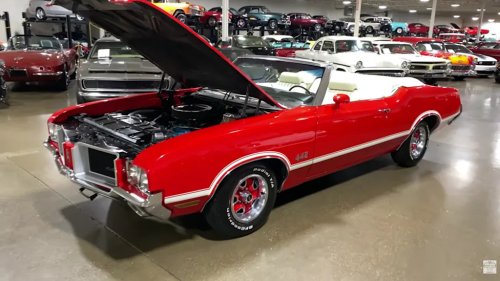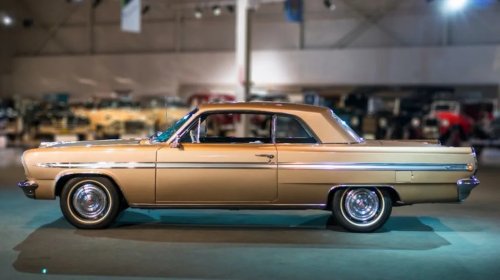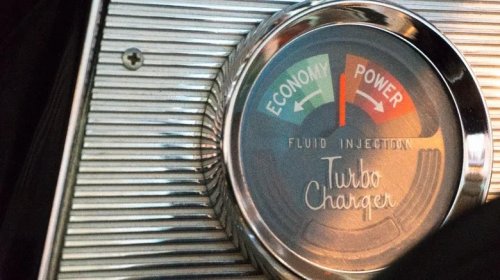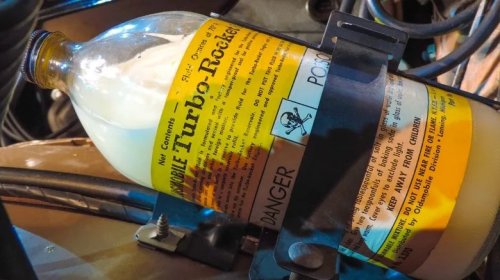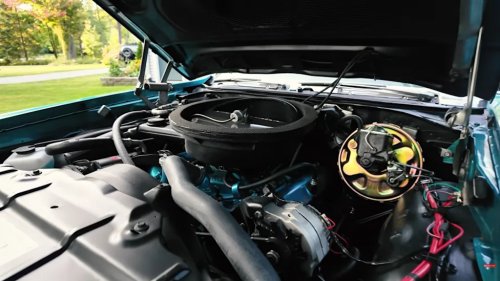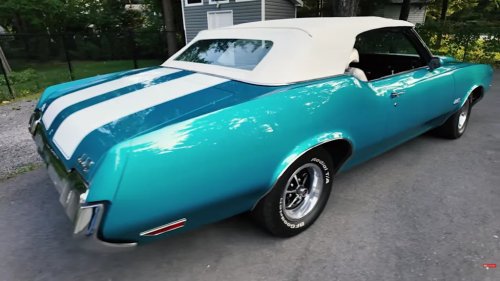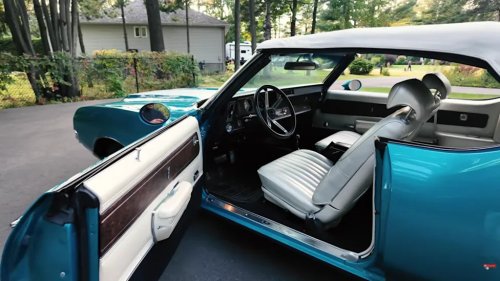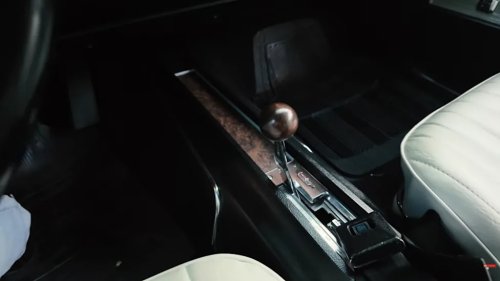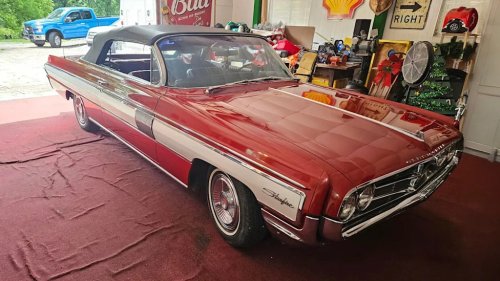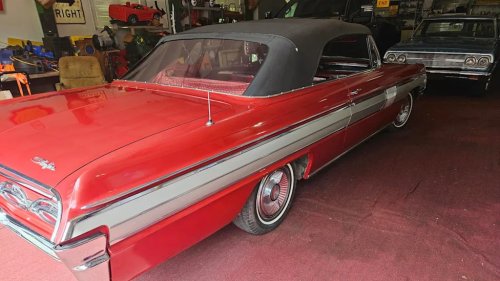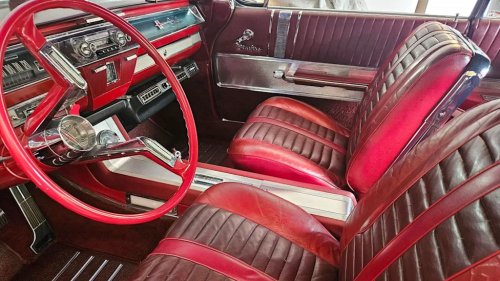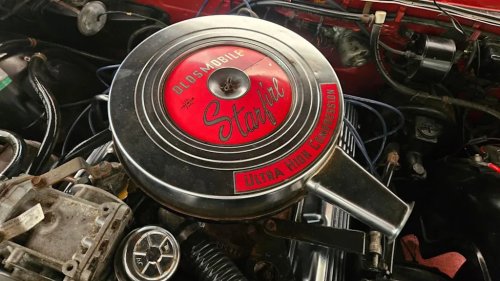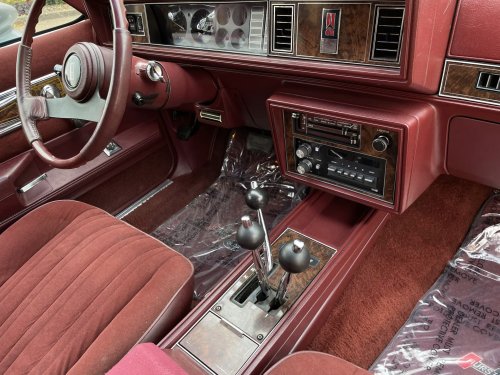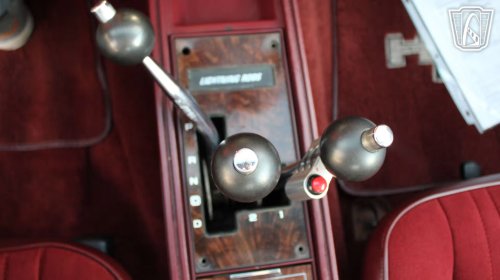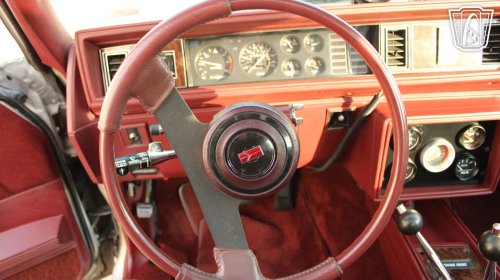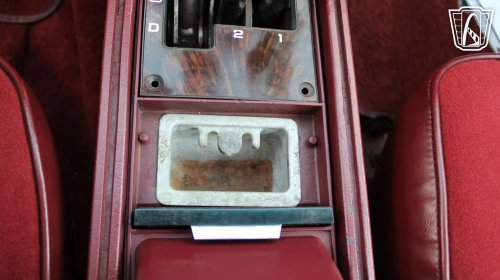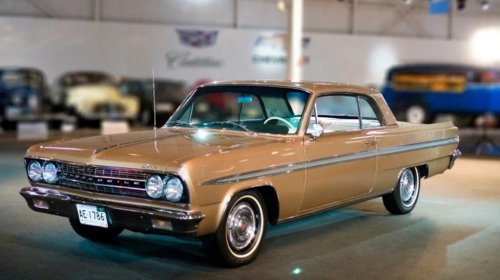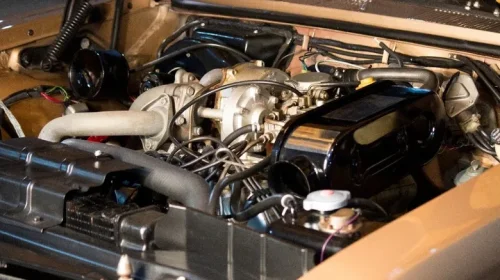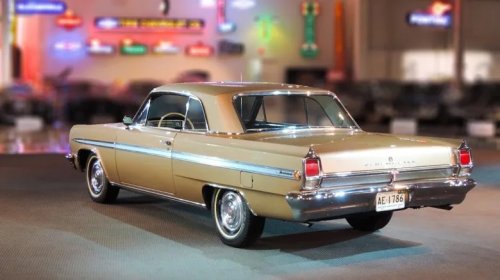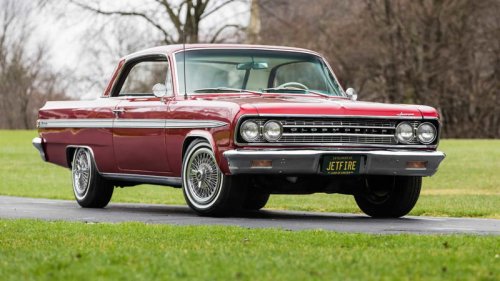
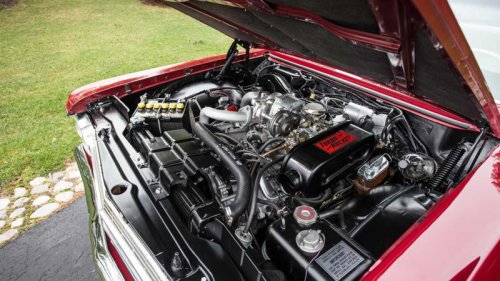
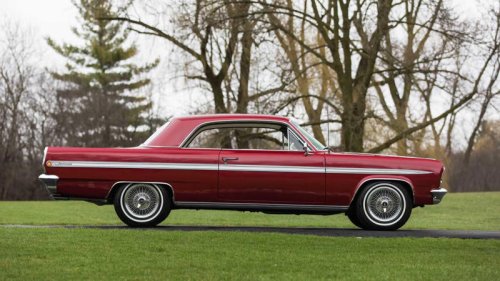
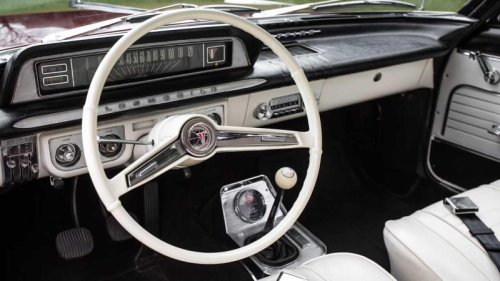
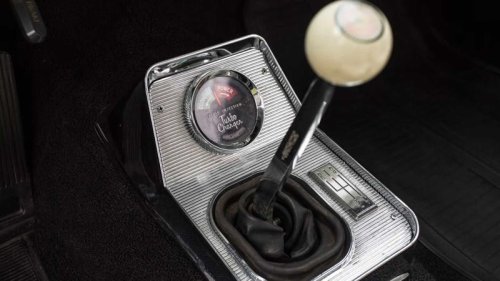
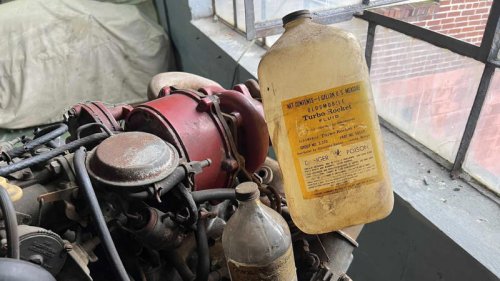
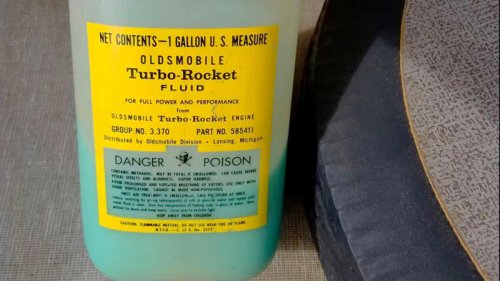
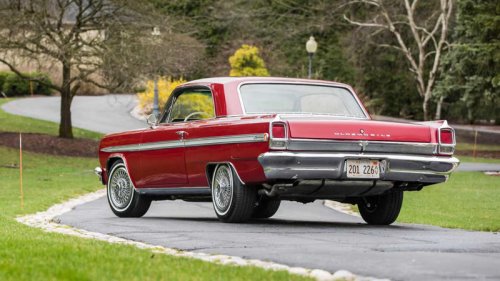
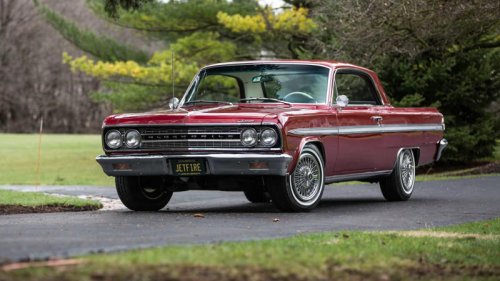
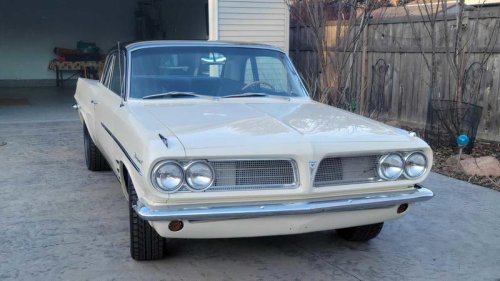
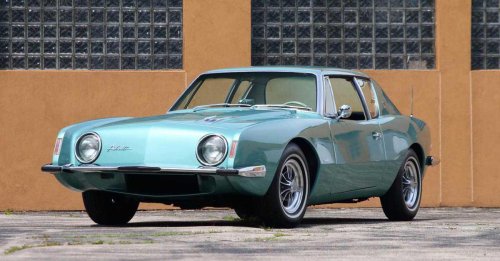
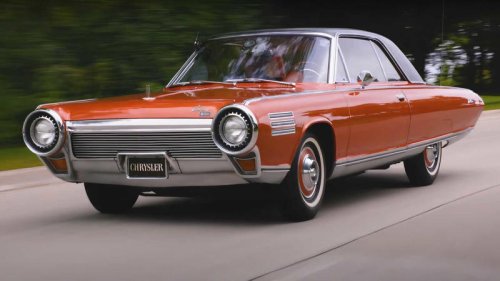
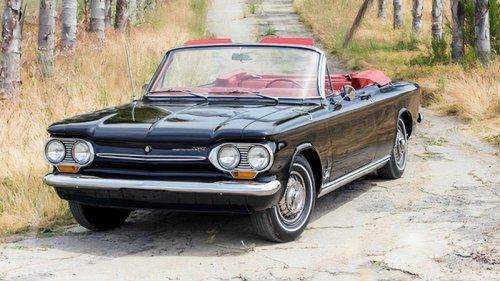



















In the golden era of American cars of the '60s and early '70s, the rule was simple: if you wanted more speed, you needed a bigger engine. But the 1960s were also a time for wild risks. Car brands were willing to experiment with oddball engineering and unproven technology to beat the competition.Amidst this fever dream of innovation, one manufacturer attempted to rewrite the laws of physics. They turned to aviation technology to build a high-tech, turbocharged muscle car that worked unlike anything else on the road. It ignored the standard playbook and tried to prove that smart engineering was better than raw size. The Oldsmobile Jetfire Was The World’s First Turbocharged Production Car Via: Mecum AuctionsIn the '60s, Detroit was obsessed with "more cubes." The standard way to go faster was to build a bigger, heavier engine. Oldsmobile, however, decided to stage a technical coup. At the 1962 New York Auto Show, they stunned the industry by introducing the Oldsmobile Jetfire. It wasn't just a new model; it was a first-to-market milestone. By beating the Chevrolet Corvair Monza Spyder to the showroom floor by just a few weeks, the Jetfire became the world’s first turbocharged production car.The Jetfire's heart was a compact 215 cu-in all-aluminum V8 called the Turbo-Rocket, but the real magic was the Garrett AiResearch T0-3 turbocharger bolted to it. This "Turbo-Rocket" setup allowed the car to hit the legendary "magic number" of 1 horsepower per cubic inch, producing 215 horsepower. Even more impressive was the 300 pound-feet of torque, which gave this small engine the low-end pull of a massive big-block. The High-Compression Turbocharged V8 Engine Via: Mecum AuctionsPerhaps the most rebellious part of the Jetfire was its high compression. Usually, turbos require low compression to prevent the engine from exploding, but Oldsmobile kept a high 10.25:1 ratio. They made this work using a complex fluid injection system called "Turbo Rocket Fluid" that sprayed a cooling mix into the intake. It was aviation-grade engineering brought to the American driveway, proving that smart tech could outrun raw displacement. Jet-Age Aesthetics: Styling And High-Tech Interior Via: Mecum AuctionsOldsmobile also wanted it to look like it belonged on a runway. While it was based on the F-85 Cutlass, the Jetfire received a host of exclusive styling cues that signaled its high-tech nature. The exterior was decked out with unique brushed-aluminum side spears that ran the length of the car, along with specific "Jetfire" badging that let onlookers know this wasn't a standard grocery-getter. The most aggressive touch was the twin-spear hood design, which gave the front end a wide, powerful stance.Via: Mecum Auctions Inside, the "Turbo-Rocket" theme continued, creating a cockpit that felt more like a fighter jet than a 1960s cruiser. The interior featured high-back bucket seats and a deluxe center console that was quite luxurious for a compact car of the era. This wasn't just for comfort; it was about positioning the car as a premium, experimental machine.Via: Mecum Auctions The undisputed star of the interior was the factory-installed boost gauge. Located prominently on the center console, it allowed drivers to monitor vacuum and pressure levels in real-time. In an age where most cars barely had a tachometer, watching a needle sweep into the "Positive" boost zone was a futuristic experience. It was a constant reminder to the driver that they were piloting a piece of cutting-edge technology, far removed from the simple iron-block muscle cars of their neighbors. The Complexity Tax: Why The Rocket Failed to Launch Bring A Trailer Despite its brilliance, the Jetfire was a commercial failure because it asked too much of the average 1960s driver. There were two major issues with the Jetfire's design that forced it to stall at the launch pad. Refilling The Rocket Fluid Via: Mecum Auctions The biggest hurdle was the "Turbo-Rocket Fluid," a 50/50 mix of distilled water and methanol. This fluid was essential to cool the intake; if the tank ran dry, a safety valve would bypass the turbo to prevent the engine from knocking itself to pieces. Suddenly, the high-tech marvel would transform into a sluggish, underpowered commuter. Most owners either forgot to refill the tank or grew tired of the chore, leading to poor performance and mechanical frustration. The Wobbly Suspension Via: Mecum Auctions While building America's first V8 turbo muscle car, Oldsmobile made a critical "suspension oversight." While the turbo added 40 percent more torque, the chassis remained largely the same as the standard F-85. This resulted in a "wobbly" ride that couldn't quite handle the sudden bursts of power, making the car feel unrefined to those used to smooth American cruisers. Reliability issues eventually became so widespread that GM offered a free program in 1965 to remove the turbochargers and replace them with standard four-barrel carburetors. This buyback program is why working Jetfires are so rare today, and fewer than 20 examples are known to still have a functional turbo system. Oldsmobile Jetfire F-85 Turbo Rocket V8 Production In 1962, only 3,765 units were built In 1963, just 5,842 units were manufactured The Oldsmobile Jetfire had a total production run of 9,607 units The 3-Speed Automatic Gearbox is extremely common on the Oldsmobile Jetfire Whereas the 4-Speed Manual Gearbox is rare to find In total, Oldsmobile built 9,607 units: 3,765 in 1962 and 5,842 in 1963. While the 3-speed automatic was common, the 4-speed manual remains a rare find. Today, these cars are highly sought after by collectors who appreciate their "broken rules" history. What An Oldsmobile Jetfire Is Worth Today According to Hagerty, values vary significantly by year and condition. A 1962 model in "Good" condition averages $23,300, while a pristine "Concours" example can reach $47,000. The 1963 models are even more valuable, with "Excellent" condition cars hitting $42,800 and the best-of-the-best Concours models commanding up to $56,000. The Era of Experiments: Other Oddballs Of The Early '60sVia: Mecum AuctionsThe Jetfire was the star of its own drama, but it wasn't the only "strange" car born from this era of intense experimentation. In the early 1960s, Detroit was a playground for engineers willing to try anything once. These manufacturers were eager to move away from traditional layouts, leading to some unique mechanical designs in automotive history. The Pontiac Tempest's Rope Drive Bring A Trailer One of the most famous examples was the 1961–1963 Pontiac Tempest, known for its "Rope Drive." This car featured a "Slant-4" engine connected to a rear transaxle by a 7-foot-long, flexible, curved steel driveshaft. While the design was intended to provide a perfect 50/50 weight distribution and a flat interior floor, the "rope" often caused strange rattling vibrations that unnerved traditional drivers. It remains one of the most daring engineering choices ever made by a mainstream American brand. Fiberglass Bodied Studebaker Avanti R2 Via: Mecum Then there was the 1963 Studebaker Avanti R2, a fiberglass-bodied "Hail Mary" for a brand on the brink of collapse. To prove its performance credentials, Studebaker equipped the Avanti with a Paxton supercharger. This wasn't just for show; the R2-powered Avanti traveled to the Bonneville Salt Flats and shattered 29 world speed records. Despite its record-breaking speed and radical look, it couldn't save the company, making it a rare and tragic icon of the era. The Turbine-Powered Chrysler Jay Leno's Garage / YouTube Perhaps the most extreme experiment was the 1963 Chrysler Turbine Car. This vehicle represented the ultimate technical gamble: a car that literally ran on a jet engine. It was famously multifuel, capable of running on diesel, kerosene, or even tequila. Chrysler produced 50 cars to loan to the public for real-world testing, but the high production costs and emissions concerns ultimately ended the project. Most of these high-whining machines were tragically crushed once the program concluded, but some still exist today. First Rear-Engined Flat Six Car Before Porsche Via: Bonhams Finally, we can’t forget the Jetfire’s direct rival, the 1962 Chevrolet Corvair Monza Spyder. While the Jetfire used a front-mounted, water-cooled V8, the Corvair featured a rear-mounted, air-cooled, flat-six turbo, which came a decade before the Porsche 911 Turbo. This layout was so unconventional for an American car that it eventually sparked the famous Unsafe at Any Speed controversy led by Ralph Nader. Like the Jetfire, the Corvair Monza Spyder proved that the early '60s was a decade defined by high-risk engineering and a total disregard for the status quo.Sources: General Motors, Chrysler, Hagerty, Mecum Auctions