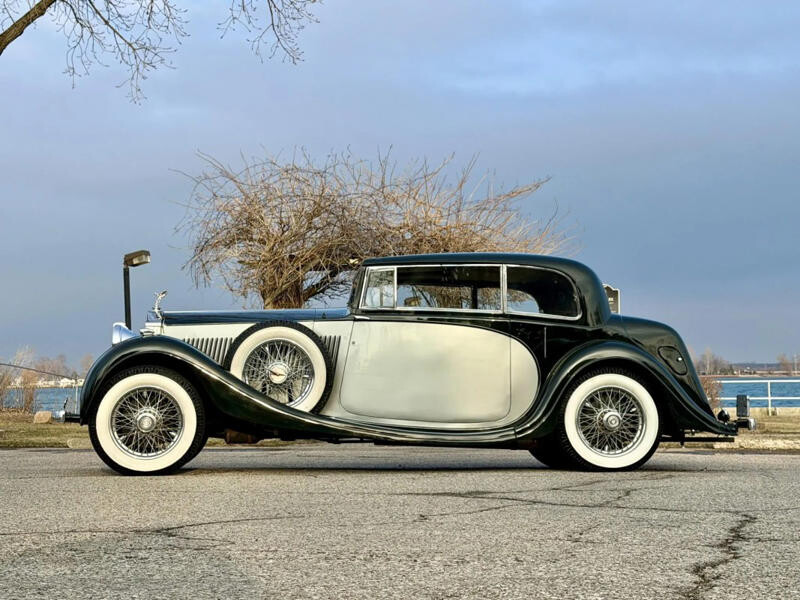
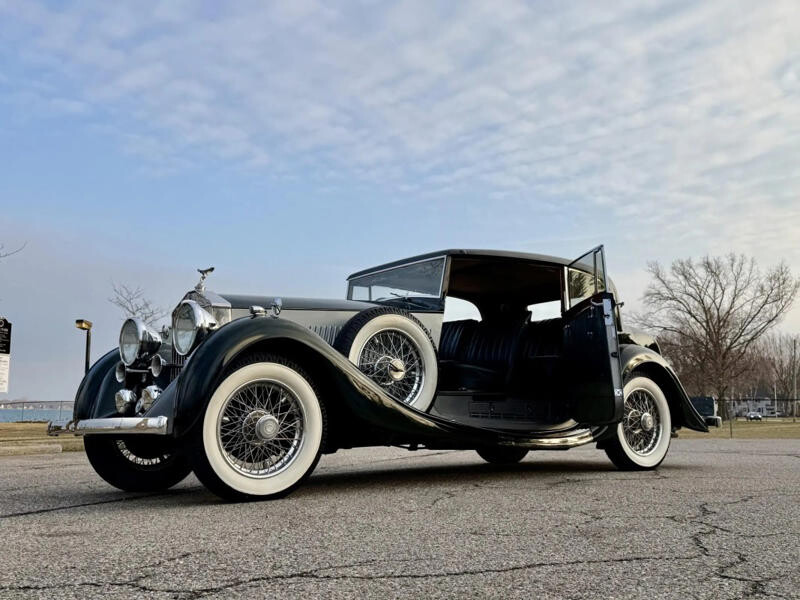
My expert opinion and pricing analysis on the offerA small clarification before we go further: the Michigan title lists this car as a 1936, and BaT's listing follows that, but the car itself is a 1935 Rolls-Royce 20/25, a different model from the 25/30 that replaced it in 1936. The 20/25 ran from 1929 through 1936 and produced 3,827 chassis, making it Rolls-Royce's most popular pre-war model. The 25/30 came after, with a larger 4.3-litre engine and only 1,201 chassis built. The distinction matters to collectors, even if the Michigan DMV didn't lose sleep over it.1936_rolls-royce_2530_img_9943-25663-scaled What doesn't need clarification is the coachbuilder. Freestone & Webb, operating out of Willesden, North London since 1923, produced no more than 15 cars a year across all chassis. They developed the "Top Hat" roofline, popularized the Razor Edge style that defined British coachwork for two decades, and won the London Motor Show Gold Medal for private coachbuilders nine consecutive times. A fixed-head coupe in aluminum, a more sporting and labor-intensive format than a standard saloon, represents the more individualistic side of their catalogue.The 20/25 market is broad. Documented auction results for the model range from under $10,000 for project-grade cars to well into six figures for exceptional concours examples. A correct, coachbuilt fixed-head coupe by a name-brand London coachbuilder in driving condition, with no reserve, typically settles somewhere in the mid-range. The selling dealer added approximately 10 of the 89,000 miles shown; total mileage is unknown, as is common for pre-war cars of this age.Video walk-around on this exact Rolls-Royce for saleThe offerMake: Rolls-RoyceModel: 20/25 HPYear: 1935 (Michigan title: 1936)Body style: Aluminum fixed-head coupe by Freestone & Webb Ltd., LondonEngine: 3,669cc (3.7L) inline-six, cast-iron block, aluminum crankcaseEngine stamping: D8UValvetrain: OHV, detachable cylinder headCarburetor: Dual-jet sidedraftTransmission: 4-speed manualDrive type: Rear-wheel driveSteering: Right-hand driveBrakes: Servo-assisted mechanically actuated drumsSuspension: Semi-elliptical leaf springs; hydraulic shock absorbers (steering wheel-adjustable)Exterior color: Dark green with silver coves and pinstripingInterior color: Green upholstery, tan headliner, burl wood dashOdometer: 89,000 miles shown (~10 added by dealer; total unknown)Wheels/Tires: Bright 19" wire wheels; 6.50-19" Universal whitewall bias-plyNotable equipment: Sunroof, Bosch driving lamps, trafficators, rear-hinged doors, dual side-mount spares, central lubrication system, Spirit of Ecstasy mascot, Lucas R100 headlights, tool kitPlaques: Freestone and Webb Ltd. / Jack Barclay Ltd. in door jambsAuction type: No reserve, Bring a TrailerCurrent bid: USD $30,000 Time remaining: 6 days Title: Clean Michigan titleOrigin: British, pre-war, right-hand driveInterested in this 1935 Rolls-Royce? View the listing here.1936_rolls-royce_2530_img_9679-25475-scaled Need new tires? Save up to 30% at Tire RackFind the perfect tires for your exact vehicle and driving style. Click here to shop all top-tier brands, including Michelin, Bridgestone, and more, directly at Tire Rack.1935 Rolls-Royce listing detailsThe Rolls-Royce 20/25 debuted at the 1929 Olympia Motor Show as the successor to the Twenty, the smaller and more accessible complement to the flagship Phantom range. Over its seven-year production run, 3,827 chassis left the factory. Rolls-Royce supplied the rolling chassis; the coachbuilder supplied everything the owner actually saw, sat in, and showed off. That arrangement put a premium on who you chose to build your body, and buyers who chose Freestone & Webb were making a statement.Founded in 1923 by V.E. Freestone and A.J. Webb at Unity Works, Brentfield Road, Willesden, the firm built bespoke coachwork on Rolls-Royce, Bentley, Mercedes-Benz, Packard, and Alfa Romeo chassis, though Rolls-Royce work was their calling card. At peak output, fifteen cars left the workshop annually. They earned the London Motor Show Gold Medal for private coachbuilders nine years running. The fixed-head coupe was not their most commonly ordered format, as saloons with room for a partition and a chauffeur sold better, which makes surviving FHC examples proportionally scarcer within an already low-volume output.This car's aluminum body is finished in dark green with silver coves and pinstriping, a combination that suits the era and the format without trying to be flashy about it. The Spirit of Ecstasy sits on the radiator, Rolls-Royce-branded Lucas R100 headlamps flank it, Bosch driving lamps sit below, and fender-mounted mirrors handle the rear view. Rear-hinged doors, trafficators, running boards, and dual fender-mounted spare wheels complete the pre-war visual vocabulary. There are areas of imperfection in the finish, noted honestly in the gallery.1936_rolls-royce_2530_img_9896-25588-scaled The cabin is trimmed in green upholstery with color-keyed carpets, a tan headliner, pull-down sun visors, and burl wood across the dashboard, door caps, and window frames. The four-spoke steering wheel fronts Rolls-Royce-branded instrumentation: an 80-mph speedometer, a clock, and gauges for amperage, water temperature, fuel, and oil pressure. A locking glovebox sits in the dash. Freestone and Webb Ltd. and Jack Barclay Ltd. plaques are mounted in the door jambs, the latter being the prominent London Rolls-Royce retailer that likely handled the original sale. Areas of dash cracking and upholstery wear are visible and should be reviewed in the gallery before bidding.Under the bonnet, the 3,669cc inline-six features a cast-iron block, aluminum crankcase, OHV cylinder head, and a dual-jet sidedraft carburetor, a thoroughly conventional setup for the period, designed around smoothness and long-term reliability rather than outright performance. Power goes to the rear wheels through a four-speed manual. Suspension is semi-elliptical leaf springs with hydraulic shock absorbers adjustable for firmness via a manette on the steering wheel hub, a useful period feature that gives the driver at least the illusion of control over how the car rides. The chassis also carries a central lubrication system, which keeps maintenance requirements more manageable than you might expect on a 90-year-old car.The selling dealer acquired the car in 2025 and added approximately 10 miles. Total mileage is unknown, as the odometer reads five digits, 89k, and one assumes it has been around at least once.1935 Rolls-Royce quick takePre-war Rolls-Royces are not the same animal as anything built after the war. They are hand-assembled collaborations between a chassis maker and a coachbuilder, and the coachbuilder's name carries as much weight as the radiator badge. Freestone & Webb was the real thing: a workshop that produced fifteen cars a year, won nine consecutive Gold Medals, and built bodies that defined the visual language of British pre-war luxury. This fixed-head coupe, in dark green aluminum with a sunroof, adjustable ride, and a cabin still wearing its original plaques, is the sort of car that rewards the buyer who already knows what they're looking for. No reserve means it ends where the bidding stops. For a serious collector of pre-war British coachwork, that's an invitation worth taking seriously. Disclaimer: This post is for informational purposes only. We are not a dealership or broker. All vehicle specifications, pricing, and availability are subject to change without notice. We are not responsible for typographical errors, omissions, or the accuracy of the provided information. Please verify all details directly with the seller.