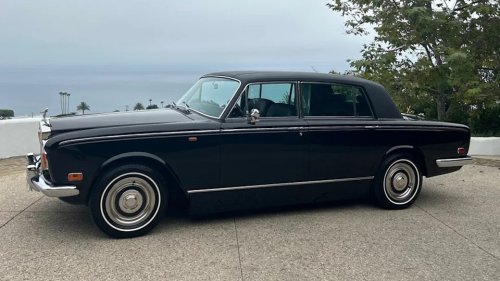
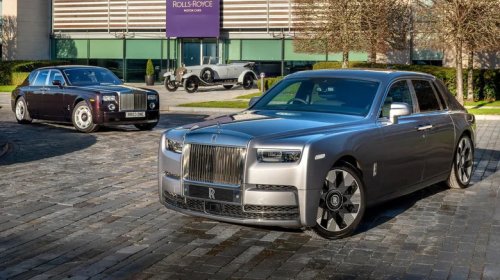
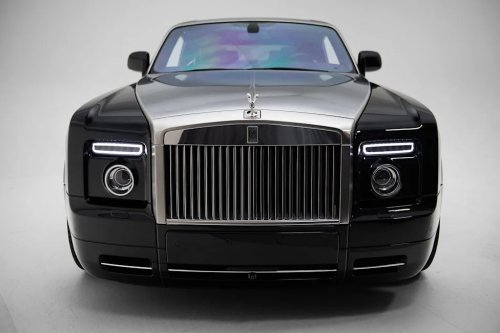
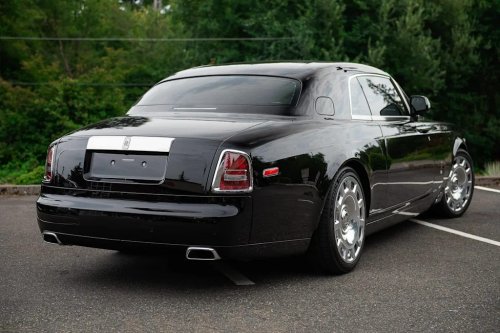
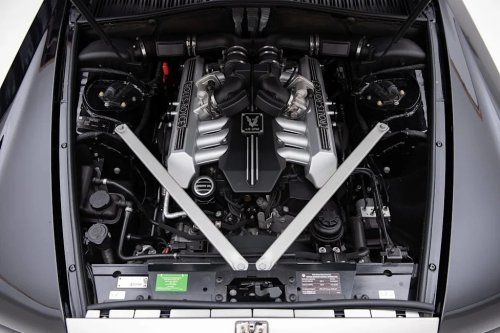
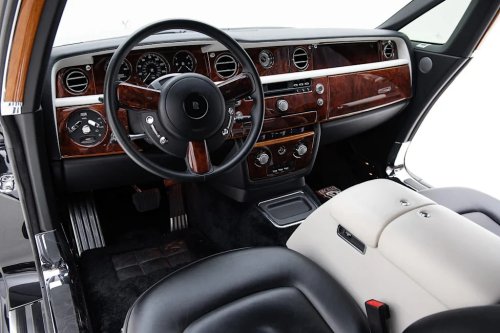
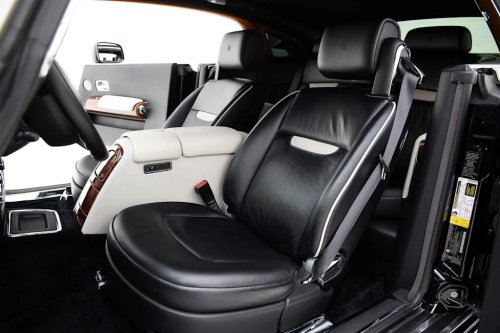
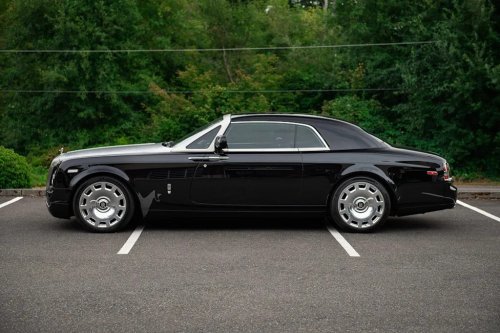
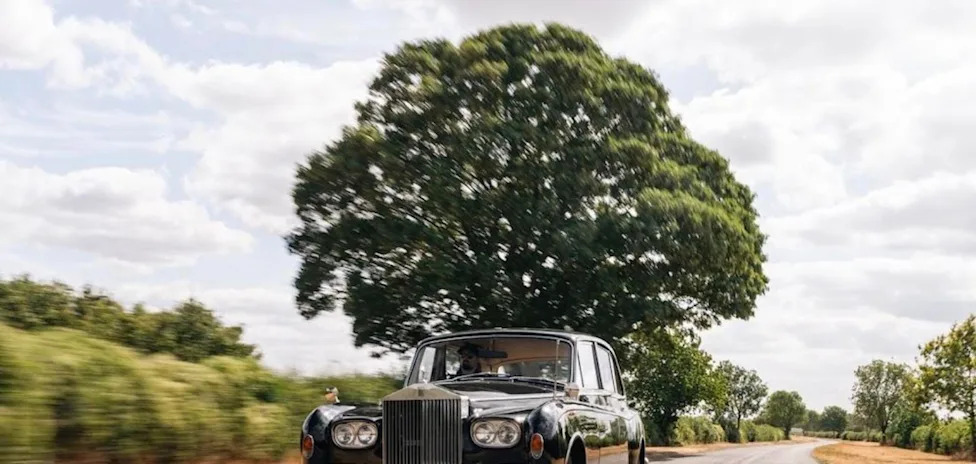
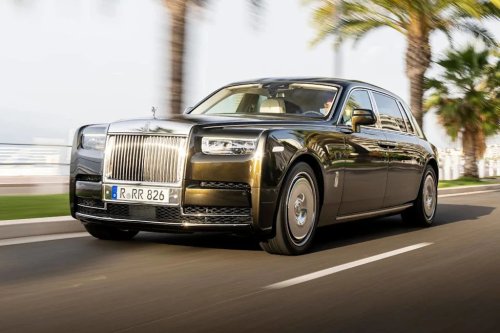
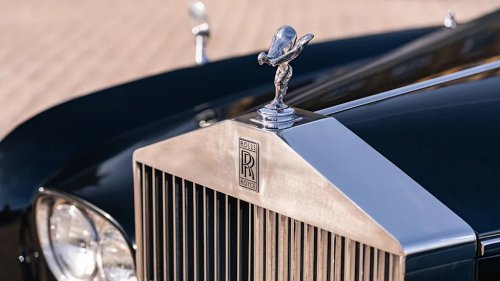
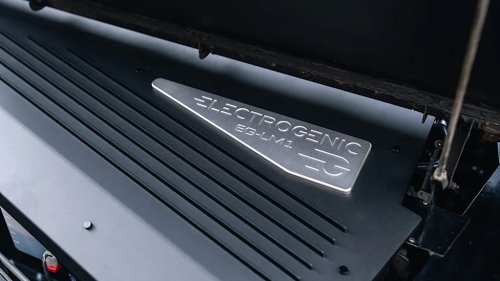
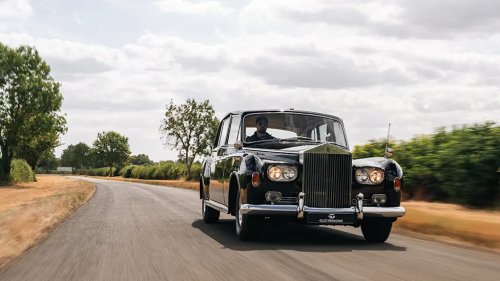
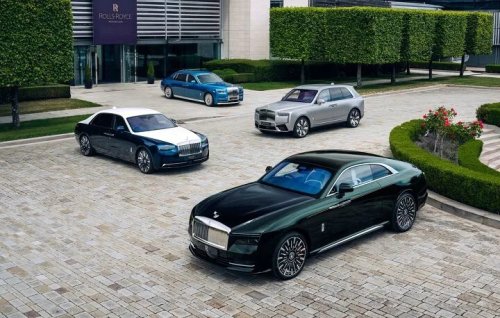
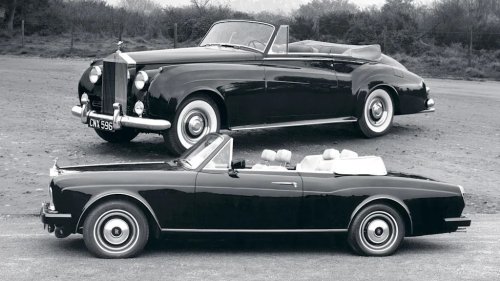
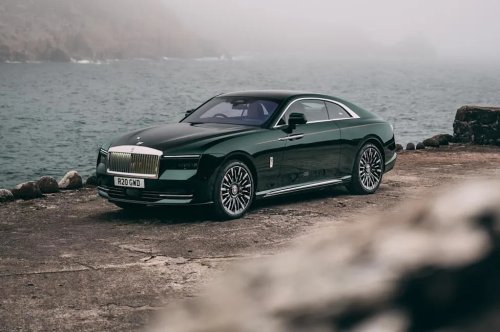
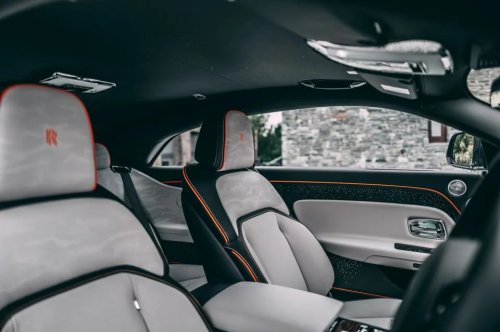
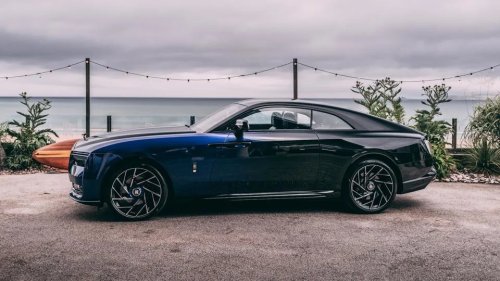
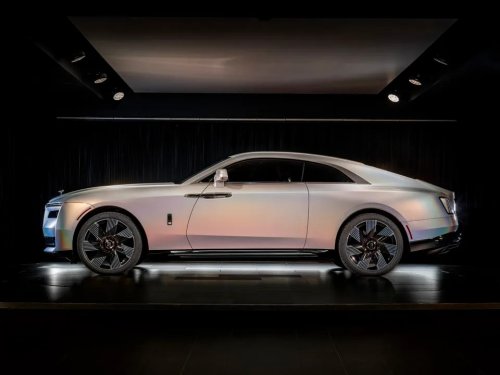
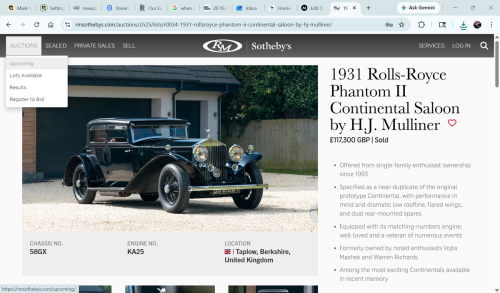
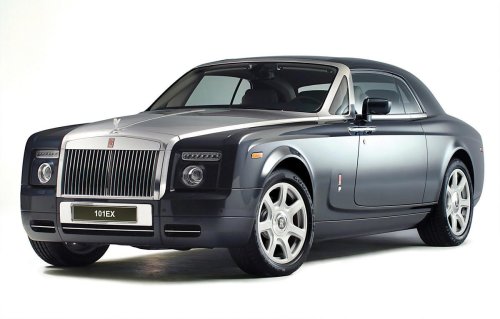
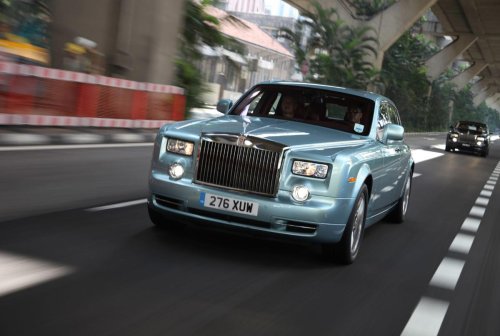
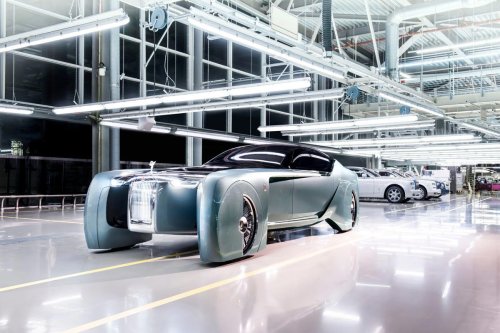
Other automakers create mere “concept cars,” but Rolls-Royce has always used the term, “Experimental Cars,” or EX. Here are three of the most recent examples of the EX moniker from Rolls-Royce, the 103EX, 102EX, and the 101EX. All three are celebrating anniversaries this year, and all three are from the so-called Goodwood Era, the time after BMW bought the storied marque and established a new world headquarters and manufacturing center on the grounds of the Duke of Richmond's famous estate.What’s the difference?“Unlike a concept car, each EX model is a finished, drivable vehicle,” Rolls says. “As well as newly developed materials, such as carbon fiber, each uses production materials such as leather and wood, rather than clay and foam or other prototypical materials.”There’s a history behind the name. The three modern Goodwood-era EX cars you see here are part of a through-line going back to 1EX, which Henry Royce built in 1919, Rolls says. When Royce found his new Phantom II, launched in 1929, too large and heavy for his own use, his designers produced a lightweight Experimental version, the 26EX, on an adapted short chassis. It proved ideal for high-speed, long-distance touring on Europe’s smooth, straight roads, and entered production as the now rare and highly prized Phantom II Continental.A 1931 Rolls-Royce Phantom II Continental Saloon by H.J. Mulliner inspired by the 26EX.And so it went until the three EXs you see here. While there have been fully driveable concept cars (we’ve driven quite a few over the years), we get what Rolls is saying. Read on to see the three Goodwood-Era concept... er, Experimental Cars.101EX, Unveiled 20 Years AgoThe 101EX debuted at Geneva in 2006. It’s a full four-seat coupé with twin coach doors, built on the same aluminum spaceframe as Phantom VII, but 10 inches shorter. Combined with carbon-fiber bodywork and powered by a 6.75-liter V12, it was designed to have a more performance- and driver-focused character than its larger sibling. It also has a lower roofline and shallower glass area; the Pantheon grille is discreetly reclined and extended back across a brushed aluminum hood and windscreen surround.Rolls-Royce 101EX.Perhaps most influently, it was the first Roller to get the Starlight Headliner comprising hundreds of fiber-optic ‘stars.’ The feature is now a fundamental element of almost every Rolls-Royce.102EX, Unveiled 15 Years Ago102EX was the first battery-electric vehicle (BEV) ever built by Rolls-Royce. Also known as the Phantom Experimental Electric (EE), it was created as a one-off working test bed for alternative drivetrain technologies, and thus represented the first tangible step on the road that would lead to the advent of the Spectre more than a decade later.Rolls-Royce 102EX.One of the biggest engineering challenges was converting everything that ran directly off the engine in a standard motor car, from power steering and ABS to heating and audio, to battery power. A 71 kWh lithium-ion battery pack did the trick. Developed in 2011, this massive battery system was composed of 96 individual NMC cells, delivering 850 amps at 338 volts, and was designed to fit into the space previously occupied by the V12 engine and gearbox. 102EX had what was then the largest capacity battery fitted to a motor car anywhere in the world; its wireless induction charging system was also a world first.103EX, UNVEILED 10 YEARS AGORolls-Royce commissioned this special ‘Vision’ motor car 10 years ago, in 2016, aimed at a Rolls for the year 2035. It was also called the “Vision Next 100.” Rolls said it would “define the future of luxury.”103EX is the wildest of them all.The interior consists of a two-seat silk couch and a big entertainment screen. Since the car will be fully autonomous, there’s no need for a steering wheel and instruments.The futuristic electric car is not small, carrying the same dimensions as Phantom Extended at well over 19 feet long. An onboard digital assistant named Eleanor was “conceived to enable fully autonomous driving while also facilitating a seamless digital interface between motor car and owner.” That feature would appear later in today’s Whispers app, which provides clients with a curated digital connection to Rolls-Royce Motor Cars. The fully autonomous function might take a little longer.
















 +7 others