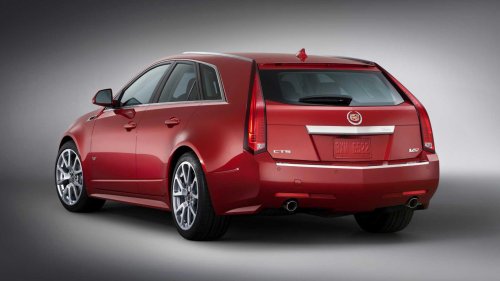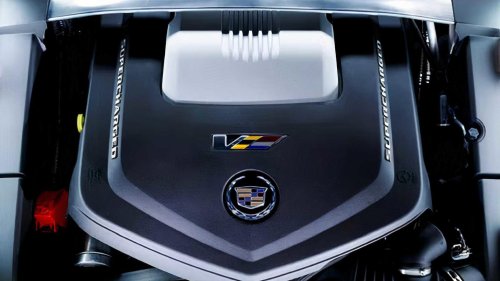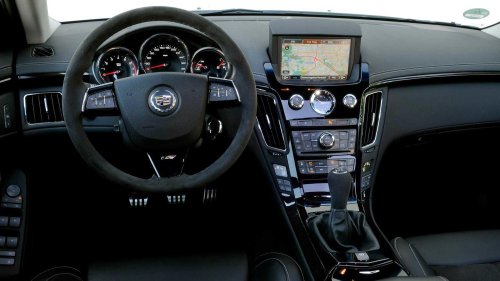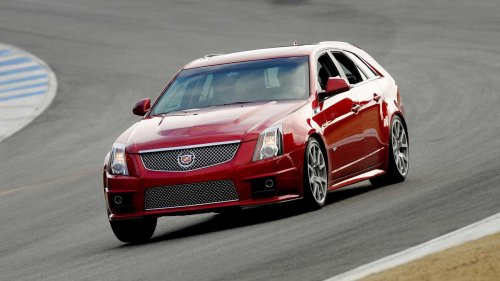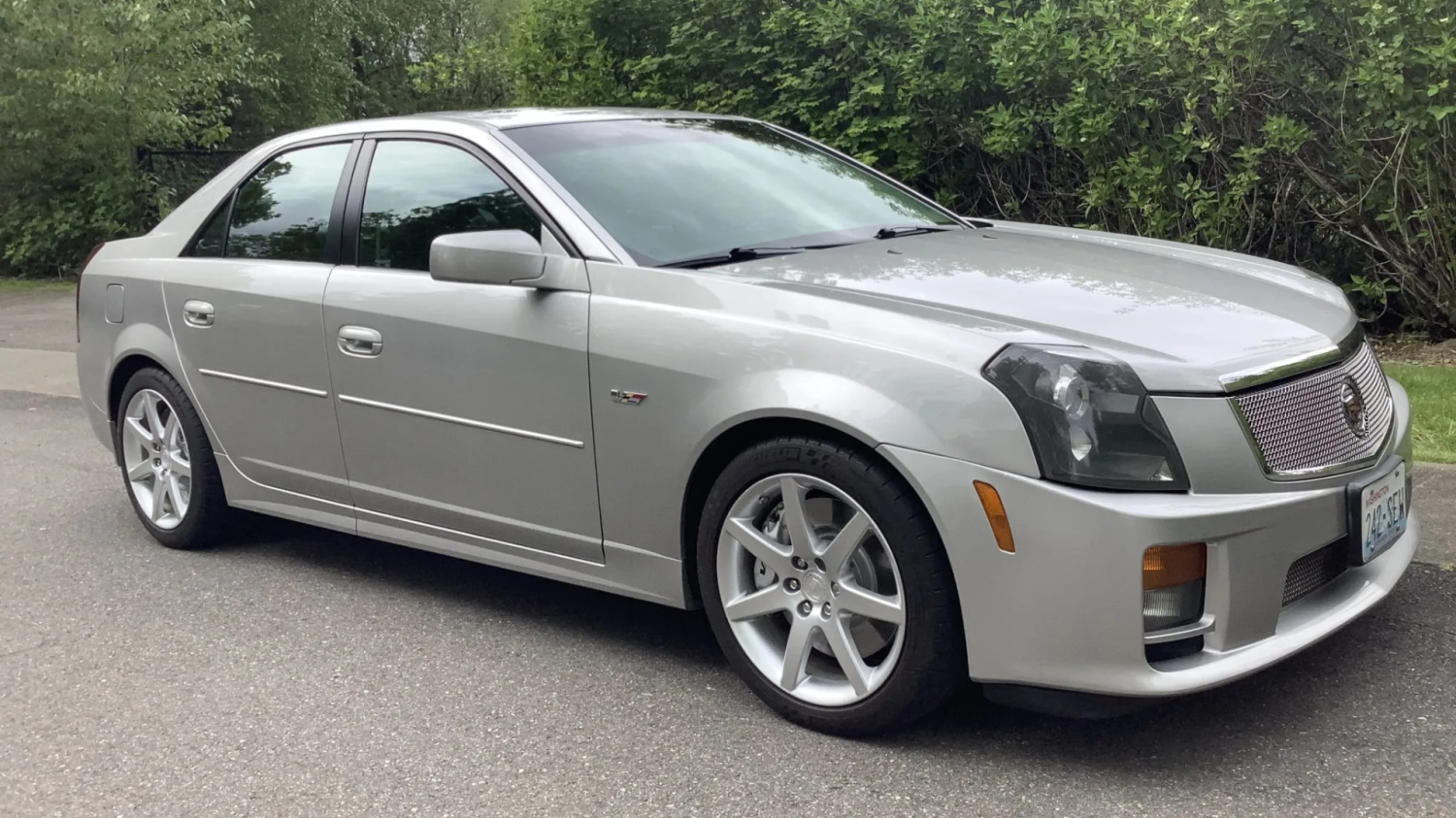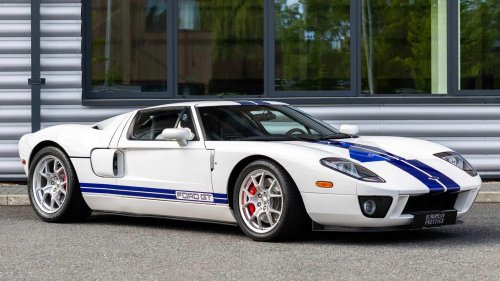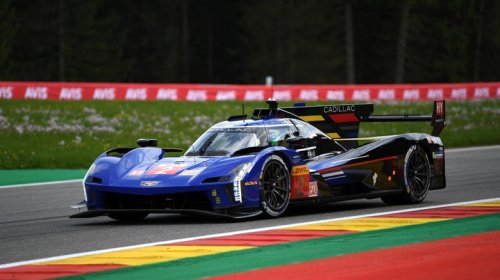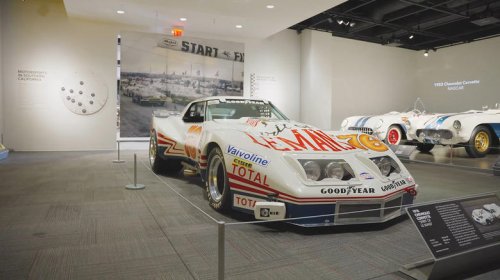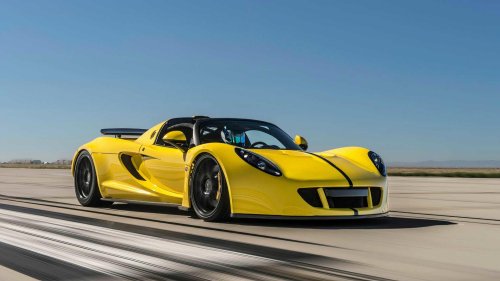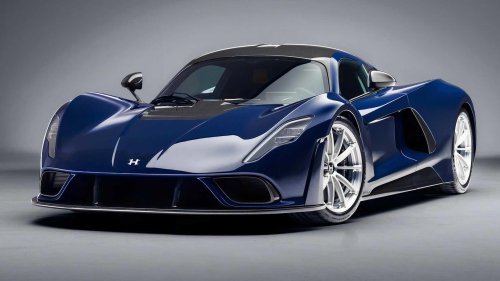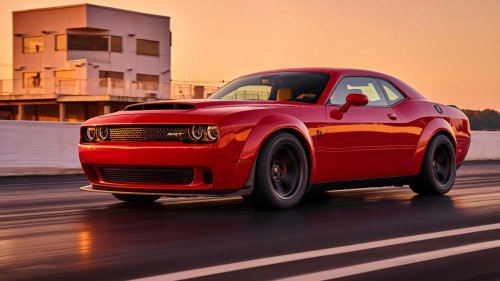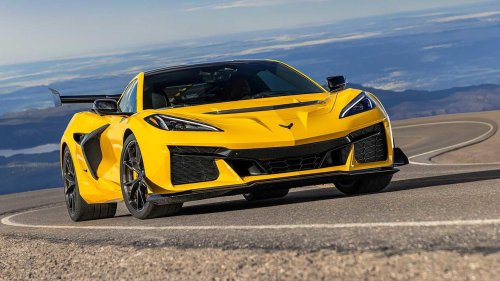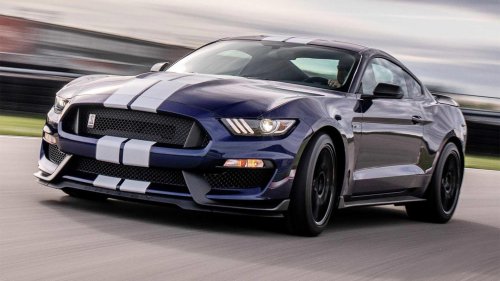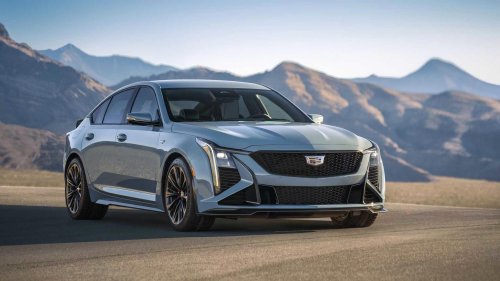

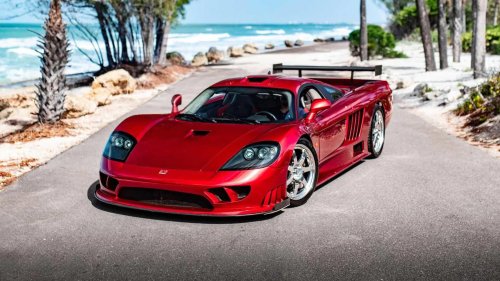




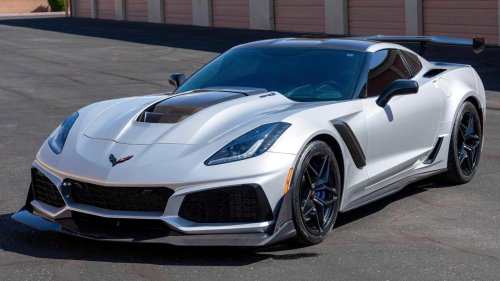
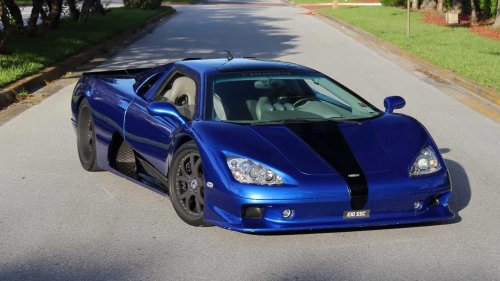
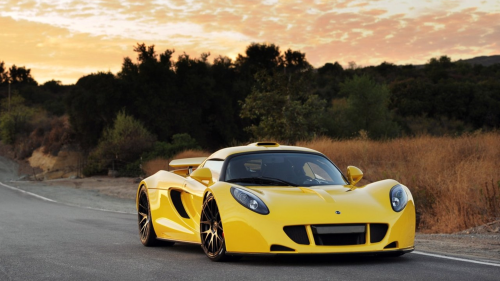



















Everyone loves to make fun of American cars for excelling at just one thing – straight-line speed. And as enthusiasts, this is, of course, just one part to a complicated puzzle of what makes a car fun. But unlike the Europeans and Japanese, Americans can sacrifice driving dynamics, handling, and revolutionary technology for the ability to do things their ownway.The United States has always leaned into the compulsion of booming engine notes, big displacements, and most importantly, rowing your own gears. So today, we celebrate that compulsion. The following ten cars not only exemplify everything that American performance cars want to be, but also top the list of the quickest manual-transmission cars to ever come from the U.S.A.To accurately compile this list, HotCars only sources engine specifications and outputs from their respective manufacturers. Additionally, any performance figures (0-60/top speed) have been sourced from reputable outlets such as Car and Driver, MotorTrend, or the manufacturers themselves, if applicable. 2025 Cadillac CT5-V Blackwing 0-60 MPH: 3.6 Seconds Cadillac Specs The Cadillac CT5-V Blackwing is the successor to the beloved CTS-V nameplate. But even though the older models are incredibly desirable, the current CT5-V Blackwing holds even more significance. It maintains the honorable distinction of being the only American sedan that you can purchase with a manual transmission in 2025. It also happens to be one of the most special cars in the U.S. market.Under the hood is a diabolical 688-horsepower, supercharged 6.2-liter V8 that rockets the boujee Cadillac to 60 mph in just 3.6 seconds. That's just half the story, though. It uses the GM Alpha 2 platform (shared with the CT4-V) - a chassis that's been refined over more than 10 years and has its roots in some of GM's most exquisite performance cars of all time. The six-speed stick is just the cherry on top of what is possibly America's best driver's car. 2014 Ford Mustang Shelby GT500 0-60 MPH: 3.5 Seconds via Bring A Trailer Specs The Ford Mustang Shelby GT500 is a certified piece of automotive history. When the fifth-generation Mustang (S197) got a facelift in 2010, Shelby decided to update the top-trim GT500 offering with a Ford Racing 5.8-liter supercharged V8 with 662 horsepower and 631 pound-feet of torque. Most notably, this generation of GT500 was the last car that the legendary Carroll Shelby ever signed off on.One of his dying wishes was to see a Mustang hit 200 mph, and in 2013, Ford claimed that the updated GT500 did so, just barely touching 200 mph or above at the Nardo test track in Italy. That number has been disputed in the past, but even if it never did, the GT500 is one of America's mightiest machines, with the ability to hit 60 mph in just 3.5 seconds. Saleen S7 Twin Turbo 0-60 MPH: 3.4 Seconds Bring a Trailer Specs The Saleen S7 is a sweetheart of American car enthusiast die-hards because it proved exactly what the U.S. was capable of back in the early 2000s. The company itself was founded in the early 1980s and further developed the racing chops of cars like the Fox Body Mustang and other well-known American nameplates. But Saleen's maiden voyage into the spotlight was with the S7 supercar in 2000.Though it took inspiration from the legendary McLaren F1, the S7 was always quintessentially American in its philosophy. And several years later, the S7 got even more radical. They took the Ford Windsor small-block that was already in the S7 and gave it two Garrett turbochargers, raising the 550-horsepower output to a ridiculous 750 ponies. That was enough to get the carbon-bodied S7 from 0-60 mph in 3.4 seconds, and to an estimated top speed of 248 mph. Chevrolet Corvette ZR1 (C6) 0-60 MPH: 3.4 Seconds Via: Bring a Trailer Specs The Corvette ZR1 started evolving much further back in history than most think. In fact, the first ZR1 was introduced in 1970 as a performance package rather than its own trim level. It showed up again for the iconic C4 Corvette in the 1990s and then took another hiatus for the C5 generation, and finally landed back in production for the C6. And by then, it had grown into a devil all its own.The 6.2-liter supercharged V8 made 638 horsepower and 604 pound-feet of torque, and was able to go from 0-60 mph in a lightning-fast 3.4 seconds. That's quicker than the Lamborghini Murciélago LP640 of the same era, and as far as top speed goes, it about ties the Merci at 212 mph. Rossion Q1 0-60 MPH: 3.4 Seconds Bring a Trailer Specs Speaking of the C6 ZR1, here's a car that's just as quick that you've never heard of – the Rossion Q1. Rossion is an American automotive company founded in 2007 by Ian Grunes and Dean Rosen. They set out to gain the rights to the Noble M400, a low-production British supercar, and eventually develop it into their own project.Somehow, they succeeded, and upon taking ownership of the blueprints, created an all-American supercar badged as a "Rossion" – a mashup of the two guys' names. It used a Ford-sourced, 3.0-liter V6 with two turbochargers and made a solid 450 horsepower and 400 pound-feet of torque. As we mentioned before, this was just as quick as the C6 ZR1, clocking the 0-60 mph run in just 3.4 seconds. 2017 Dodge Viper ACR 0-60 MPH: 3.3 Seconds Via: Mecum Auctions Specs It's hard to believe that the Dodge Viper has been gone for eight years now. It was the only American competitor to the Corvette, and now Mopar fans are out of luck when defending their pride against the golden child of GM. But while it's unclear whether the Viper will come back or not, one cannot deny the impact of the final Dodge Viper ACR.The ACR was the top-trim, most powerful and most attack-ready Viper to date. It featured a titanic, 8.4-liter V10 pushing out 645 horsepower and 600 LB-FT of torque. The SRT team wanted to make sure that it would be sticky on the track - so much so that its aero package produces over 1700 pounds of downforce at max load. It did it all, going from 0-60 in 3.3 seconds, and claiming multiple production car lap records at tracks like Laguna Seca and the Nürburgring Nordschleife (manual, rear-wheel-drive record). 2005 Ford GT 0-60 MPH: 3.3 Seconds Ford Specs Talk about highly anticipated... The 2005 Ford GT was technically the first generation of this model, however, it was the undoubted spiritual successor to the Ford GT40 of the 1960s - the car that took Ford from zero to hero in the 24 Hours of Le Mans to beat Ferrari all the way back in 1966. Funnily enough, the idea for a GT40 successor actually began very early on. There were at least seven different concept cars set to succeed the famed racecar from the 70s through the 90s, but it wasn't until the eighth try, when a designer sketched a drawing on a private jet cocktail napkin in front of several drunk Ford executives who decided that they finally wanted to put it into production.The result was the 2005 Ford GT we all know and love today. It housed a 5.4-liter V8 with an Eaton supercharger strapped on top and made 550 horsepower and 500 pound-feet of torque. The motor and blower combo was enough to scoot the GT from 0-60 in just 3.3 seconds, and get to a verified top speed of 205 mph. Chevy Corvette ZR1 (C7) 0-60 MPH: 3.0 Seconds Cars and Bids Specs General Motors was on a different level in the 2010s. The CTS-V was one of the best-driving cars on the road, the Camaro ZL1 1LE was beating supercars around the track, and the C7 Corvette ZR1 was defying rear-wheel-drive physics with its alien-level 3.0-second 0-60 mph time. This Corvette was the peak paradigm of what American muscle cars had wanted to achieve since the 1960s, and one could argue that this ZR1 topped it all off.Under the hood was a 6.2-liter supercharged V8 pumping out over 750 horsepower and 715 pound-feet of torque, all going through an optional seven-speed manual transmission. Its aero package, while not quite as impressive as the Viper we mentioned earlier, was capable of 950 pounds of downforce at top speed, which contributed to its multiple lap records at locations like Virginia International Raceway and more. SSC Ultimate Aero TT 0-60 MPH: 2.78 Seconds Mecum Specs The C7 ZR1 may have been impressive for a mass-production car, but the SSC Ultimate Aero TT is where things get real serious. Whereas there were nearly 200,000 C7 Corvettes of all trims produced in its cycle, there were only 24 individual examples of the Aero TT made from 2007 to 2009, and it went further than any American company had before.In between the axles was a GM LS6 V8 bored out to 6.3 liters and coupled with two turbochargers that were designed and built in-house at SSC. After all was said and done, the Aero TT made 1,180 horsepower and nearly 1,000 pound-feet of torque - a figure that would compete with most modern hypercars today, and was robust enough to achieve a blisteringly fast 0-60 time of 2.78 seconds. After a 255 mph top-speed run in Washington State, it was crowned the fastest production car of all time in 2007. And of course, you had to shift it yourself. Hennessey Venom GT 0-60 MPH: 2.4 Seconds Hennessey Specs Even disregarding the manual transmission aspect of our rubric, this car tops our list as one of the most impressive American cars, period. The Hennessey Venom GT made history, going 270 mph at the Kennedy Space Center in 2014 - the fastest recorded speed for any production car. It was all thanks to a motherload of power and torque (1,244 HP, 1,155 LB-FT) coming from a 7.0-liter twin-turbo V8 and driven through a six-speed manual transmission. It also claimed the title for fastest open-top production car when the Spyder variant went 265.6 mph.All of this is even more astounding when you find out the Venom is based on the Lotus Elise and Exige platforms. The lightweight nature of the chassis was key in keeping that power-to-weight ratio high enough to reach 60 mph in 2.4 seconds, as well as the record-breaking 270 mph top speed. Of course, it was heavily modified, but the bones of this car were far more integral to the record than most would think. Regardless, the Venom GT remains a pillar of American engineering, as more than ten years later, it is still the fastest American production car of all time.