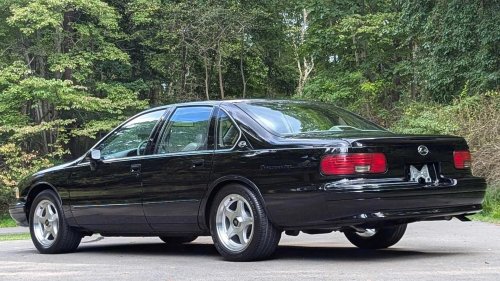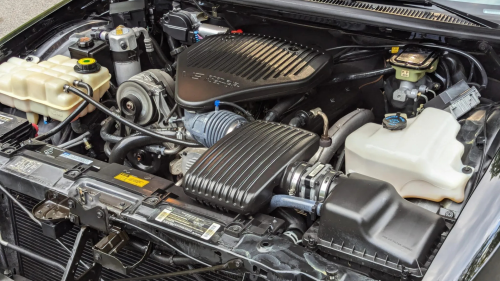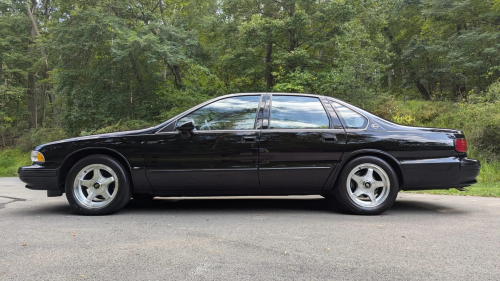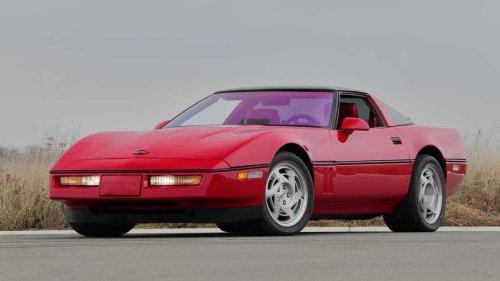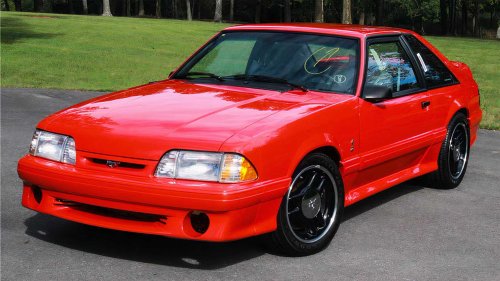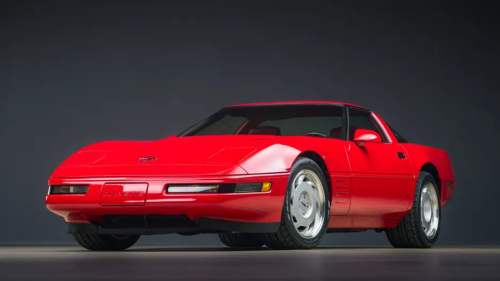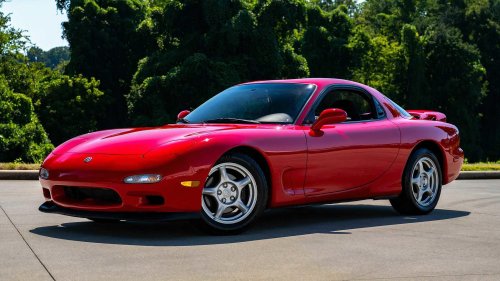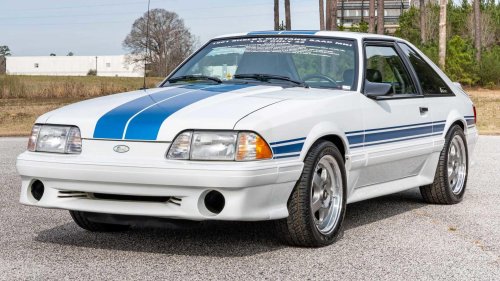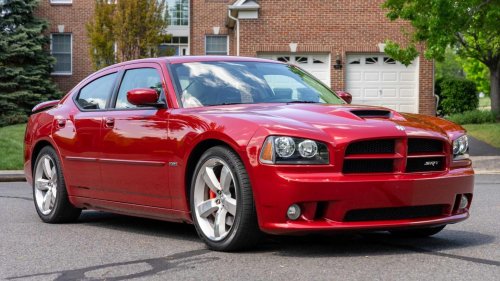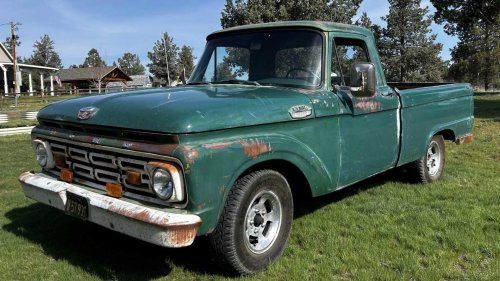
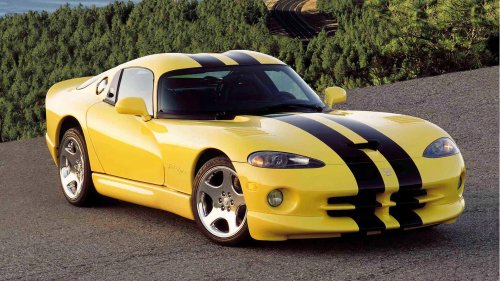
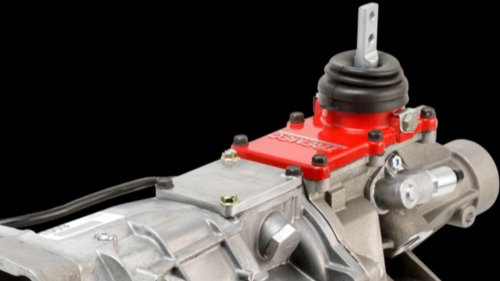
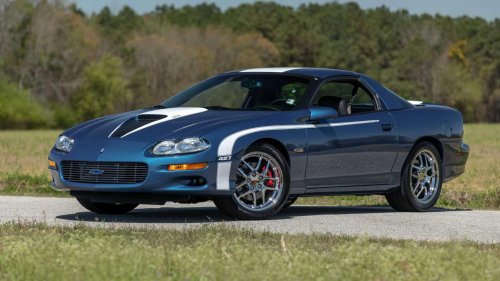
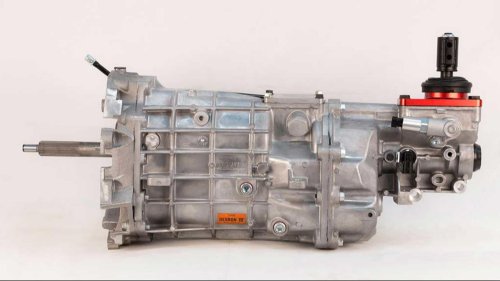

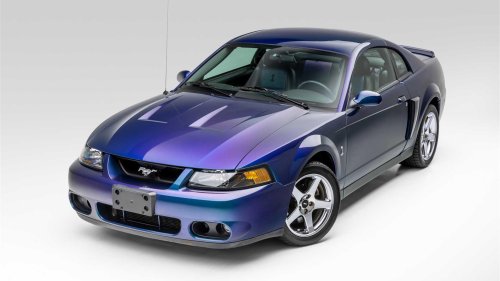
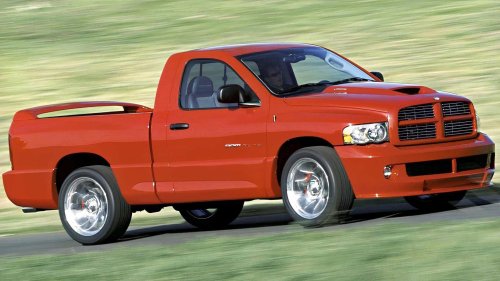




















Following the close of the classic American muscle car era in the early 1970s, the fabled segment wouldn't get a full-blooded resurrection until around the early 1990s. At that time, fuel-injected motors were becoming more and more commonplace. American manufacturers were also finally figuring out ways to engineer motors that could churn out enough power to actually make for exciting cars, while adhering to the various emissions standards in place at the same time. In other words, the end of the Malaise Era was upon them, and domestic manufacturers were keen to capitalize on it.In the shadows of the American muscle renaissance was the uptick in transmission development. These new, powerful cars needed transmissions that could handle the sheer amount of oomph they were going to chuck out. Older gearboxes simply couldn't keep up, and the old-school four-speed manuals from the classic era were simply too outdated to bring back around.That's why one company, Tremec, decided to develop the T-56. It's a six-speed unit, and it saw use in loads of 90s and 2000s muscle cars across a wide range of brands. It's considered one of the best manuals ever produced, and it has a good number of reasons for making that claim. Ancient Origins Bring A TrailerWhile the Tremec namesake gained most of its fame in the 1990s, the company itself traces its roots back much further, and they're not even planted in the US. In 1964, the company was founded in Mexico. At the time, the Mexican government mandated that all cars sold in the country needed to contain at least 60 percent Mexican-produced components. Ford, having a large stake in the Mexican market, struck a deal with another American company called Clark Transmissions and founded a separate firm called "Transmisiones y Equipos Mecánicos" or "Transmissions and Mechanical Equipment" in English. If you acronymize the Mexican company's name, you get "Tremec".The very first Tremec-produced gearbox found its way into the 1964 Mexican-market Ford F-100 as a top-loader, four-speed manual unit. From then on, the company found its way into the US, beginning in 1975. A new technical and sales facility was opened in Plymouth Township, Michigan. Around the same time, Tremec started to produce a wide array of what it calls "torque-transfer solutions." Basically, any sort of component that takes motor torque and transfers it to something that spins, like a wheel or gear, the company began to produce.Dodge However, come 1992, something happened that would turn Tremec into a popular name among drag racers, muscle enthusiasts, and general gearheads. That year, BorgWarner, another transmission producer, began building its T-56 six-speed manual transmission. Its first application was the '92 Dodge Viper, the model's debut year. While the car was famously hard to handle, the T-56 gearbox was praised for its raw, heavy, unfiltered feel, something that many folks thought was a thing of the past, as the automotive industry moved ever closer to a tech-based industry. Tremec Takes Over TremecIn 1993, General Motors decided to approach BorgWarner with a proposition. It was interested in sourcing the T-56 for its Chevrolet Camaro and Pontiac Firebird models, both of which were entering their fourth generations that same year. A deal was struck, and GM now held the rights to utilize the BorgWarner T-56 in its models. Come 1994, the Australian-market Holden Commodore, another GM product, also began offering the unit, and the C5 Chevrolet Corvette also adopted it, beginning in 1997.In 1998, BorgWarner was interested in selling its coveted T-56 manual transmission. The company was busy focusing on its quickly-growing transfer case market, as the SUV and small pickup truck market was beginning to take off in earnest, and the company was struggling to keep up with demand. On the other hand, Tremec had begun to cement itself as a specialty performance component manufacturer among muscle car and drag racing enthusiasts.Mecum In order to offload some of its strain, BorgWarner sold the rights to the T-56 to Tremec, along with its entire manual transmission division. This meant that every single schematic, unit, and employee of BorgWarner's that occupied that side of the business were now under Tremec's control. After all, it had a proven track record, and also had the production potential to meet the demands of several manufacturers who were interested in the T-56, and other manuals, for use in their respective models.Despite being put under control of an entirely new company, the T-56 remained untouched in its design or development following the sale to Tremec. Apparently, the Mexican company knew the recipe was already well-sorted and well-loved by virtually anyone who owned or had driven a car equipped with a T-56. How It Works TremecAt its core, the Tremec T-56 is a simple, old-school manual transmission. Starting with its case, Tremec makes use of aluminum for its case, bell housing, and extension housing in an attempt to keep its weight as light as possible. It also uses synchronizer (syncro) rings made of brass.For those not in-the-know, synchronizer rings, or "syncros", allow for smooth changes directly between gears. Unsynchronized transmissions require a maneuver called double-clutching, wherein a shift can only be completed correctly as follows: depress the clutch → move gear selector to neutral → release clutch→ match engine revs to transmission speed→ depress clutch again → slot gear lever into next gear. It sounds like a pain, and it is one.Back to the T-56. It took advantage of paper-based friction material, which is used alongside the brass syncro rings to mitigate friction. In later-model T-56 transmissions, paper was swapped out for carbon fiber, providing a much more durable baseline. Its shifter was of a single-rail design, which is a layover from the old-school, four-speed manuals of yesteryear.Single-rail systems make for less precise-feeling shifts, but are much simpler and more durable than some of the more modern, complicated arrangements that allow for things like shorter throws and better feel. Its clutch setup is hydraulic in all applications except for one, the Ford Mustang Cobra, wherein it was mechanical. Loads Of Brands Used It General Motors Bring A Trailer GM was the most prominent user of the T-56 transmission throughout its life, both when it was produced by BorgWarner and by Tremec. The most common setup for a GM-destined T-56 transmission was either a 2.66 or 2.97 first gear ratio, along with a 27-spline output shaft, which was later upgraded to a 30 or 31-spline configuration.GM Models Using The Tremec T-56: Cadillac CTS-V (2004–2007) Chevrolet Corvette (1997–2007) Chevrolet Camaro (1993–2002) Chevrolet SSR (2005–2006) Holden Commodore SV8/SS (1994–2008) Holden Monaro CV8 (2001–2006) Pontiac Firebird (1993–2002) Pontiac GTO (2004–2006) Ford Bring A TrailerFord's use of the T-56 was on a much smaller scale than GMs. Ford took advantage of a different bell housing bolt pattern than GM-destined T-56 transmissions, and also employed the 30-to-31-spline output shaft throughout the entire duration of its use. Input shaft lengths were also slightly shorter, and a 2.66 first gear ratio was exclusively used.During Ford's use of the T-56, the Detroit Giant owned a majority stake in Aston Martin, meaning it was featured in a couple of its models, too.Ford Models Using The Tremec T-56: Ford Mustang Cobra (2003–2004) Ford Mustang Cobra R (2000) Ford Falcon XR8 (2002–2005) FPV F6 Tornado/Typhoon GT/GT-P (2004–2008) Aston Martin Models Using The Tremec T-56: Aston Martin DB7 Vantage (1999–2003) Aston Martin V12 Vanquish (2001–2006) Chrysler DodgeDespite boasting the smallest list of T-56 users, Chrysler was the first to adopt the transmission when it was released in 1992. It shared an identical bell housing bolt pattern to GM's variants, as well as a unique, 10-spline input shaft in early models. A 26-spline shaft eventually replaced it.Chrysler Models Using The Tremec T-56: Dodge Viper (1992–2007) Dodge Ram SRT10 (2004–2006) Here's What Replaced The T-56 CadillacIn 2007, Tremec began the T-56 transmission's phase-out. That same year, the company introduced its replacement, the TR-6060. It was a six-speed manual, and adopted numerous parts from its predecessor, albeit with a slew of new, stronger components. A new, triple-synchro-mesh system is found on the first and second gears, and the reverse gear also receives synchronization. Larger, more robust gears are seen, too, increasing robustness.As of today, it's still in use, and can be found in Cadillac's CT4-V and CT5-V Blackwing models. It was also used in the Dodge Challenger until its discontinuation in 2023, and in the Camaro until its demise in 2024.