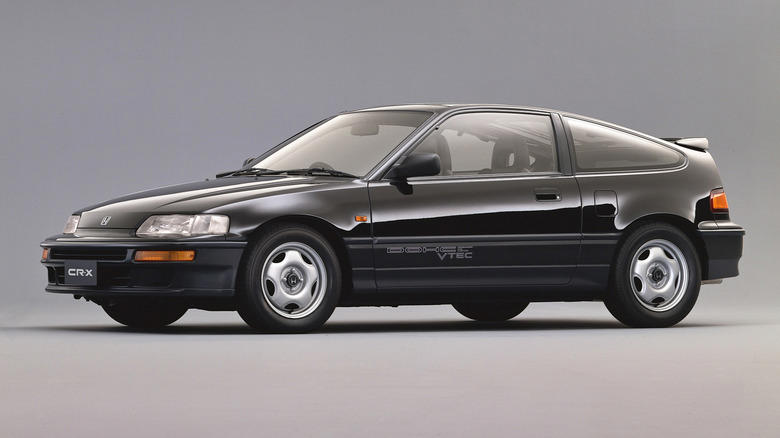
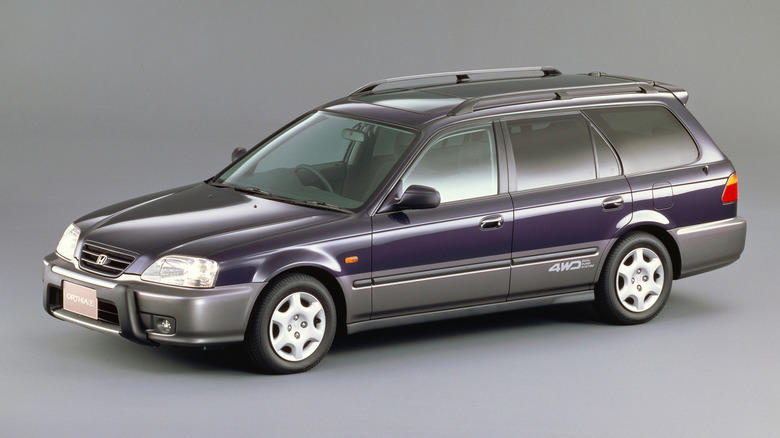
Honda CR-X SiThe original CR-X launched for the 1984 model year, but the Si variant didn't arrive until the following year. It added fuel injection to boost the car's power output to 91 horsepower, as well as several other engine tweaks and a revised cabin. These relatively small changes added up to make a big difference, putting the Si in a class of its own in the market. The second generation CR-X, which arrived in 1988 and remained in production until 1991 — hence its inclusion here — followed the same formula.The Si was still the top trim, and now churned out 105 horsepower from its 1.6L engine. For 1990, the model was given an interior makeover, but most of its oily bits remained unchanged. The exterior was also tweaked, with new wheels and disc brakes. After its suite of changes for the new decade, the 1991 model year saw no major changes, and it would turn out to be the CR-X Si's last before being discontinued. Its successor, the Del Sol, aimed to deliver the same affordable, fun-to-drive thrills, but for many enthusiasts, it didn't live up to the standard set by the original.Honda OrthiaEven in Japan, the Honda Orthia remains a rare sight. It was a short-lived model that took the platform of the Civic but stretched it into wagon form, then added a four-wheel drive system. In the U.S., Subaru is best known for its off-road ready wagons, but in Japan, the Orthia's domestic competition also included similar models from Toyota and Nissan. The Honda debuted in Japan in 1994, two years after the popular Toyota Caldina and a year after the second-generation Subaru Legacy wagon.Unfortunately, with so much competition, the Orthia struggled to stand out among buyers. A revised model was launched in 1999 but that didn't do much to boost the model's popularity, and it was discontinued in 2002. Whether it would have been more popular if it had been released overseas is a tricky question — Subaru's wagon was a key part of its international expansion, but without any rallying heritage to draw from, Honda might have had a hard time convincing American buyers that the Orthia was the superior choice for all-terrain use.