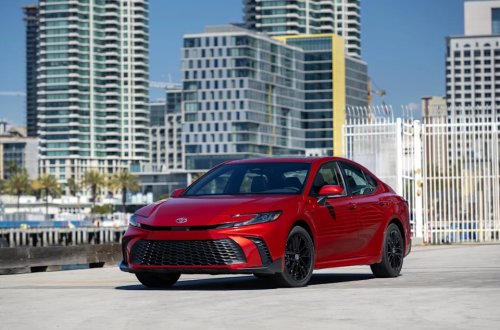



















Car shopping is stressful enough without dealerships adding psychological warfare to the mix. One man's experience with a Toyota dealership showcases a classic sales tactic that left him fuming. How he ultimately handled the situation might surprise you. Was This Toyota Car Salesman Being Scammy? In a trending video with more than 27,000 views, content creator @bluejelloface describes his frustrating experience at a Toyota dealership where he feels a salesman tried to manipulate him. The saga began Friday when he test drove cars and found a Camry that was "OK." He told the salesman to work up the numbers and said he'd return Saturday around 10 a.m. That's when things got weird. "He calls me later that night and says, ‘Hey, my sales manager wants to talk to you at 11:00. Can you be made available then?’ And I was like, ‘Sure, whatever. What's up?’" he explains in the video. "He's like, ‘Well, he wanted to let you know that we're not making any money on that car.’" @bluejelloface said he got off the call in disbelief and sat for a minute just staring at the phone. "I didn't set the [expletive] price. We haven't even started negotiating yet. Anyways, I was pretty angry about that," he says. Despite his feelings, @bluejelloface showed up Saturday. The salesman was five minutes late, he says, which didn't help matters, and immediately launched into explaining why they weren't making money on the car. "So I pause him, and I'm like, ‘That's none of my business. I didn't set the cost of that. We haven't even talked or negotiated about price. I haven't even asked you to take any money off of the car," he says. The manager pivoted to the trade-in. "And he goes, ‘Well, that's, you know, it comes down to your trade. We told you we'd give you more, but, you know, since we're not making any money on this car, we can't give you any more on your trade,’" the TikToker reports. He pushed back, explaining his trade-in value and mentioning he'd been getting service at that dealership for six years. "This is where he really falls on his [expletive],” he says. The salesman had the gall to say he really didn’t care about that “because we have different departments," he claims. He says the salesman added that, as a sales guy, he’s just “interested in moving volume.” "And then I just like—dude, inside, like, my head was boiling. I don't give a [expletive] about that. I care about all the money that I've given that dealership as a whole," he says. He walked out. The salesman didn't even try to stop him. He ended up buying a car at a different dealership where the salesman's attitude was "so good" that he actually might try to hire him for his own team. "So, anyways, anybody in cars, what the [expletive] was that all about? And if you are selling cars, I don't give a [expletive] if you're making money on the car or not. Set your [expletive] prices appropriately, you dumb [expletive]. If that sales guy would have just given me the numbers on Friday, I probably would have bought that car," he says. It's a Common Manipulation Tactic What this customer experienced is a classic manipulation technique designed to anchor expectations before negotiations even begin. According to Consumer Reports, dealerships use various psychological tactics to maximize profits. The goal is to make customers feel guilty about negotiating or asking for a better deal. By claiming the dealership is already selling at cost, they're trying to eliminate your negotiating power before you've even made an offer. Consumer Reports identifies several manipulative tactics dealerships commonly use: The Lowball Offer: Dealers quote an unrealistically low price to get you in the door, then add fees and costs once you're committed. The 'Buy Now, Or Else': Creating false urgency by claiming the price is only good today, or another customer is interested in the same car. The Four Square: Drawing four boxes on paper for purchase price, trade-in value, down payment, and monthly payment—designed to confuse you and focus on monthly payments instead of total cost. The Word Track: Using scripted responses to control the conversation and steer you toward their desired outcome. The Hard Sell: High-pressure tactics, including "good cop, bad cop" routines with managers or requiring you to finance through them or buy extended warranties to get a lower price. The Quid Pro Quo: Telling customers they can only get a lower price if they finance through the dealership or purchase add-ons. The National Motorists Association explains that salespeople practice these tactics daily, while the average car buyer purchases a vehicle every five years. "This isn't a fair fight," they note. How Do Car Salespeople Make Money? According to LawInfo, dealers make money through front-end markups (typically 3–5% on the car's price) and back-end products like extended warranties, GAP insurance, and dealer add-ons. Most salespeople work on commission, earning 20–30% of the dealership's profit on each sale, plus 5% commission on back-end products. Commenters React “I despise auto sales manipulation tactics,” a top comment read. “As a dealer technician, we hate sales just as much,” a second person said. “I have almost 20 years of experience in the car business. What the salesman was trying to say is that sales are slow so we have vehicles marked down at a loss to get traffic into the dealership. He was trying to let you know beforehand that he doesn’t have any room to negotiate,” another wrote. “I hate negotiating. Just put the damn price up and make it the lowest you can offer,” a commenter added. Motor1 reached out to @bluejelloface for comment via TikTok direct message and comment, and to Toyota via email. We'll update this if either responds. We want your opinion! What would you like to see on Motor1.com? Take our 3 minute survey. - The Motor1.com Team