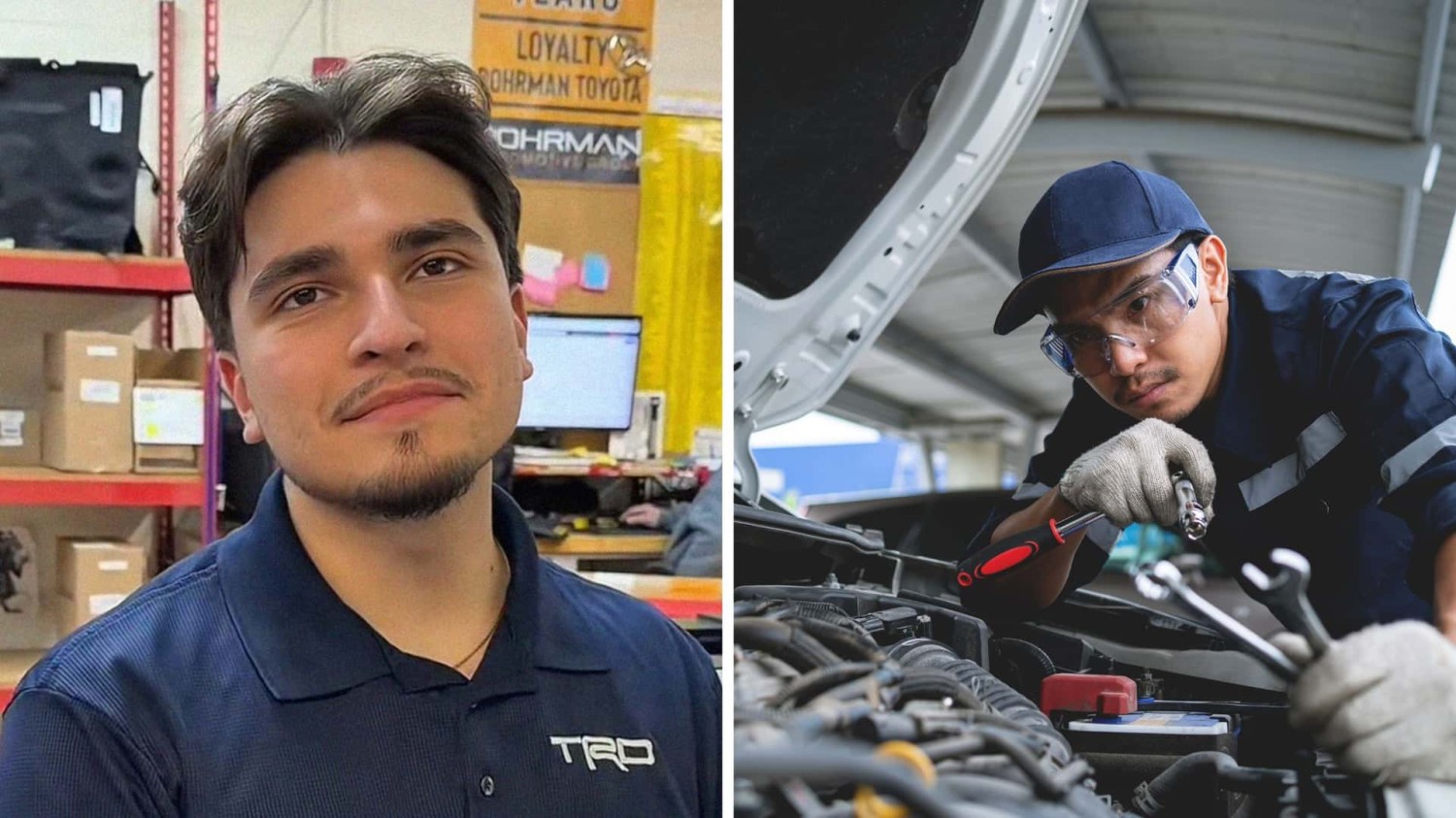



















To the general public uneducated about the finer points of automotive service, terms like "mechanic" and "technician" can seem interchangeable, with the split between the two not worth much thought. But there's a world of difference for the folks who make their living in service departments and repair shops, who take pride in their training and in their approach to keeping vehicles running well. The split between the two roles is the focus of a recent viral TikTok featuring employees at the Rohrman Toyota (@rohrmantoyota) dealership in Lafayette, Indiana. The series of quick-hit interviews asks them to describe the differences between a mechanic and a technician. "A mechanic fixes what's wrong. A technician fixes what's wrong, but also determines why it was wrong," was the most straightforward answer from the roughly dozen employees interviewed in the clip that's been viewed more than 65,000 times. Mechanics And Techs Face Off In the clip, most of the answers circle around the same idea. Employees largely agree that a technician is trained to track down root causes and work through the "why?" of a problem before removing or replacing parts. A mechanic, however, is more likely to replace parts and fix what's broken without necessarily tracing the problem to its source. One worker brings up Automotive Service Excellence (ASE) certification and formal training. Another shrugs and says the difference is "the spelling." A few admit they're not entirely sure in the clip, which is lighthearted and casual. Things went entirely differently in the comments section, with lots of discussion between the folks who actually work on the shop floor. That's where the question stopped being a harmless bit of dealership content and became something closer to a referendum on how automotive work is valued, and who gets credit for it going well. The discussion spilled into debates about pride, experience, credentials, and what "real" competence looks like in a trade that's been steadily reshaped by electronics, diagnostics, and flat-rate labor. "Mechanic will work circles around 90% of dealership technicians," one commenter wrote, drawing a sharp line between hands-on experience in what he sees as credential-driven shop culture. Another piled on, "Gimme a dude with experience not a degree. Tired of lending my tools and knowledge to dudes who make it 6mo." There was pushback from a different angle. Some argued that true skill shows up in diagnosis, not just in swapping parts. "I want to see a tech rebuild parts instead of just replacing them; if I can save a part I’m going to," one wrote, while another claimed shortcuts and skipped steps are mistaken for speed or superiority. As fun and frivolous as the video may seem, it's revealing that the whole thing unraveled into something messier and more personal in the comments, which read less like a debate over job titles and more like a running argument over respect and who's earned their place in a repair bay. So What Is The Difference Between Mechanics And Techs? The divide the video stumbled into didn't appear out of nowhere; the field of automotive work itself has changed over the years. Modern vehicles arrive in service bays trailing fault codes, software updates, and network systems that often demand a laptop before they ever need a wrench. Dealerships have leaned into the technician label to reflect these changing demands. Now they’re turning to factory programs, ASE certification, and standardized diagnostic procedures to make repairs faster, more consistent, and easier to document. That job title transformation also helps explain the edge and divide in the comments. For proud and experienced mechanics, speed and part replacement can’t replace craft. Rebuilding components or fixing problems that can’t be neatly described by a trouble code is where experience still matters most. The rub is that many mechanics feel the modern workflow leaves little room for gut instinct. It's easy to see that frustration in comments that downplay the value of prolonged technical training over the experience and raw know-how of successful mechanics. So really, the argument comes down to more than just job titles. It's about how much of the work is driven by procedure versus by intuition, and who gets credit when both are required to fix something. Take away the titles, and the best people in any shop already live in the middle ground, able to use scan tools when they help and rely on raw experience when needed. Rather than being a forgettable social trifle, the dealership's video wound up exposing a fault line running through a trade that's been quietly reinventing itself for years. On the shop floor, the only distinction that really matters is simple: whether the car leaves the baby fixed, and whether it stays that way. Motor1 reached out to Rohrman Toyota via phone and direct message. We’ll update this if they respond. We want your opinion! What would you like to see on Motor1.com? Take our 3 minute survey. - The Motor1.com Team