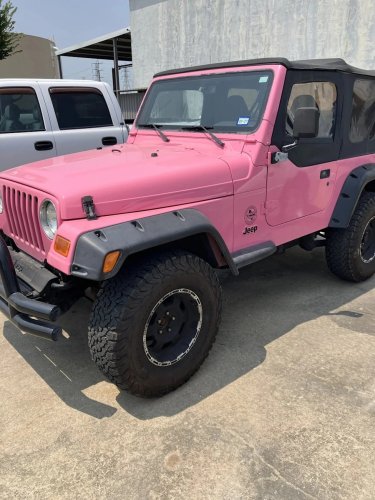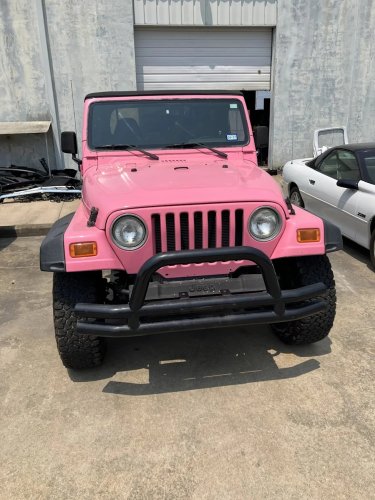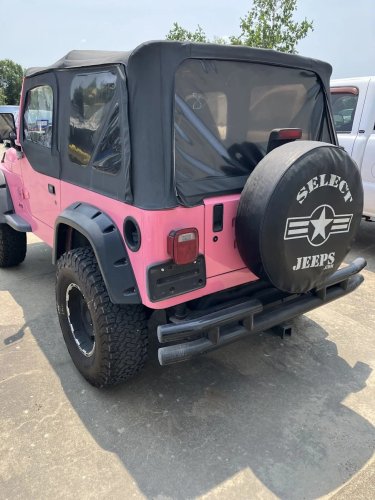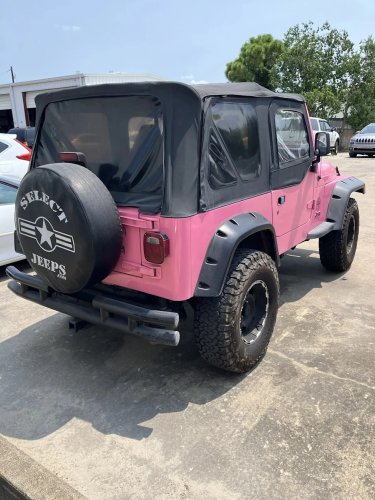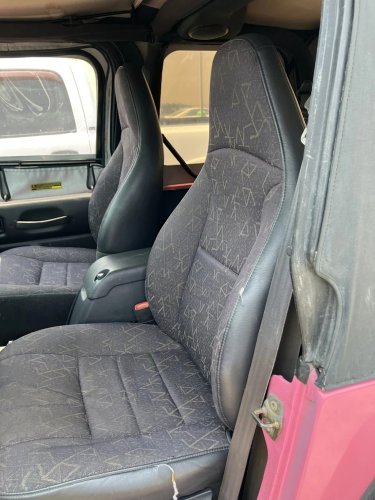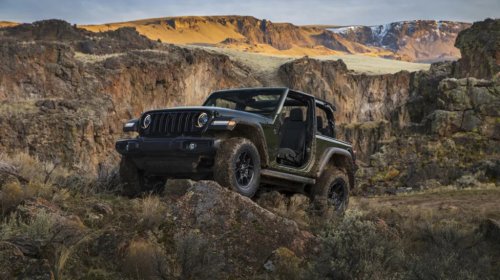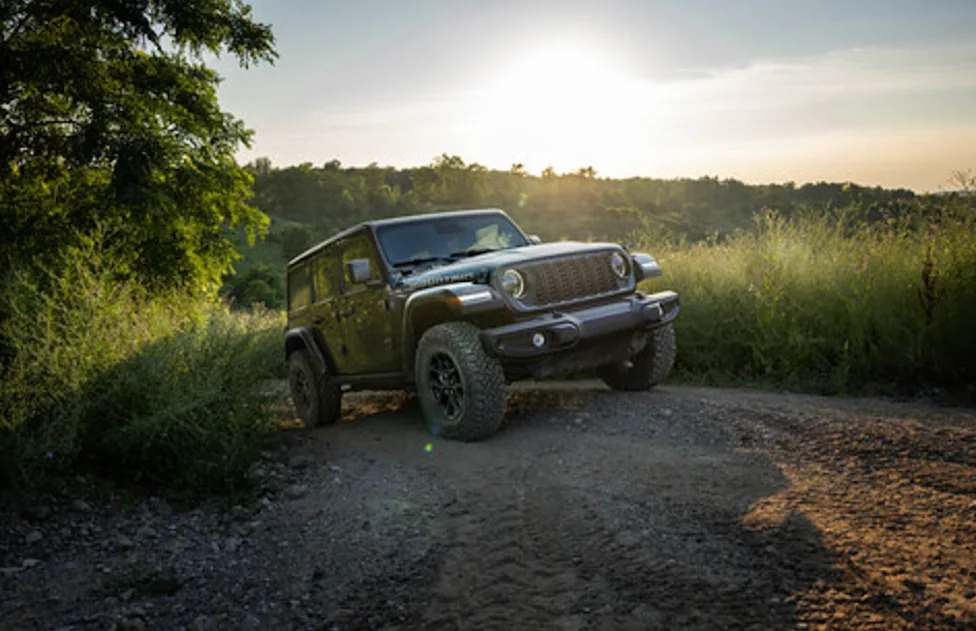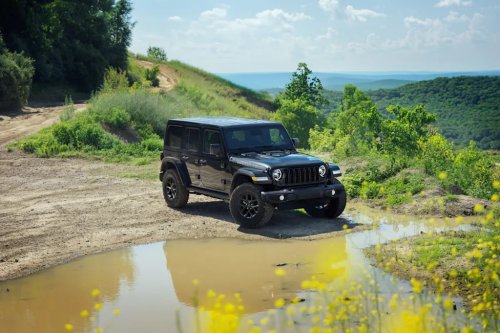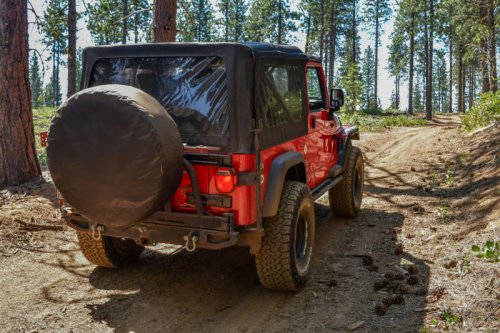
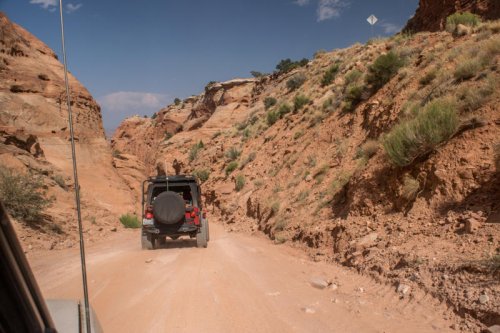
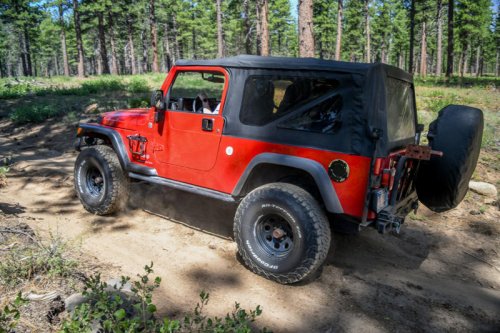
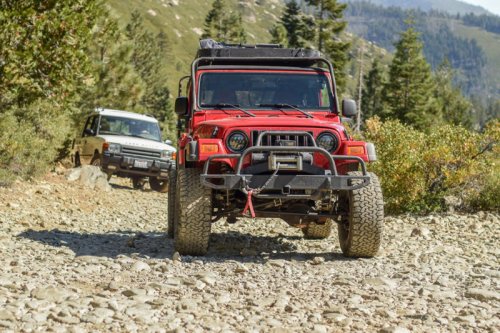
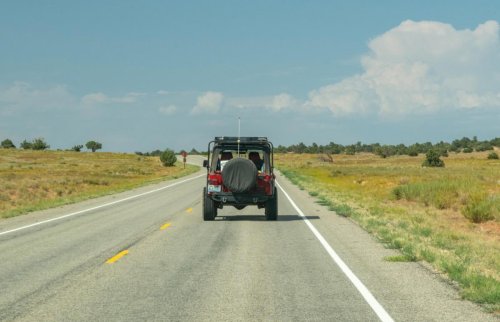







Not the best experienceI’ve driven several kinds of cars throughout both my life and career. I’ve driven huge farm trucks ranging from dualies to supercabs with extended beds, buses, vans–you name it. However, before I bought my Uncle’s Moab-bred 2006 Jeep Wrangler, the closest I’d ever gotten to a dedicated off-roader was mine and my husband’s 1996 Land Rover Discovery. I’d never driven a Wrangler. Our Land Rover is bone stock, except for slightly larger tires, so I expected body lean, minimal power at high speeds, poor gas mileage, and wind noise. But my Wrangler is far from stock. It’s lifted by four inches and fitted with 35-inch tires, without any modifications to the 4.0-liter inline six. Oh, and it has a soft top, so there’s a very small buffer between me and the great outdoors at higher speeds. So, why did I suggest driving it from Bend, Oregon, to the San Francisco Bay Area (where my husband and I are relocating to) to save on towing it with our U-Haul? Because I said, foolishly, “It can’t be that bad.” Here’s how my drive went, and why I’ll probably never do it again unless there’s a gun to my head.Bigger tires and new gears made it a pro at rock crawling, but not at cruising With 35-inch tires, my Uncle had it regeared to 4.88s to get back the torque he lost with the big tires—and it worked. Around town and off-road, the Jeep is spunky. But on the highway? It struggles. Even at 65, the RPMs were close to 2,700 rpm with overdrive. If it were on factory tires and gears, it would likely cruise around 2,100–2,200 rpm. It wasn’t very stable, either. It wandered quite a bit and was eager to follow any track the new AT tires grabbed onto. Therefore, you can imagine how badly the inclines through the Mt. Shasta National Forest went. Before any incline, I’d have to force it downshift to third or second gear to get momentum and carry it over the hill, and even then, it was screaming at around 40-45 mph. Minivans were passing me left and right, and I was white knuckling it and paying very close attention to the temp gauge. Once I was out of the woods (literally), it was a lot smoother, but not by much.The noise from the soft top was slowly driving me closer to insanityThe aftermarket exhaust didn’t help, but the soft top didn’t provide much relief from the wind noise. In fact, through the mountains, I feel like it was amplified. My husband installed new speakers and a headunit with Android Auto, but it didn’t make a difference. I had to turn the speakers up to the point that they were almost popping to hear anything, so I had to resort to wearing noise-canceling headphones to keep the angst at bay. Of course, I paid special attention to my mirrors to make sure I spotted any emergency vehicles and other drivers. I tried to stick it out for as long as I could before putting my headphones on, which was about three hours. The drive took about 12 hours due to construction, slow speeds, and traffic. You know, California things.Don’t get me started on the cost of gasFactory mpg figures for the 2006 Jeep Wrangler with a stock build weren’t great, with an average of 13 mpg in the city and 17 on the highway. However, since mine is even less aerodynamic due to the four-inch lift, the mileage was worse. By a very large margin. I had to refuel every 180 miles or so, as it was down to ¼ tank by then, and when I did the math…I felt tortured. The best mileage I got during that trip was 11.6 mpg with 100% of the miles on the tank being highway driving at 65 mph, because anything faster felt like I was about to launch myself into space. Since it was a 369-mile journey, I had to fill up three times. Once I was out of Oregon, the price of regular was over $5 a gallon, so I spent close to, if not over, $75 per tank. That was a tough pill to swallow.Because it’s a TJ, I was scared of overheatingLike many TJs of that time, my Uncle, husband, and I struggled with persistent overheating issues. It would be at operating temperature and fine as long as we were moving, but the second we were idling, the temperature would start climbing–and quickly. It was even worse if the A/C was on and it was warm outside. My husband and I did everything: new water pump, new belts, new radiator hoses (checking for the steel coil on the inside to prevent collapse), new radiator cap, new coolant, new cooling fan and clutch–the works. We even tried swapping the standard 5-blade fan with a 10-blade fan from a 1996 Ford Explorer, as advised by my Forum Friends. After several disappointing stress tests, we finally figured out the cause. My Uncle had an updated aluminum four-core radiator installed with a “racing style” overflow reservoir. My husband theorized that the smaller tank, combined with the flow design, was sucking in air at high temperatures, which caused bubbles to collect under the thermostat, causing it to close, which then caused the coolant to boil. Wouldn’t you know it, buying a stock reservoir from eBay fixed it. But it didn’t mean my anxiety about being stranded on the side of the highway was squelched. Like I mentioned before, my eyes were glued to the temp gauge, especially on those inclines through the mountains. I kid you not, my hands were sore from gripping the steering wheel as tightly as I did. Thankfully, I was fine—but for all 12 hours I was on the road, I was formulating a game plan on what I’d do if it did overheat.Final thoughts: Next time, I’m trailering the damn thingObviously, I learned my lesson. I used to be the person who questioned those who put their rigs on a trailer and towed them to the trailhead. Now I get it. I don’t have a truck capable of towing or a trailer (yet), but if I ever have to travel that far again in that Jeep, I’m absolutely going to do everything I can to have it trailered, starting with saving for a truck and trailer. Two things came from that trip: I now felt more confident in my Jeep’s abilities on long drives, and I got the best sleep of my life after I made it to California.