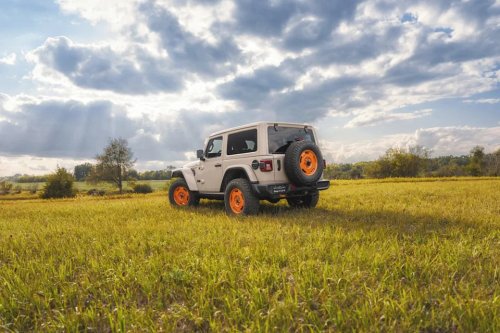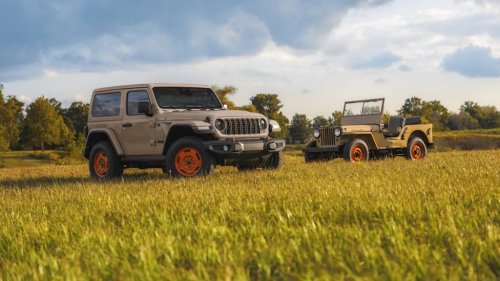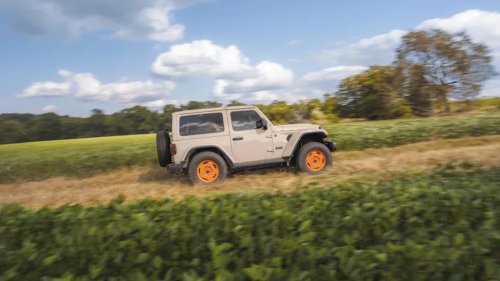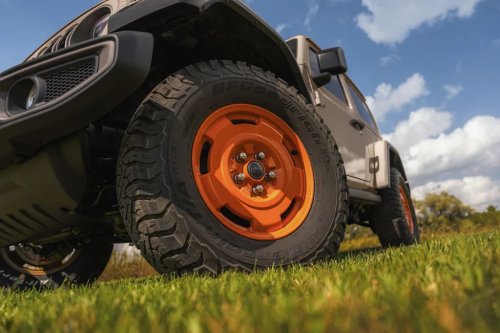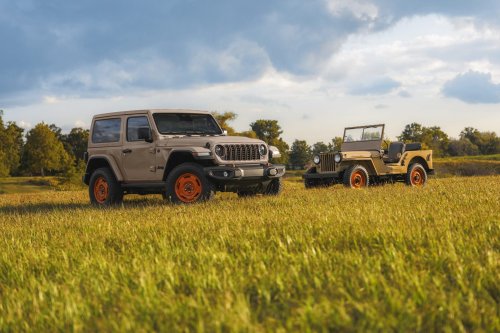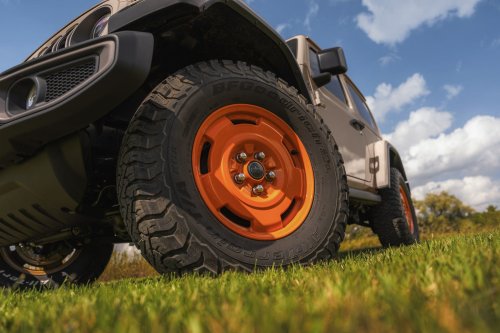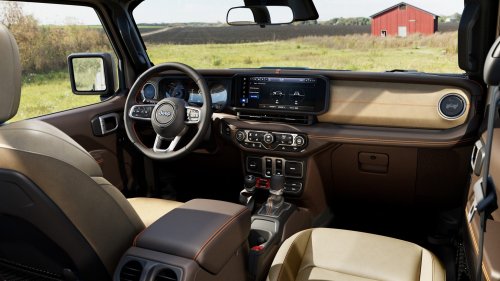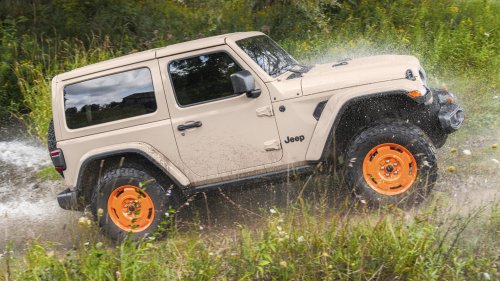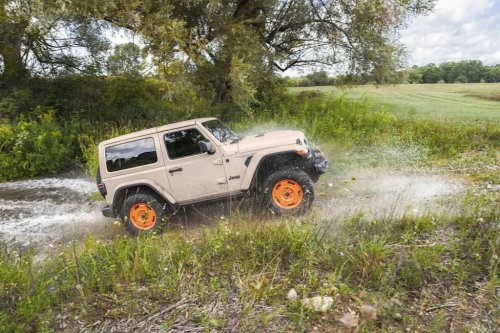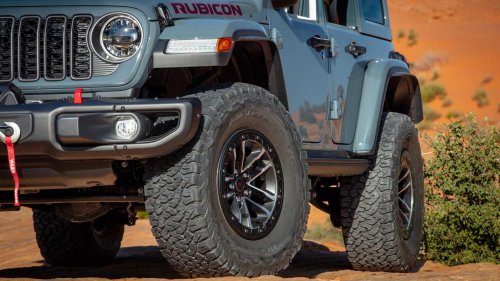
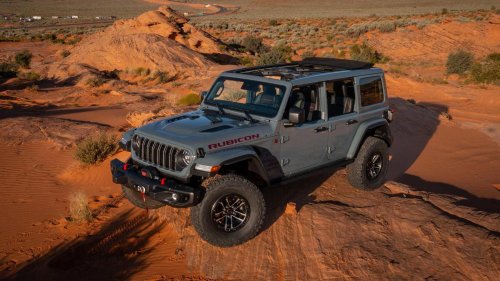
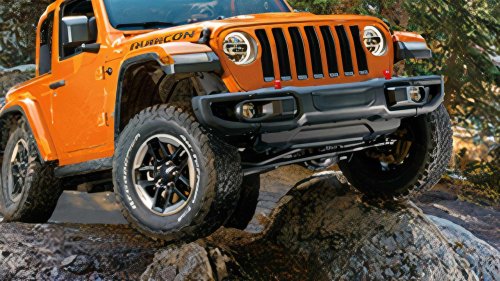
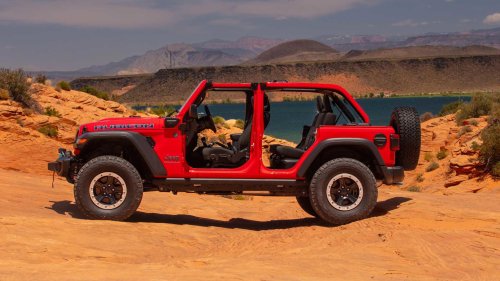
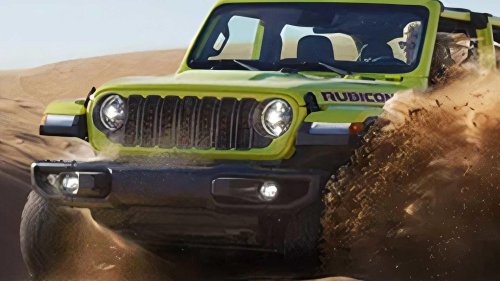



















Jump LinksAn average SUV driver may think that a Jeep Wrangler Rubicon is a little out of place on the dealer's lot. After all, many shoppers are looking for an everyday family crossover so they can take the kids to school rather than tackle a rocky trail. Such a shopper may walk right past a vehicle that treats difficult terrain as a mechanical challenge and choose another option that looks at gravel roads in a theoretical sense.However, fans know that the base Wrangler already has impressive off-road fundamentals with its body-on-frame chassis, solid front and rear axles, standard four-wheel drive, and generous ground clearance. And they should know that there’s a lot more to the Rubicon story than just trail capability. Jeep engineers have spent years turning the Rubicon into something spectacular, giving it the ability to crawl, flex, and keep going when others fail, helping build its growing legend. The Rubicon Was Built To Matter JeepJeep named the Rubicon after the Californian trail of the same name, which is one of the most punishing off-road routes in the USA. Since its debut in 2003, the Wrangler Rubicon has featured stronger axles, low-speed control, traction hardware, and trail protection than other models in the lineup. The current generation (known internally as the JL) doubled down on that theme. The Rubicon is already very flexible, with a windshield that folds and doors that come off. Underneath, the engineering is very focused and designed to treat off-road obstacles as problems to be solved.Jeep offers many distinct Wrangler trims, such as Sport, Sport S, Sahara, the Willys, and 4xe variants, and they can still go quite a long way down a rough road. But if you're looking to climb ledges, lift wheels, straddle rocks, and keep going no matter what, then the Rubicon is the one to pick. It’s the grade that brings all of Jeep's off-road technology together, with features like front and rear locking differentials, the Rock-Trac transfer case, heavy-duty axles, an electronic front sway bar disconnect, and standard BF Goodrich KO2 all-terrain tires. Why The Rubicon Keeps Moving Jeep Jeep's multipoint approach to Rubicon engineering is what makes this vehicle so hard to stop. It's available with a 3.6-liter Pentastar V6 and manual transmission, or a 2.0-liter turbocharged four-cylinder with an eight-speed automatic. The V6 delivers 260 lb-ft of torque, and the turbo four makes 295 lb-ft, giving the Rubicon two flavors without taking away from the core off-road hardware that makes it what it is.But the first of the real story makers involves the front and rear Tru-Lok electronic locking differentials, which force both wheels on the axle to rotate together. Unlike an open differential, which distributes torque along the path of least resistance, this system distributes power evenly for greater traction.The second Rubicon trick is the NV241OR transfer case with a 4:1 low-range ratio. The deep low range is important because crawling requires a deliberate approach to let the driver precisely place the vehicle’s tires. Here, the system multiplies torque to slow the vehicle down and, if you choose a manual transmission with the available 4.88 axle ratio, it could achieve a 100:1 crawl ratio. The pieces allow drivers to inch slowly over rocks with minimal throttle input, less wheel spin, and much more control than they might otherwise have.The third trick to look out for is wheel articulation, which comes down to the Rubicon’s electronic front sway bar disconnect. The system allows the front wheels to drop and compress farther, improving suspension articulation on tough terrain. In plain language, that means the tires stay in contact with the ground more effectively, and you may be able to achieve traction in a tricky situation before the lockers have to come into the picture. And when you add the standard Rubicon 33-inch all-terrain tires and heavy-duty rock rails to the picture, you’re starting to see a system that’s potent on the toughest terrain. The Hidden Strength Underneath Jeep While this trio of technologies is part of what makes the Rubicon so attractive to off-road enthusiasts, the tougher, less glamorous components underneath are just as important. For example, the model features third-generation Dana 44 heavy-duty solid axles at the front and rear. These are significant pieces of hardware that need to be strong if you are to take full advantage of those other traction aids. After all, you might not progress very far down that remote track if the axle assemblies, shafts, housings, and final drive components cannot withstand the stress.The tire package also reinforces the logic, with LT285/70R17C BFGoodrich All-Terrain T/A KO2 tires coming as standard on the latest Rubicon. Rubber of that size looks more than spectacular under the fenders, as it helps improve obstacle clearance and lengthen the contact patch in tricky situations. They also provide a good amount of sidewall flex to help a tire wrap around a rock rather than skate over it. And the bigger off-road tires change the gearing burden, working well with the Rubicon's deeper axle ratios and Rock-Trac transfer case.Protection is another part of the story. The 2025 Rubicon comes with heavy-duty, sealed rock rails and skid plates for the fuel tank and the transfer case. The components give you a broad baseline of protection as standard on every Wrangler, with extra side protection that could come in very handy where ledges and boulders could crush sills or bodywork. So, when you look at everything together, you can see that Jeep has strengthened the actual structure of the off-road experience rather than simply dressing it up. Why The Rubicon Outclasses Other Wranglers Stellantis Standard Jeep Wranglers may feel relatively competent in tricky settings. The Sport or Sport S has a solid axle, body-on-frame design with four-wheel-drive credibility, but those vehicles use the Command-Trac transfer case rather than the more heavy-duty Rock-Trac unit in the Rubicon. They also don't have the Rubicon's standard front and rear locking differentials or electronic front sway bar disconnect. This means a lesser Wrangler may struggle to clear the same obstacle, while the Rubicon takes a considered approach, slowing down, letting the hardware do its work, and remaining in control at all times.Rubicon owners know they are not simply paying more for a nicer Wrangler, as they’re getting a different threshold of mechanical competence altogether. They have to go a long way to find an off-road challenge that can trick the Rubicon, which can survive with a wheel in the air longer, creep over obstacles more slowly, and withstand a lot more punishment underneath.Still, buyers who are not completely convinced by the Rubicon could look to the Rubicon X model for additional thrills. In 2026, Jeep sells the Rubicon X at an MSRP of $63,225, meaning it carries an almost $13,000 premium over the base two-door Rubicon, before destination.However, the X comes with a lot more equipment, including the Xtreme 35 package, steel bumpers with a winch cable for the front bumper, the Safety Group, Technology Group, and Convenience Group. Look for a body-colored hard top, 12-way power-adjustable front seats, Nappa leather seats, body-colored fender flares, and a full-time 4:1 transfer case. The Factory Off-Roader Sweet Spot Jeep Jeep knows that many serious off-road owners may buy a standard vehicle and add their serious capability later. Those buyers may shop in the aftermarket for locking differentials, shorter effective gearing, stronger axle hardware, rock rails, and better tires. Still, Jeep can provide all of that in one bundle with the Rubicon.This factor matters because you can spend a great deal of money converting an ordinary Wrangler into something like the Rubicon, and that approach can quickly become complicated. It's not always easy to figure out gearing, electronics, actual strength, and suspension behavior, and crucially, get them all to work together at the right time.This certainly explains why the Rubicon is not the cheapest of the Wrangler range, starting at $45,815 for the two-door model before fees and taxes. For that money, buyers get 285 horsepower and 260 pound-feet of torque from the 3.6-liter V6 Pentastar. And that's plenty enough for a vehicle whose strength lies in low-speed control and mechanical leverage.So, in summary, the Jeep Wrangler Rubicon is special because it employs a comprehensive approach to your off-road problem. It'll keep its tires on the ground more effectively, lock them together when necessary, multiply torque when speed becomes useless, and protect itself from violent terrain. It's also got all the excellent hardware you might need to make that lifestyle credible, and it has a lot of real engineering heft behind its badge. In short, the Rubicon is far more than just a tough-looking Wrangler. Instead, it's something you really want on your side when the trail turns from scenic to hostile.Source: Stellantis