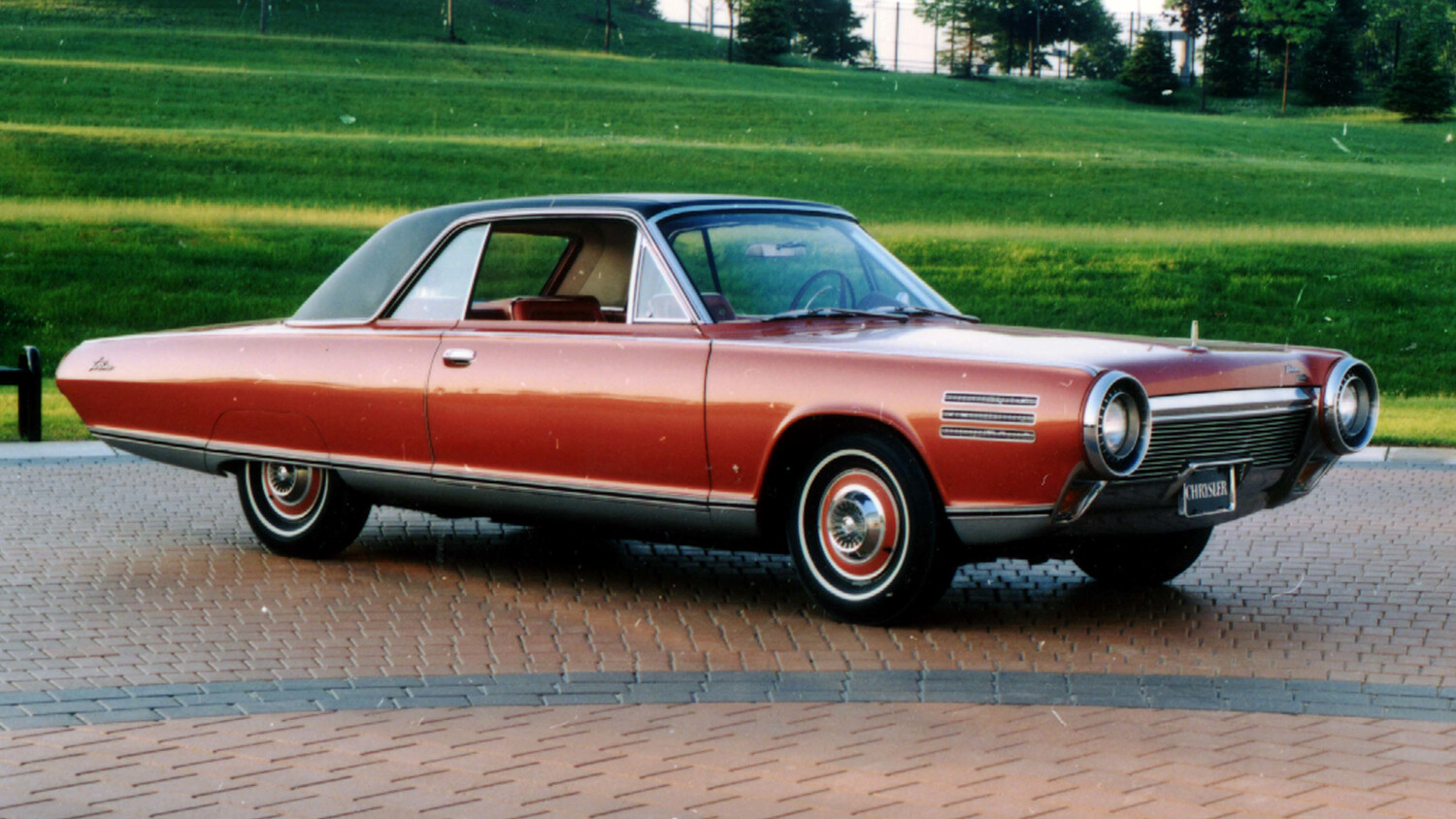
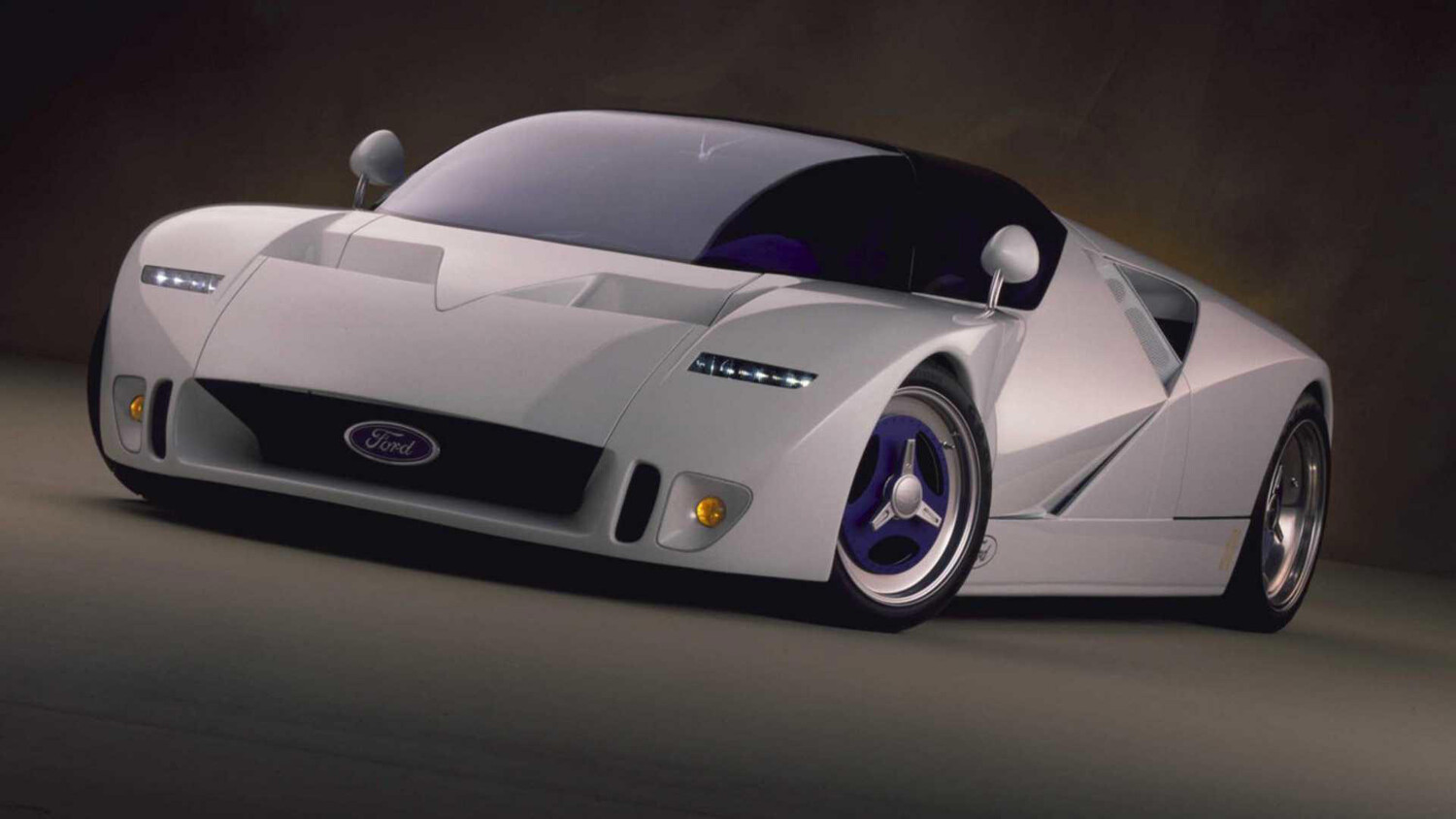
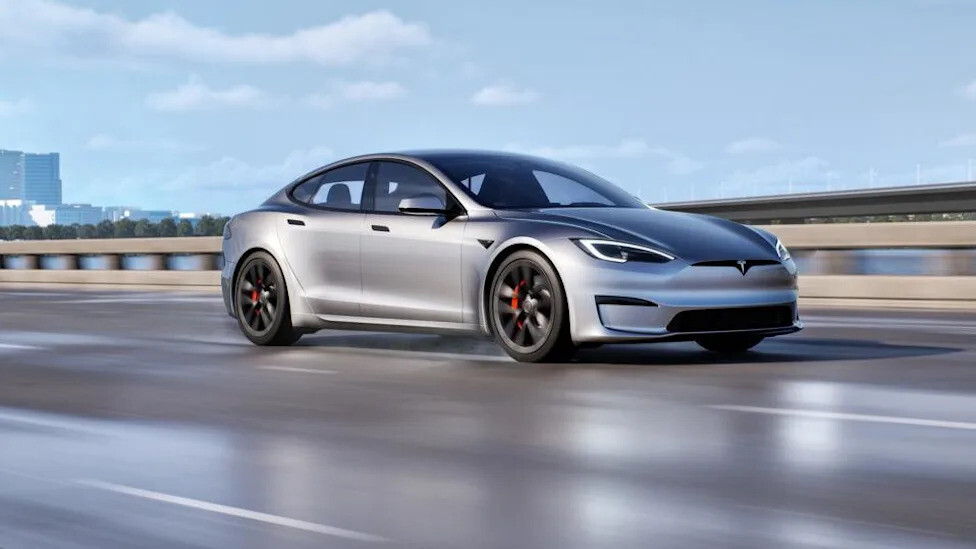
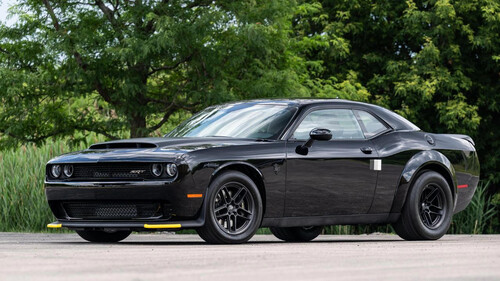
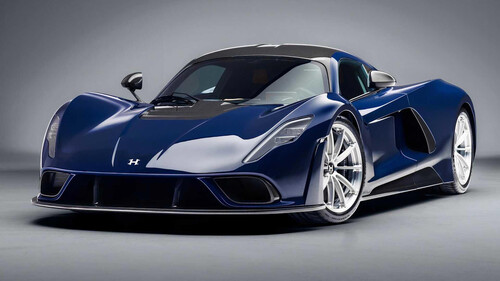
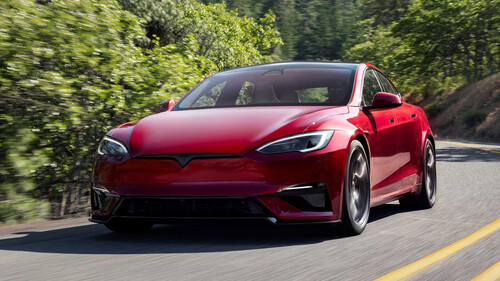
The engineering behind a new car plays an essential part in the success or failure of that particular car. Sometimes, car companies try to save a few pennies in that process, and pay the penalty later when that car lands on a showroom floor.Some car companies spend years and millions upon millions of dollars to get the engineering just right. Like Toyota, a company obsessed with reliability and maintaining its reputation, running development cars to the point of destruction to ensure the customer gets the best product it can offer.Here are 10 American cars that were properly over-engineered... often for the better, but sometimes also not.We researched American cars that came with a degree of overengineering, some by design, others by the insistence of eccentric individuals. Cars listed according to the year of introduction, or premier at a motor show. Duesenberg Model SJ Year Of Introduction: 1932 1932 Duesenberg SJ front, side viewIndianapolis auto company Duesenberg's SJ was a thing of technological wonder. The barge-sized car, with a 153.5-inch wheelbase, is powered by an advanced, 6.9-liter, supercharged straight-eight engine producing 320 hp, ensuring a top speed in excess of 100 mph. It came with a three-speed manual gearbox, the suspension consisted of a beam-type front end, and a live axle at the back, along with semi-elliptic leaf springs, and it had advanced, vacuum-assisted hydraulic brakes.In 1932, the SJ cost as much as $20,000. Launched just ahead of the Great Depression financial crisis, the Duesenberg company closed down by 1937. Great car, wrong time. Tucker 48 Year Of Introduction: 1948 1948 Tucker 48 Torpedo front, three-quarterThe Tucker Torpedo, as the Tucker 48 was also known, was an extremely innovative American car. The "48" was the brainchild of Preston Tucker, a former Ford employee who demanded a lot more from his staff than most folks were willing to give. He wanted to elevate the automobile to the next level of safety and innovation.The Torpedo's engine, which came out of a helicopter, was located at the back. It also has three headlights that swivel according to steering inputs, it has a built-in roll cage to enhance rollover safety, and it has a shatterproof windscreen. Legal battles, spiraling development costs and a high staff turnover eventually saw the Tucker company go belly-up. Chrysler Turbine Car Year Of Introduction: 1963 1963 Chrysler Turbine Car Front Angled ViewIn the early 60s, Chrysler went down the turbine engine rabbit hole, spending millions of dollars developing working prototypes. With a body styled by Italian firm Ghia and powered by a 130-hp turbine engine, the car sure looked cool. But the turbine experiment did not work out as well.Performance was below par, heat management was a major challenge, the turbine engine did not take to higher altitudes, and it required an eight-step starting procedure, instead of turning a key. Most importantly, the engine could not comply with the newly introduced Clean Air Act, regulating emissions. Chrysler closed down the project, after 55 development cars were made. Vector W8 Year Of Introduction: 1989 1991 Vector W8 Twin Turbo front, sideIn 1979, Jerry Wiegerts, owner of the California-based Vector outfit, began developing the W8. A supercar with a striking, aerodynamic design far ahead of its time, the W8 is powered by a modified, twin-turbocharged Chevrolet small-block V8 producing 625 hp. An Oldsmobile TM424 transaxle sends the power to the rear wheels. As is often the case with smaller start-ups, it required a decade of development before the hand-built W8 finally went on sale. Managing the excessive heat generated by the V8 proved to be a particularly challenging prospect.By that time, the Vector W8 retailed for nearly half-a-million dollars, more than double the price originally envisaged. Only 17 W8s were eventually made before the company ceased operation in 1993. Cizeta-Moroder V16 Year Of Introduction: 1991 1993 Cizeta V16T front, three-quarterIn 1988, former Lamborghini engineer Claudio Zampolli, running his own workshop in California, managed to raise funds to create a bespoke new supercar. Zampolli believed he needed a unique engine to trump the likes of Lamborghini's Diablo, so he came up with a 540-hp, V16 engine. A combination of two Lamborghini V8 engines, the complex engine required a lot of development and funding.In 1991, when it was finally up and running, the Cizeta-Moroder V16T cost $300,000. At the time, one could buy two Ferrari Testarossa supercars for that amount. The exorbitant asking price was the last nail in the V16T coffin. Only 11 original Cizeta-Moroder V16Ts were made. Ford GT90 Year Of Introduction: 1995 1995 Ford GT90 Concept front, three-quarterThe rather extravagant Ford GT90 made its debut in 1995. Ford's next-generation supercar came with a six-liter, quad-turbocharged V12 engine that produced up to 720 hp. Ford's engineers believed the GT90 could reach almost 250 mph. But the drivetrain was a terribly complex business. The triple exhausts generated so much heat, said Ford, normal body panels would not suffice. So the GT90 came with ceramic tiles, similar to the items used on the space shuttle, to deal with the excessive temperature.The GT90 concept was based on an aluminum monocoque, and its body panels were carbon fiber items. It shared its all-round independent suspension with its cousin, the Jaguar XJ220. The cool but complex never made it to production. Cadillac XLR Year Of Introduction: 2004 2004 Cadillac XLR front, three-quarterThe Cadillac XLR is a high-tech, luxurious grand tourer, created to do battle with Germany's finest GTs. Based on the Chevrolet Corvette C6 platform, the XLR is powered by a 4.6-liter Northstar V8 producing 320 hp. The XLR-V version came with a supercharged, 4.4-liter V8 engine, with 443 hp. The XLR is constructed using an advanced chassis design and composite body panels, and a complex folding roof system. The XLR was the first Cadillac to feature radar-based, adaptive cruise control, and it came with a head-up display system, an adaptive suspension system, and heated and cooled seats.As cool as it is, the expensive XLR failed to set the sales charts on fire. After a nine-year production run, just over 15,000 XLRs were sold. Tesla Model X Year Of Introduction: 2015 2021 - 2025 Tesla Model X front, on roadTesla's Model X Plaid is powered by three, carbon-sleeved electric motors and a large battery pack providing up to 1,020 hp, and 1,050 lb-ft of torque. That's enough to blast the Tesla to 60 mph in just 2.5 seconds, and a top speed of 163 mph.The Model X's cool, rather overengineered party trick, is the rear falcon doors. These double-hinged doors fold open electrically, allowing rear-seat passengers to get into the Tesla, standing virtually upright. The doors, with built-in sensors, also fold up, which means tight parking spots are no longer a challenge. To top it all off, Tesla boss Elon Musk thought it would be cool to add a feature where the X's doors, lights and mirrors "dance" to the tune of music. Yep. A dancing car. Tesla recently announced that the company's Model S and Model X will be discontinued. Dodge Challenger SRT Demon 170 Year Of Introduction: 2023 2023 Dodge Challenger SRT Demon 170 front, three-quarterThe Dodge Challenger SRT Demon 170 was unleashed in 2023. The 170 gets a 1,025 hp version of the 6.2-liter Hemi V8 engine, with a three-liter supercharger providing copious amounts of air to the combustion process. This Demon is specifically engineered for drag racing, so it gets an upgraded rear axle, a drag racing suspension set-up, upgraded brakes, special Mickey Thompson drag racing tires, and sound-deadening material delete.With the Demon 170's drivetrain upgraded to deal with more than 1,000 horses and the rigors of drag racing, it should last a good few years on the road. Hennessey Venom F5 Revolution Evolution Year Of Introduction: 2025 2025 Hennessey Venom F5 Revolution LF front, three-quarterFamed American tuning company Hennessey have built some spectacularly powerful machines since the 90s. But they all pale in comparison to the latest Venom F5 "Revolution Evolution". Hailed as the most powerful road car powered by an internal combustion engine, the F5's 6.6-liter, twin-turbocharged V8, christened "Fury" by Hennessey, now delivers a staggering 2,031 hp.The six-speed manual gearbox sends the horses to the rear wheels, and Hennessey uses a high-tech traction control set-up, with the system limiting power in lower gears to provide maximum traction. The F5 also gets a new, state-of-the-art carbon fiber tub, an updated interior and a magnificent, H-pattern gated shifter. Is the F5 overengineered? You bet. And it needs to be, because it was designed to reach 311 mph, and break speed records.