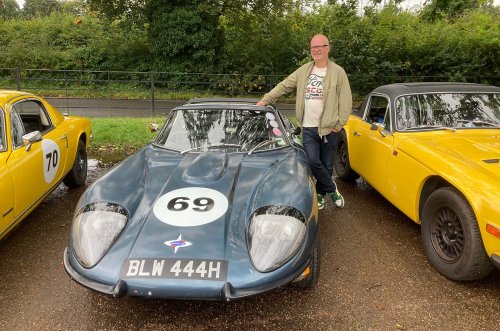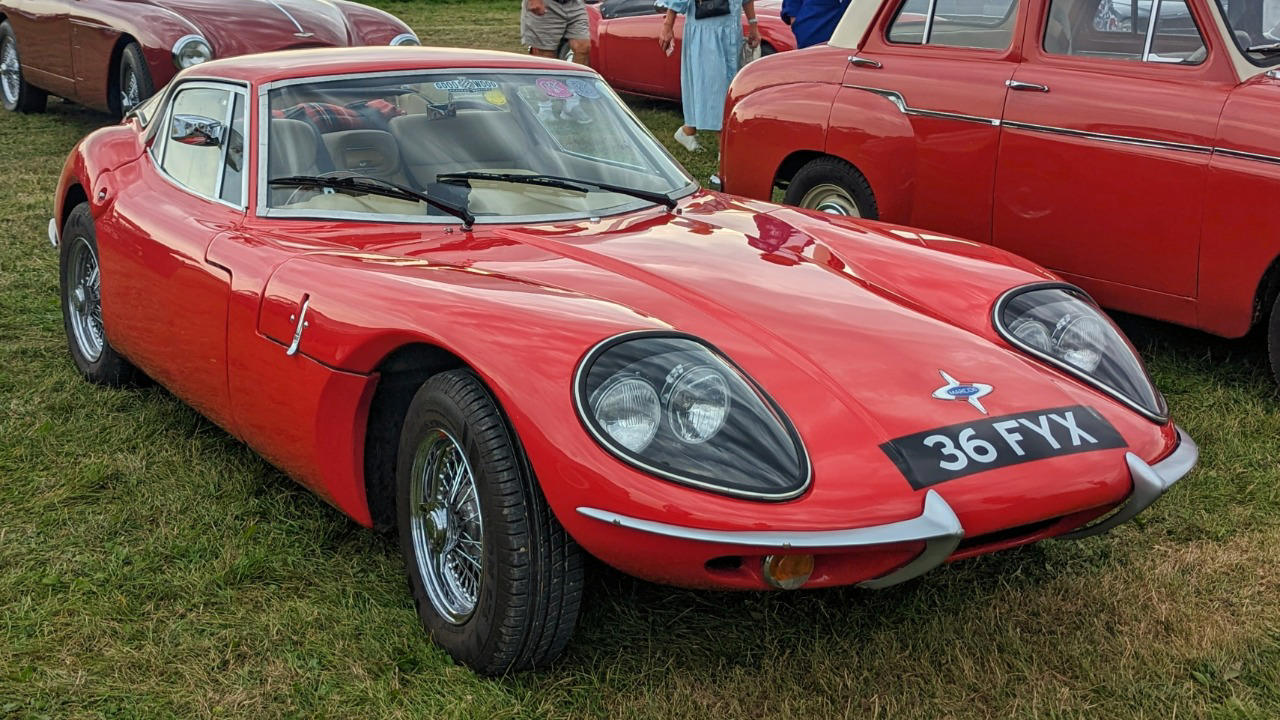



















Most people skip over the 1965 Marcos GT until they see how light it isThe 1965 Marcos 1800 GT rarely commands attention in a crowded classic-car paddock at first glance. Its awkwardly low roofline and unfamiliar badge tend to push it into the background beside more obvious British icons. Only when someone mentions how astonishingly light it is, and how that weight figure comes from plywood rather than exotic metal, do people start to circle back for a closer look. That second inspection reveals a car that treated weight as its central obsession. From the wooden chassis to the reclined driving position and compact Swedish engine, every major decision on the Marcos GT serves the same goal: extract performance not through brute power, but through minimal mass. The plywood experiment that became a sports car Marcos Engineering grew out of a small British operation that spent years experimenting with wood chassis monocoques and glassfibre bodies. Period accounts describe how Marcos engineering treated plywood as a structural material long before composite tubs were fashionable. The company pushed that concept through early models such as the Marcos GT Xylon and later the 1600 GT, building on a philosophy that lightness and stiffness could come from layered timber as effectively as from steel. The Marcos GT line became the clearest expression of that idea. English and European references describe the Marcos as a low-volume British sports car that sat outside the mainstream of the 1960s industry. Rather than chase mass production, the firm focused on small batches and continuous evolution, adjusting engines, suspension hardware and even rear axles as the decade progressed. Within that family, the 1965 Marcos 1800 GT marked a turning point. It combined the proven plywood monocoque with a Volvo four-cylinder and a body shaped almost entirely around the driver. Later commentary on Marcos GT history frames this generation as the car that took the wooden-chassis experiment out of the club-racing niche and into a recognisable roadgoing grand tourer, even if production numbers stayed modest. How light is it really? The headline attraction of the 1965 Marcos 1800 GT is not its power figure or top speed. It is the curb weight. Contemporary technical data for the Marcos GT lists the Height at 42.5 in (1,080 m) and the Curb weight at ca 1,80 kg, numbers that underline just how small and light the car really is. Even allowing for the formatting quirks of historic data, the figure places the Marcos among the featherweights of its era, closer to a racing special than a conventional road coupe. Race-prepared examples confirm the same philosophy. A period competition listing for a Marcos 1800GT 1965 describes a Lightweight specification homologated at 600 kg, with a Mass Engine breathing through 45 DCOE carburetors. That figure puts the car into territory usually reserved for single-seat racers or minimalist track specials, not fully bodied coupes with doors, glass and trim. On the road, that weight transforms how the car feels. Owners and restorers describe an immediacy to every control input and a level of responsiveness that modern drivers associate with stripped competition machinery. The plywood monocoque, bonded and glued rather than welded, keeps the structure rigid while avoiding the mass penalties of steel box sections. The glassfibre bodywork simply wraps that core rather than carrying major loads. Even the driving position serves the same goal. Period engineering notes explain that Adams, the designer, reclined the driver in the style of a contemporary racing car to lower the roofline and frontal area. Later analysis of the Adams layout describes how the seatback almost lies against the wooden backbone, which helps the body sit lower over the chassis and keeps the silhouette dramatically slim. The Swedish heart: Volvo power in a British shell Under the long, low bonnet of the 1965 car sits a Swedish four-cylinder that would be more familiar to owners of Scandinavian coupes than to British sports car buyers. The 1,778-cc (108.2-cu.in) OHV I-4 with twin Stromberg carbs delivered 114 horsepower at 5,800 rpm and 110 lb-ft of torque at 4,200 rpm, figures that appear in period specifications data. The engine, effectively a Volvo B18 variant, was shared with the Volvo P-1800 and brought a reputation for durability that small British makers often struggled to achieve with homegrown powerplants. Enthusiast discussions of the 1964 Marcos 1800 highlight that it used the same B18 engine as the Volvo P-1800, making the 1965 car part of a short run that paired Swedish mechanicals with British chassis ingenuity. Commenters describe the model as only a tad heavier than a bare-bones racer, which kept it competitive in vintage class events despite modest power outputs by modern standards. Later project notes from specialists reaffirm the specification. One restoration summary lists the Original registration date as 1965 and confirms an Engine described as a Volvo 4 cylinder 1780cc engine, paired with a manual gearbox in a compact driveline package. That account of a Marcos project underlines how little metal sits ahead of the driver, which keeps weight off the nose and supports the car’s eager turn-in. The decision to source power from Volvo rather than from domestic suppliers was unusual for a British maker in the mid 1960s. Yet it fit the Marcos approach. The company cared less about national sourcing and more about combining a strong, compact engine with its ultra-light chassis. The B18’s iron block and overhead-valve layout may have looked conservative, but in a car that barely reached three-quarters of a ton, the result felt lively. Suspension, stance and that impossibly low roof The chassis hardware under the Marcos 1800 GT reflects the same obsession with agility and packaging. Contemporary technical commentary explains that the suspension was fully independent, with Triumph Vitesse style unequal wishbones in front and a coil-sprung De Dion tube at the rear. That layout, described in detail in period analysis of the Triumph Vitesse inspired, gave the Marcos a sophisticated footprint compared with many live-axle rivals. The De Dion arrangement in particular helped keep unsprung weight low and camber changes predictable, which mattered on bumpy British circuits. Combined with the plywood backbone and low seating position, it allowed the car to sit at that 42.5 in roof height without compromising basic suspension travel. Drivers who climb in today still comment on how they almost step down into the cockpit rather than dropping from above, a reversal of the experience in many modern sports cars. Inside, the original Marcos 1800 carried a two-spoke steering wheel and a distinctive dashboard. Historical descriptions of the Marcos GT interior mention a prominent centre console and an instrument layout that looked more like a small aircraft than a family saloon. The design was relatively expensive to build, which later led the company to simplify the cabin in subsequent models, but in the 1965 car it reinforced the sense of sitting in a purpose-built machine. Body proportions followed the mechanical package. The long nose housed the Volvo engine and front suspension pick-up points, while the cabin sat far back over the rear wheels. The result was a profile that looked almost cartoonishly low beside conventional coupes of the period, yet the shape flowed logically from the engineering underneath. Race pedigree and the cult that followed Although the Marcos 1800 GT never matched the production scale of bigger British names, it built a competition record that still draws interest. The lightweight homologation figures and plywood structure made it an attractive platform for privateers who wanted something different from the usual Lotus or TVR entries. Period race reports tie specific Marcos 1800 race to long-distance events and endurance marathons, where low weight and efficiency mattered more than outright horsepower. The broader Marcos GT series extended into later engine options and body revisions. Enthusiast groups cataloguing the Marcos GT 3 and the 1968 Marcos 1600 GT describe how the line evolved from the original Volvo powered cars into Ford based drivetrains and larger capacities. Names such as Ghislain Eloy Depasse appear in social media posts that celebrate the Marcos GT among other historically important British automobiles, evidence of a small but dedicated following. That following shows up in the engagement numbers that modern posts attract. A featured photo of a 1965 Marcos 1800 GT credited to Juan Alfonso Orero Revert and shared in an enthusiast group drew 522 reactions, 41 comments and 79 shares. The same post tags Aggrotech Ebm Industrial among those engaging with the image, a reminder that niche cars can still generate broad interest when they surface in the right online communities. The figures of 521 and 522 sit alongside references to the 1968 Marcos 1600 GT, which used a plywood chassis, glassfibre body and rear-wheel drive, tying the wooden-chassis story across multiple variants. Another enthusiast account describes how the 1968 Marcos 1600 GT is a unique sports car that used a plywood chassis similar to modern composite technology. That post on Marcos history frames the wooden construction as a precursor to later carbon fibre tubs, even if the materials differ. It also reinforces how the company kept refining the same basic idea rather than abandoning it after a single model run. Why enthusiasts are finally paying attention For years, the Marcos 1800 GT sat in the shadow of more famous 1960s coupes. The badge lacked the instant recognition of Jaguar or Aston Martin, and the plywood chassis could sound like an oddity rather than a selling point. Yet as the classic market has matured, the qualities that once seemed eccentric now look forward thinking. Collectors who focus on engineering stories increasingly highlight the car’s combination of low mass, efficient packaging and cross-border component sourcing. The fact that a British company could pair a Volvo engine with a plywood monocoque and a De Dion rear end, then keep the roof at 42.5 in while delivering road comfort, reads like a case study in creative problem solving. References in multiple Wikipedia entries and in linked data collections show how the car has moved from obscurity into a more widely documented niche. There is also a growing appreciation for cars that achieve performance through lightness rather than power. In an era where modern sports models routinely exceed 1,400 kg and rely on electronics to manage their mass, a plywood coupe that weighs around 600 kg in racing trim and still uses mechanical steering and simple suspension has obvious appeal. Drivers who experience a well set up example often come away surprised at how alive the car feels at legal speeds, a trait that many heavier contemporaries cannot match. That shift in perception helps explain why more people now pause when they see a Marcos badge in a paddock or on a social feed. At first, the 1965 GT might blend into the background beside more glamorous machinery. Once its weight figure, its 1,778-cc Swedish engine and its plywood backbone enter the conversation, the car stops being a curiosity and starts to look like one of the most inventive British sports cars of its decade. More from Fast Lane Only Unboxing the WWII Jeep in a Crate 15 rare Chevys collectors are quietly buying 10 underrated V8s still worth hunting down Police notice this before you even roll window down The post Most people skip over the 1965 Marcos GT until they see how light it is appeared first on FAST LANE ONLY.