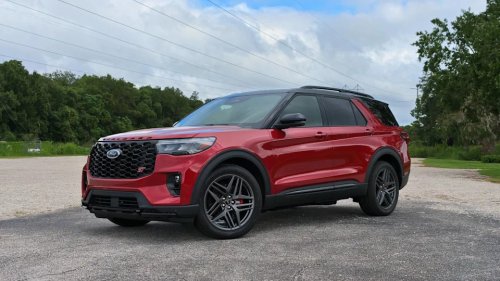
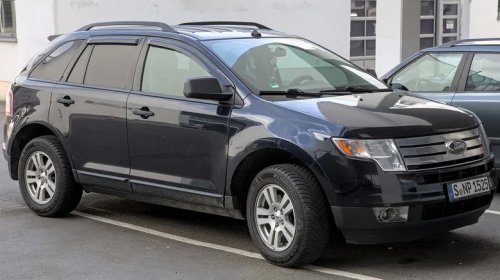
A warning light on your dashboard can ruin your day. Most people don't know what half of them mean, and the ones that sound serious—powertrain, engine, and transmission—can send you into a full spiral because you know it’s going to cost a pretty penny. Some people ignore them and keep driving, hoping it goes away on its own; others do the responsible thing and get it checked out. But what happens when you spend the money to get it checked out, but get zero answers? What’s Up With This Ford Explorer Dashboard Light? In a video with around 6,900 views, content creator Jack (@jackofeverything) recounts a frustrating experience with her Ford Explorer. "There was a light that came on the dash of my Ford Explorer that was shaped like a wrench," she says, "and when I googled that, it said it was probably the powertrain, and it was." She says she drove with the light on for three days before she could get an appointment at the dealership. It was on when she turned the car on that morning. It was still on when she pulled into the dealer's lot. Then the mechanic got behind the wheel to move it into the bay, and it vanished. "I paid them $123 for them to tell me that there's nothing wrong with my car," she says. "I don't have $123 to waste,” she added in the caption. Tell us what you think! View Comments What The Ford Wrench Light Means The wrench symbol on a Ford dashboard is tied to two things: the throttle control system and the transmission. According to Branch Automotive, the light activates when the car's onboard diagnostic system detects a problem in either of those areas. Common triggers include a faulty throttle body, transmission issues, failed sensors, a failing electronic control module, low battery voltage, or loose and damaged wiring. The other thing worth knowing is that ignoring it can make things worse. If the underlying problem goes unaddressed, the car can enter what Ford calls "limp mode," a safety feature that caps engine RPM and slashes power to protect the drivetrain. At that point, driving at normal speeds becomes impossible until the issue is actually fixed. Branch Automotive notes that a proper diagnosis involves more than just plugging in a scanner and reading the trouble codes. Mechanics also need to inspect sensors, test the throttle body and transmission components, and check the wiring harness. Why Warning Lights Sometimes Disappear According to Firestone Complete Auto Care, dashboard warning lights are tied to the car's electrical system and rely on consistent power to function. Intermittent issues (things like a weak battery, a failing alternator, a faulty voltage regulator, or loose electrical connections) can cause lights to flicker on and off unpredictably. The underlying problem doesn't go away just because the light does. It just means the fault isn't actively triggering at that exact moment, which makes diagnosis significantly harder and, in some cases, means a shop can legitimately come back with "no fault found." Commenters React “This may or may not be true. Faults are logged in control units memory. Since you paid the diagnostic fee you should have asked for a print out. If you didn’t get it tell them you want it . The diagnostic report will be stored in their system,” a top comment read. “Go to AutoZone and have them scan for codes. They will do it for free,” a person said. “It still logged a fault…” another wrote. “Hopefully they didn't just clear it, otherwise it will come back on. Good luck,” a commenter added. Motor1 reached out to Jack (@jackofeverything) via TikTok direct message and comment. We'll be sure to update this if they respond. We want your opinion! What would you like to see on Motor1.com? Take our 3 minute survey. - The Motor1.com Team