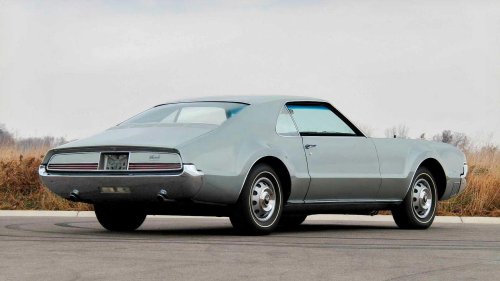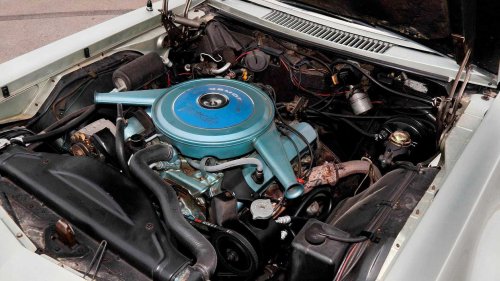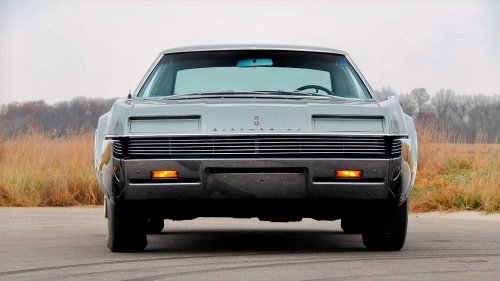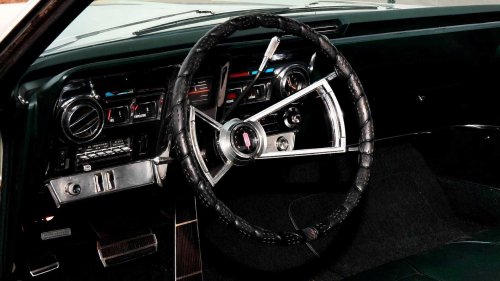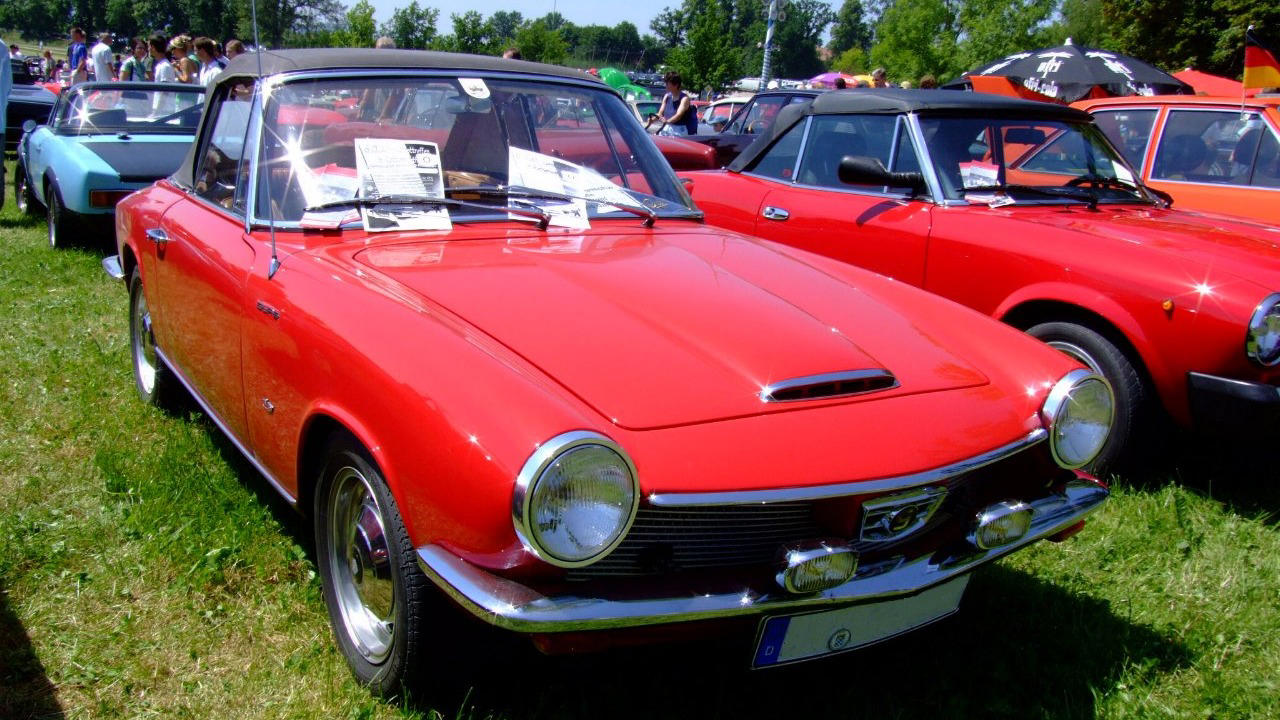


























The 1965 Glas 1700 GT is a car most people miss until they look closerThe 1965 Glas 1700 GT rarely draws a crowd at first glance. Parked among louder badges and bigger reputations, it can look like just another pretty 1960s coupe until someone pauses long enough to trace its lines and read its small script badge. Look closer, and this understated car reveals a story that connects Italian design studios, rural Bavarian workshops and the early ambitions of BMW. A Bavarian outsider with Italian curves To understand why the Glas 1700 GT slips past most people, it helps to start with the name on its nose. The Glas GT family came from Glas, a modest German manufacturer that never achieved the profile of Porsche or Mercedes. Yet the Glas GT line was conceived as a genuine European sports car, aimed at the same buyers who might otherwise have considered more established marques. Glas did not try to compete on brute force. Instead, the company leaned into style and engineering neatness. The Glas 1700 GT arrived after the smaller Glas 1300 GT, extending the concept with more displacement and a higher position in the range. In the model table for Glas GT Glas, the Glas 1700 GT sits between the original Glas GT and the later BMW 1600 GT, with the BMW 02 Series listed as successor, underlining how this small coupe bridged two eras. The company itself was rooted far from Italy. Glas, also referred to as The Glas, grew out of Hans Glas GmbH in Dingolfing, a business better known for practical vehicles than glamorous coupes. The saloon that shared its engine with the GT, the Glas 1700, was a middle class four door produced by Hans Glas at Dingolfing, and its development was tracked from prototype stage through to a quiet end when BMW pulled the plug because Glas lacked cash for investment. That pragmatic background makes the GT’s styling all the more surprising. Pietro Frua and the Ferrari illusion The surprise comes from one name stamped into the history of the car: Pietro Frua. The body of the Glas 1700 GT was styled by the Italian designer, whose studio gave this compact German coupe a profile that could almost pass for a scaled down Ferrari. Contemporary observers have noted that the car’s sleek bodywork, styled by renowned Italian designer Pietro Frua, is marked by smooth lines and an aerodynamic profile that still looks modern on a quiet side street. One enthusiast video captures the effect in plain language. In a segment titled Vintage! GLAS GT, the narrator remarks that it looks like a Ferrari but hails from rural Bavaria, the Glass GT that appears on screen belonging to an owner named Uvaen who keeps two of these rare vehicles, including a 1700 GT coupe. The clip, available on Bavaria the Glass, underlines how easily the silhouette can be mistaken for something Italian and exotic rather than a product of Dingolfing. The Italian influence ran deeper than a passing resemblance. Commentators describe the Glas 1700 GT as a cool blend of Italian design and German engineering. Produced by Hans Glas between the mid 1960s and the late 1960s, The Glas 1700 GT carried a body penned in Turin and a drivetrain developed in Germany. One detailed overview of the Glas highlights this dual character as central to the car’s appeal. Another close study of the model’s styling credits Italian automotive design icon Pietro Frua with creating one of the prettiest sports coupes of its era, with images attributed to Hans Glas GmbH. That assessment appears in a feature on the Italian Pietro Frua design, which positions the car among the most elegant shapes of the 1960s. Engineering roots and the 1700 upgrade Under the surface, the Glas 1700 GT was less flamboyant and more methodical. The coupe shared its basic powertrain with the Glas 1700 saloon, tying the glamorous body to the practical four door that Hans Glas built for middle class buyers. The saloon, described in detail in the entry on The Glas 1700, was engineered to be durable rather than exotic, and that same engine provided the GT with reliable performance instead of temperamental thrills. The GT range began with a smaller engine. In its early form the Glas GT used a 1,300-cc unit, which later gained a companion in the 1700 GT motoring variant. One analysis of BMW’s South African sedans notes that the 1,300-cc specification was later joined in the lineup by the 1700 GT, and that these cars carried a truly seductive Italian visual philosophy on top of their German mechanicals. That pairing is highlighted in a study of the 1,300-cc specification and its evolution. By the time the Glas 1700 GT reached showrooms, the car sat near the top of the Glas range. It was marketed as a relatively affordable yet potent coupe, one that combined style with everyday usability. Club material from GLAS describes the GT as elegant and relatively affordable, yet also very potent, and calls it the most successful design in the company’s history. That description appears in the GLAS GT section of the GLAS club, which also notes that cars were exported to the USA for US$3,785. Modern market summaries echo that positioning. A current listing platform describes the Glas 1700 as blending Italian design by Pietro Frua with German engineering spirit, and presents the coupe as an appealing package for enthusiasts who want something different from mainstream classics. The overview of The Glas 1700 highlights those qualities as central selling points. In period, the 1700 GT’s performance figures were competitive for a small European sports car, even if they were not headline grabbing. The Glas GT entry records how, in September 1965, maximum power rose as the car evolved, and the model joined the broader market for European sports cars that balanced speed with practicality. That context is laid out in the main Glas GT overview, which situates the coupe among its contemporaries. From obscure showroom piece to collector’s secret The Glas 1700 GT never reached mass popularity, which is one reason it remains easy to overlook. Production numbers stayed modest, and the company’s independent run ended when BMW absorbed Glas. A detailed description of one green GLAS GT, first registered in California in 1968 and later taken by its owner to Vancouver in the 1970s, notes that production of the GT began in 1964 and that by 1965 a significant share of output was already in the 1700 GT specification. The same account explains that roughly one third of the total GTs built were 1700 GTs, a figure that appears in the Description of that restored car. Today, the car’s scarcity is part of its appeal. One detailed feature on a late 1967 example describes it as a rare Glas 1700 GT, one of the last built in that year. The same car had been sitting in a garage for 50 years, a detail repeated several times in the coverage and in social media references that emphasize the figure 50 while calling it a Rare Glas 1700 GT Garage Find. That story appears in a report on a Garage Find and is echoed in linked references that use phrases such as Forgotten For 50 Years and Rare Glas Garage Find. Another enthusiast piece frames the 1700 GT as a cool blend of Italian and German influences and describes it as a valuable find for collectors. The same report notes that a tidy example was offered at around $12,500 in Emeryville, California, indicating that values, while rising, still lag far behind the car’s more famous Italian lookalikes. Those details are captured in a closer look at the rare Glas that surfaced on the West Coast. Specialist dealers reinforce the sense that the 1700 GT is a connoisseur’s choice. One buying guide frames the car in the context of the mid 1960s German sports car industry, describing how, as the German market entered a state of full swing in 1965, Glas followed its reputation for sharp, practical engineering into the sports segment. The guide, written for people Buying or Selling a Glas 1700 GT, presents the coupe as a smart alternative to better known models. That positioning is outlined in the buying advice. Even among BMW enthusiasts, the car is treated as something of a hidden relative. One feature on a 1966 example introduces the story with the phrase Enter Glas and describes how, with a curvaceous body designed by Frua, the Glas 1700GT offered supermodel looks comparable to any contemporary Itali coupe. The same piece likens the car to the BMW 507’s stepbrother and compares it with the Mercedes 190SL, using the phrase Enter Glas to signal its arrival in that company. Those comparisons are laid out in a profile of Enter Glas and its place in that lineage. Why the 1700 GT still rewards a second look Part of the Glas 1700 GT’s charm lies in how it plays with perception. At first glance, it can look like a junior Ferrari, which is exactly how the Vintage! GLAS GT segment introduces it. Yet the badge on the nose leads not to Maranello but back to Bavaria, to a factory that also turned out practical saloons and microcars. That contrast between appearance and origin is what makes the car such a satisfying discovery for those who care to look twice. Modern coverage often leans into that sense of surprise. One recent show report described how, among a field of classic cars, what truly stood out was a Glas 1700 GT Coupé that appeared to have just rolled out of uncanny valley. The writer suggested that many younger visitors assumed it might be a digital creation rather than a real mid century product, which is why the piece joked that haters will say it is AI. That reaction is recounted in a feature on a Glas Coup that looked almost too perfect. Clubs and enthusiasts have stepped in to preserve the story behind that uncanny shape. GLAS owners’ groups document production numbers, period pricing and export histories, while also sharing restoration guides and parts sources. The GLAS GT description from the club, which calls the coupe the company’s most successful design, is one example of how owners have built a knowledge base around a car that mainstream histories often skip. The digital footprint around the car has grown through a web of small but dedicated outlets. One feature on a 1967 example traces a path from a Craigslist listing in the San Francisco Bay Area to deeper background, linking to resources such as classicviruslist.com and even technical services like Akismet’s privacy page that support the hosting platform. Those links, discovered through references to Burrito, Glas, Frua and Classic Virus, form a kind of informal archive that keeps the model visible to people searching for obscure European coupes. More from Fast Lane Only Unboxing the WWII Jeep in a Crate 15 rare Chevys collectors are quietly buying 10 underrated V8s still worth hunting down Police notice this before you even roll window down The post The 1965 Glas 1700 GT is a car most people miss until they look closer appeared first on FAST LANE ONLY.