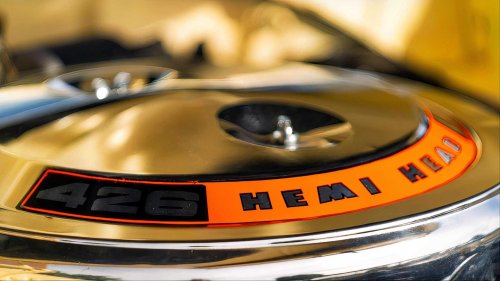
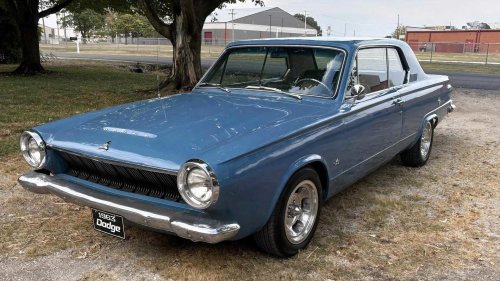
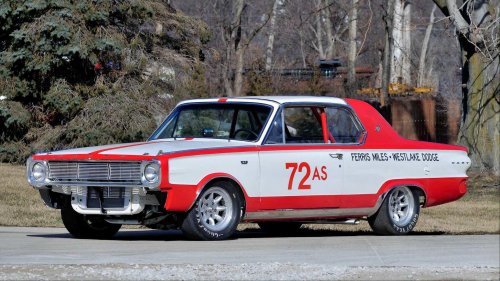
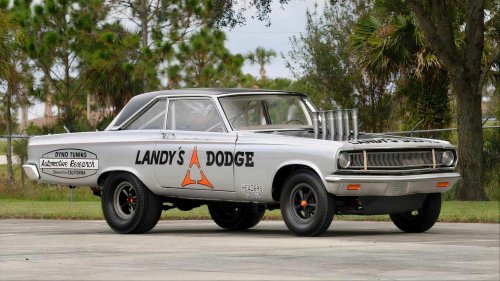
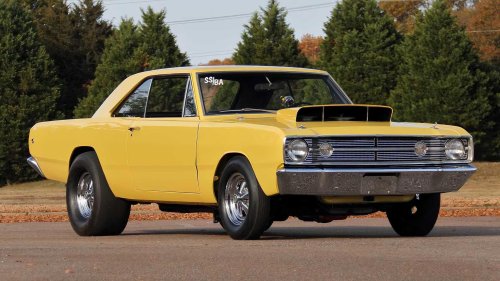
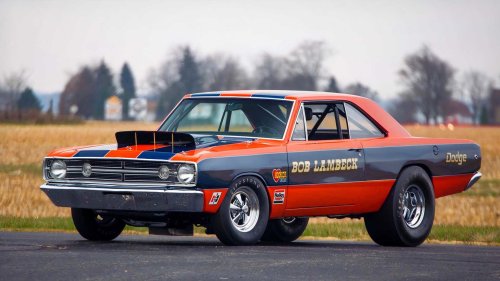
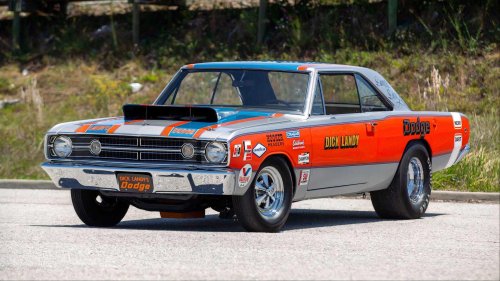
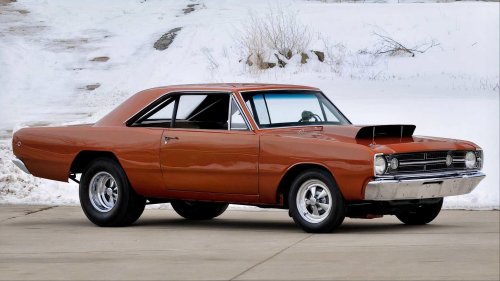
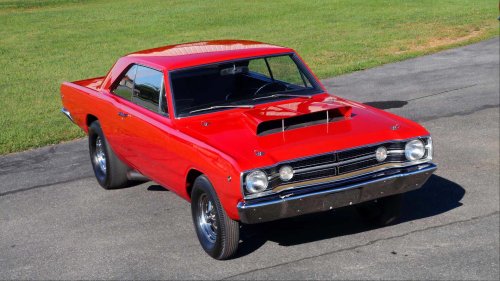
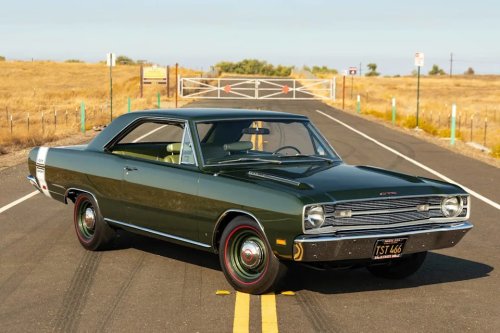
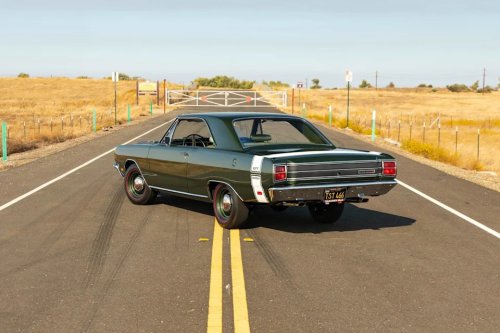
After driving a stake though the heart of the Axis of Evil, many returning WWII service members with mechanical skill and adrenalin addictions, came up with a new wicked form of driving. Hot rodding took hold in Southern California, with the original gearheads modding their cars in extreme ways to get as much speed as possible out of them, which inevitably led to drag racing as a serious sport. In the early days, there was a lot of craziness on the dry lake beds and streets of the LA area, so Wally Parks founded the National Hot Rod Association (NHRA) in 1951 as a way to focus the chaos on 1,320 feet of a controlled environment.Even with structure, drag racing was still the Wild Wild West with drivers and teams left to Frankenstein together their rides, and, of course, pay for everything out of pocket. Detroit noticed the popularity of the rising sport in the 1960s and started lending support as well as building factory drag cars. Track-ready rides like the 1963 Chevrolet Impala Z11 or 1964 Ford Thunderbolt weren't just drag legends but also promotional tools that helped sell more muscle cars. Dodge was also involved in providing factory mayhem, but in 1968, they outdid themselves by creating the ultimate drag car that somehow flew under the radar while also pegging the radar gun. The Dodge Dart Misses Out On 426 Street Hemi Mania Mecum Every superhero car needs a good origin story, and Dodge's dominant factory drag car is descended from the Mopar Gods. Back in the 1950s, Chrysler developed a new powerful V-8 with hemispherical combustion chambers. Known as the FirePower series, the mutha of all engines was the 375-horsepower 392ci V-8 that made the 1957 Chrysler 300C the fastest car in the world at the time. For whatever reason, the FirePower was discontinued, but in the early '60s, the idea of the unique heads found new favor and the 426ci Hemi V-8 was born. This 425-horsepower, 490 pound-feet of torque wondermill was designed as a race-only engine, and more specifically for Richard Petty to kick all the ass on the NASCAR circuit in his Plymouth Blevedere.Bring A Trailer It turns out, Petty was a little too successful with the Hemi engine and Ford went crying to NASCAR that it was too fast. NASCAR temporarily banned the 426 Hemi, until it could be homologated, meaning that a certain number, usually 500 to 1,000, had to be sold to the public to qualify for competition. Instead of doing a homologation special, Chrysler made the 426 Street Hemi available to all Dodge and Plymouth intermediate models, and suddenly Fords were getting smoked on the streets as well.As a compact, however, the Dodge Dart was excluded from the Hemi frenzy, which was kind of a slap in the face, because in the early '60s it was a Max Wedge-equipped Corvette killer and the fastest thing Mopar had to offer. 1966 Dodge D-Dart Race Car That Was an Actual Drag Mecum Dodge tried to throw the Dart a bone in 1966 by creating a factory drag car, but not with a Hemi. The D-Dart was built to compete in the NHRA D/Stock class and featured an underwhelming 275-horsepower 273ci V-8. It reportedly ran in the low 14s, which isn't even as good as a '66 Dart would have been with a bone-stock 383ci V-8, which existed at the time but wasn't available on the compact Dodge.Needless to say, the D-Dart wasn't terribly successful and Dodge abandoned the project after only 50 units were made. The funny thing was that this was supposed to be a promotional kind of thing to help move Darts off the lot, but the formula was "Win on Sunday, sell on Monday", so it fell flat. Mopar Factory Drag Car Mecum Dodge did have a serious drag car in the 1965 Dodge Coronet A990, that was so badass it made the NHRA change the rules. The Coronet A990, along with its Plymouth Belvedere A990 sister car, actually got ahold of the 426 Hemi V-8 a year before the rest of Mopar was graced with it.Pulling ETs in the low-11s and high-10s, this factory drag car absolutely dominated the Super Stock class. There were actually a lot of things like acid-dipped body panels on the A990 cars that weren't particularly stock, so the NHRA created the Factory Experimental (FX) class, which eventually led to what we now know as funny cars. There were about 200 A990s built, split evenly between Dodge and Plymouth, so it's a valuable piece of Mopar history. 1968 Dodge Dart Finally Gets A Hemi From Hurst Mecum Chances are it wasn't Dodge that was keeping the Dart out of the Hemi sweepstakes, but rather a Chrysler Corporation edict, but in 1968 a brilliant loophole was found. Chrysler only forbade Dodge from putting a Hemi into a compact, but they didn't say anything about a third party. Dodge entered into a partnership with Hurst Performance to build the ultimate factory drag car, based on the '68 Dart GTS and featuring a big honking 426ci Hemi V-8. The cars were built sans engine at the Dodge factory and then sent to Hurst for Hemifying as well as getting other performance upgrades. Signified by the "LO23" code, the '68 Hemi Dart was an absolute terror on the drag strip, fresh from the factory.Amazingly enough, this 10-second ride was actually street legal, though street use was heavily discouraged by Dodge. There is a misconception that powerful cars are illegal to run on the streets, but what "street legal" actually means is that the car has normal safety features like seat belts, headlights, turn signals, and bumpers. The Hemi Dart had all of that, but Dodge intended it to be a track-only car and issued a disclaimer warning that it shouldn't be used on the street. Then again, it was sold at Dodge dealers, so chances are some knucklehead bought one as a daily driver and subsequently wrapped it around a telephone pole. Only 80 of these bad boys were produced and most were distributed directly to racing teams, so most people didn't even know about it back then. Unleashing the Power of the '68 Hemi Dart MecumThe 1968 Hemi Dart LO23 was put on a diet with acid-dipped body panels, fiberglass hood, lightweight bumpers, and an interior deletion of just about everything that wasn't a driver's seat or steering wheel, giving it a curb weight of about 3,000 pounds. Combined with the underrated ferocity of the 426ci Hemi V-8, this sucker had a power-to-weight ratio that made it seem like it was shot out of a cannon. According to Dodge Garage, a Hemi Dart could run "Mid-10s on the quarter-mile. All day long," and racing legend Dick Landy blasted a 10.46 second ET at 131.19 MPH in October 1968. There are rumors that a little bit of tuning could get this car down in the 9s, but there are no documented runs to support that. The 1968 Plymouth Barracuda Got Its Own Hemi Too Mecum Coinciding with the amazing Hemi Dart, Plymouth got their own Hurst special with the 1968 Hemi Barracuda, foreshadowing the iconic Hemi 'Cuda a few years later, and that, BTW, is the legal limit for how many times we're allowed to use "Hemi" in a sentence. The Hemi Barracuda was also a stripped-down, lightweight drag monster, and actually was a little bit quicker off the draw than the Hemi Dart.When Plymouth put the test mule, pictured above, through the paces, they recorded a 10.22-second quarter-mile run, which is 0.24 seconds faster than the Dodge. That's an almost imperceptible amount of time, but it is technically faster, so chalk one up for Plymouth. With only 50 units produced, the '68 Plymouth Hemi Barracuda BO29 is also rarer, giving it the edge in collectibility as well. Track-Ready NHRA Superstar Mecum The Dodge Hemi Dart won the NHRA SS/AH class in both 1968 and 1969, as well as taking many major events on the circuit. The only time it didn't win was when a Hemi Barracuda beat it down the track. Icons like Dick Landy, Herb McCandless, and Ronnie Sox racked up numerous divisional and national wins behind the wheel of a LO23, but when it came to the big prize, it was a BO29 that brought home the glory. In the 1968 NHRA U.S. Nationals Super Stock Eliminator, it was Arlen Vanke driving a Plymouth Hemi Barracuda who took the title. For the year, it was almost always a Hemi Dart vs. a Hemi Barrcuda in the finals of any NHRA event. 426 Hemi Shadow Ban MecumBecause the Hemi-powered Darts and Barracudas were so dominant, the 426ci Hemi V-8 once again wore out its welcome on the racing scene. While the NHRA didn't outright ban the Mopar factory drag cars, they required Hemi-equipped entrants to carry extra weight to sort of even the playing field. This ended the compact Hemi Dart's advantage, but it was still a competitive car, just not nearly as dominant. This was also the final curtain call for lightweight factory drag cars because there was literally no point in stripping off the weight if it had to be added back on to compete. On the bright side, the 426 Hemi V-8 can brag that it was the only engine so badass that it was banned by both NASCAR and the NHRA. Buying A Hemi Dart Today MecumGenerally speaking, a rare 1-of-80 Hemi-equipped classic Mopar should be a million-dollar ride, but there's a little secret that collectors aren't as interested in race cars as they are factory originals. Most of the 1968 Dodge Hemi Darts were raced and still bear the drivers' names and advertisers, which makes them less valuable than, say, a clean 1970 Challenger Hemi R/T convertible. On the plus side, all of these cars were delivered without paint, so any kind of a respray during restoration doesn't affect their value like it would be changing colors on an otherwise numbers-matching Golden Age Mopar.Neither Hagerty nor J.D. Power has a value for a '68 Hemi Dart, but for the most part these are six-figure cars. One with a plain yellow paint job sold for $300,000 at Mecum Kissimmee 2016 and then that same car took at $302,500 at Mecum Kissimmee 2023. By contrast, Dick Landy's LO23 only brought in $220,000 at a Mecum auction in 2019. Even crazier, a legit numbers-matching race car just sold at Mecum Kissimmee 2026 for a mere $93,500. Granted, these cars don't have a lot creature comforts and make lousy daily drivers, but they are rare Hemis and should be worth a hell of a lot more.Sources: Dodge, Mecum.