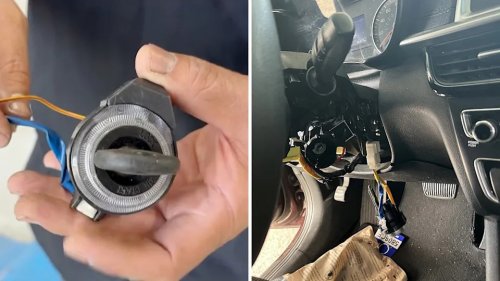
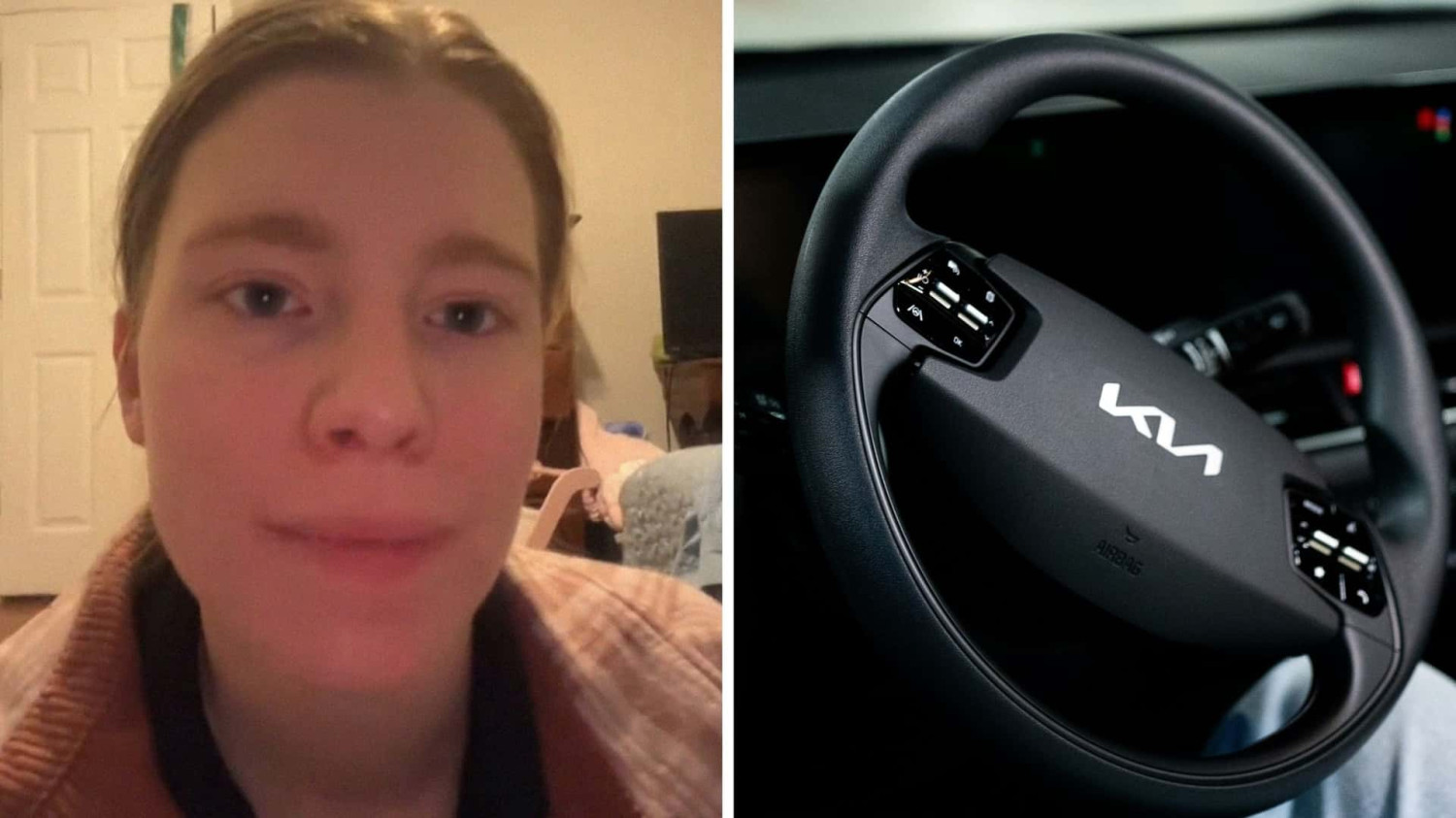
Two hours before a woman was supposed to trade in her Kia, she sat behind the wheel, watching the dashboard light up and feeling the engine start to shake. What should have been a routine hand-off before taking possession of a new car suddenly looked like a deal that was dead on arrival. In the clip from creator Bre (@beepboopboopbeepbeepboop), she's in obvious distress as she fills viewers in on an unfolding disaster. Desperately wanting to part ways with the car that she's apparently never been very happy with, none of the maintenance steps she’s tried have done anything to address the transmission light on her dashboard that suddenly came on before trading the car in. "I seriously don't know whether to cry or laugh because I was about to trade my car out and now my transmission light is on and my car is shaking," she said in the TikTok that's been viewed more than 7,100 times. "I just wanted to trade this car out, and now are they gonna take it if the transmission's light on? Probably not." Did She Fix The Troubled Kia? Throughout the clip, there's a blurred line between panic and guesswork. Bre says she's added oil. She wonders if a fresh oil change and filter might somehow smooth things out, but nothing changes. She reports the car keeps shaking and the warning light stays on, turning what should have been a straightforward trade-in into a motorized hazard. In a follow-up video, she adds a layer of clarity that only partly settles things. After the car was scanned, she says the issue indicated a misfire linked to one of the ignition coils. It's a far less catastrophic diagnosis than a failing transmission, at least on paper, and it's something she feels comfortable trying to fix herself. She replaces what she describes as the third coil, hoping that will resolve the rough running condition. But even after the repair, the car is still shaking, leaving her uncertain, short on time, and out of pocket for the cost of the parts and her effort. Faced with a car that still wasn't running right and a trade-in deadline looming, she made a decision that a lot of drivers would understand: cut your losses and move on. Tell us what you think! View Comments "I just traded that POS," she wrote in the comments. In the follow-up posts, she said the car had been throwing multiple misfire codes and that she had already spent about $300 trying to track down the problem. The dealership still took the vehicle, but at a cost. She said she owed roughly $12,000 on the loan and received about $7,500 on trade, leaving her to roll several thousand dollars of negative equity into the next purchase. That brought the total of her new loan to around $32,000. Were There Other Options? In the comments, the clip turns into a kind of real-time troubleshooting session. Some viewers encouraged her to keep working on the problem, suggesting that clearing the code and continuing to diagnose the misfire might have eventually led to a fix. "You have to clear the code and then start it. I had to change my coils on my Cadillac. You got this," one commenter wrote. Clearing a code can sometimes turn off the warning light temporarily, especially if the underlying issue isn’t constant, but it doesn’t fix the root problem. In situations like this, it can also reset readiness monitors and make it harder to get a clear picture of what’s actually wrong, which is why most mechanics treat it as a short-term step in diagnosis rather than a solution on its own. Others focused less on the repair and more on the transaction itself. One commenter pointed out that she might have gotten more money selling the car elsewhere, mentioning Carvana as an option. Bre replied that the online retailer had offered her just under $8,000, and she asked how to use Carvana, which was a sign that, even at that stage, she was still weighing what the best move might be. Mixed in with the advice were notes of sympathy from people who saw the situation as something bigger than a mechanical issue. For them, it was a familiar kind of pressure, caused by an unreliable car and a decision that had to be made under considerable duress. "US mamas just want a good running car," one commenter wrote. Even after Bre had wrapped up the transaction, the picture was murky. In a later comment, she said the underlying issue appeared to be a vacuum leak at the intake manifold gasket, with a repair expected to run around $500. Initially, the estimate reads like a manageable fix. But that clarity only came after the car had been running poorly, and each attempted solution only added to the uncertainty. With no guarantee that the problem was isolated or that another issue wouldn't surface, she didn't have the luxury of waiting for a definite solution. Instead, she pretty much bit the bullet and chose the definite outcome of swallowing a lower trade-in price and agreeing to a higher monthly payment. What we see in the clip serves as a reminder of how quickly a routine trade-in can fall apart when a vehicle becomes unpredictable. That's especially so for a young mother who had a simple goal to hand over the keys and move on. Unfortunately, when any trust and confidence in her car disappeared, all she was left with was an assortment of options that went from bad to worse. Motor1 reached out to Bre via direct message and commenting on the clip. We’ll update this if she responds. We want your opinion! What would you like to see on Motor1.com? Take our 3 minute survey. - The Motor1.com Team



















 +44 others