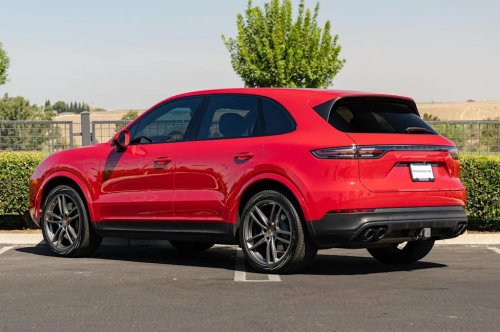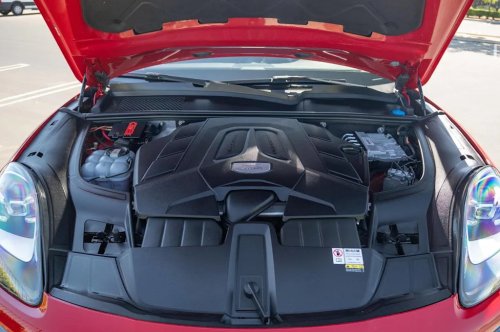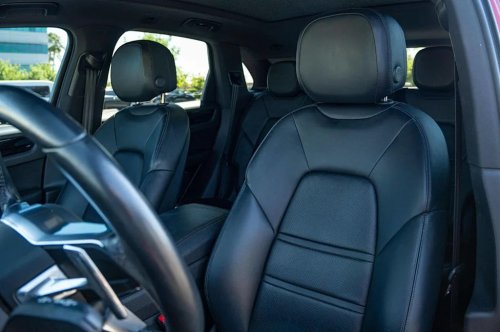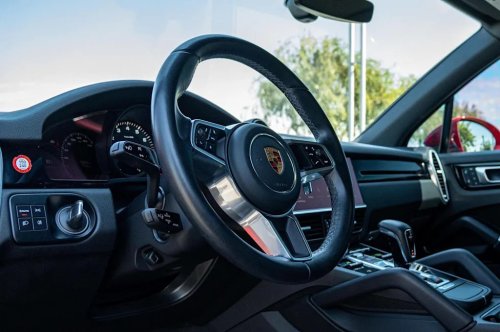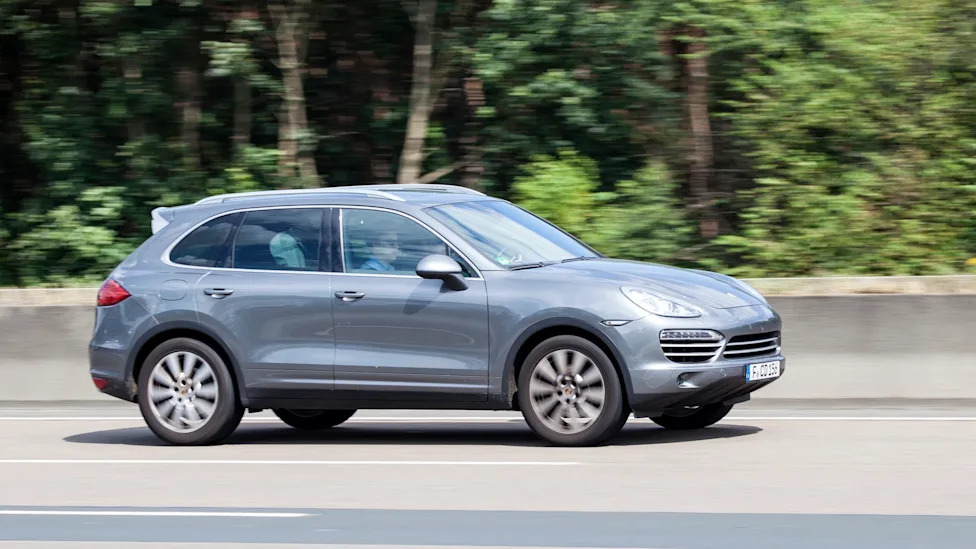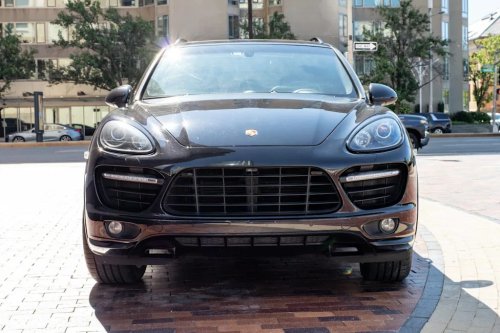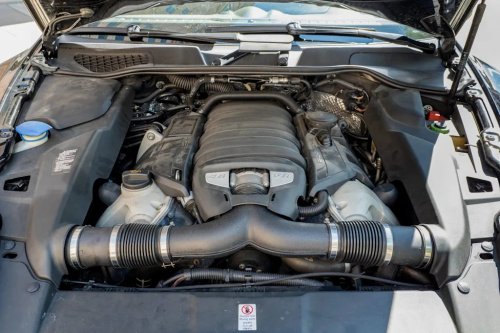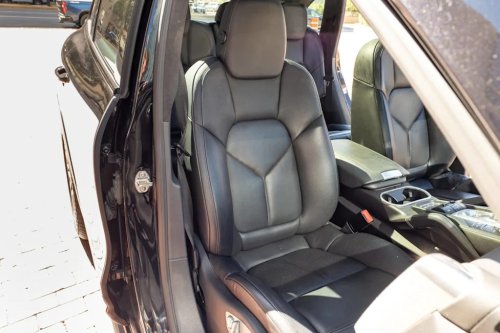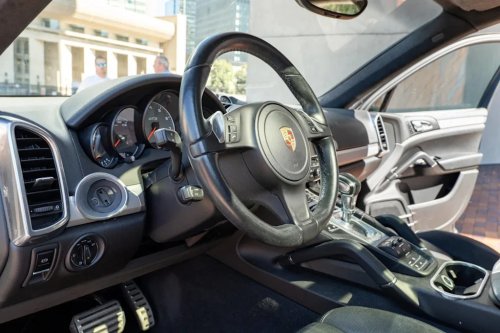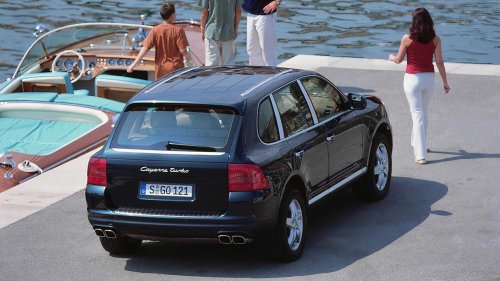
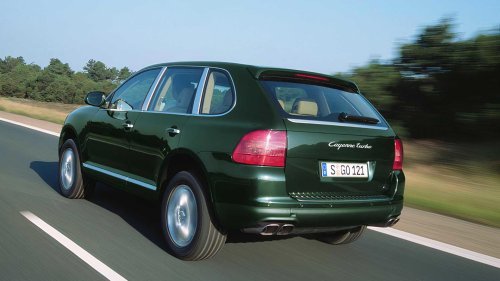
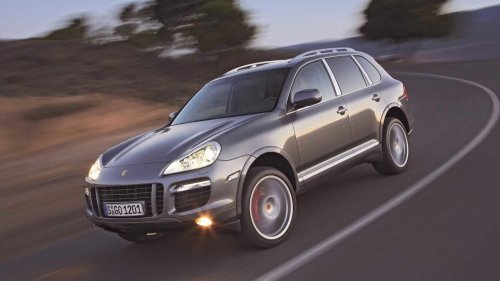
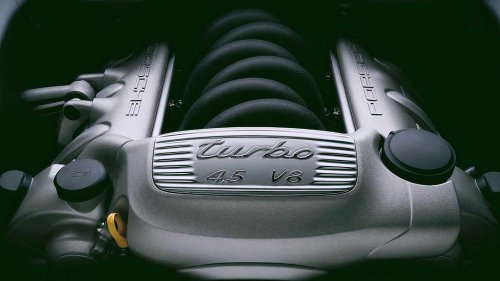
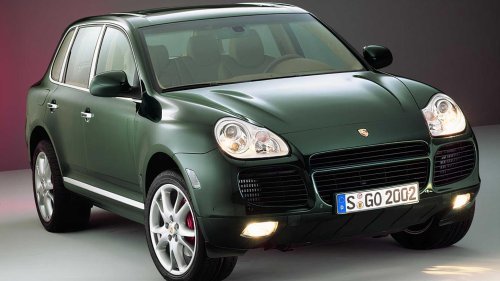
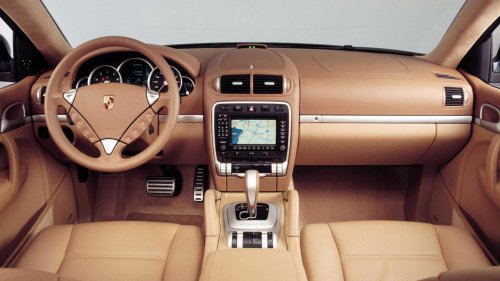
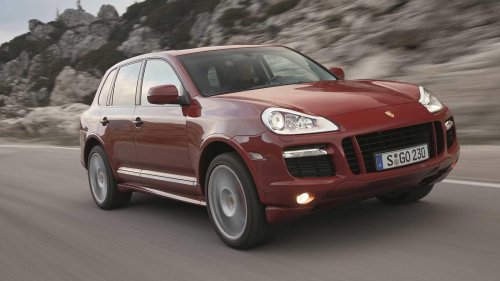

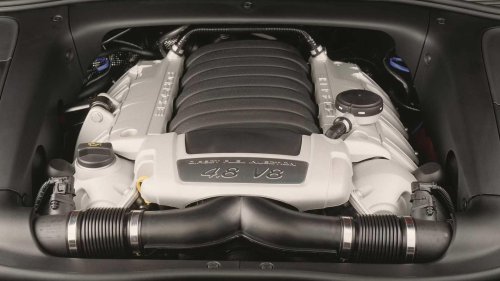
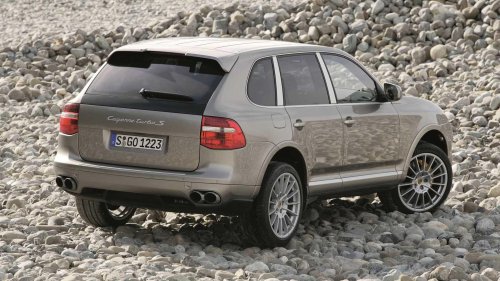
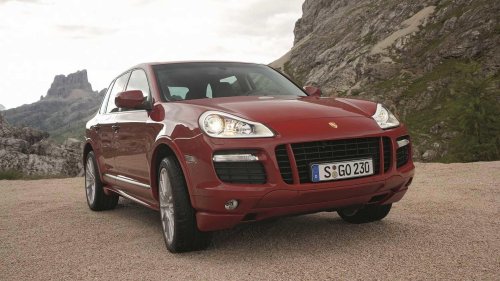


















Jump LinksPre-facelift 2003–2006 Cayenne (955)2003–2006 Cayenne (955) SpecificationsFirst-generation Porsche Cayenne CriticismThe Facelift That Fixed The Cayenne (957): What Changed?Other Engine Changes From 955 To 957:Exterior RefreshInterior RefreshThe GTS: The New Addition to the Lineup2010: Specific ModelsDrivetrain (All Models):Safety Ratings In The US: The Uncomfortable Truth2010 Porsche Cayenne Reliability and Common IssuesKey Problem Areas For 2010 (957) Models:What You're Likely To Pay Today Does the 2010 Cayenne have a V8 engine?Is the 2010 Porsche Cayenne reliable?How much horsepower does a 2010 Porsche Cayenne have?Performance SUVs have become a fixture in the automotive landscape, with models like the Porsche Panamera, Aston Martin DBX707, and Bentley Bentayga Speed offering true sports car levels of acceleration and handling. However, there was a time when these high-riding speedsters were a rarity, and it was Porsche that helped pioneer the segment. The 2010 Porsche Cayenne was the culmination of this endeavor, being the final year of the first generation.Now, more than a decade later, these cars can be picked up on the used market at a fraction of their initial price, which was arguably far too high. However, the question remains, is a 2010 model a smart buy with all the modern alternatives at your fingertips? And are you setting yourself up for high maintenance costs, or will you get your money's worth?This Buyer's Guide combines on-paper information and independent tests/real test drive reports, where available. Used model pricing varies based on location and condition of the car. Commonly reported problems do not affect every 2010 Porsche Cayenne, and your mileage may vary. Porsche Cayenne: The Savior In the late '90s, Porsche found itself in a spot of financial trouble and the future of the brand seemed uncertain. What was needed was a high-volume, high-margin product that could rake in the revenue and bolster the iconic brand, both financially and reputationally. The timing was perfect, since many manufacturers were embarking on their first foray into the SUV realm. Importantly, both Volkswagen and Audi were doing just that, and what that meant for Porsche was access to the VW Group PL71 platform that all three models ultimately shared.Announced in 2002 with first deliveries taking place in 2003, the Cayenne was met with huge controversy among purists and enthusiasts alike, the general sentiment being that "Porsche doesn't make SUVs." And yet straight out the blocks, the Cayenne proved to be a sales success, with sales volumes going on to surpass every other Porsche model, proving the doubters wrong and financially guiding Porsche out of the woods. The Cayenne's success, standing alongside the 911 as one of Porsche's volume pillars, allowed for funding to be allocated to the development of the Carrera GT and, later on, the 918 Spyder. Pre-facelift 2003–2006 Cayenne (955) 2003-2006 Porsche Cayenne Turbo (20) Cayenne (base): 3.2L VR6 (M02.2Y), 247 hp/229 lb-ft, with six-speed manual or six-speed automatic (Tiptronic) Cayenne S: 4.5L V8 (M48.00), 340 hp/310 lb-ft, with six-speed automatic (Tiptronic) Cayenne Turbo: 4.5L twin-turbo V8 (M48.50), 450 hp/457 lb-ft, with six-speed automatic (Tiptronic) Cayenne Turbo S (2006 only): 4.5L twin-turbo V8, 521 hp/530 lb-ft, with six-speed automatic (Tiptronic) 2003–2006 Cayenne (955) Specifications 2003-2006 Porsche Cayenne Turbo (3)The first-generation Cayenne's breadth of performance was somewhat vast, with the base Cayenne being reported to have been a little underpowered and the flagship Turbo and Turbo S models boasting outputs much akin to those of supercar contemporaries. For context, a Ferrari from the same era, the F430 Scuderia, had 503 hp, so it was clear that Porsche meant business and the end result reflected just that.Key Features (995)Porsche wasn't quite certain how its customers would respond to or make use of its first-ever SUV, and as such, it was what some might consider to be a little over-engineered for the task at hand. Standout standard and optional features included: Full-time AWD with a locking center-differential and low-range transfer case. Optional Porsche Active Suspension Management (PASM) with adaptive dampers. Steel coil springs as standard and air suspension as an option. Impressive approach/departure angles and genuine off-road capability thanks to 8.5 inches of ground clearance. A not insignificant 19 cu-ft of cargo space with the rear seats upright. A nod to Porsche tradition, the ignition was located to the left of the steering column. First-generation Porsche Cayenne Criticism Styling was divisive, however, with the 996-generation 911's overall design having already been a little controversial. The Cayenne's face borrowed heavily from this, with the so-called 'fried egg' lights perhaps not proving to be the most ideal starting point for the design of Porsche's first SUV. In addition, many felt that while adequate, the interior quality didn't quite match the Cayenne's lofty sticker price and early models suffered from reliability teething issues such as leaky coolant pipes and fiddly electrics. Facelift 2007–2010 Cayenne (957) 2008 - 2010 Porsche Cayenne Turbo The Facelift That Fixed The Cayenne (957): What Changed? The base-model Cayenne received a new 3.6-liter VR6 (M55.01) with 290 hp/273 lb-ft. Cayenne S models now featured a 4.8-liter V8 (M48.01) with 385 hp/369 lb-ft thanks to a 3 mm increase in cylinder bore. Direct fuel injection was also added to increase efficiency, as well as VarioCam Plus, which added variable valve lift to the inlet cam, in addition to variable intake and exhaust cam timing, aka VarioCam (no 'Plus'). Cayenne GTS (New for 957) featured the same 4.8-liter V8 (M48.01) as the Cayenne S, albeit with 405 hp and the same 369 lb-ft torque figure, along with a higher-revving tune and a standard sports exhaust. Cayenne Turbo models also saw an increase in displacement, featuring a 4.8L twin-turbo V8 (M48.50) with outputs of 500 hp/516 lb-ft. The flagship Cayenne Turbo S' 4.8L twin-turbo V8 output a whopping 550 hp/553 lb-ft thanks to tweaked ECU tuning, higher boost pressure for the turbochargers, a revised intake plenum and Y-pipe, and the fitment of a lower back pressure exhaust system over the already impressive Cayenne Turbo. Other Engine Changes From 955 To 957: 2003-2006 Porsche Cayenne Turbo Engine Bore Scoring: A widely publicized issue with the 4.5-liter N/A V8 (M48.00) in the 955 Cayenne S models was the scoring of the Lokasil bore liners. New engine block materials and cylinder coatings for the 4.8-liter N/A V8 (M4801) engine addressed this, replacing the earlier liners with more durable Alusil and iron-coated liners. NB: this didn't apply to earlier Turbo/Turbo S models, which used Nikasil-coated bores across both 955 and 957 generations. Cooling: The cooling system on 955 Cayennes would likely have been more durable had it been hewn from chocolate. A switch from plastic pipes under the intake manifold to aluminum, along with strengthened thermostat housings and the addition of active cooling flaps, revised water pumps and upgraded radiators allowed for more reliable and efficient cooling throughout. Updated Porsche VarioRam dual-plenum intake manifolds were added to the naturally aspirated 4.8-liter engines, which boosted low-down torque. Exterior Refresh 2003-2006 Porsche Cayenne Turbo (1) A much cleaner look for the headlights, front bumper, and taillights. Optional daytime running lights incorporated into the front bumper. New wheel designs for all models. Trapezoidal quad tailpipes on Turbo models are replaced with round, chromed items. Turbo models receive wider air intakes and power domes on the hood. Interior Refresh 2003 - 2006 Porsche Cayenne Turbo The center console was redesigned, and higher-quality materials were used throughout the interior. The Porsche Communication Management (PCM) system was updated. Switch gear was improved throughout with a focus on improved tactile feel and durability. The GTS: The New Addition to the Lineup 2008 - 2010 Porsche Cayenne (3) Features a 405 hp/369 lb-ft 4.8-liter N/A V8 (M48.01). Lowered sports suspension with Porsche Active Suspension Management (PASM) as standard. Wider arches and aggressive bumpers in line with those of the Turbo. A focus on weight reduction by way of an aluminum hood, extensive use of aluminum in the suspension and chassis components and removal of some of the interior sound deadening material. The standard fitment of a sports exhaust system, specifically designed for the GTS. Six-speed manual transmission offered, incredibly rare in the US with only 134 being made for the North American market and only 114 of those having been sold in the US. This is considered the holy grail for enthusiasts. The 2010 Porsche Cayenne GTS was introduced as a lightweight, handling-focused version of the SUV that offered increased agility over the S and Turbo models in the lineup. It is often regarded as the sweet spot in the range, offering V8 performance, timeless styling and a degree of simplicity over the Turbo models due to its atmospheric V8. 2010: Specific Models 2007 Porsche Cayenne S Transsyberia Racer Black/Orange Front Angled View The 2010 Porsche Cayenne S Transsyberia was a rally-inspired limited edition featuring the GTS' V8, locking rear differential, height-adjustable suspension, and skid plates. Porsche had originally intended for a 600-unit production run commemorating its rally success, but ultimately only 285 Cayenne S Transsyberias were made, making this rarer than a Porsche 959. Perhaps the rarest of all, three manual Transsyberias were delivered new to Canada... The GTS Design Edition 3 featured exclusive colors and cosmetic package from the Porsche Design division, limited to just 1,000 units globally, 100 of which made their way to US soil. 2010 Porsche Cayenne (957) Specifications 2008-2010 Porsche Cayenne 4.8L M4801 NA V8 Engine Drivetrain (All Models): Permanent AWD Locking center differential Low-range transfer case (two-speed) Porsche Traction Management (PTM) Active anti-roll bars aka Porsche Dynamic Chassis Control (PDCC) Should You Buy A 2010 Porsche Cayenne (957)? Porsche Safety Ratings In The US: The Uncomfortable Truth Crash testing was never conducted on the 2010 Cayenne in the US, not by the NHTSA nor the IIHS. Historically, the Stuttgart-based manufacturer has not voluntarily submitted vehicles for US crash testing and, as such, neither the NHTSA nor IIHS have ratings for either of the two first-generation Cayenne models.What we do know, however, is that all vehicles sold in the US have to be federally certified to meet Federal Motor Vehicle Safety Standards and that the Cayenne does just that. Additionally, both the Touareg and Q7, with which the Cayenne shares its platform, scored well in available testing, and 2010 models do feature standard safety equipment such as dual front and side airbags, full-length curtain airbags, brake assist and Porsche Stability Management (PSM). All Cayennes also benefit from a robust body structure with high-strength steel in key areas, providing a debatable physics-based advantage due to its sheer mass in excess of 5,000 lbs. 2010 Porsche Cayenne Reliability and Common Issues Overall, the first-generation Cayenne gets a pretty bad rap for reliability. However, the variety of powertrains in the range, as well as poor reliability in earlier models, tarnish its reputation. After all, this is a 16 to 23-year-old luxury vehicle boasting a lot of impressive equipment, much of which can suffer failures. Later models certainly fair better, with most gremlins having been ironed out by the 2010 model year. Key Problem Areas For 2010 (957) Models: Coolant system (plastic pipes): Briefly mentioned earlier, plastic coolant pipes between the firewall and the engine tend to crack under thermal cycling. This can lead to overheating and other collateral damage. Porsche did address this by revising the design for the 957, but the plastic pipes on 957 models can still become brittle and leak, often around the thermostat housing. Evidence of replacement or an upgrade to aluminum is a bonus when looking to purchase.Fuel pump failure: Two in-tank fuel pumps are prone to fail in all first-gen Cayenne's, symptoms of which are failing to start, or starting and then stalling. An empty fuel tank is often the misleading result of running diagnostics on this issue, which ultimately just requires the replacement of one or both of the pumps, for which one should budget $500–$1,000 per pump.Transfer case wear: Should fluid changes be neglected, the NV125 transfer case can develop issues, the symptoms of which are rather identifiable being vibration at speed and grinding. This is easily preventable with regular fluid changes, every 30,000 to 40,000 miles. Thankfully, doing this can often reverse early-stage damage.Air suspension failures (if equipped): Often considered as not an "if," but rather a "when," failure of the air struts, compressor, and valve block are bound to happen. Components are considered relatively expensive to repair - $1,500–$3,000 per corner for struts - which leads to many owners converting their air suspension to steel coilovers.Keyless entry/start (KESSY) antenna failures: Early keyless systems were rather unreliable and the VW group system is known for being even more unreliable as vehicles get older, often leading to intermittent lock/unlock and start issues, keys being locked in vehicles and a lot of frustration and expense. This can also prove to be one of the more difficult issues to diagnose.Valve cover gasket seepage: A relatively common issue on higher-mileage V8s where the sealant hardens, allowing for oil to leak onto the exhaust manifold and leading to a burning oil smell. While not urgent, this is something that should be addressed in time.Oil Separator/PCV failure: This can lead to crankcase pressure issues, leading to external leaks.Coil Pack Replacement: Common on V8 models, this is a labor-intensive process, so it's advised to just replace all eight when one fails - $50–$80 per coil.Brake Wear: Due to the Cayenne being a heavy vehicle and requiring performance brakes, consumables are expensive, in particular the carbon ceramic brakes (CCB) on the Turbo S. ONe should budget between $1,000 and $3,000 for a full brake service including rotors, pads and sensors on steel brake variants. Bills of $20,000–$25,000 at a Porsche dealership for a full CCB service are not unheard of. 2010 Cayenne Reliability: NHTSA Recalls Officially, there were three recalls for the 957 Cayenne as below. However, this is a little more nuanced with a recall that was issued for the next-generation 958 Cayenne, ultimately affecting late 957 Cayenne and 970 Panamera models, too.Fuel Line Chafing: relevant to 2008 V6 models only. NHTSA 08V076000 / Porsche recall A803, filed in 2008. This recall pertains to a fuel line in the plenum panel area, which could contact the rear engine compartment cover, consequently leading to chafing on the fuel line due to engine movement while driving, and ultimately resulting in a fuel leak. 5,573 MY2008 Cayenne V6s were recalled, the fix being a rerouting of the fuel line in question, along with the installation of an additional spacer ring. Degradation of the Shifter Cable Bushing Degradation: relevant to 2004–2010 Cayenne (all 957s). NHTSA 19V-514 / Porsche recall AKB1, filed in 2019. Degradation of the bushing that connects the gear selector lever to the gearbox may cause the two to become detached, resulting in the vehicle not properly shifting into Park mode when the shifter is positioned in Park and the key is removed from the ignition, and no warning chime notifying the driver. The fix was the replacement of the cable shifter bushing. Headlight Horizontal Adjustment Caps: relevant to all 2003–2020 Cayenne (all 957s). NHTSA 22V-656 / Porsche recall ANB4, filed in 2022. Due to incorrect assembly instructions at the Leipzig plant, caps covering the low-beam headlight horizontal adjustment screws were found to be missing. Glare or impaired visibility created by improper headlight alignment poses a risk to both the driver and drivers of oncoming vehicles. The fix here was the fitment of the missing caps. Camshaft Adjuster / VarioCam Bolt Failure: officially 2011 Cayenne S and Turbo (958), also affects 957 V8 models. NHTSA 17V-368 / Porsche recall AH08, filed June 2017. While this recall does not necessarily pertain to the 957 Cayenne, both 957 and 958 V8 models share engines from the M48 family. The aluminum bolts that secure the timing chain sprockets to the camshaft adjusters were defective and had a tendency to shear. When this happens, tension is lost in the timing chain and timing is thrown, likely leading to catastrophic failure of the engine. In Turbo models, the passenger-side camshaft drives the vacuum pump, the failure of which adds the loss of both power brakes and power steering. The grey area here is that while the NHTSA recall covered 17,986 vehicles in total (including V8-powered Panameras), many vehicles that were prone to this issue were not listed in the recall. As such, many specialists recommend preventive bolt replacement on any late-957 V8 with aluminum fasteners which secure the bolt in place. Pricing: Then And Now What You're Likely To Pay Today The cheapest entry into Porsche ownership is in fact the base model 2010 Cayenne V6, with pricing starting at $5,000 and stretching to $10,000 for well-maintained, clean examples. There are also many of these around, so V6 Cayennes are generally not difficult to come by. However, cleaner ones are harder to find on account of them being less sought after, and so they are more likely to be neglected.Many consider the Cayenne S to be the sweet spot in the range for daily use due to its relative affordability and the characterful V8. Prices start at around $15,000 for high-miler workhorses, and $18,000 will find you a nice example with decent provenance.The wild card here is the Cayenne S Transsyberia, with just over 100 having been sold in the US. These are the rarest and most distinctive of the first-gen Cayenne range with astonishing off-road capability. Prices tend to vary significantly based on both condition and documentation.The enthusiasts' favorite in the range is the Cayenne GTS, with manual examples in particular commanding a really strong premium, often selling for over $100,000. Generally, however, the market for the more common automatic models sits between $15,000 and $25,000.The 2010 Porsche Cayenne Turbo's higher maintenance costs tend to offset its lower purchase price compared to the GTS, and it does offer more performance than any of the N/A models as well as higher specification from the factory. Prices range from $10,000 to $20,000.The cream of the Cayenne crop is the Cayenne Turbo S due to its impressive performance - even by today's standards - as well as the mystical gravitas that the Porsche marque carries. One can expect to pay $25,000–$35,000 on average. However, sellers can often name their price, and they will likely find a buyer for a well-maintained, clean Turbo S without difficulty. First-generation Porsche Cayenne Collectability The first-gen Cayenne is fast becoming recognized as a future classic, in particular the GTS, Turbo S, and Transsyberia trims. Perhaps the holy grail of 957 Cayennes are the manual-equipped GTS and Transsyberia models due to scarcity, the latter of which very few people even know exists.The top investment pick would likely be a very clean, low-mileage Turbo S in an interesting spec/rare color scheme, with well-documented provenance.It's very unlikely that base V6 Cayenne's and Cayenne S' are going to appreciate in value due to the fact that so many of them were made and there is very little to distinguish them in the market. The market trend shows that modern-day enthusiasts are looking for more analogue experiences and as clean examples of 955s and 957s become more scarce, prices of the best examples will likely climb.While not a "get rich quick" kind of classic, this falls firmly in the category of "buy the best one that you can afford and enjoy it." There's a good chance that you won't lose money, then. Summary: Should You Buy A 2010 Porsche Cayenne (957)? PorscheAt a time when manufacturers were uncertain as to how consumers would make use of a performance SUV, many manufacturers tread with caution and chose a particular focus for their SUVs, be it on-road performance for the BMW X5 (E53), off-road prowess for the Volkswagen Touareg (7P), or okay-but-not-excellent-at-anything with the Mercedes-Benz ML (W163).Porsche decided to make the first-gen Cayenne brilliant at everything. Its looks were polarizing, and the pricing was absurd for the time, but not only did it outperform many of its rivals both on and off the road, but it was also the model that saved Porsche from near-certain doom. As with most vehicles, the facelifted version is the one to go for (957 over 955), hence it being the focus of this article.Those who purchase a used Porsche Cayenne with caution are likely to enjoy not only the prestige that comes with owning a Porsche, but also a genuinely good product that, with some love and care, can offer a lot of enjoyment across countless driving landscapes. FAQs Does the 2010 Cayenne have a V8 engine? The 2010 Porsche Cayenne was available with a number of engines, the majority of which were V8s in either naturally aspirated or twin-turbocharged form. The Cayenne S, S Transsyberia, GTS, Turbo and Turbo S are all powered by V8s. Is the 2010 Porsche Cayenne reliable? While not praised for impeccable reliability, the first-generation Cayennes can be reliable and are known to benefit hugely from regular maintenance and care, with post-facelift models proving to be considerably more reliable than their earlier counterparts. There are very few serious reliability with the Porsche 2010 Cayenne that would sway us from recommending it. How much horsepower does a 2010 Porsche Cayenne have? The 2010 Porsche Cayenne range has a number of different engines available with power ranging from 290 hp in the 3.6-liter VR6 Cayenne to 550 hp in the 4.8-liter twin-turbocharged Cayenne Turbo S.