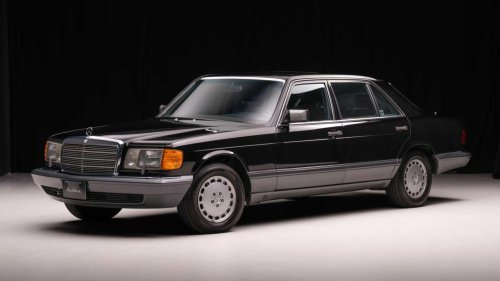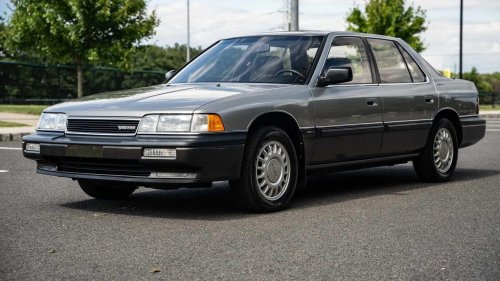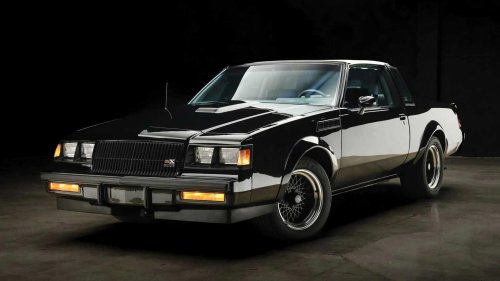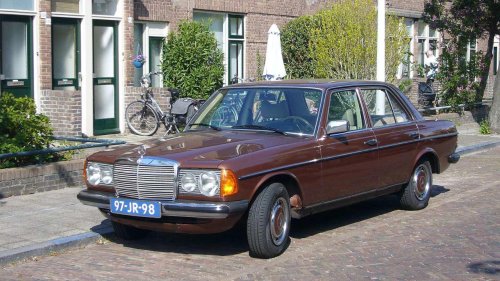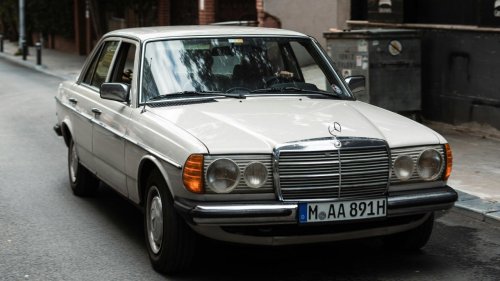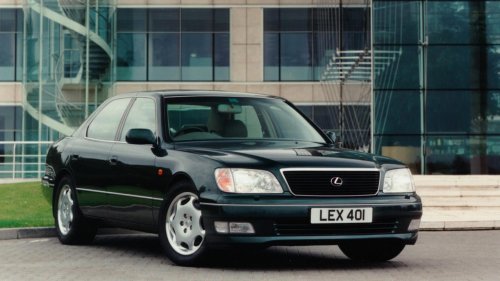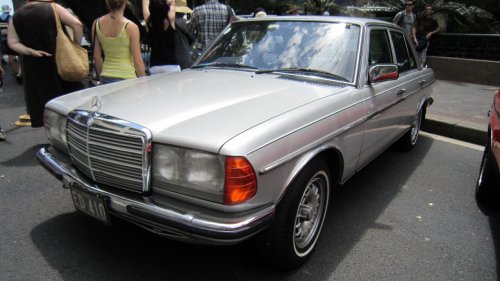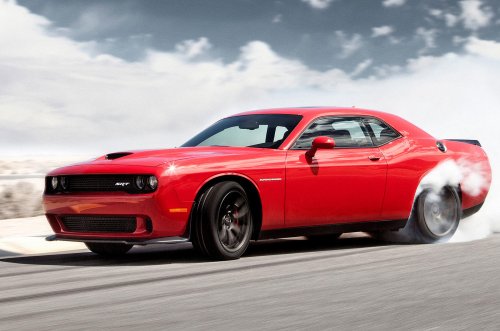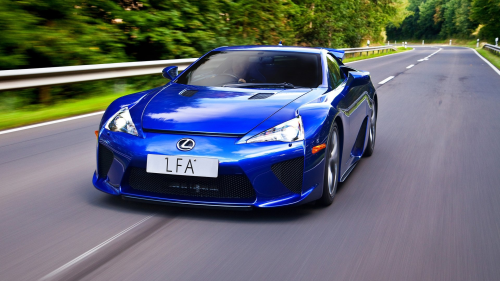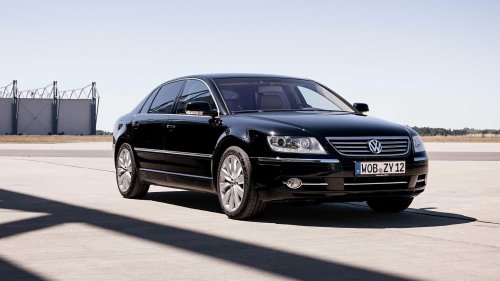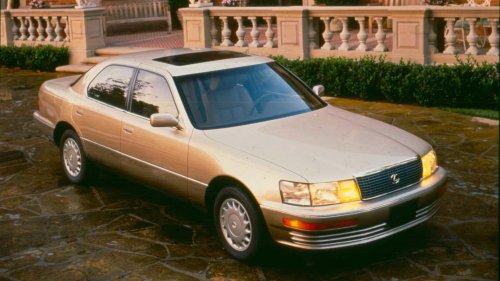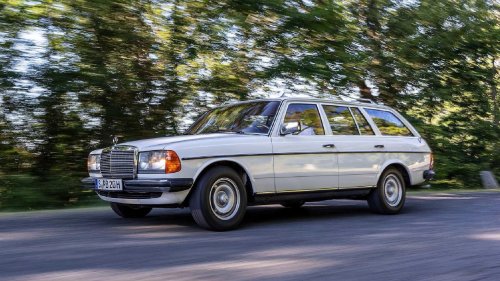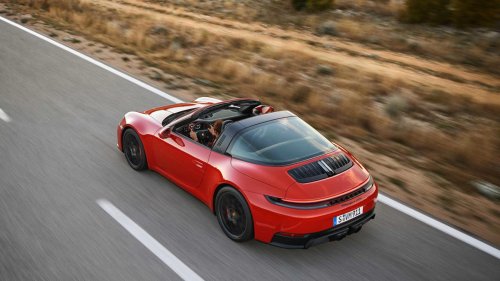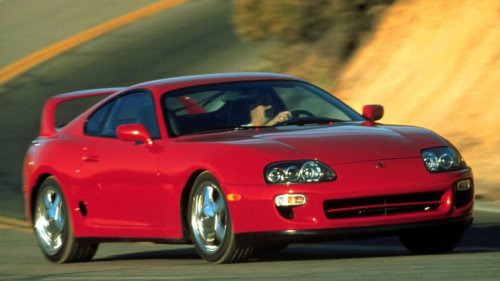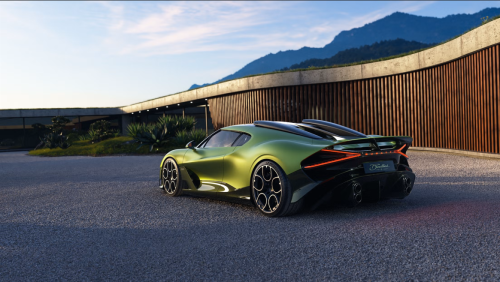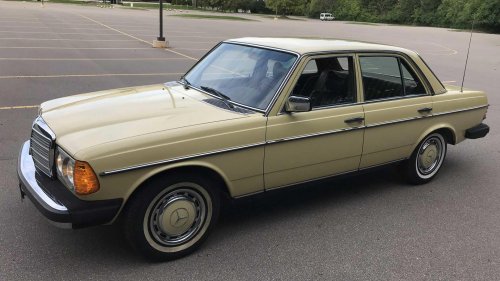

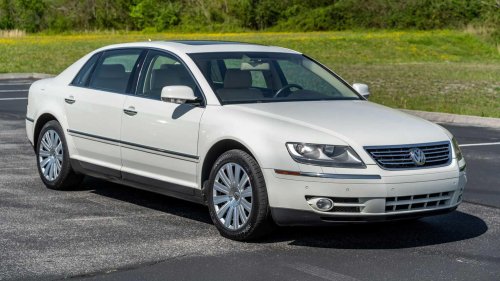

























Every so often, we'll get introduced to a car that's been engineered so well that you could consider it as being over-engineered – in other words, far too advanced and complex for its intended use. These cars tend to fall into one of two categories: they're either cars that are at the forefront of mechanical and technological development for their day, or they're cars that are so solid that they're practically unbreakable.Plenty of over-engineered cars end up as automotive legends thanks to how advanced or unkillable they are, and many of the near-indestructible ones are still floating around as people's daily drivers. The cars on this list come from a wide variety of marques and eras. Many of them are big, traditional sedans orluxury cars. There is one sports car in there, though, as well as a couple of supercars and one bona fide muscle car. While they all seem so different on the surface, they all exemplify what happens when engineers are the ones in charge – not the marketing department. Mercedes-Benz W123 Via: Bring A Trailer Specs Source: Mercedes-BenzThe Mercedes-Benz W123 might seem like a fairly ordinary car. In many ways, it is. It was Mercedes' mid-sized sedan option, slotting below the bigger W126 and then higher than the smaller W201 190 when that appeared in 1982. But, the W123 existed in an era where Mercedes-Benz tended to gloriously over-engineer absolutely everything they made. As a result, the W123 was built like a tank, and it simply refuses to die. In fact, it's not unheard of for W123s to be able to last as much as 400,000-500,000 miles on their original engines, thanks to how strong these cars are. Many of them were also sent to Africa after their original European owners were done with them, faultlessly racking up hundreds of thousands more miles in some of the toughest conditions in the world.There are huge numbers of W123s still around today, and some of them are even still being used as daily drivers. That's one of the best testaments to how over-engineered these cars are. While it may not be technologically impressive like many of the later cars on this list are, the W123 proves that sometimes there's no substitute for just building a fairly simple car as well as possible. Bugatti Veyron Bugatti Specs Source: BugattiThe Bugatti Veyron is perhaps one of the greatest examples of overengineering going right. A pet project of Volkswagen's legendary executive Ferdinand Piëch (he will show up again later), this car was intended to be the fastest production car in the world. That was something it achieved multiple times, both in standard and Super Sport form. The Grand Sport and Grand Sport Vitesse also ended up becoming the fastest production convertibles in the world when they were tested. The way the Veyron achieved this was through spectacular levels of over-engineering. It introduced a whole new type of engine to the world, using a quad-turbocharged W16 engine that needed 4 radiators to stop it from overheating. It also had a specially-designed 7-speed transmission made by Ricardo in the UK, as no off-the-shelf unit could handle the Veyron's immense power and torque. The Veyron also spent a lot of time in the wind tunnel, where the engineers battle constantly against aerodynamics to get just that little bit extra speed and downforce out of it.The Bugatti Veyron may feel a bit old hat now. But, 20 years ago, this was the most exciting car in the world. It was one of the few cars that was both a status symbol and a statement of top-quality engineering. Thanks to that, it's carved itself a deserved place in automotive history. Mercedes-Benz S-Class (W140) Specs Source: Mercedes-BenzWhenever you ask any enthusiast what the best version of the Mercedes-Benz S-Class is, everyone will point to the W140 generation. It had a bold new design for the 1990s, a brilliant choice of engines (which included a 6-liter V12!), and it had some of the best build quality you could get in any production car at that time. It was also jammed full of the latest automotive tech. The W140 S-Class came with double-glazed windows for extra insulation and a huge variety of electronic gizmos. This included electric folding side mirrors, heated seats both in the front and the rear, an electric rear sunshade, electronic stability control, and automatic windshield wipers.In case anyone needed any further proof of how over-engineered the W140 Mercedes-Benz S-Class is, it once managed to save a world leader from almost certain death. Eduard Shevardnadze, the then-President of Georgia, was traveling in an armored W140 in his motorcade in February 1998 when he was ambushed. The attackers launched rocket-propelled grenades at the car, severely damaging it. But, thanks to how well-engineered the car was, Shevardnadze managed to escape unharmed. Volkswagen Phaeton Bring a Trailer Specs Source: VolkswagenThe Volkswagen Phaeton is, sadly, remembered as a monumental flop. But, that doesn't take away from how incredible an engineering achievement it was. This was another pet project of Ferdinand Piëch, who wanted to create a Volkswagen that could outdo the Mercedes-Benz S-Class in every way. That was something Volkswagen certainly managed. The Phaeton was full of the best technology you could get in a luxury car at the time. This included computer-controlled air suspension, radar adaptive cruise control (it was the first production car ever to have this feature) and a draftless 4-zone climate control system. It also introduced the legendary W12 engine to the world in production car form, paving the way for Bentley to develop it to its absolute best, and the monstrous V10 turbodiesel that produced 553 lb-ft of torque.It may have been a complete flop thanks to trying so hard to compete with other luxury cars with more prestigious badges. But, the Volkswagen Phaeton has given itself a solid place in automotive history thanks to how gloriously over-engineered it is. It's a car that's still loved by enthusiasts who know about it, and it wouldn't be a surprise if it became a proper classic in years to come. Lexus LS400 Lexus Specs Source: LexusMuch like the Mercedes-Benz W123, the Lexus LS400 isn't a car that has anything particularly groundbreaking with its engineering. It even looks fairly conservative in its styling. Yet, like the W123, this car is engineered in a way that makes it almost completely unkillable. There is at least one documented example of an LS400 reaching over a million miles, and others have achieved as much as 380,000 miles.Lexus spent 6 years and a billion dollars developing the LS400. All that over-engineering absolutely paid off, though. It outsold its competitors in North America (the market it was primarily targeted for), and left a huge legacy in the world of luxury cars. Lexus LFA 2011 Lexus LFA Front One Quarter Specs Source: LexusWhen it comes to over-engineering, the Lexus LFA is another one of the biggest examples of that in the supercar world. When Lexus created this car, it took over-engineering to the biggest extreme you could go for its time. It was supposed to be the ultimate supercar, and Lexus really took that to heart. It took much longer to develop than was initially planned, because partway through, the engineering team decided to switch to making the entire structure of the car in carbon fiber instead of aluminum. Why? Because the engineers thought it would make the car better.Lexus also wanted the car's V10 engine, which was developed in partnership with Yamaha, to be the best-sounding engine ever. To make that happen, they went to the ludicrous extreme of getting Yamaha's music division to design the exhaust. That certainly worked, because the LFA sounds incredible.The Lexus LFA is rightfully regarded as one of the greatest supercars of all time. That has everything to do with the engineering extremes Lexus went to while the car was being developed. This car will absolutely become a classic in the future, standing as an example of what engineers can do when they're given free rein to build the ultimate performance car. Mercedes-Benz 600 Grosser Stahlkocher, via Wikimedia Commons Specs Source: Mercedes-BenzHave you ever heard of the term "dictator chic" whenever certain world leaders have been discussed? Well, this car was the quintessential example of that. The Mercedes-Benz 600 Grosser was the ride of choice for many of the 20th century's most brutal leaders. It was also a favorite of A-list celebrities, rock stars and business tycoons. Basically, anyone who had massive amounts of money bought one.The Grosser was the most expensive production car in the world when it was launched. When you look at how over-engineered this car is, that's not surprising at all. The 600 runs off an incredibly complex hydraulic system. This controls everything from the seat adjustment to the suspension. The suspension, in particular, is regarded as one of the best things about the 600. It's self-levelling and produces a very smooth ride, much like the hydropneumatic suspension on the old big Citroens. Unfortunately, these complicated systems made the 600 incredibly expensive to maintain.The Mercedes-Benz 600 Grosser is still a very desirable classic car to this day. Even its association with brutal dictators like Idi Amin hasn't affected its image too much. Many people chalk how great it is down to how over-engineered it was for its day. There aren't many cars that can match how grand and comfortable the 600 is, and that over-engineering made the 600's unique character possible. Mercedes-AMG One Mercedes-AMG ONE on the Nurburgring Specs Source: Mercedes-BenzAnother supercar to challenge the over-engineered stakes, the Mercedes-AMG One is possibly the most complicated road car that's ever been made. An ode to Mercedes-Benz's serial success in Formula 1, this car uses technology straight out of that series. In fact, the powertrains for every AMG One were built at Mercedes-Benz High Performance Powertrains in Brixworth alongside the Formula 1 units! This means the AMG One gets a 1.6-liter twin-turbocharged V6, supplemented by three electric motors. Two of them drive the front axle (making this car all-wheel drive), while the 3rd powers an MGU-H system on the turbochargers. The MGU-H system is pretty much lifted wholesale from the Formula 1 powertrains, using an electric motor to keep the turbines on the turbochargers spinning. This gets rid of turbo lag, giving a serious boost to the AMG One's power at lower RPMs.This incredible complexity does come at a high cost, though. As the engine is basically a racing unit, it'll only last for around 31,000 miles. After that point, the car will have to be returned to Mercedes to have a brand-new engine fitted. Considering that Formula 1 powertrains are extremely expensive, this could turn out to be a really painful maintenance bill for anyone who's lucky enough to own an AMG One. Dodge Challenger SRT Demon 170 2023 Dodge Challenger SRT Demon 170 Jailbreak Specs Source: DodgeYou might not expect the Dodge Challenger SRT Demon 170 to show up on a list of the most over-engineered cars ever. But, to create a car as crazy as the Demon 170 is, Dodge pushed their engineering capabilities up to the maximum. The Demon 170 features a gamut of specialized heavy-duty engineering to help it get the best times on the drag strip. This includes specialized drag-focused suspension, special lightweight components to help reduce the weight by 157 lbs, and a sophisticated launch control system called TransBrake 2.0. TransBrake is specifically designed for drag racing and works in conjunction with a torque reserve system that makes sure all the torque is delivered to the rear wheels the moment you launch off at the drag strip. That's not to mention that it has the most powerful development ever of the supercharged 6.2-liter Hellcat V8, producing 1,025 hp and 945 lb-ft of torque.Dodge has called the Challenger SRT Demon 170 the last muscle car. While that might be debatable, it's certainly a throwback to the drag strip monsters people used to build back in the '70s. It does that, however, with the best engineering available to Dodge, and with a lot of help from modern technology. As over-engineered cars go, the Dodge Challenger SRT Demon 170 has to be one of the most fun. Mitsubishi 3000GT VR4 Via Orlando Classic Cars Specs Source: MitsubishiThe Mitsubishi 3000GT VR4 is a Japanese sports car that often flies under the radar. It's never had the reputation that its contemporary competitors have had since the '90s ended. But, not only is it a great '90s Japanese sports car, but it was also one of the most advanced of its day. It had a sophisticated all-wheel drive system, rear-wheel steering and active aerodynamics. While those might be things that are somewhat commonplace today (minus the rear-wheel steering), they were bits of tech that were cutting-edge when the 3000GT VR4 came out in the early '90s.While the Mitsubishi 300GT VR4 was genuinely one of the most advanced performance cars you could buy in its day, that didn't seem to help it become popular. Most people will choose the Toyota Supra or the Nissan 300ZX over this car. The upshot of that, though, is that they're still cheap on the used market!