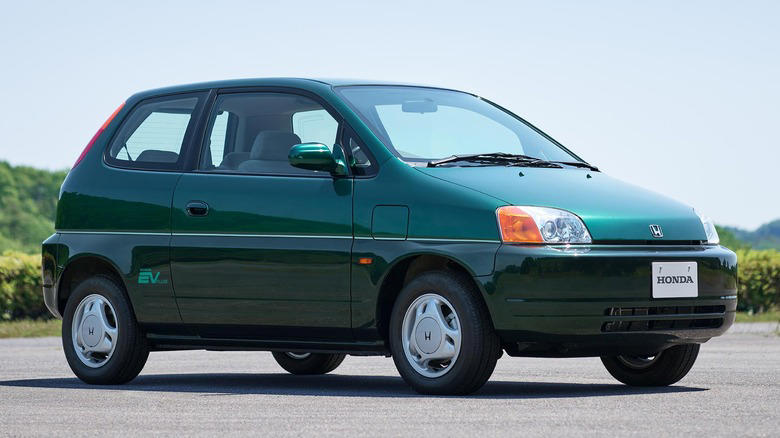


















1997-99 Honda EV Plus - 340 producedThe 1997-99 Honda EV Plus was the result of a nearly decade-long effort at Honda to create a practical and marketable electric vehicle (EV). When Honda created its EV research team in 1988, there was no existing industrial base to produce either electric motors to power EVs or the batteries to power them. Honda's offer to purchase small quantities of motors got some suppliers involved in the development process. But there was no cutting-edge battery technology then, just the same old lead-acid batteries that were under the hoods of gasoline-powered cars.Honda's sense of urgency increased in 1990 when the U.S. Clean Air Act was amended to include California's LEV standards. In 1992, the EU followed suit with its first emissions standards. These regulations would only get stiffer, pushing Honda to seek cleaner vehicle solutions. The team grew to over 100 Honda engineers and set out to make the world's best EV. California would be its primary market, so testing would happen there — 80,000 miles worth. The test cars had power steering as well as air conditioning and performed as well as gasoline-powered cars under all conditions. They featured brushless DC motors, which provided high efficiency and performance. The EV Plus was the first EV to use longer-range, more energy-dense nickel-metal hydride (Ni-Mh) batteries. The first EV Plus rolled off the production line in April 1997 and was available for lease only. A total of 340 EV Plus cars were made by the time the program ended in 1999.