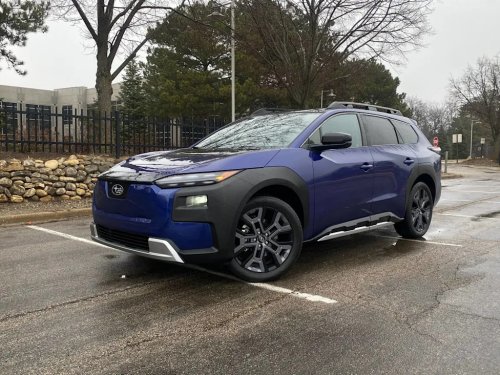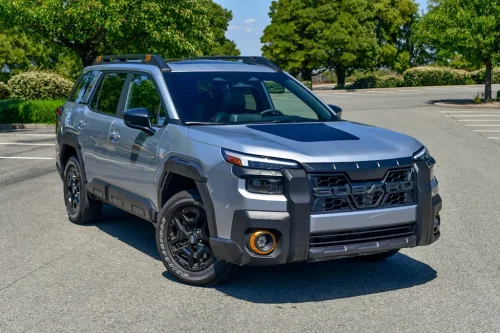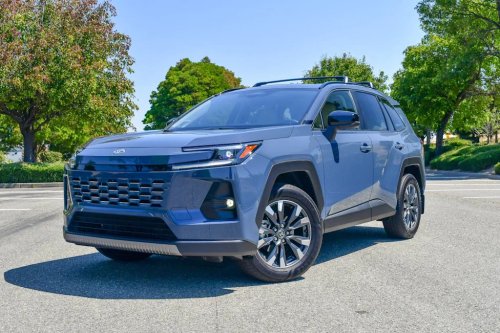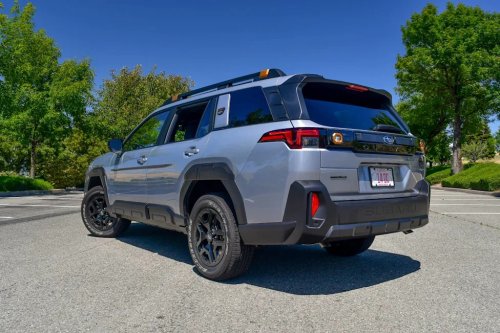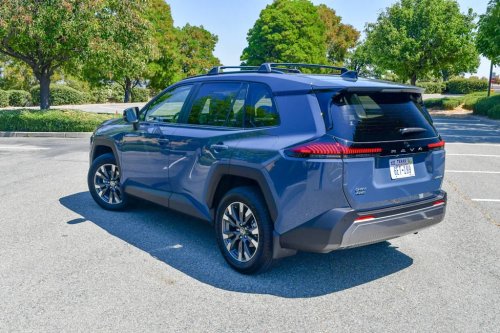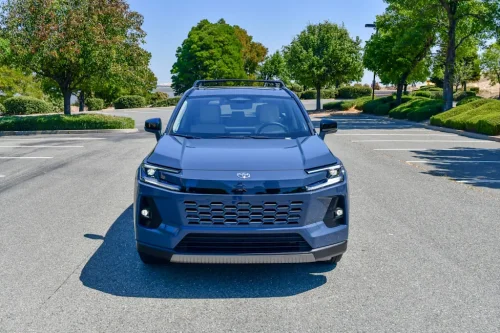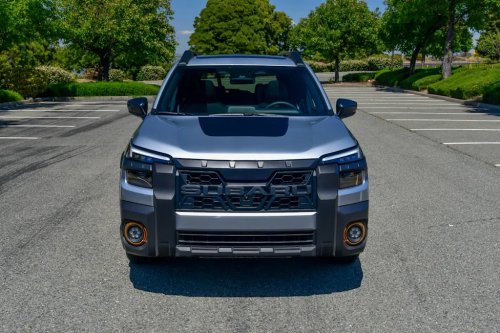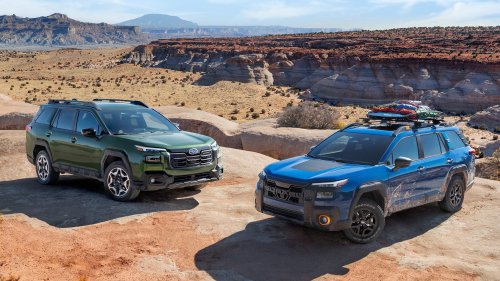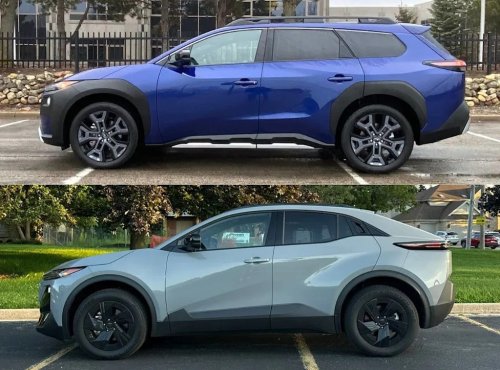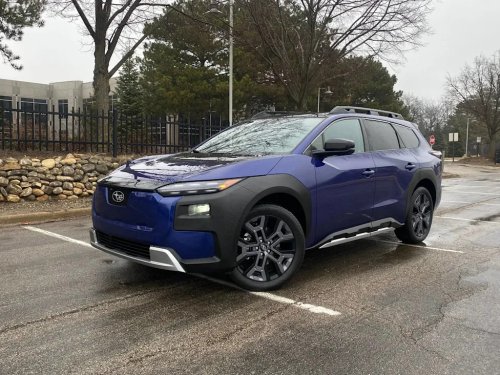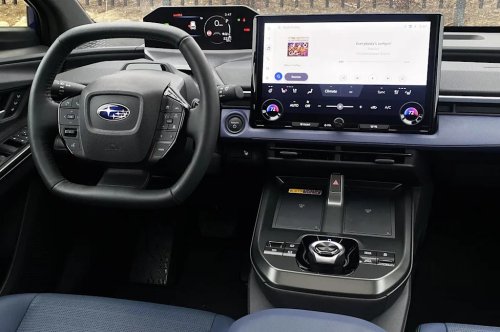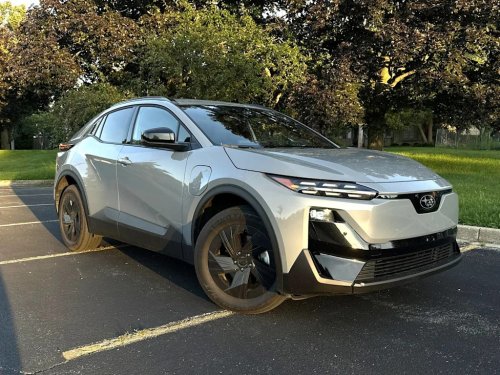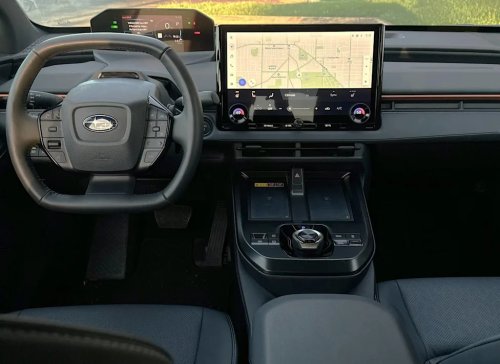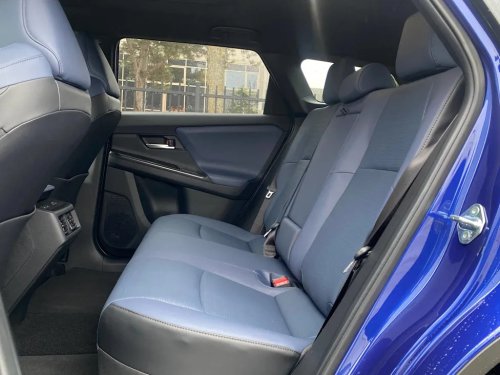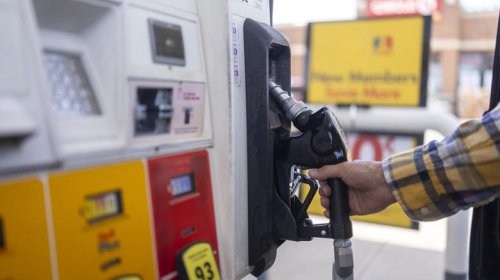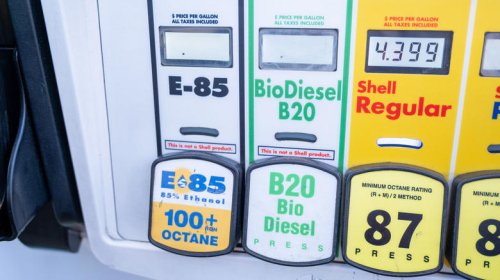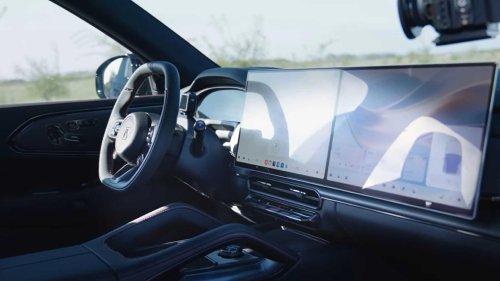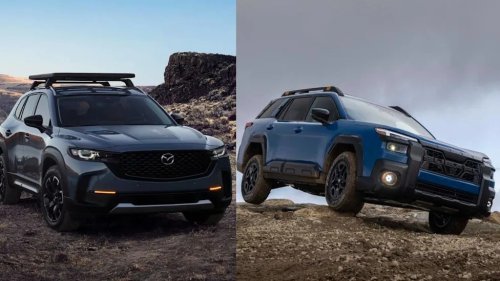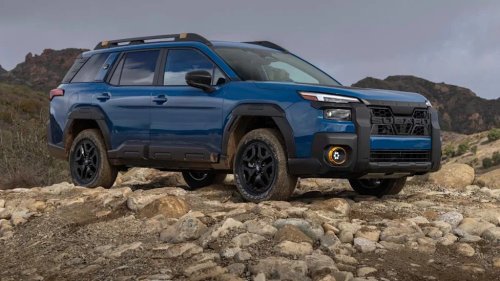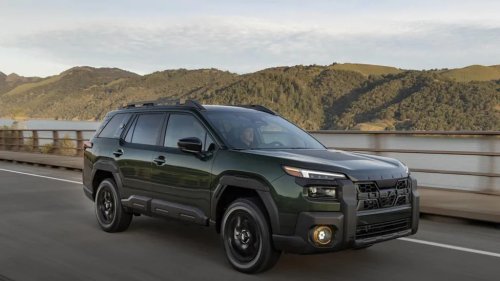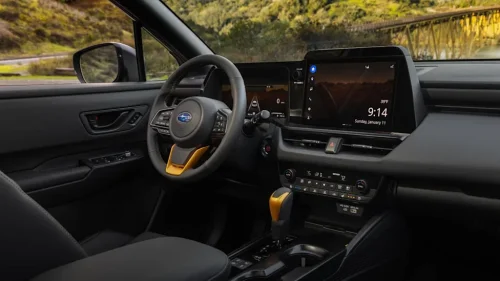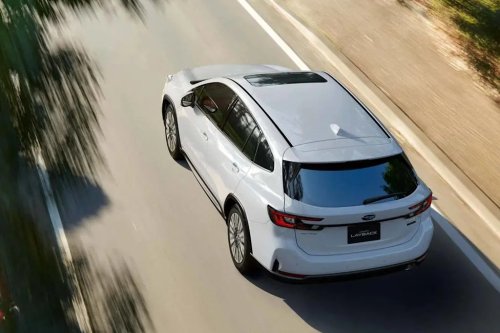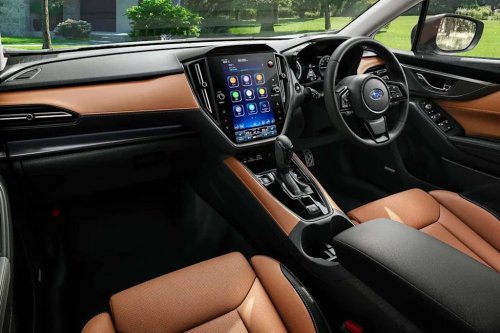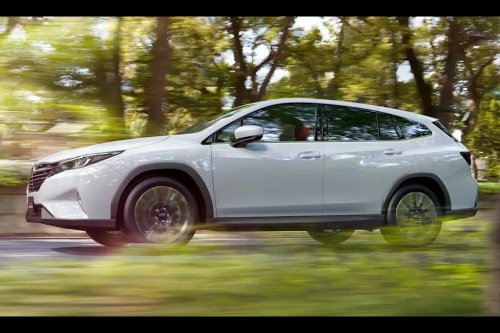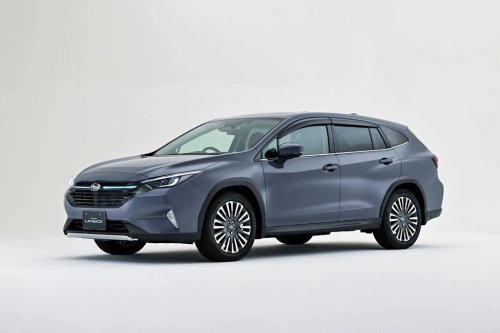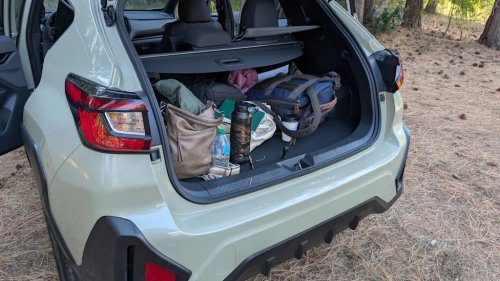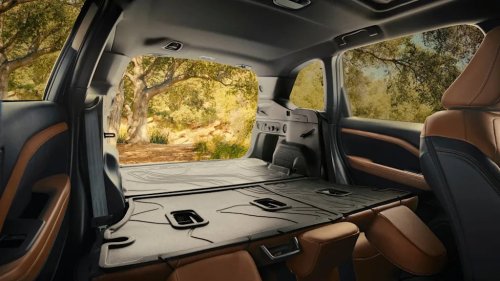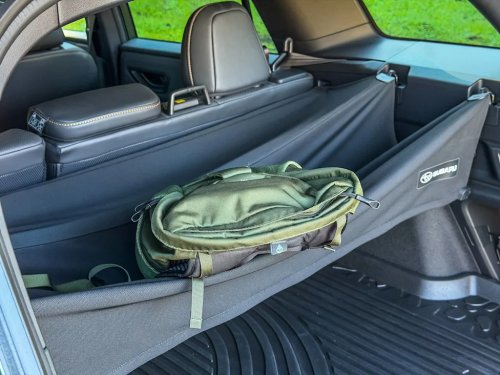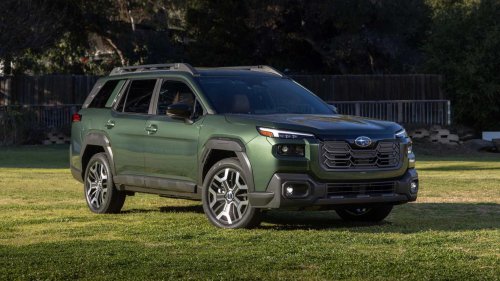
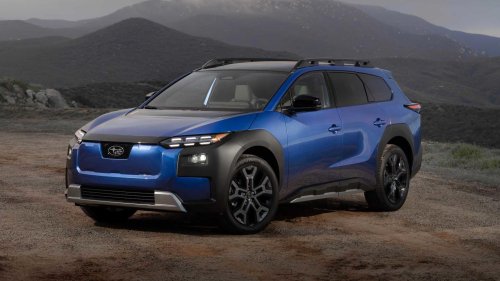
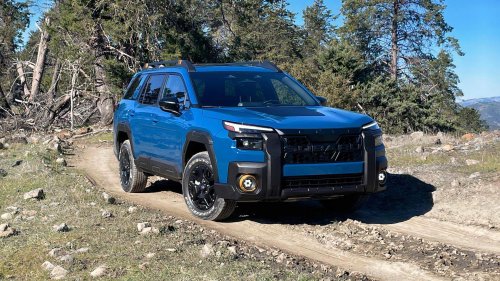
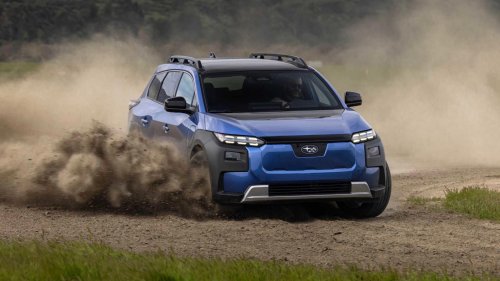
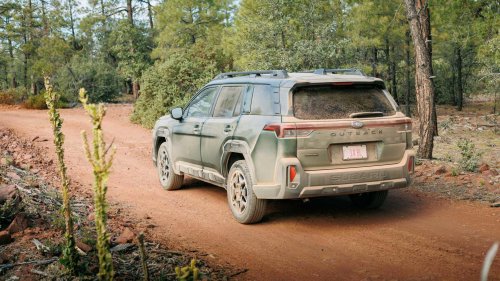
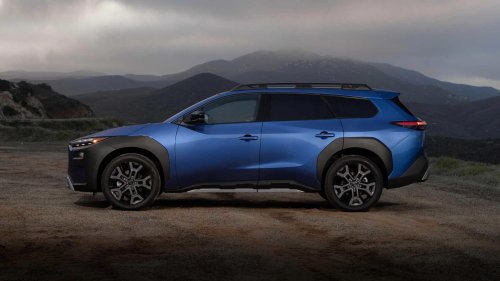
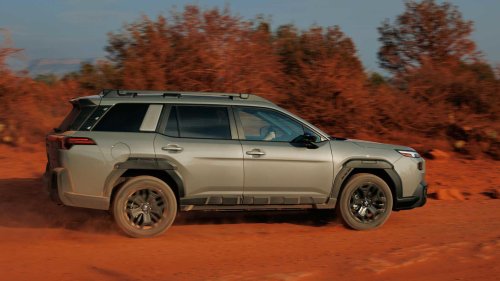
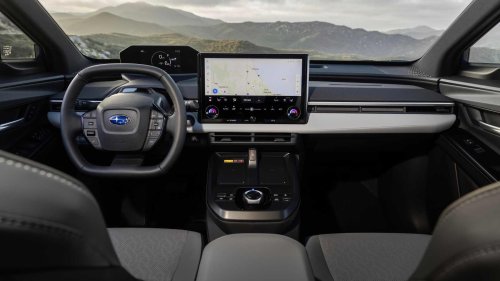
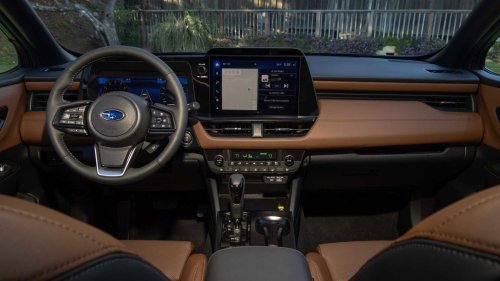
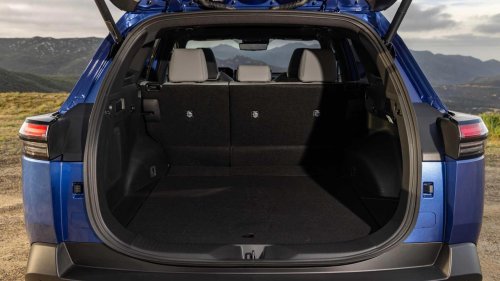
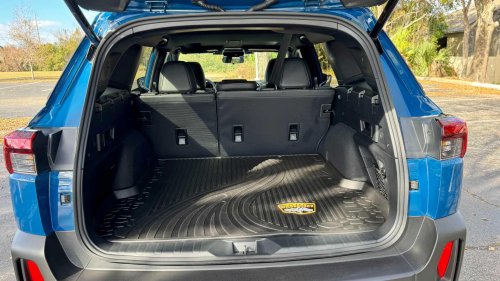
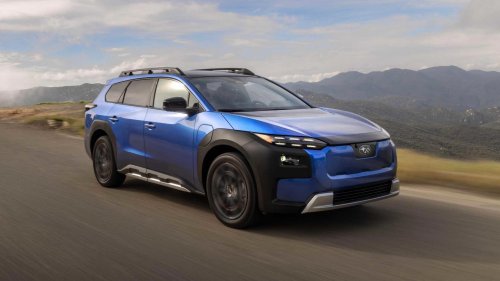


















For 2026, Subaru has launched two similarly sized and shaped vehicles that both go by the name Outback, at least, depending on the market. At least, they do in some markets. One of them is the direct descendant of the Legacy-based tall wagon from decades ago, while the other is Subaru's spin on Toyota's bZ line of vehicles. That latter is called Trailseeker in the United States, but in Europe, it goes by the name E-Outback.Subaru It's a clear admission that what they created is an electric version of the Outback, complete with raised ride height and extra cladding. In fact, the sleeker profile is arguably more wagon-like and in keeping with the original Outback than the boxy, combustion-powered model that now shares its name. The situation is that the two have a lot in common, which leaves us wondering whether one is the better choice and the better Outback. Let's dig in. Powertrains And Performance SubaruThe Trailseeker and Outback differ the most when it comes to their powertrains. The only things they really have in common are all-wheel drive and the ability to deliver equal power to each axle. Nothing else really lines up.The Outback follows a classic Subaru recipe with its standard naturally aspirated 2.5-liter flat-four engine. It makes 180 horsepower and 178 pound-feet of torque. Subaru also offers an optional turbocharged 2.4-liter flat-four with 260 hp and 277 lb-ft of torque. Both of them are paired with all-wheel drive and a CVT that can be manually shifted through eight pre-defined ratios.The base model is the most efficient, with a combined fuel economy of 27 mpg. In contrast, the least efficient is the Wilderness, which combines a taller ride height, less aerodynamic bodywork, and the turbo engine to get 23 mpg combined.Brett T. Evans/CarBuzz/Valnet Despite using more fuel, our recommendation of the two Outback powertrains is definitely the turbocharged one. The gain in performance is well worth the hit to fuel economy. It also sounds and feels less rough and strained. The benefits will be even more pronounced at higher elevations, where the turbo helps compensate for the lower air density. It even runs on regular 87-octane gasoline, so there isn't the extra penalty of more expensive fuel.The Trailseeker is completely electric, using a battery pack and motors mainly from Toyota. However, as noted by a Toyota engineer, the Trailseeker and its Toyota counterpart were projects led by the Subaru team. A sign of that, besides the more wagon-like shape, is that the Trailseeker has identical motors front and rear, allowing a 50/50 front-rear torque split like other Subarus. The dual-motor setup (the only one available) makes 375 hp and 398 lb-ft of torque. That makes it easily the most potent and quickest of the two vehicles, even with a 724-pound weight difference.Subaru The Trailseeker is also far and away the most efficient of the two tall wagons. With 18-inch wheels, it gets the equivalent of 117 mpg in combined driving with a range of 281 miles. Add 20-inch wheels, and efficiency dips to 114 mpg-e with a range of 274 miles.Ian Wright/CarBuzz/ValnetAs for how quickly the Trailseeker can regain its range, it charges from 10% to 80% in 28 minutes at a DC fast charger. The Outback gets a small win in range, with more than 400 miles to a tank across every version, and it can fill up faster than even the quickest-charging EVs in America.Then, there's the Outback's secret weapon, which is the aforementioned Wilderness trim. In addition to the standard turbo engine, it gets several mechanical upgrades for off-road duty, including improved approach and departure angles. The wheels are downsized to 17-inch units with chunkier all-terrain tires and a full-size spare. The suspension is raised further to give it 9.5 inches of ground clearance, plus the shocks are electronically adjustable.On the whole, though, as long as you aren't road-tripping constantly, or you need the Wilderness trim's added off-road capability, the Trailseeker gets our vote for the best running gear. Though the Outback's engines are better than ever, they can't compare to the total lack of vibration and noise of an EV. There's no contest on sheer gumption or frugality, either. Unless you need faster refueling, the Trailseeker has the Outback outgunned in every way. Design Subaru The looks of these two wagons are both quite similar and quite different. They each have a variety of classic Outback cues, such as contrasting cladding on the bumpers and wheel arches. They each have blunt front bumpers with perhaps overly butch designs.Ian Wright/CarBuzz/Valnet They each have more ground clearance than many conventional sedans and wagons. In fact, the base Outback and Trailseeker are very close on that measure, with the former boasting 8.7 inches and the latter with 8.5 inches. Those aren't even the only exterior dimensions that are really close. The Outback is barely an inch longer and wider than the Trailseeker, while also being a little more than an inch taller.Subaru Looking beyond some of the basics, though, the two models do have major differences. For one thing, the Outback is leaning harder into traditional SUV design. It's far more upright and boxy in design, with square-shaped wheel arches. The Trailseeker is comparably sleek, looking more like an actual lifted wagon. The Trailseeker still has some obvious Toyota roots, with unique contrasting fenders and lighting that, while different, stillfollow some of the basics set by the bZ.Subaru The interiors are even more different. The Trailseeker looks like the Toyota's to which it's related. The layout is on the minimal side with flat planes, sharp corners, and simple rectangular screens. The Outback's interior looks much more conventional with more curves, and it attempts to connect the infotainment screen to the instrument cluster. We also appreciate the many physical buttons and knobs in the Outback. The Trailseeker makes do with mostly virtual buttons on the infotainment screen.Subaru On the topic of the screens and technical features, the two are close. The Trailseeker has the larger infotainment screen at 14 inches compared to the Outback's 12.1-inch unit. The Trailseeker's instrument screen is smaller, though at 7.0 inches versus 12.3 inches.The actual user interface for each system is fairly similar, though the Outback has a few Subaru-specific differences, such as a dedicated home screen. The Trailseeker is much more akin to a modern Toyota. Regarding features, both have wireless Apple CarPlay and Android Auto, dual-zone climate control, a power tailgate, and heated front seats, among others. Practicality/Space Jared Rosenholtz/CarBuzz/Valnet The Outback is just a tad bigger on the outside compared to the Trailseeker. It's just under an inch longer and a bit more than an inch taller. The result, though, is a noticeably larger cabin. The Outback has 34.6 cubic feet of space behind the rear seats and 80.5 cubic feet with the rear seats folded. The Trailseeker is a bit behind at 31.3 cubic feet and 74 cubic feet for each measurement, respectively. The Outback has more overall passenger volume, too, at 111.1-112.3 cubic feet, depending on whether it has a moonroof, and the Trailseeker has 96.2-97.5 cubic feet for the same reason. Cost SubaruIf you're on a strict budget, the Outback is the most affordable option. It starts at $34,995, which comes to $36,445 with the $1,440 destination charge. However, the base model is the only one to beat out the Trailseeker. The base Trailseeker starts at $39,995, or $41,445 with the $1,450 destination charge. To get a turbo Outback, you'll be spending at minimum $46,445 with destination on the Wilderness trim. Otherwise, the Outback and Trailseeker are very similarly priced, with one or the other having a higher price depending on trim and options. The Outback has the highest starting price, with the Touring XT trim at $49,445 plus destination. It May Not Have The Name, But The Trailseeker Is The Outback We'd Pick While there are niche reasons you may opt for an Outback over a Trailseeker, on the whole, we'd go with the Trailseeker. It's extremely similarly equipped to the Outback at basically every trim level, and has similar off-road capability. They even have similar looks, though we favor the more wagon-like shape of the Trailseeker.More importantly, though, the Trailseeker offers vastly superior performance and refinement from its electric powertrain, for less than the Outback's most powerful turbo powertrain. So, unless you lack convenient charging, need fast refueling, are on a seriously tight budget, or need the Wilderness's capability, the Trailseeker is the obvious choice.Source: Subaru