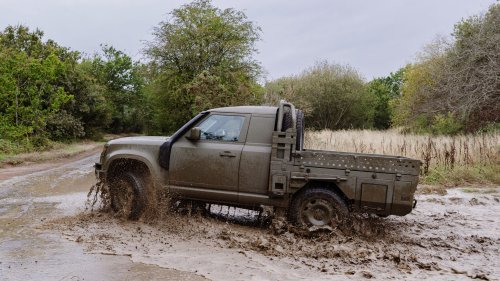
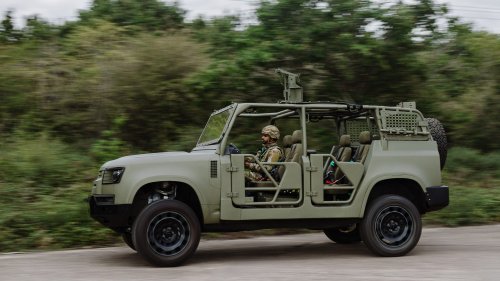
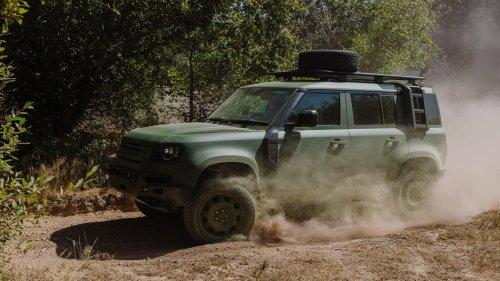
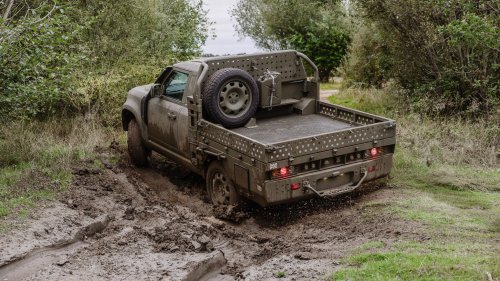
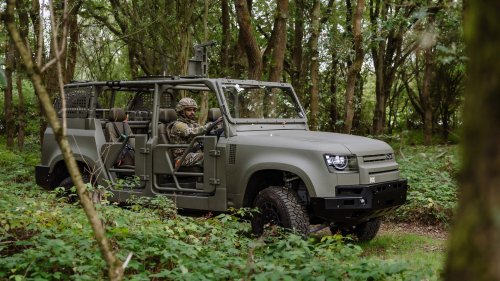
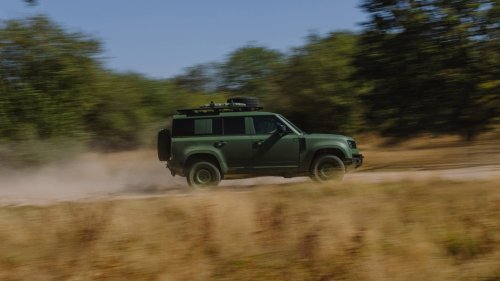
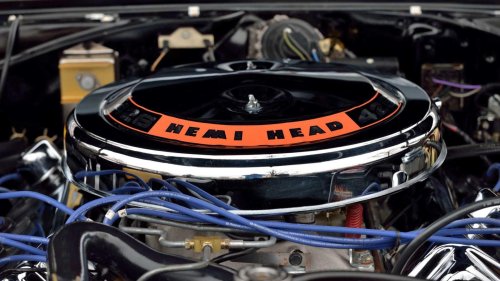
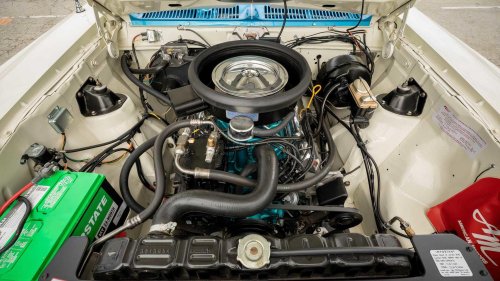
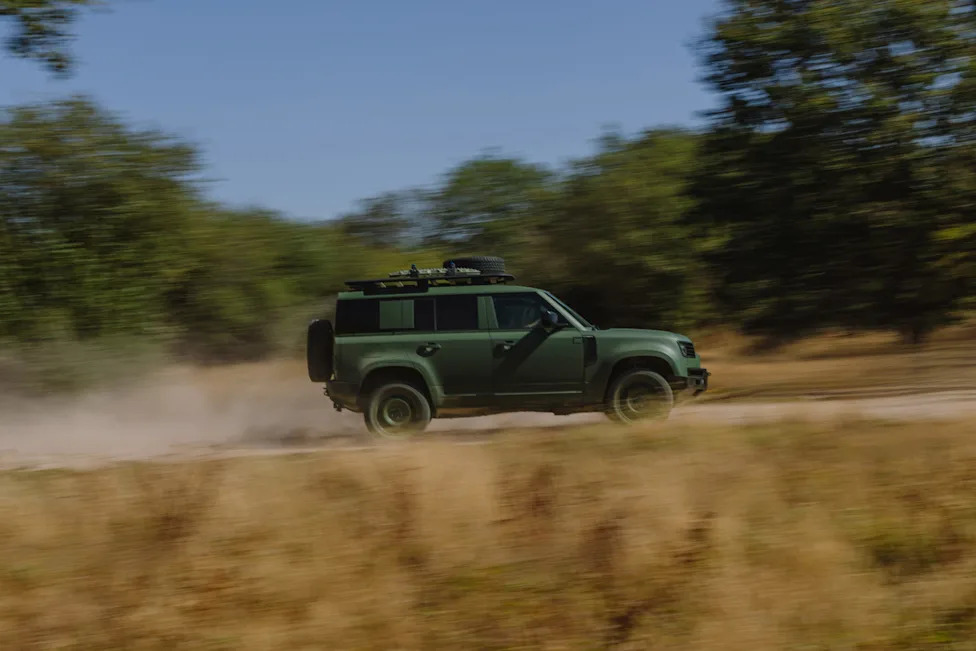
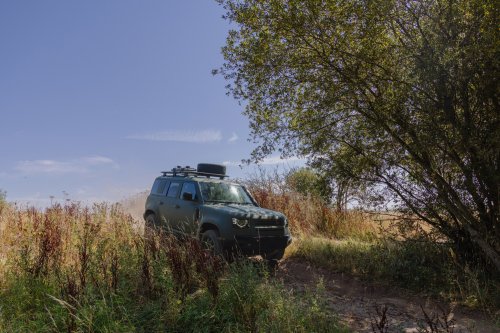
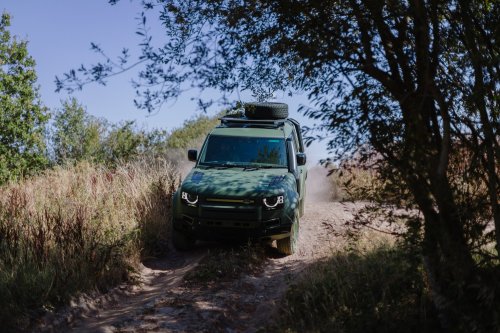
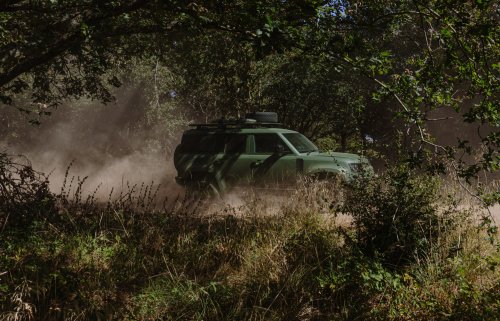
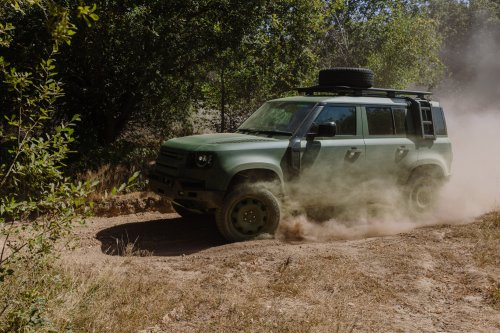
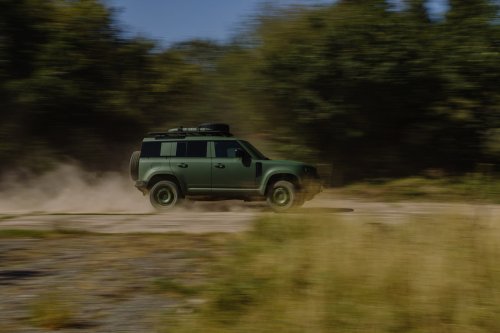
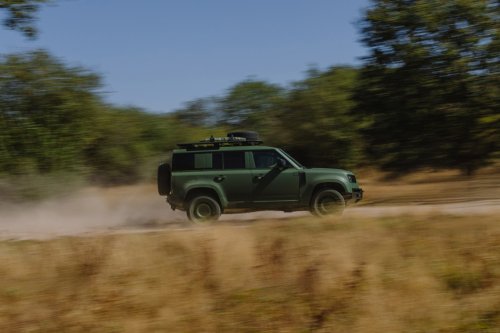
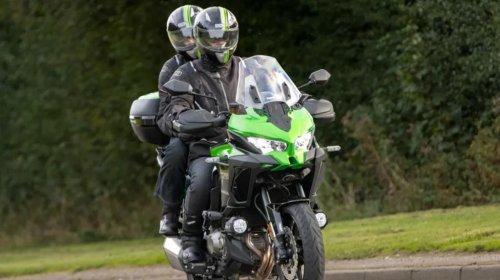
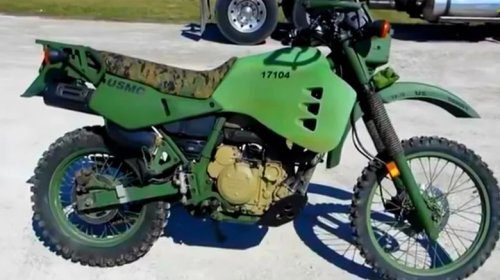
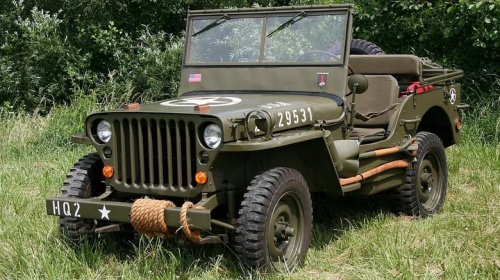
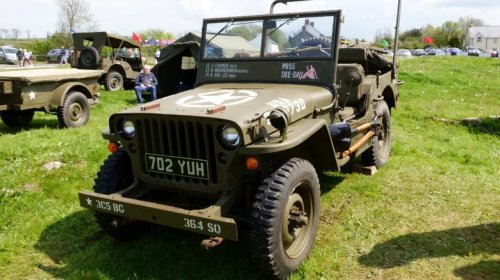
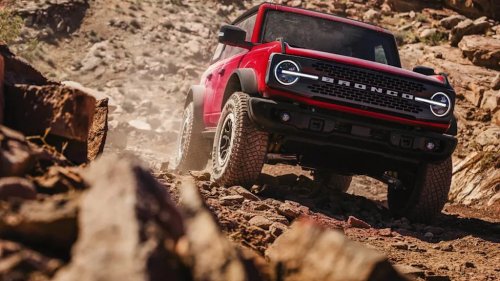
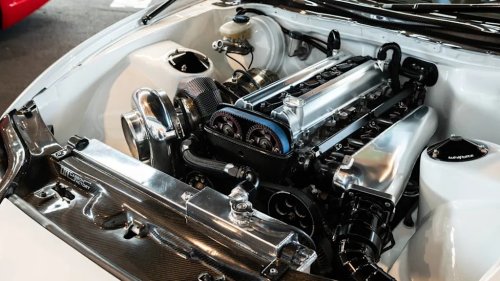
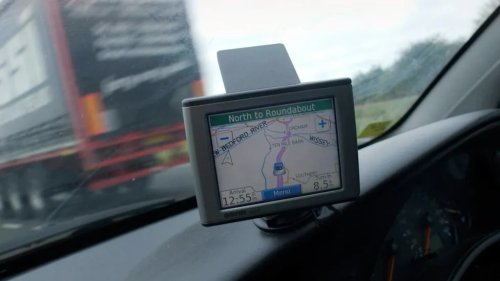
Autoblog and Yahoo may earn commission from links in this article.Field-TestedWhether at peacetime or during conflict, the military and its partners are often the source of advanced technology that makes its way into consumer-grade goods available to civilian populations and the general public. In the 1930s, the Army Air Corps worked with Bausch and Lomb to develop the Ray-Ban Aviator sunglasses. Auto-injector technology field-tested by Army medics during the Vietnam War was eventually developed into the devices containing life-saving medicines like the EpiPen and Narcan, while the Internet traces its roots back to 1969 and ARPANET.However, many of these innovations that saw actual use on the field by the armed forces have made their way into our cars. What was once experimental technology for the battlefield has eventually become standard equipment in cars sold the world over. These seven features may perhaps be the most impactful for enthusiasts and commuters the world over.FordFour-Wheel Drive While four-wheel drive SUVs and trucks have been a common sight in traffic from coast to coast, the technology underpinning it has existed in some form for more than 100 years. The tech is as old as the automobile itself, but its use within the military came when it demonstrated a need for such vehicles, as they were often in terrain that defeated conventional trucks. The U.S. Army's experience in the Puncho Villa Expedition of 1916 through Mexico resulted in its fleet of over 500 trucks breaking down constantly in rugged Mexican terrain. AdvertisementAdvertisementThe first four-wheel-drive vehicle to be mass-produced was the FWD Model B, as 16,000 such trucks were seen in use by the British and American armies during World War i. However, four-wheel-drive wasn't widespread on the field until the introduction of the Willys MB Jeep. Developed for the U.S. military in 1941, the Jeep saw wide use during World War II and after the war, and the subsequent civilian Jeep CJ became a popular recreational vehicle for off-road aficionados. The Land Rover, the Toyota Land Cruiser, and eventually the modern SUV are all evolutionary by-products that came as a result of the military's decision to develop vehicles that needed to go where roads didn't.Silas Stein/picture alliance via Getty ImagesTurbocharging Once the domain of high-performance racing technology, turbocharging has come a long way before it became a common sight under the hood in daily commuters. But before it ever found its way under the hood of an automobile, or defined a revolutionary era of Formula 1 racing, it was actually first developed for military aircraft. Combustion engines require both air and fuel to function, and at high altitudes, naturally-aspirated piston aircraft engines lose power due to the thinner air with lower oxygen concentration. To combat this, French engineer Auguste Rateau developed early turbine supercharging for aircraft engines during the first World War to maintain power output at altitude, and American engineer Sanford Moss refined the technology for the General Electric turbosupercharger that allowed Allied bombers to operate at high altitude throughout WWII. The technology transferred to civilian vehicles in stages — first to trucks, then to performance cars, and eventually to the mainstream passenger car market. Today, a turbocharged engine is the default choice for most new vehicle platforms globally. The fuel efficiency and performance advantages that the military needed to keep bombers flying at 30,000 feet are the same advantages that allow a 1.5-liter turbocharged four-cylinder to produce the power of a naturally aspirated 2.5-liter while burning less fuel. GPS Navigation Long before in-dash sat nav systems became an option on new cars and getting directions was a matter of printing out detailed instructions from Google Maps and MapQuest, the military has been using Global Positioning System (GPS) technology for strategic endeavors. Developed by the United States Department of Defense, the military first used this technology as a navigation and weapons guidance system. The first GPS satellite launched into space in 1978, and the initial constellation of 24 satellites became operational by 1993. In the interest of protecting military interests, the system's civilian applications were initially restricted. A deliberate accuracy degradation called Selective Availability ensured that civilian GPS was less precise than military GPS. AdvertisementAdvertisementHowever in May 2000, President Clinton ordered Selective Availability turned off, which immediately made civilian GPS accurate to within meters rather than tens of meters. Within a decade, turn-by-turn GPS navigation had become standard equipment on new vehicles across most price segments, while aftermarket solutions from companies like TomTom and Garmin became popular electronics. Every car navigation system in existence, whether built-in or smartphone-based operates on infrastructure built and maintained by the U.S. Space Force for military purposes. Anti-Lock Brakes (ABS) Anti-Lock Braking Systems, or ABS are such an essential part of automotive safety systems, that like airbags or seatbelts, it would be next to impossible to fathom a time when they weren't a thing. The mechanical precursor to ABS was developed for aircraft because the problem of wheel lockup during landing was understood to be dangerous well before it was addressed in automotive applications. A locked wheel provides dramatically less stopping force than a rolling wheel and eliminates steering control entirely, which is a dangerous problem in a car and a potentially catastrophic one in a bomber landing at speed. In the 1920s, French aircraft pioneer Gabriel Voisin developed a mechanical flywheel ABS system, which allowed his bombers to land on shorter runways without destroying tires. ABS systems, both mechanical and electronic, were in widespread use in Aircraft for decades before the technology migrated to automobiles. German engineering firm Bosch was the first to develop a system for automotive applications, its electronic system first became available on the Mercedes-Benz S-Class in 1978 and was directly informed by aerospace engineering. The system that saves lives every day by preventing traction losses on wet roads traces its lineage to a French aviator's solution to a landing problem for military aircraft.LexusDrive-by-WireToday, most automobiles on the road operate off of a sophisticated computerized system called drive-by-wire, which replaces the traditional mechanical pulleys, cables and levers in cars of yore with electronic sensors, control computers, and electric actuators for operations like the throttle, brakes and even the steering. While these sophisticated control systems have become commonplace in modern road vehicles, they have actually originated in the skies. In the 1930s, Soviet firm Tupolev first used electronic fly-by-wire systems in the ANT-20, and today, almost all modern fighters and bombers rely on fully electronic controls for nearly all their flight controls and throttles. AdvertisementAdvertisementThis military aviation framework directly inspired the drive-by-wire systems used in a lot of vehicles today. While many people think of electronic throttle control as a fairly recent innovation, modern iterations derive from the electronic throttle stops used on Quadrajet carburetors in the 1970s, where a small servo was used simply to keep the car's idle steady. Today, that automotive adaptation has evolved into something much closer to its military roots, as many modern cars use computer-assisted electronic throttles and electronic brake actuators, which also integrate with features such as lane-keeping assist and collision mitigation systems. Claudio Villa/Getty ImagesThe Call of DutyIt is fascinating to see how the rigorous demands of the battlefield have shaped the comfort and performance of our daily drivers. From the rugged utility of four-wheel drive to the high-tech precision of GPS and drive-by-wire, the lineage of these automotive fesatures is deeply rooted in the need for reliability, safety, and efficiency under extreme conditions. What began as a strategic necessity for the battlefield has gradually evolved into a suite of features that we now consider essential for everything from grocery store runs to cross-country road trips.As we look toward the future, innovation shows no signs of slowing down. With current military research into autonomous systems, advanced electric powertrains, and sophisticated cybersecurity, it is highly likely that the groundbreaking technologies of tomorrow are currently being field-tested by the armed forces today.This story was originally published by Autoblog on Jun 29, 2026, where it first appeared in the Features section. Add Autoblog as a Preferred Source by clicking here.




















 +18 others