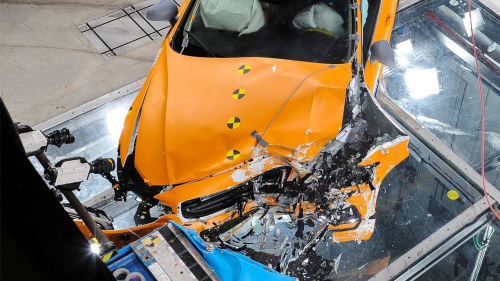
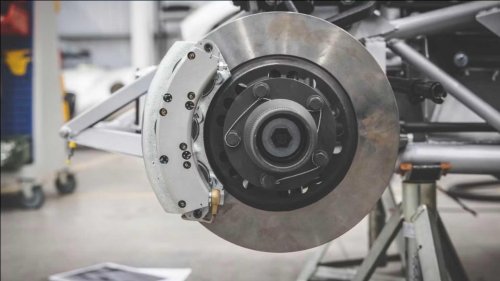
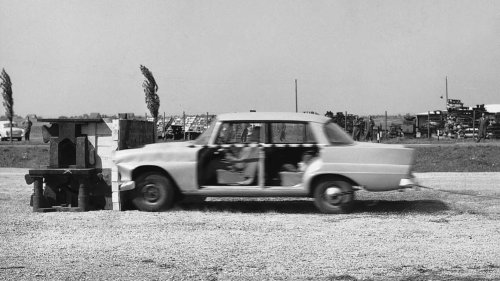
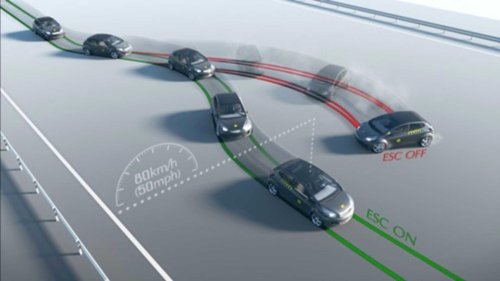
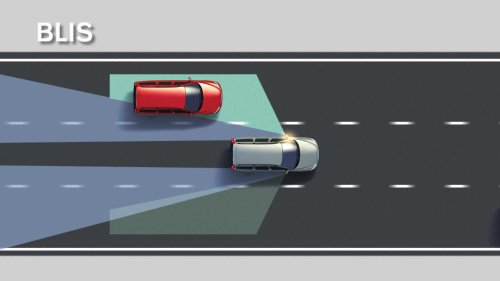
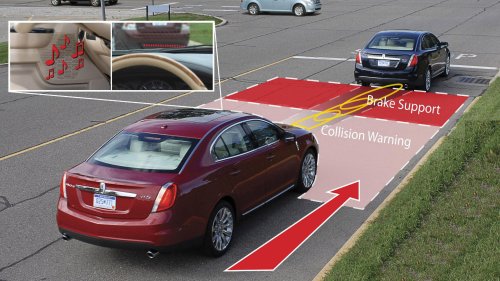
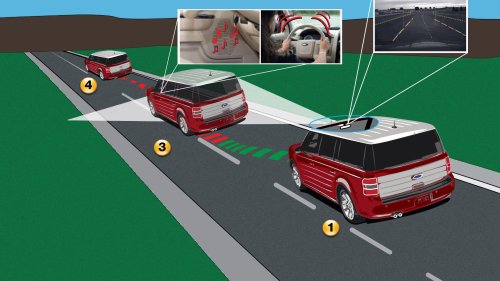
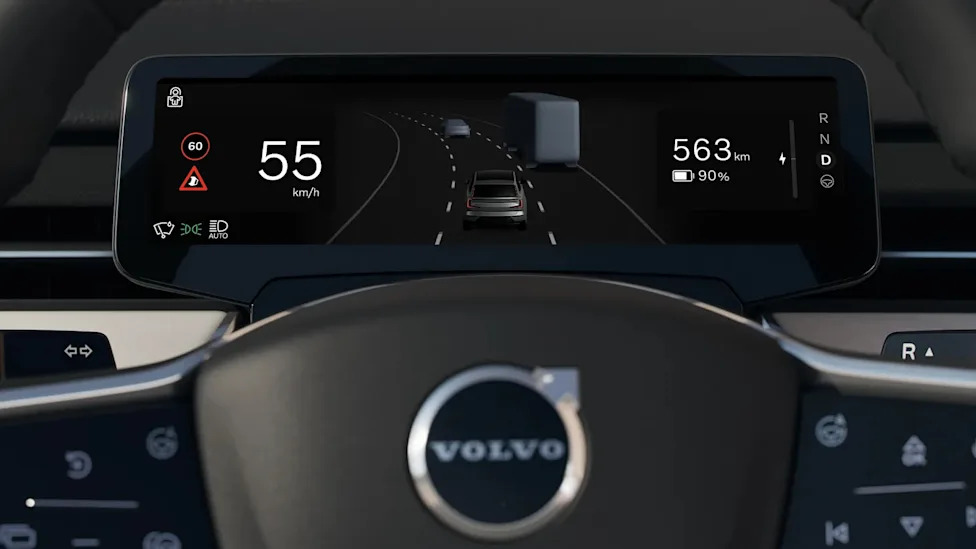
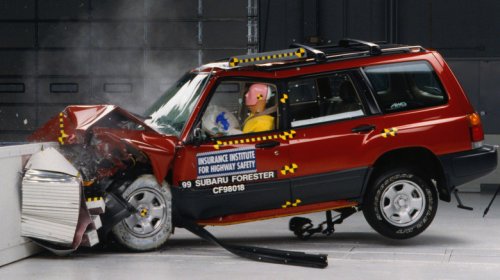
Automotive safety is a constantly evolving journey. Ever since the invention of the car, automakers have strived to build vehicles that minimize the risk of accidents, injuries, and deaths. From better braking systems to the high-tech computer-based systems of today, automotive history has been marked by constantly evolving features that keep drivers and passengers safe on the road.In this list we have put together 10 of the most important automotive safety features, which have been responsible for saving countless lives and preventing countless serious injuries over the decades. Let’s take a look back at the history that brought them here, and how they work to keep us safe.Items are listed in chronological order, from the oldest to the newest. Crumple Zones Year Introduced: 1937 volvo crash mainThe oldest safety innovation on our list is the humble crumple zone (or crush zone). As suggested by its name, this area of a vehicle is designed to crumple and deform, absorbing kinetic energy in the event of a collision. This diverts the impact’s energy away from the vehicle’s occupants, who are safely contained within a rigid frame.The concept of the crumple zone was introduced by Mercedes-Benz in 1937; one of the company’s engineers at the time, Bela Barenyi, was responsible for coming up with the idea and patenting it. In the decades that followed, crumple zones became a standard part of automotive design, making vehicles much safer and accidents less deadly. Disc Brakes Year Introduced: 1955 Jaguar C-type brakeDisc brakes are a safer and more efficient type of braking system, which uses a disc with brake pads clamping on from either side. They came about as an alternative to drum brakes, an older system which uses brake pads pressing outward onto the sides of a cylinder (known as the drum).The very first examples of disc brakes appeared as early as the late 19th century, but the technology did not find a practical application in production cars until 1955, when disc brakes were installed on the Citroen DS. Although drum brakes can still be found in some cheaper vehicles, disc brakes are far more common today. Crash Testing Year Introduced: 1959 1959-1968 Mercedes-Benz W111 W112 Crash Test Crumple Zone BW In the present day, crash testing is considered the main way to assess a new vehicle’s safety capabilities. Testing procedures are comprehensive and high-tech, with detailed scores that outline a car’s strongest and weakest points. Like most safety innovations, however, crash testing started out in a highly experimental way.While General Motors had conducted a barrier crash test before, in 1934, the first example of systematic crash testing occurred in 1959 thanks to Mercedes-Benz; it took place at the company’s facilities in Sindelfingen, in southern Germany. The first ever crash test dummy had been created a decade earlier, for use in the aviation industry.A towing system borrowed from a nearby gliding club launched a test vehicle against a makeshift solid barrier, allowing the team to analyze the effects of a direct collision. Over time, testing techniques improved and became standardized. Crash tests were adopted by automakers and government bodies alike, and are now commonplace in most areas of the world. Three-Point Seatbelt Year Introduced: 1959 2024 Volvo XC40 Since 1959 Seatbelt ScriptIn 1958, young engineer Nils Bohlin moved away from the aerospace industry to join Volvo as a safety systems engineer. He immediately started working on a new device which would revolutionize automotive safety, inspired by his previous work on fighter planes: the three-point seatbelt. This restraint system kept passengers more secure in the event of a crash, helping prevent serious injuries and death.A year later, Bohlin’s seatbelt design became standard on the Volvo PV544. Volvo famously left the patent open in order to allow other automakers to use the design. This meant the three-point seatbelt quickly spread across the world, saving lives and becoming a staple of modern automotive safety. Rear Facing Child Seat Year Introduced: 1972 Volvo rear facing child seat 1972Thirteen years after revolutionizing automotive safety with the three-point seatbelt, Volvo introduced another crucial innovation that kept children safe on the road: the rear-facing child seat. This feature arrived in 1972, and eventually became the standard way to transport young children in a vehicle.Volvo took inspiration from the aerospace industry when coming up with the design for the rear-facing seat. The concept of astronauts lying on their backs during take-off, which helps spread out forces evenly, informed the design of the seats, which work on similar principles to reduce the risk of injury in a crash. Airbags Year Introduced: 1973 1973 Oldsmobile Toronado Brown Front Angled ViewAirbags are a crucial component of automotive safety. This feature, which most of us take for granted today, helps prevent serious injury and death in the event of an accident, drastically improving outcomes for driver and passengers alike. The first production car in the world to offer airbags as an option was the Oldsmobile Toronado in 1973. Oldsmobile referred to the new feature as the Air Cushion Restraint System (ACRS).In 1977, however, the brand stopped offering the ACRS due to a lack of consumer interest. It wouldn’t be until a decade later that the first production car came with standard airbags, the Porsche 944 Turbo. In the years that followed, airbags became more popular, eventually turning into the commonplace feature seen in all new vehicles today. ABS Year Introduced: 1978 1978 Mercedes-Benz S-Class W116 ABS Tests Modern RecreationABS (Anti-Lock Braking System) is a vital safety feature that prevents a vehicle’s brakes from locking up during an emergency stop. This is accomplished by repeatedly applying and releasing brake pressure, which allows the driver to retain control of the vehicle and avoid an accident. The earliest examples of ABS technology actually came from the aviation industry, before it was adapted for the automotive world.ABS was first offered in a production car in 1978 by Mercedes-Benz with the W116 S-Class. Two years later, the feature became standard on all Mercedes-Benz models. Other automakers also began to implement the technology on their own models; today, ABS is commonplace in most vehicles. ESC Year Introduced: 1995 Stability control diagram from Euro NCAPElectronic stability control, or simply ESC (sometimes referred to as “electronic stability program”, or ESP) is a vital feature that prevents cars from skidding, spinning, and rolling over. The system automatically senses when the vehicle is losing traction, making small corrections such as applying the brakes to individual wheels or reducing engine power. According to the Insurance Institute for Highway Safety (IIHS), vehicles with ESC are 40% less likely to be involved in a single-vehicle fatal crash.This technology was introduced by Mercedes-Benz in 1995, on the S-Class W140 and CL Coupe C140. Mercedes collaborated with Bosch during the development of this feature; Bosch was responsible for building the sensors and software. Blind Spot Monitoring Year Introduced: 2003 2003 Volvo Original Blind Spot MonitoringBlind spot monitoring is yet another safety innovation that Volvo is responsible for. This technology mitigates human error: it uses cameras and radars to detect the presence of other vehicles in a car’s blind spot, in case the driver forgets to check or doesn’t look properly.It was first introduced in 2003. Volvo referred to its system as the BLIS (Blind Spot Information Device). The technology rapidly gained popularity, and other automakers caught on over the following years: Mazda introduced its own system in 2008, and Ford in 2009. Today, most new vehicles feature blind spot monitoring as part of their package of safety features. Collision Mitigation Year Introduced: 2003/2008 collision mitigation graphicThe last item on our list has two separate introduction dates as it arrived in slightly different form in different years. “Collision mitigation” is a fairly broad term, but it generally refers to any automotive technology where a vehicle automatically takes action to avoid a collision, in the absence of input from the driver.In 2003, Honda introduced an early version of this technology with the Collision Mitigation Brake System (CMS or CMBS) in the Inspire. This radar-based system scanned the road ahead and automatically applied the brakes if the driver did not brake with enough force.However, according to the Guinness Book of Records, the first car with a constant crash avoidance system was the Volvo XC60 in 2008. Unlike in previously available systems, the Volvo’s collision avoidance tech was constantly switched on, and did not require cruise control to be activated in order to function.Where research meets the right dealBrowse This ModelSources: Mercedes-Benz, Volvo, Honda, Guinness Book of Records, TECOSIM Group