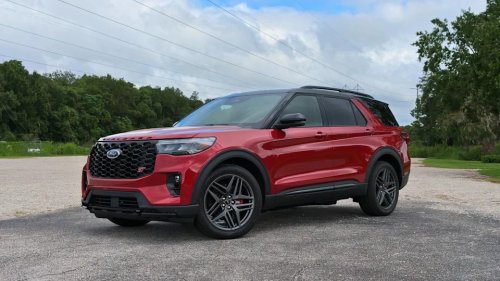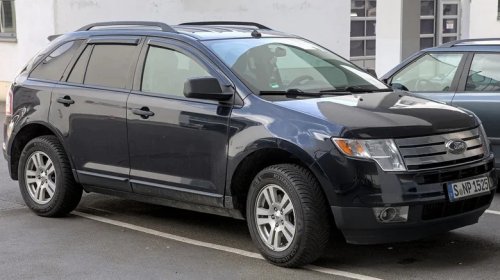


















Ford recalls 254,000 SUVs over software that can disable safety featuresFord is recalling 254,000 SUVs in the United States after discovering a software problem that can disable rearview cameras and several driver-assistance features, raising the risk of a crash. The defect, tied to an unexpected reset of image processing software, affects popular Ford and Lincoln models built over multiple recent model years. Owners are being told to schedule a free software update, which Ford says will restore full function to the affected systems. What triggered the recall The recall centers on a glitch in the vehicles’ image processing software that can suddenly reset while the SUV is in use. When that reset happens, the rearview camera image can disappear and a suite of safety and driver-assist tools can shut down without warning. Regulators say the loss of these systems can reduce a driver’s ability to detect hazards behind and around the vehicle, which increases crash risk. Federal safety officials opened a case after receiving reports that rearview cameras were going dark or freezing, sometimes accompanied by the loss of blind spot monitoring, cross-traffic alerts and other aids. An investigation found that a software defect in the digital control unit could trigger an unexpected reboot. That reboot interrupts the video feed and can also disable related support features that rely on the same processing hardware. According to material linked from Ford recalls SUVs, the issue is not tied to a mechanical failure or physical wiring problem. Instead, it is a software logic flaw that can surface under certain operating conditions. The problem stems from the image processing module unexpectedly resetting, which can cause the rearview camera to fail just as a driver is backing up or relying on the display in traffic. Which SUVs are affected The recall covers a long list of higher-end Ford and Lincoln sport-utility vehicles. According to the National Highway Traffic Safety Administration, Ford is recalling certain 2022 to 2025 Lincoln Navigator, 2024 to 2025 Lincoln Nautilus, 2025 Lincoln Aviator and Ford Explorer SUVs that share the same image processing architecture. The affected vehicles are primarily in the United States and were built for model years when these camera and driver-assist suites became standard or widely available. Regulators describe the campaign as targeting more than 254,000 vehicles, a figure that appears in multiple filings and public summaries. One notice specifies 254,640 SUVs in the U.S. market, while several summaries round that figure to 254,000 for simplicity. A social media advisory from Ford Motor also cites 254,640 SUVs and repeats the broader 254,000 figure that has become shorthand for the scale of the recall. Owners of Ford Explorer, Lincoln Navigator, Lincoln Nautilus and Lincoln Aviator models built in the affected years are being urged to check their vehicle identification numbers against official recall tools. Some coverage of the campaign, including a detailed brief on Ford recalls SUVs, highlights that the recall is limited to specific production ranges rather than every example of these nameplates on the road. How the defect shows up on the road In daily driving, the software problem can present itself in several ways. The most visible symptom is a blank or frozen rearview camera display when the driver shifts into reverse. In some cases, the screen may show a warning message instead of the expected video feed. Drivers have also reported intermittent loss of parking assist lines or guidance markers that normally appear over the camera image. Beyond the camera, the same reset can affect advanced driver-assistance features that rely on the shared processing unit. Reports referenced in federal summaries describe temporary loss of blind spot information, rear cross-traffic alert, lane-keeping support and pre-collision assist. A short video advisory aimed at owners of Ford Explorer, Lincoln Navigator, Nautilus and Aviator models warns that a software glitch can knock out the rearview camera, blind spot monitoring and pre-collision assist in a single event. Regulators caution that the loss of these systems can reduce a driver’s ability to detect hazards behind and alongside the vehicle. A driver backing out of a tight parking space without a working camera or cross-traffic alert, for example, may miss a pedestrian or approaching vehicle that would normally trigger an on-screen warning and audible alert. The same concern applies on multi-lane roads where blind spot indicators and lane-keeping aids serve as a second set of eyes. Why regulators view rear cameras as essential Rearview cameras are no longer treated as convenience features. They are now embedded in federal safety standards and are required on new passenger vehicles sold in the United States. The National Highway Traffic Safety Administration, often referenced as NHTSA in recall documents, has long argued that cameras and supporting software significantly reduce backover crashes, particularly those involving children and pedestrians behind large vehicles. Because of that status, any defect that can disable a rear camera, even temporarily, draws close scrutiny. In recall filings tied to this campaign, NHTSA describes the problem as an unexpected reset of safety features and notes that the loss of the rearview image and related driver-assist tools raises the risk of a crash. A bulletin highlighted by unexpected reset coverage echoes that language, tying the software flaw directly to hazard detection. Regulators have also stressed that modern driver-assistance suites are designed as layered protection. Even if a driver remains fully attentive, the loss of camera views, radar-based alerts and automatic braking removes backup safeguards that can prevent or lessen the severity of collisions. That perspective explains why a software issue in a camera module can trigger a recall of more than a quarter of a million vehicles. Ford’s response and the planned fix Ford Motor has told regulators that it will fix the issue with a software update to the image processing module. The company has not announced a mechanical repair or hardware replacement as part of this campaign. Instead, technicians will reprogram the affected control units with revised code that prevents the unexpected reset and keeps the camera and assistance features online. According to summaries of the recall, Ford will notify owners of affected SUVs and instruct them to schedule service at authorized dealerships. The software update will be provided free of charge. In some cases, owners may be able to receive the update through an over the air delivery if their vehicles support remote software downloads, though official filings focus on in-dealer reprogramming. A regulatory report referenced by Ford recall over vehicles notes that Ford opened an internal investigation after receiving field reports of camera failures and assistance feature dropouts. Once engineers traced the problem to the image processing software, the company opted to initiate a recall in coordination with NHTSA. Ford has said it is not aware of fatalities linked directly to this defect, although crash and injury data in the official docket are limited in the public summaries. What owners should do now Owners of potentially affected vehicles have several immediate steps available. First, they can check their vehicle identification number in the recall lookup tools maintained by NHTSA and by Ford. The official campaign number associated with this issue appears in federal databases, and entering a VIN into those tools will confirm whether a specific SUV is covered. If a vehicle is included, owners should contact a Ford or Lincoln dealer to arrange the software update as soon as appointments are available. Service advisors can confirm the scope of the work and estimate how long the reprogramming will take. In most cases, software updates of this type involve connecting a diagnostic device to the vehicle and loading new code into the affected module. Until the repair is completed, drivers should be prepared for the possibility that their rearview camera and assistance features may stop working without warning. Safety officials recommend treating these systems as supplemental help rather than primary safeguards. That means using mirrors, checking blind spots manually and backing up slowly, especially in crowded parking areas or near driveways where pedestrians are likely to be present. Some consumer advisories, including a brief circulated as Ford Recalls coverage, also suggest that owners document any camera or assistance feature failures they experience before the update. That documentation can help service departments verify the issue and can be useful if questions arise about the effectiveness of the software fix. How this fits into a broader pattern of software recalls The Ford campaign reflects a broader shift in the auto industry, where software issues now drive a significant share of recalls. Modern SUVs like the Ford Explorer, Lincoln Navigator, Lincoln Nautilus and Lincoln Aviator rely on complex networks of sensors, cameras and processors to deliver features that were once mechanical or absent entirely. As a result, a single coding error in an image processing module can have far-reaching effects. Recent years have seen multiple recalls across brands for problems such as malfunctioning automatic emergency braking, incorrect speedometer readings and glitchy infotainment systems that disrupt backup cameras. In many of those cases, the remedy has been a software update rather than a physical part replacement. That pattern is evident again in this campaign, where the fix targets the logic that controls how the rearview camera and driver-assist tools operate. Analysts looking at the latest Ford action have pointed out that the company is far from alone. As vehicles become more connected and feature-rich, the line between automotive engineering and consumer electronics continues to blur. A report framed as Ford Motor Recalls Over Software Issue places this recall alongside a growing list of software-driven campaigns that focus on digital components rather than mechanical failures. For regulators, the trend raises questions about how to evaluate and monitor software quality in vehicles. Traditional testing and certification processes were built around hardware durability and crash performance. Now, agencies like the National Highway Traffic Safety Administration must also assess how code behaves in real-world conditions, including edge cases that may not appear in laboratory simulations. The safety stakes for large SUVs The models involved in this recall are among the largest and heaviest in Ford’s lineup. Vehicles such as the Lincoln Navigator and Ford Explorer offer three rows of seating and are popular with families, ride services and business fleets. Their size provides advantages in crash protection for occupants, but it also creates larger blind zones behind and around the vehicle. Rearview cameras and parking aids are especially valuable on these large SUVs, which can have limited rearward visibility through mirrors alone. A defect that disables the camera at the moment a driver is backing out of a driveway or parking space carries particular concern, because pedestrians, cyclists and small children can be difficult to see from the driver’s seat. Coverage that highlights how Regulators warn about the loss of these systems emphasizes that the risk is not theoretical. Even if most drivers complete trips without incident, the absence of camera views and alerts in a small fraction of situations can translate into serious crashes. That is why both Ford and federal officials are urging prompt completion of the software update. More from Fast Lane Only Unboxing the WWII Jeep in a Crate 15 rare Chevys collectors are quietly buying 10 underrated V8s still worth hunting down Police notice this before you even roll window down