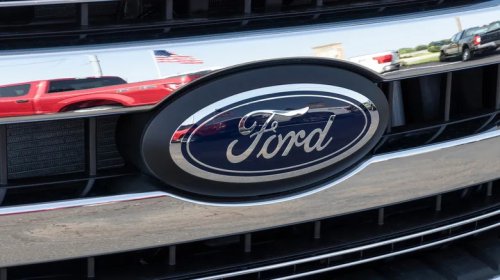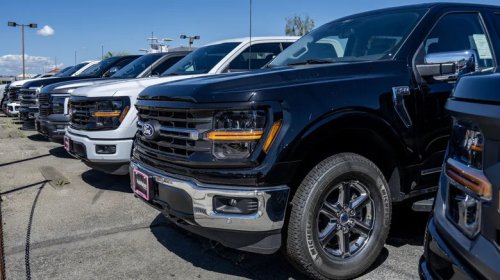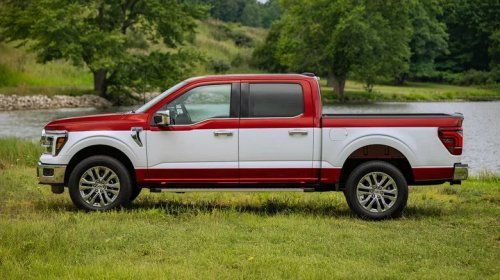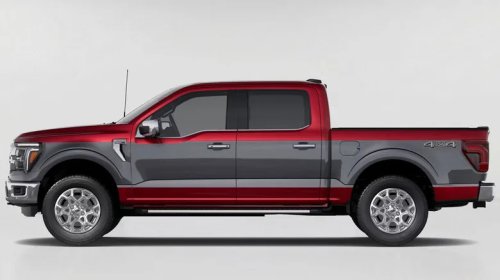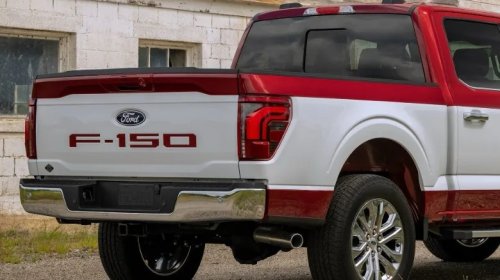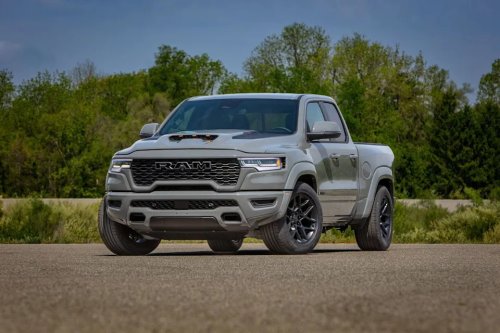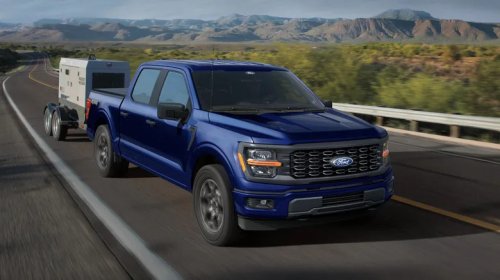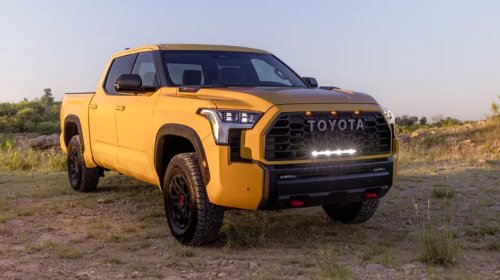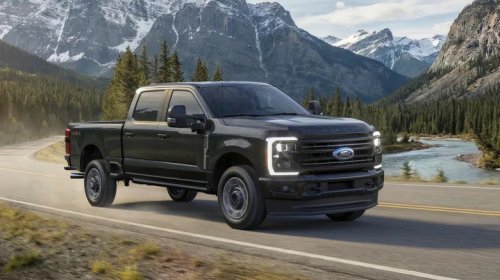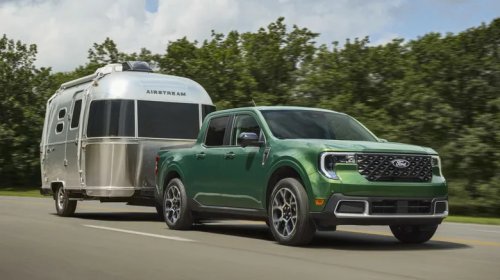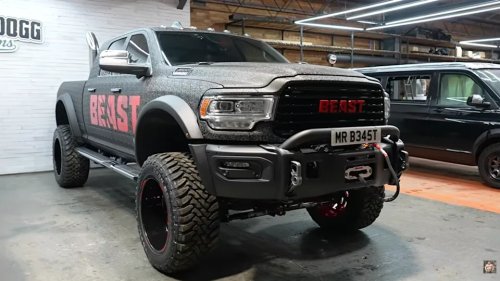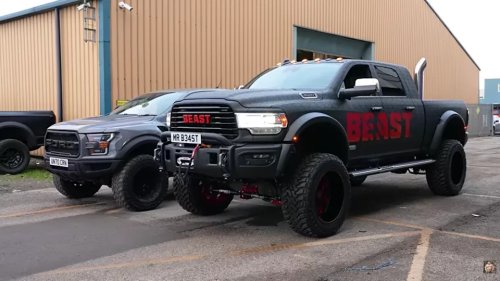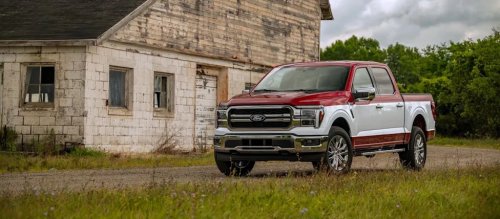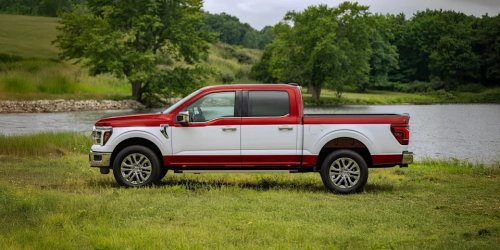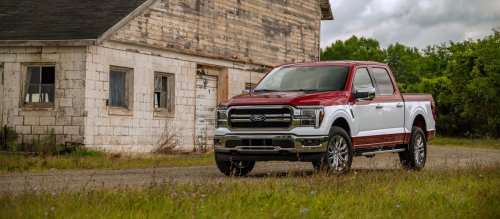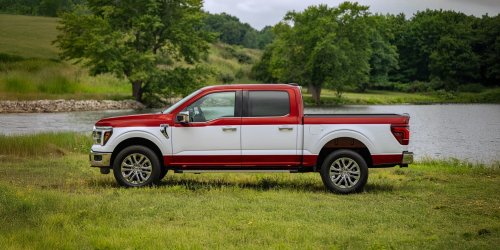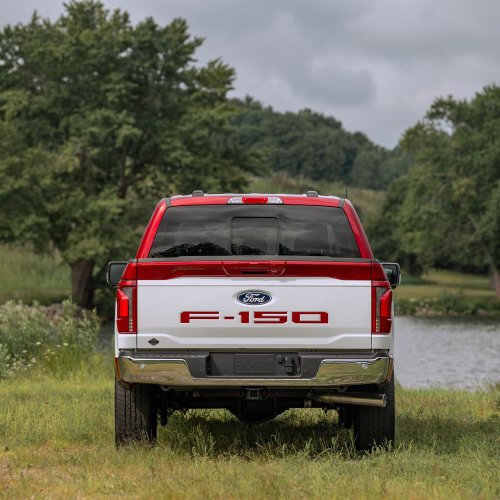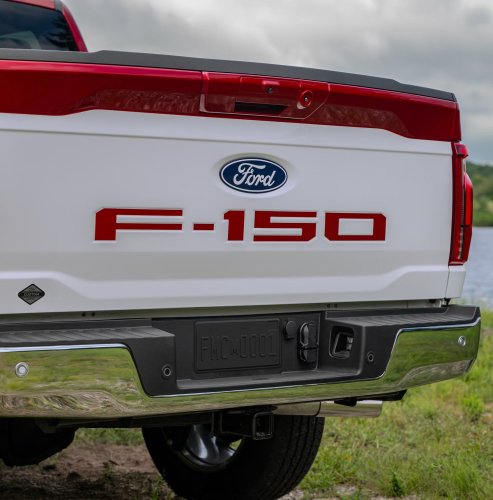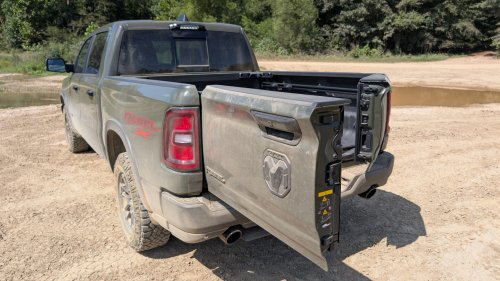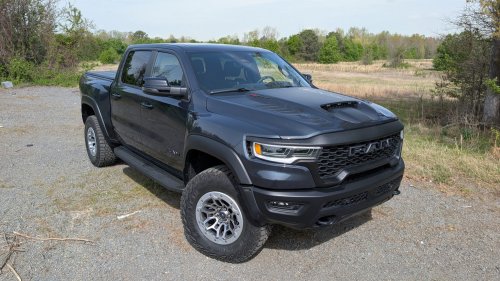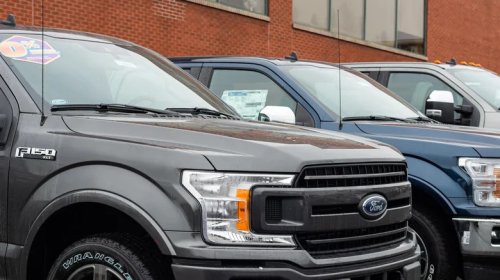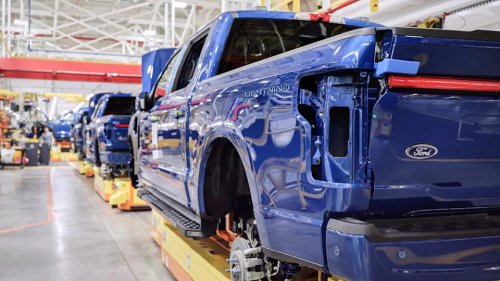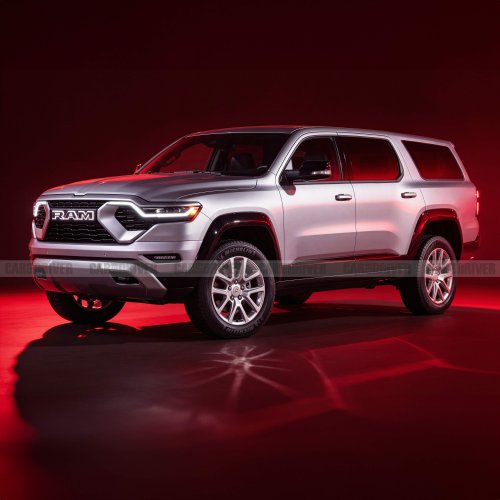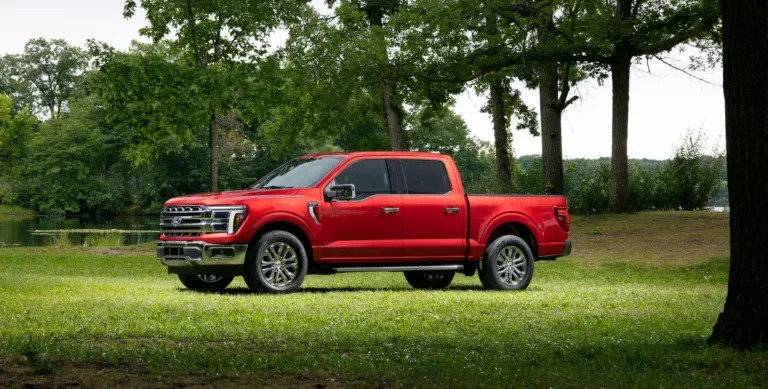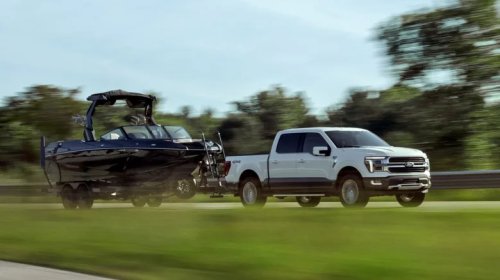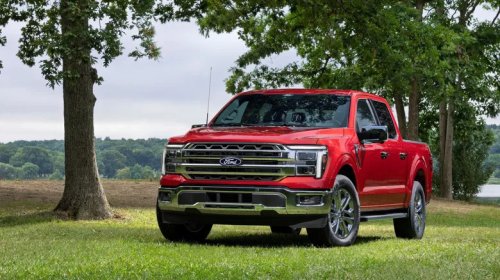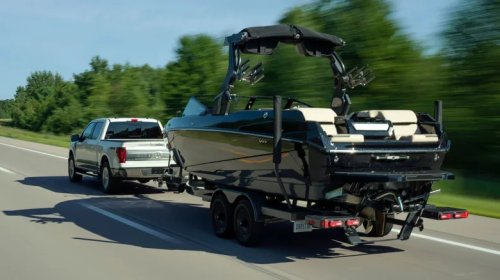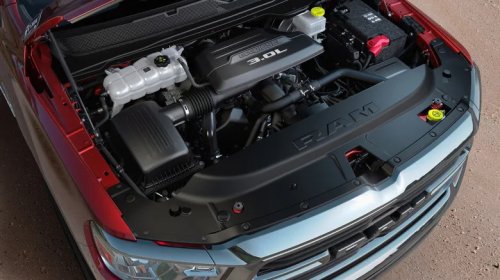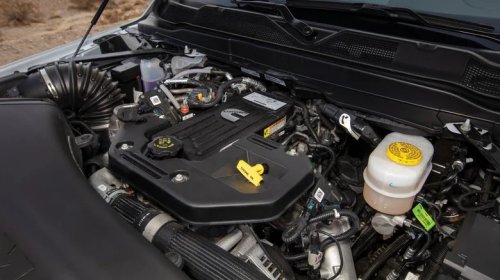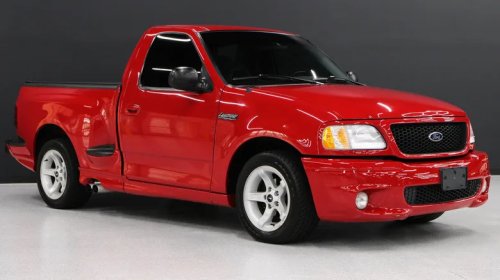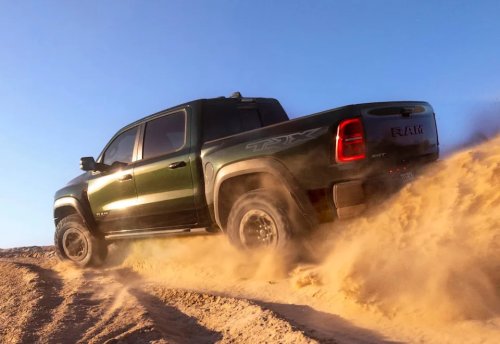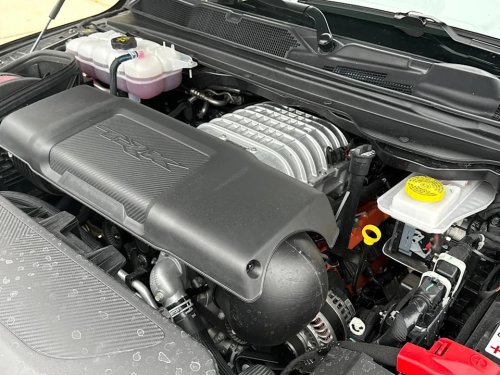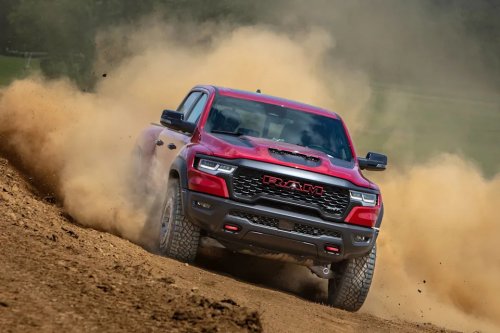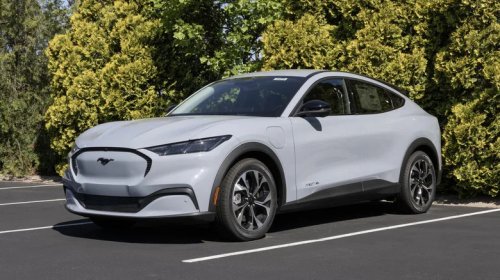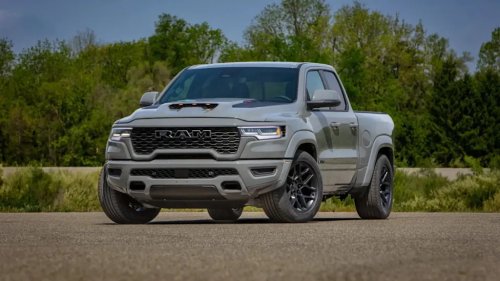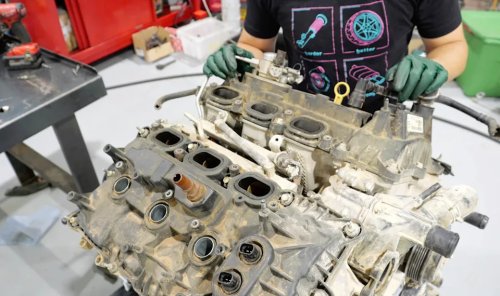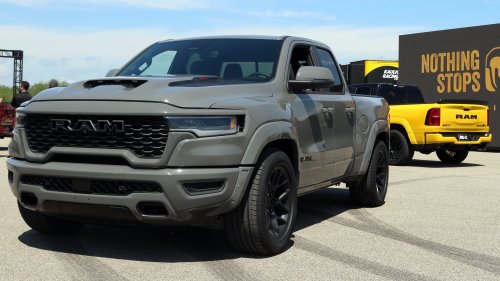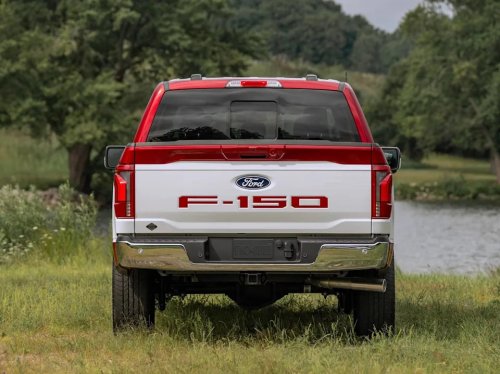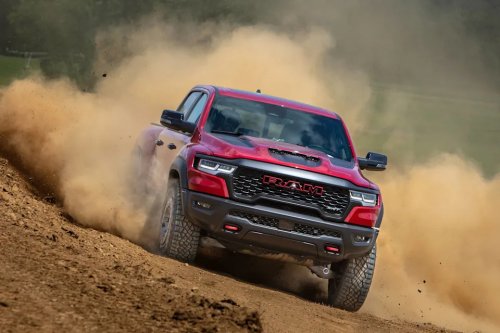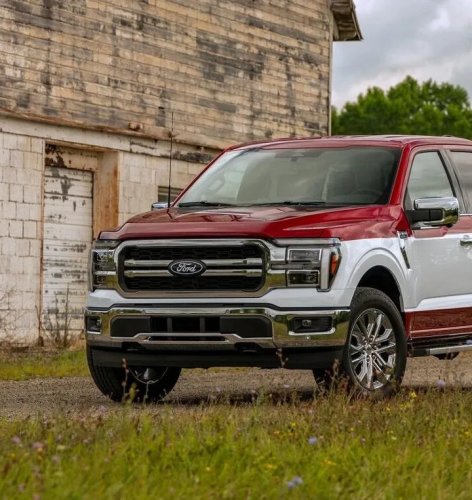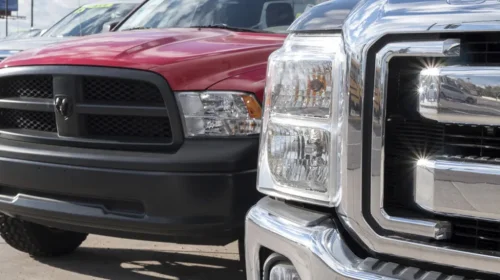
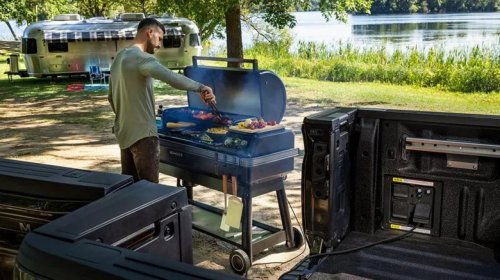
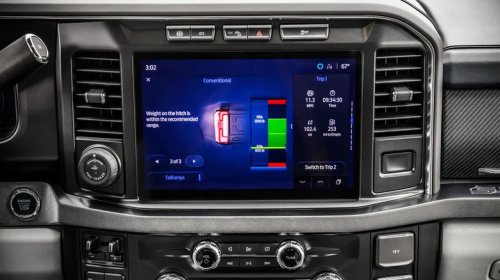
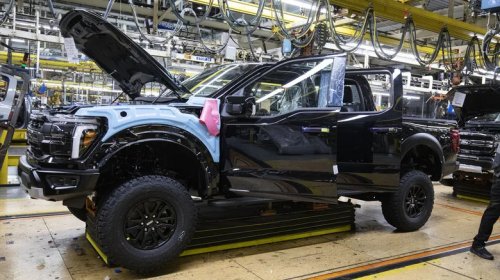
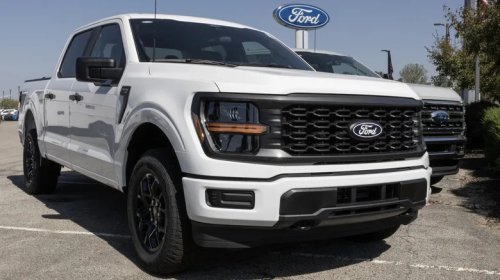
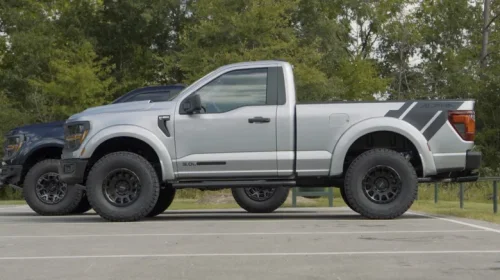



















A close-up of a Dodge Ram and a Ford F-150 pickup. - tishomir/ShutterstockThe car world has seen no shortage of rivalries. And in many of these, the competitors are chasing the same buyer. At the top end of the performance market, there was the Holy Trinity of hypercars: the Porsche 918, the LaFerrari, and the McLaren P1, three hypercars built for the same wealthy, supercar-obsessed customer. Down in the mainstream, the Mazda CX-5 and Toyota RAV4 are still trading buyers today, both chasing the same practical, budget-conscious family. However, none of these rivalries have burned as long or as hot as the one between the Ford F-150 and the Ram 1500, two trucks fighting over the same full-size pickup buyer for decades: someone who needs work capability but also wants comfort, technology, and a bit of bling on the way to the job site. That is why one is always the alternative for the other. Ford introduced the F-150 in 1975. The Ram name arrived in October 1980 for the 1981 model year, when Dodge's D-series pickups were rebranded. Ever since, these two trucks have been locked in a decades-long fight for that same customer. That shared audience is exactly what makes differentiation so tricky. AdvertisementAdvertisementFord and Ram can't afford to alienate their loyal base by changing too much, so they compete on the margins instead — with aggressive lease deals, trim-level badge appeal, financing incentives, and the lot. Be that as it may, sometimes the real battle comes down to something simpler: giving buyers a feature the other guy just doesn't have. So, here are five cool features the Ford F-150 has that the Ram 1500 doesn't.Read more: 10 Mistakes You Might Be Making When Changing The Oil In Your VehicleFord Pro Power OnboardA person powering a grill with Ford's Pro Power Onboard electrical system. - FordIn the intro, we talked about how these trucks cater to working people and professionals who handle tools daily. For that exact buyer type, Ford's F-150 offers a standout feature called Pro Power Onboard. Specifically, the truck is available with an integrated electrical generator that provides sustained AC power (2.0 kW, 2.4 kW, 7.2 kW, and up to 9.6 kW on the F-150 Lightning) to external devices. This is more than a conventional 120-volt outlet, as it is designed to power tools and appliances without the need for a separate portable generator. Let's say you want to go camping, and you could choose between the F-150 and the Ram 1500 as your campermobile. If you want to power your hefty appliances, you can simply plug them directly into the F-150. AdvertisementAdvertisementIf you choose the Ram 1500, you will often need a separate portable generator for anything requiring more than 2.0 kW of power. On jobsites, farms, remote maintenance locations, and roadside repair jobs, the benefits are also real. Pro Power Onboard can also prove invaluable during a power outage and save you money by eliminating the need to purchase a generator to power your equipment. The Ram 1500 has power outlets, but it does not have a factory-installed high-output onboard generator as powerful as the one available in the F-150. This is a functional advantage because it makes the F-150 better suited to the needs of its intended professional users, who often work or travel in locations where access to electricity may be limited.Onboard scales with Smart HitchA close-up on a Ford pickup truck center screen showing Smart Hitch functionalities. - FordFord's F-150 also gives buyers a genuine edge in hauling and towing confidence, something that matters to the exact same working buyer. The feature responsible is Onboard Scales with Smart Hitch, a system built around four suspension sensors that estimate payload and tongue weight and enable the truck's adaptive damping.Picture loading a bed full of pavers for a weekend patio job, unsure how close you are to the payload limit. Instead of guessing or hunting down a truck-stop scale, drivers can check the estimated weight on the center touchscreen, through the FordPass app, or by watching illuminated bars in the taillights as the bed fills up.AdvertisementAdvertisementThe Ford Smart Hitch also solves a related, often-ignored problem: trailer tongue weight. Get it wrong, and a trailer can start swaying at highway speed. Ford's system estimates that figure automatically and flags it on the same touchscreen, app, or taillight display used for payload, so drivers can redistribute cargo before ever pulling onto the highway.The Ram 1500 simply doesn't offer a factory equivalent. It has plenty of its own tech, but nothing that turns the suspension itself into a built-in scale for both bed and trailer. For contractors, farmers, and anyone who tows semi-regularly, that's not a small omission. It's the difference between knowing your numbers and eyeballing them.An aluminum bodyA black Ford F-150 going through production assemblies at the Ford Dearborn Plant - Bill Pugliano/Getty ImagesFord's F-150 also stands apart from the Ram 1500 in something more fundamental than any single button or switch: what the truck is actually made of. Since 2015, Ford has built the F-150's body from aluminum instead of steel, a decision the company has carried into the current 14th-generation truck. Aluminum's biggest advantage comes down to basic physics.The metal is roughly one-third the density of steel, so swapping the body material alone strips a significant amount of weight off the truck before you've touched anything else. That saved weight doesn't just sit there, either. Ford pairs the aluminum-alloy body with a high-strength steel frame, a combination that keeps the F-150 structurally rigid while giving it a real, measurable edge in payload capacity and fuel economy over a truck built entirely from steel.AdvertisementAdvertisementRam never followed Ford down this road, and neither did Chevy. Part of the reason comes down to simple economics: raw aluminum costs roughly three times as much as steel to source and work with, which is a hard number for a mass-market truck maker to swallow across an entire body panel lineup. So the Ram 1500 sticks with a traditional steel body, a choice that makes it heavier than an equivalent F-150 before either truck is even loaded up.PowerBoost Full HybridA white Ford F-150 parked on a dealership lot. - Jetcityimage/Getty ImagesThe 3.5L PowerBoost Full Hybrid V6 pairs Ford's twin-turbo six with an electric motor for a combined 430 horsepower and 578 lb-ft of torque, while still returning an EPA-estimated 22 mpg city and 24 mpg highway. When MotorTrend compared the F-150 against the Silverado and the Ram 1500, they noted that: "Ford is the only pickup manufacturer to offer a full-blown hybrid powertrain," a distinction that puts real daylight between the two trucks rather than just a marketing label.Ram's closest answer is eTorque, the mild-hybrid system Stellantis puts under the hood of select HEMI-powered trucks, bolted here to the base 3.6L Pentastar V6. MotorTrend draws the line clearly, too, noting that "Ram's eTorque setup on the entry-level V-6 is a mild hybrid system." A mild hybrid can smooth out stop-start driving and add a small torque assist off the line, but it doesn't drive the wheels on its own.It also doesn't come close to matching PowerBoost's ability to operate as a standalone electric generator, as we discussed above. Ram's mild-hybrid system was never built to do that job, and it doesn't. For a buyer cross-shopping the two trucks on efficiency, torque delivery, or worksite power, PowerBoost isn't just a nicer badge on the fender. It's a fundamentally different kind of engine, and Ram doesn't have one to offer.A two-door regular cabTwo regular cab two-door Ford F150s parked next to each other. - YouTube/PaxPowerFord's F-150 also beats the Ram 1500 on sheer configurability, starting with something as basic as the cab itself. As AutoGuide points out, Ram skips the two-door, regular cab configuration entirely. Every Ram 1500 comes with four doors, whether you pick the Quad Cab or the Crew Cab. The F-150, on the other hand, still offers a genuine two-door Regular Cab alongside its Super Cab and Super Crew options, and is one of the best single-cab trucks you can buy.AdvertisementAdvertisementThat extra configuration isn't just a styling choice. It changes the price of entry, too. KBB's 2026 pricing data shows Ram's cheapest 1500 starts at around $43,000, a price floor that exists in part because no regular-cab version undercuts it. The F-150 starts at $40,085, a gap that comes down largely to Ford still building a stripped-down, two-door work truck that Ram simply doesn't offer anymore. For buyers who don't need rear seats at all, fleet operators, contractors, or anyone hauling tools instead of people, that regular cab option means a lighter, cheaper, more purpose-built truck.Ram's smallest cab, the Quad Cab, still carries extremely tight rear doors and a back seat, whether the buyer wants that extra bulk and cost or not. It's a small thing on paper, but it reflects a real difference in how far each brand is willing to go to serve the no-frills end of the market. Ford still builds it. Ram, at least for now, has left that buyer behind on this front.Want the latest in tech and auto trends? Subscribe to our free newsletter for the latest headlines, expert guides, and how-to tips, one email at a time. You can also add us as a preferred search source on Google.Read the original article on SlashGear.