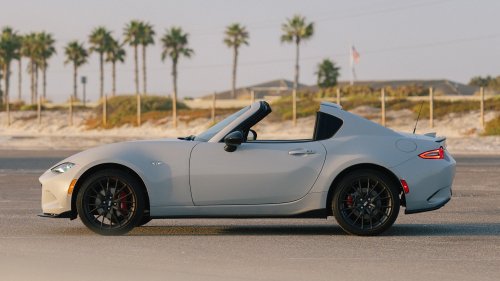
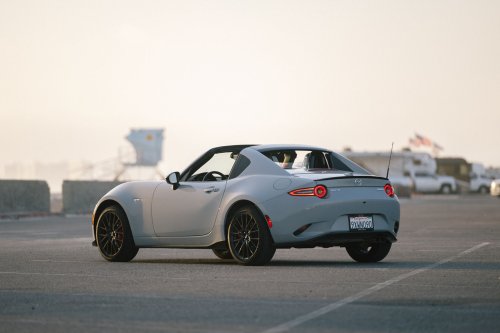
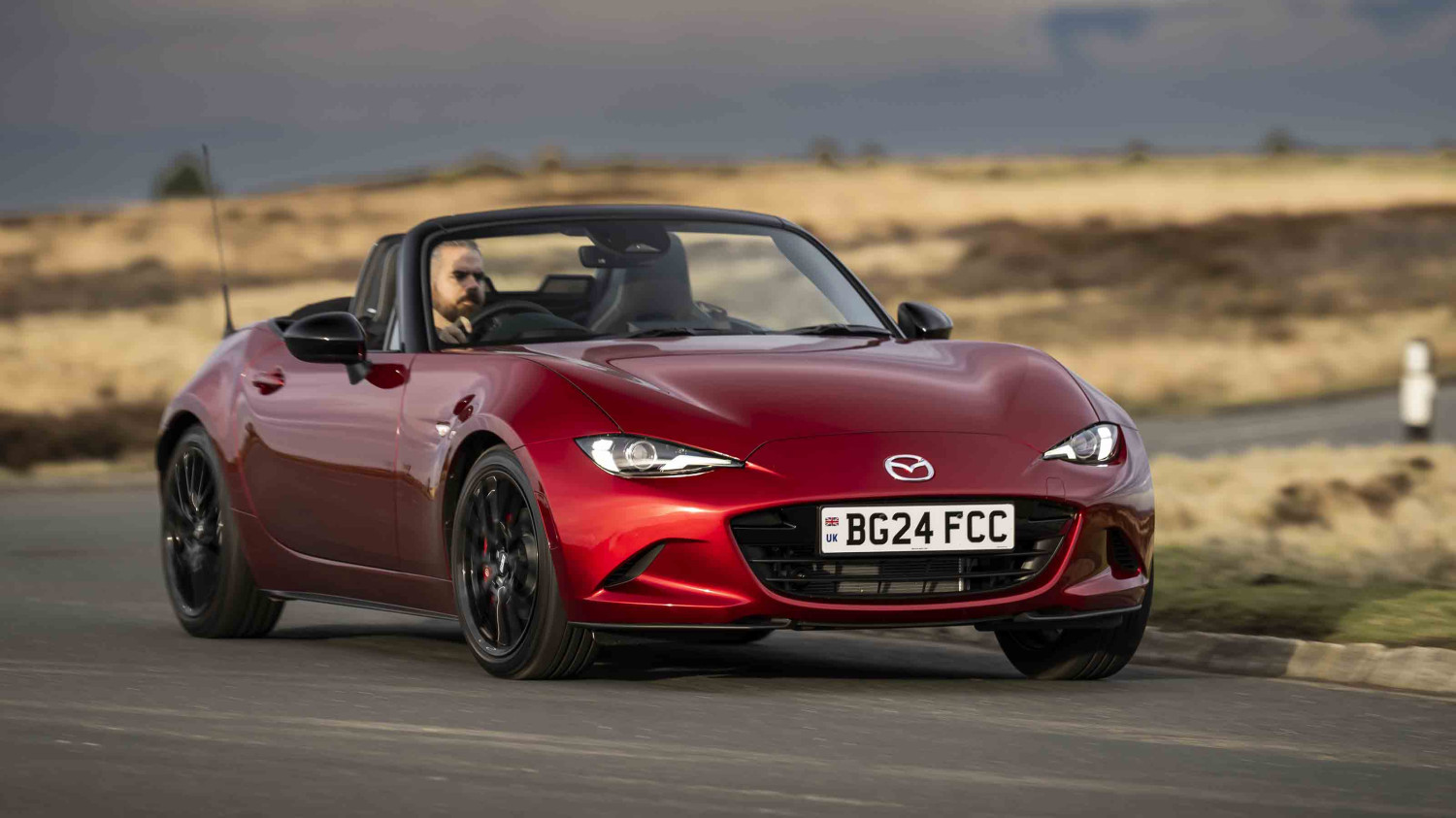
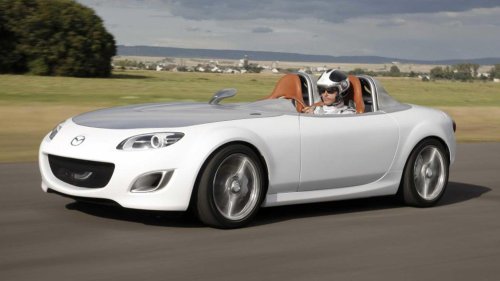
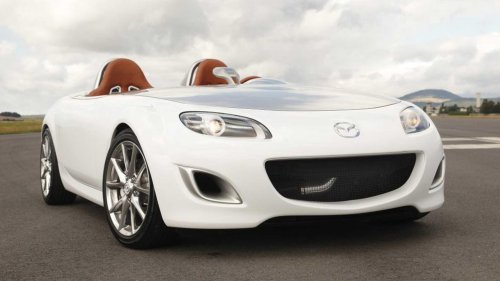
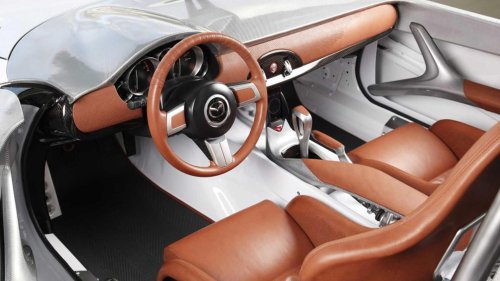
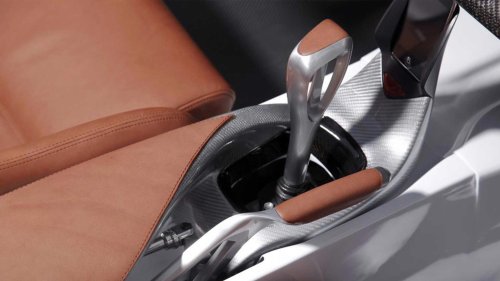
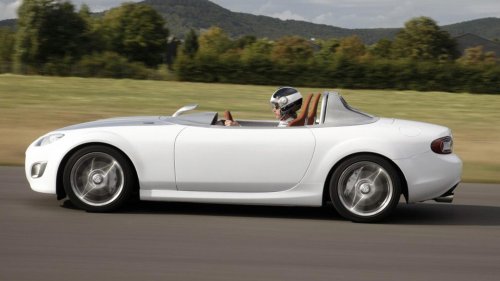
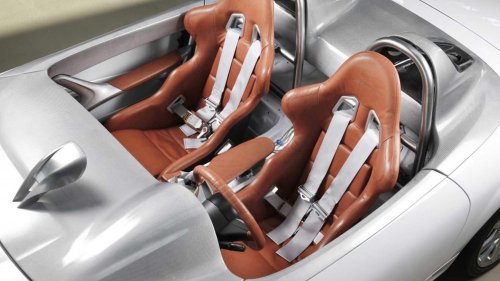
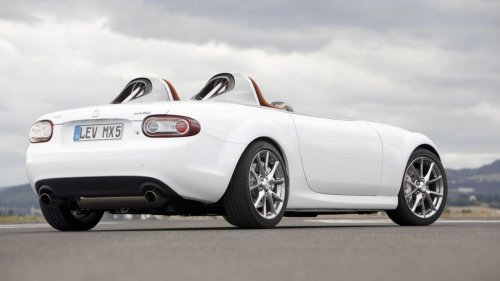
For decades, the Miata has been the default answer to a simple question: What’s the best sports car you can buy for the love of driving? But in the late 2000s, Mazda pushed that idea further than ever before. To mark the MX-5’s 20th anniversary, the brand unveiled a concept that stripped the formula down to its absolute core and forgot to stop.This concept was incredibly light, focused, and perhaps the purest version of the MX-5 Miata, the best-selling roadster ever made. This one-off concept did not make production, but the ethos and the philosophy helped push the Miata's generations that followed even further. If it made production, though, it would have completely revolutionized the automotive landscape for sports cars. The Mazda MX-5 Superlight Concept Could Have Started A Revolution Via: Mazda The Mazda MX-5 Superlight Concept was unveiled in 2009 as a one-off concept to celebrate 20 years of the MX-5. It was one of the many coolest Mazda concept cars ever.Based on the NC-generation Miata, Mazda took an already lightweight, affordable sports car and removed anything that didn’t directly contribute to driving. The 2009 Superlight Concept was a stripped, extreme interpretation of the MX-5 philosophy, designed to explore how far simplicity and mass reduction could be pushed in a modern car.As emission rules tightened, many manufacturers pivoted toward efficiency and restraint. But the Superlight was Mazda’s way of proving that building cleaner cars didn’t have to be boring. Mazda never put it in production, but it had the potential to entirely revolutionize the industry in several ways. A Radical Redesign – Windshield-less Sports Car Via: Mazda One of the Superlight’s most striking features was the complete removal of the windshield. In its place were small aerodynamic deflectors, paired with prominent roll hoops behind the seats. This reduced mass and altered the driving experience by fully exposing occupants to wind, noise, and speed. The result was an uncompromising roadster that emphasized immersion and driver experience. It prioritized the driving experience over convenience, pushing the MX-5 concept closer to a track-focused machine than a traditional road car.It challenged assumptions about what a sports car needed to look like. The Superlight Concept also questioned whether comfort-driven design conventions had diluted driver engagement in compact sports cars. Lightweight Meets Performance – Sub-2,200 lb in 2009 With lightness as the Superlight’s guiding principle, Mazda’s engineers removed every component they could justify losing. The folding roof was the first to go, followed by the windshield and its wipers, transforming the MX-5 into a true speedster. Side windows were eliminated as well, allowing the associated door mechanisms to be removed, while exterior door handles were deleted altogether. Even the conventional rearview mirror was replaced with a smaller aluminum unit, a material also used for the newly designed roll hoops positioned behind the occupants. These roll hoops were intended to improve protection in a rollover and optimized for the car’s aerodynamic efficiency.Via: Mazda Once the exterior had been pared back to its essentials, Mazda’s engineers shifted their focus inward, applying the same ruthless approach to the cabin. The stock seats were removed in favor of lightweight bucket seats, while the steering wheel, handbrake, and gear lever were swapped for simpler aluminum components. Air-conditioning was deleted entirely, with the open cabin making ventilation unnecessary. There was no radio, no cruise control, and no sound-deadening material, all in the name of cutting mass. The result of this aggressive approach was a final curb weight of 2,193 pounds, more than 300 pounds lighter than a standard MX-5. Efficiency Without Compromise – Small Engine, Big Impact Via: Mazda Power came from a naturally aspirated 1.8-liter engine producing 125 horsepower, paired with a manual transmission. While output figures were modest, the low curb weight delivered a strong power-to-weight ratio and sharp responses. Mazda’s focus was not outright speed, but efficiency through lightness. It resulted in reduced fuel consumption, lower emissions, and improved agility, but without sacrificing driver engagement.The Superlight ultimately remained a concept due to regulatory and usability constraints, but it served as a clear demonstration of Mazda’s belief that performance begins with weight reduction. Weight Reduction Over Power 2009 Mazda MX-5 Superlight Concept Profile Rolling ShotThe Mazda MX-5 Superlight Concept stayed true to the Miata’s long-standing philosophy by retaining a modest, efficient powertrain. Under the hood sat Mazda’s familiar 1.8-liter naturally aspirated MZR engine, producing 125 hp and 123 lb-ft of torque, paired with a five-speed manual gearbox. On paper, the numbers were unremarkable, but the Superlight was never about straight-line acceleration. With a claimed 0-62 mph time of 8.9 seconds and a curb weight of just 2,193 lb, the car relied on responsiveness, balance, and driver involvement to deliver its fun. Subtle changes like an aluminum intake and a bespoke Mazdaspeed exhaust sharpened the engine note, reinforcing the experience rather than chasing output.If you consider the power-to-weight ratio, a Koenigsegg One:1 hypercar with a 1:1 power-to-weight ratio (1,360 PS to 1360 kg). Whereas the Superlight Concept with 125 hp and 995 kg (2193 lbs), has a power-to-weight ratio of 1 hp: 7.96 kg or 1 hp: 17.5 lb, which is simply ridiculous.Via: Mazda Where Mazda invested most heavily was in the chassis. The suspension was upgraded with Bilstein monotube dampers, allowing the Superlight to sit 1.1 inches lower than a standard MX-5 and improving body control through increased stiffness. Double wishbone front and multi-link rear suspension geometry was retained but more tightly tuned. Braking was also enhanced with four-piston calipers and larger discs measuring 11.8 inches up front and 11.0 inches at the rear. Combined with 205/45 R17 tires, these changes ensured the Superlight’s performance focus was rooted firmly in handling, control, and driver confidence rather than outright speed.Via: Mazda Rather than chasing outright acceleration, the Superlight’s body tuning made speed feel more intense by amplifying feedback and control, an approach that transformed even modest performance into something genuinely engaging — a feeling echoed by period testing from AutoExpress UK, which noted that “with no windscreen to protect you from the elements, it's pure driving pleasure turned up to 11, even at modest speeds… the reduced weight and uprated suspension bring the light, accurate steering to life.” What The NC And ND Miata Learned From The Superlight Concept BringATrailer The Superlight Concept served as a boundary test for Mazda rather than a production preview. It showed how far the MX-5 formula could be pushed when weight reduction became the primary engineering goal. While the Superlight itself was never road legal, the lessons it revealed directly informed how Mazda evolved both the later NC updates and the all-new ND.With the NC, Mazda resisted the industry trend of escalating power and complexity. Despite stricter safety and emissions regulations, the facelifted NC models avoided major weight increases, particularly in soft-top form. The Superlight reinforced Mazda’s understanding that preserving balance, steering feel, and chassis dynamics mattered more than headline performance figures. Rather than chasing speed, Mazda focused on maintaining the MX-5’s handling dynamics through careful mass management and suspension tuning.David Alpert / HotCars / Valnet Those lessons were fully realized with the ND. From the outset, Mazda set aggressive weight targets, resulting in one of the lightest modern production sports cars on sale. While the ND retained required safety systems, infotainment, and climate control, engineers prioritized lighter engines, smaller components, and reduced high-mounted mass. The result was a road-legal MX-5 that approached Superlight-level curb weights without sacrificing usability or compliance.David Alpert / HotCars / Valnet Crucially, Mazda also learned what was not feasible for production. A windshield-less design, extreme decontenting, and the removal of everyday convenience features were incompatible with regulations and customer expectations. Instead, Mazda distilled the Superlight’s philosophy of lightness, simplicity, and driver focus into a form that could be sold globally. What To Expect From The Next-Gen Miata HotCars Photo © 2023 Valnet For the MX-5 Miata, Mazda follows a philosophy which is simply lightweight. Here's what we know so far about the next-generation Miata, according to reports. Mazda has confirmed that the next-generation Miata, internally called the 'NE', will stay true to its ethos. It will remain a lightweight, compact sports car, and Mazda will not chase horsepower, while still offering a manual transmission.Speaking to Car and Driver, designer Masashi Nakayama said that the design of the car will not be nostalgic, but look forward. He further added that there are no plans for a turbocharged or electric version, unless there is an outright ban on ICE. And lastly, while dual-clutch transmissions can help improve performance with faster shifts, the Miata will continue with a manual transmission.David Alpert / HotCars / Valnet In essence, the NE generation MX-5 Miata will continue to borrow the philosophy of the Superlight concept from 2009, and make the Miata lighter and purer with every new model. While the Superlight didn't outright revolutionize the industry, it has in increments with every generation that follows. The next-gen is expected to debut in 2026, as a 2027 model. However, we await Mazda to officially confirm the same.Source: Mazda, AutoExpress UK, Car and Driver





















 +8 others