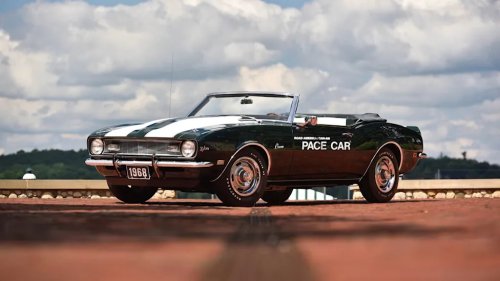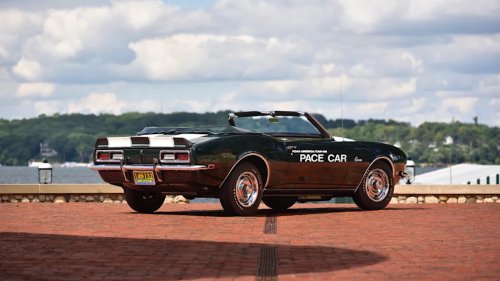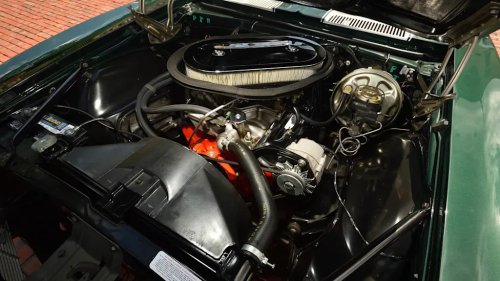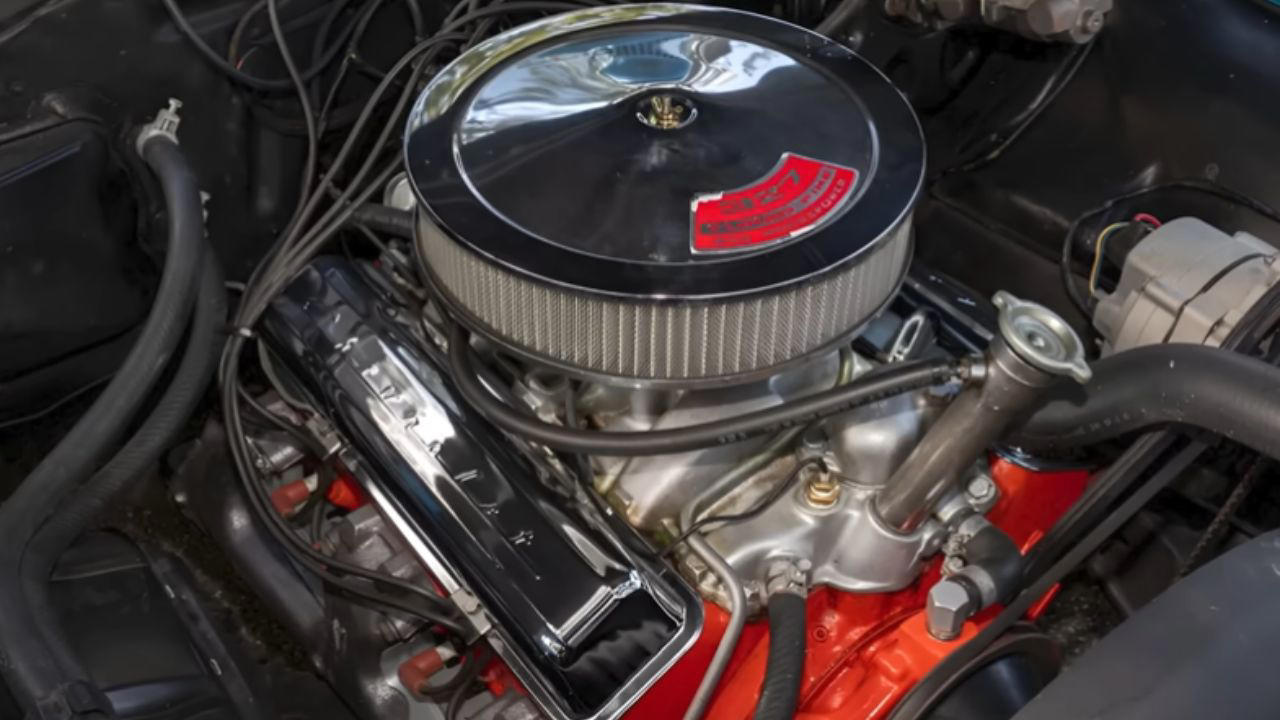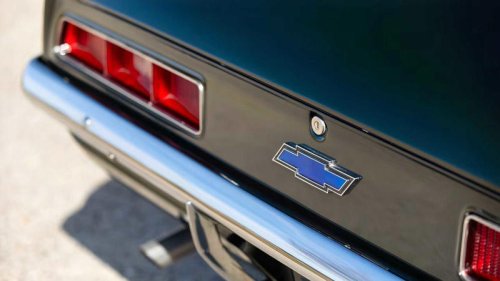
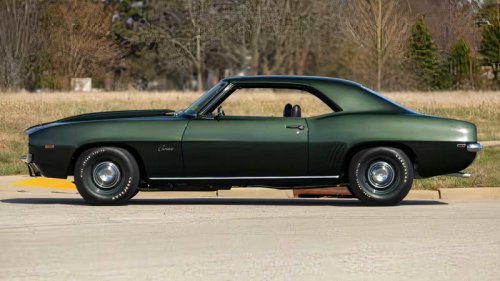
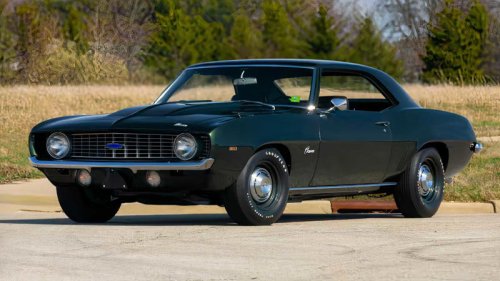
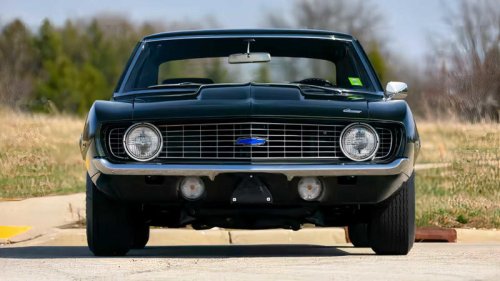
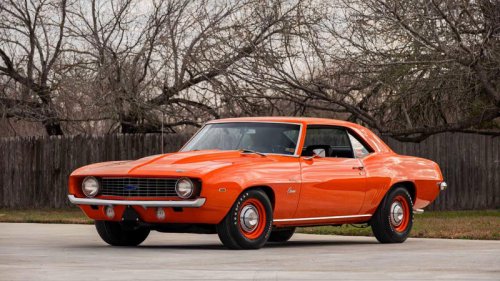
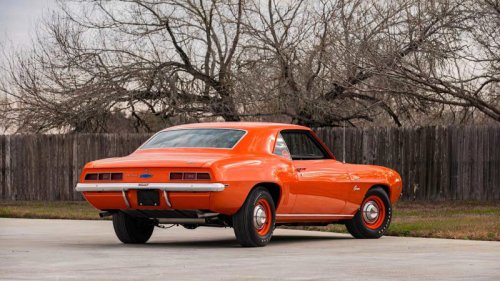
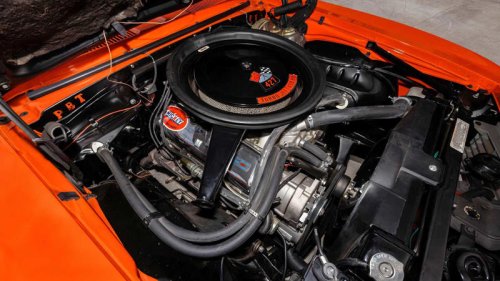
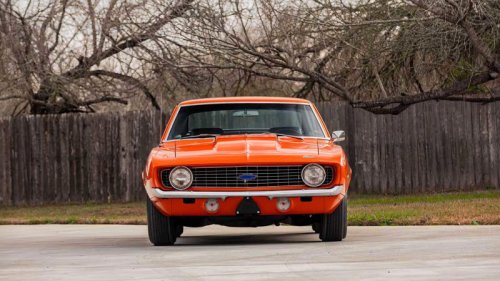
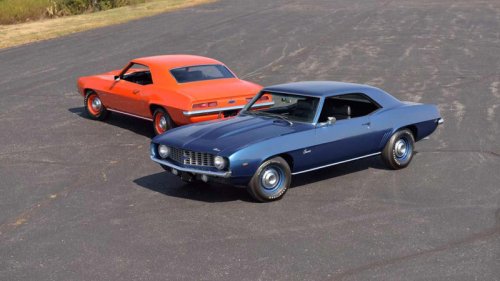



















One of the saddest developments in recent automotive history is the discontinuation of the Chevy Camaro, a nameplate that was a key piece of Chevrolet's performance puzzle for much of the last six decades. The Camaro spawned multiple generations, models, and special versions, and since most were built for the masses, gearheads interested in owning one have plenty of options in the used market.However, not all Camaro versions will be easy to find today. In fact, some appear to have been made of unobtanium as they were produced in such tiny numbers that they rarely come up for sale, and when they do, only the wealthiest collectors can afford them. Such is the case with the Camaro we're covering today. Arriving at the tail end of the muscle cars golden era and only available for one year, this Camaro is a unicorn that only a lucky few get to see in the flesh, let alone afford one. The 1960s GM Engine Displacement Ban And How Chevrolet Found A Clever Way Around It Via Mecum AuctionsIn the early 1960s, GM introduced a strict corporate edict prohibiting its brands from participating in factory-supported racing in a bid to relieve political pressure and reduce scrutiny from safety organizations. The edict included a ban on engines larger than 400 cubic inches in intermediate and compact cars (except for the Chevy Corvette), and it could not have come at a worse time. Pontiac introduced the GTO shortly after and kicked off the muscle car craze, and since the phrase "there is no replacement for displacement" reigned supreme at the time, GM found itself at a disadvantage, with its fiercest rivals having no restrictions on engine sizes. The Camaro suffered the same fate when it debuted in 1967, with unrestricted Mustangs and Mopars already dominating the pony car market at the time.Despite the official ban, GM engineers often found ways to support racers through "backdoor" channels, and Chevrolet's method was known as the COPO (Central Office Production Order) program. The Camaro was one of the biggest beneficiaries of the COPO program, as it turned it into a tire-shredding monster that obliterated Cobra Jet Mustangs and Hemi-powered Mopars without breaking a sweat. The COPO System Explained via MecumOriginally, the COPO system was a mundane process designed for fleet sales. It allowed police departments, taxi companies, municipal services, and businesses to order large batches of vehicles with non-standard equipment. Essentially, it was a way to order special colors, heavy-duty equipment, and other things that typical buyers did not need or want. However, towards the end of the 1960s, the COPO system evolved into an administrative loophole that savvy Chevrolet dealers and performance-minded insiders in the Chevrolet top brass used to bypass the ill-advised ban.Tired of performing costly and time-consuming engine swaps in his dealerships,legendary racer and dealer from Pennsylvania Don Yenko pioneered using COPO for performance when he ordered a "fleet" of 201 Camaros in 1969 with the COPO 9561 option, leveraging his friendship with Chevrolet performance chief Vince Piggins to make it happen. Chevrolet's Central Office approved the order, and the 425-hp "L72" 427 cubic-inch V8 engine was installed in the 1969 Camaro directly on the Chevy assembly line. Not too long after Yenko broke the seal, another dealer known as Fred Gibb ordered a fleet of Camaros through the COPO program, which equipped the Camaro with a race-sourced all-aluminum V8 and created the rare monster we're covering here — the 1969 Camaro ZL1. The Short Reign Of The 1969 Chevrolet Camaro ZL1 via MecumFord struck gold when it built the Mustang in the mid-1960s and created the pony car blueprint, and it was quickly rewarded with more than 400,000 units sold in its first 12 months. GM immediately started working on a Mustang rival, and about two years later, the Chevy Camaro was born.The Camaro looked the part and offered high-performance versions like the SS, but with the GM engine displacement ban still firmly in place, it was outgunned by cross-town rivals. Dealers like Don Yenko did offer engine swaps that spiced things up, but without a factory 427, the Camaro lacked the ultimate big-block punch some rivals could claim, even though SS396 and Z/28 models were already strong performers. Thankfully, the COPO program gave dealers a way to equip the Camaro with incredibly powerful big-block engines and other performance-focused hardware straight from the factory, allowing them to create speed demons like the 1969 Camaro ZL1. The COPO Option That Birthed The 1969 Camaro ZL1 via MecumIn 1969, Camaro buyers seeking a factory 427 had two COPO packages, and choosing either had huge implications on price and the level of brutality a Camaro equipped with either offered. COPO 9561 Camaros were fitted with a Corvette-sourced 427 cubic-inch cast iron V8 (internally known as the "L72"). With an output of 425 hp and 460 lb-ft, the Camaro could finally face off with Detroit rivals, but it still wasn't enough for Fred Gibb, who was a high-performance Chevy dealer in LaHarpe, Illinois, and a serious drag racer.Gibb wanted a Camaro that could dominate NHRA Super Stock racing, and just like Don Yenko, he went to Vince Piggins and proposed putting the ZL1 engine—an all-aluminum, 427-cubic-inch racing engine designed for Can-Am road racing—into the Camaro via the COPO program, resulting in the COPO 9560 order code. Gibb used the COPO 9560 code to order a fleet of 50 ZL1-equipped Camaros, the minimum number required to meet NHRA homologation rules at the time. Since all COPO orders were fully assembled by Chevrolet at the factory, the 1969 ZL1 came with a standard GM warranty and could be serviced at any Chevy dealer. Only 69 Camaros were built to COPO 9560 specifications in 1969, making the 1969 ZL1 one of the rarest Camaros ever made. Why It's So Rare Via Mecum AuctionsThere are several reasons why only 69 Camaro ZL1s were built in 1969, starting with the complicated ordering process. The COPO program was not advertised to the public, and only a few dealers knew about COPO 9560. The bigger reason was the price. Fred Gibb, who conceived the idea, ordered a batch of 50, but a sticker price of around $7,300 (roughly $60,000 today) made it a tough sell, especially considering that it cost almost double the price of a high-end 1969 Camaro SS. He ended up sending 37 of his 50 cars back to Chevrolet to be redistributed to other performance dealers.While Gibb struggled to sell his cars, other savvy dealers heard about the "secret" code and ordered a few more for their own specialty customers. By the time the production line stopped, a total of 69 units had been produced, and since many were raced for years, and some were reportedly stripped of their engines, the commonly cited figure of surviving examples is around 50 cars. A Closer Look At The ZL1's Performance Via Mecum Auctions"Win on Sunday, sell on Monday." This was Ford's mantra in the 1960s, but every Detroit automaker lived by it. Drag racing culture was more prevalent than ever at the time, and manufacturers whose cars dominated in motorsports or put up the fastest quarter-mile times were rewarded with higher sales numbers, especially when the engines and performance hardware from the race cars trickled down to production cars.Ford dominated with FE-powered racers in the early and mid-1960s, then with the Cobra Jet and Boss engines towards the end. Chrysler remained formidable with its Hemi-powered cars. Chevy also wanted a piece of the pie, but with one hand tied behind its back by the GM engine ban, it had to find other ways to equip models like the Camaro with the power it needed to compete, and that is how the COPO 9560 option that gave us the 1969 ZL1 came to be. A Race-Bred Monster Via Mecum AuctionsNeedless to say, the 1969 Camaro ZL1's party piece was its engine. Originally developed for Can-Am racing, the all-aluminum ZL1 engine was designed to provide the massive grunt of a big-block engine while weighing roughly the same as a small-block V8. Chevrolet also wanted it to be able to handle the high-stress environment of the racing world, and it featured beefed-up internals such as a forged steel crankshaft and forged rods and pistons. Other upgrades included a radical solid-lifter camshaft, open chamber heads for high-RPM airflow, a massive 850-cfm Holley four-barrel carburetor mounted on a high-rise aluminum intake manifold, and a stratospheric 12.0:1 compression ratio. Chevy officially rated it at 425 hp and 450 lb-ft of torque, but the general consensus in the car community is that it was underrated for insurance and other reasons.ZL1 buyers could select the M20, M21, M22, or the M40 Turbo Hydra-Matic, although no ZL1s were ultimately built with the M20. All of them were all beefed up to ensure the power got to the wheels without breaking the car. The ZL1 option also mandated other drivetrain and chassis upgrades, including a heavy-duty rear axle with a 4.10:1 gear ratio, Posi-Traction, a high-capacity radiator, and the F41 heavy-duty suspension package. The Ultimate Drag Strip Weapon Via Mecum AuctionsThe ZL1 was essentially a factory-built dragster with the most powerful Chevrolet engine available at the time powering a Camaro that had been put on a strict diet. It was a recipe formulated with absolute domination in mind, and the ZL1 achieved this mission perfectly.The ZL1 recorded quarter-mile passes in the low 13s straight from the factory, putting it in the same conversation as some of the fastest American cars of the 1960s. However, with a bit of tuning, open headers, and racing slicks, the ZL1 was a different beast. A Camaro ZL1 piloted by Dick Harrell ran the quarter-mile in an astonishing 11.64 seconds at 122.15 mph in 1969, putting it in a class of its own. 1969 Camaro ZL1 Collectibility Today Mecum AuctionsThe 1969 Camaro ZL1 is everything muscle car collectors look for and then some. The one-year-only design oozes pure golden era muscle with its Coke bottle curves, muscular rear fenders, and protruding V-shaped nose. We do not need to go over its race-sourced hardware and how insanely fast it was again. Factor in its scarcity, and it is easy to see why the 1969 ZL1 costs around $610,000 on average. However, original well-maintained and perfectly-restored units with proper documentation can fetch far higher prices, such as a Hugger Orange example that sold for an eye-watering $1,094,500 at an auction in 2020.But even if you are one of the lucky few who can fork out such crazy amounts of money, the ZL1 is a unicorn that rarely goes up for sale, as we could only find a handful of sales in the past five years. You will have to be on the lookout for a while before you get a chance, and when you do get a chance, you better be ready for a hammer fight.The 1969 Camaro ZL1 was only a one-year option, but that was all the time it needed to obliterate the competition and cement its reputation as one of the craziest factory builds of the muscle car golden era.Sources: Motor Trend, Hagerty Valuation Tool, Barrett-Jackson