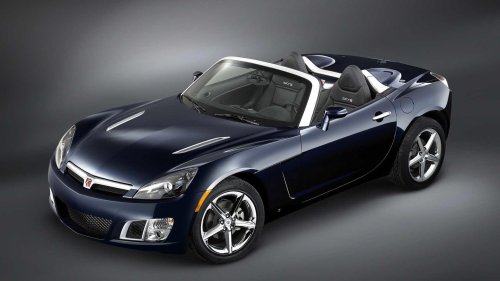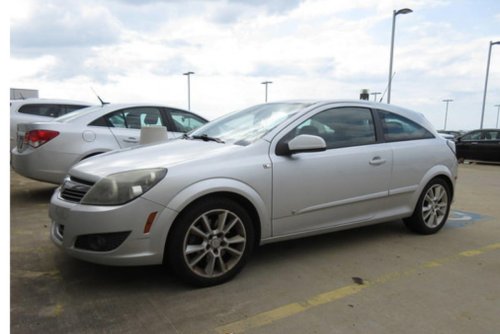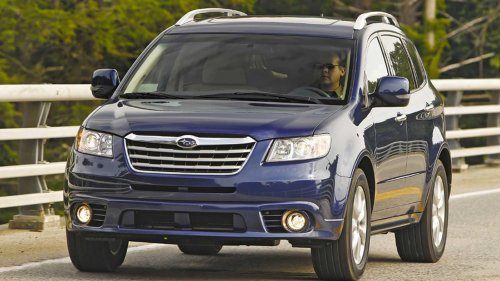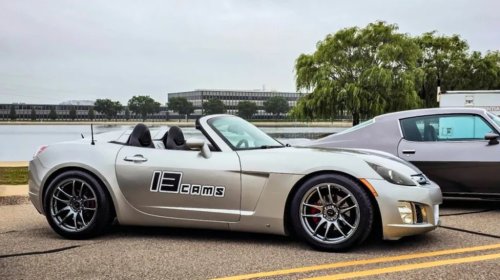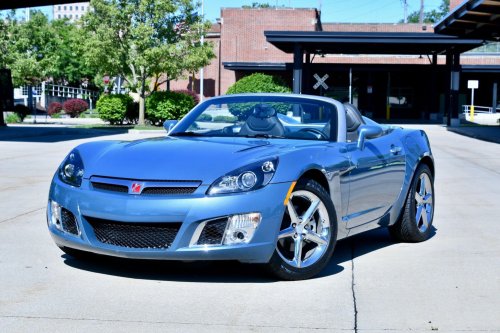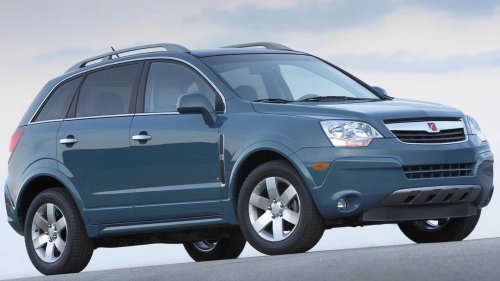
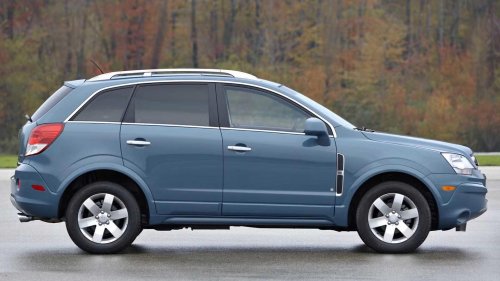
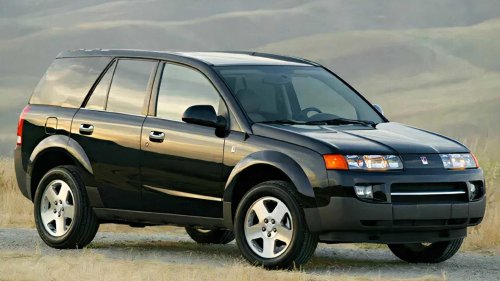
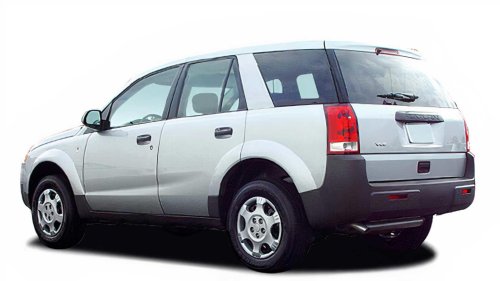
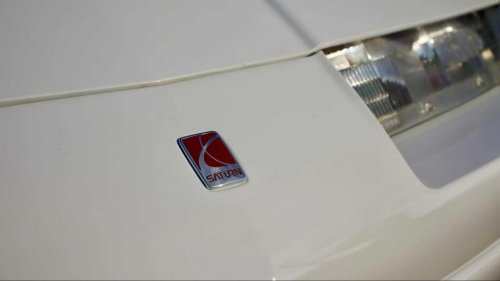
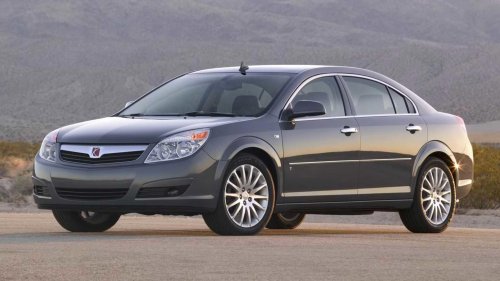
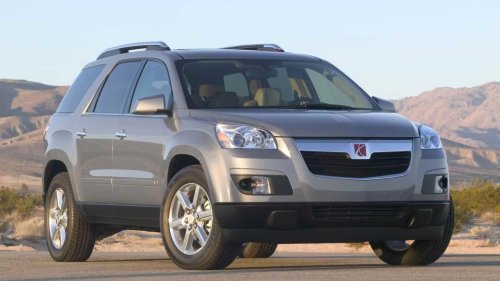
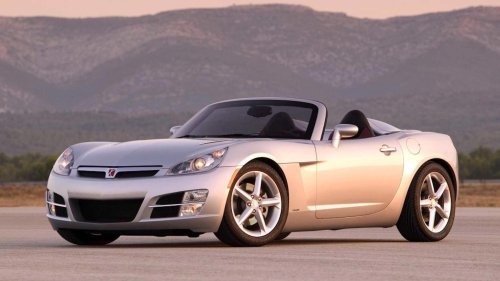



















In the wake of the 2008 financial crisis, GM killed off several of its brands as part of a large restructuring process. Although this enabled GM to weather the storm and survive in the long term, it did remove several longstanding names from the market, Saturn being one of them. Although, unlike other members of the family (Pontiac for one), this brand hadn’t been around that long, it still makes up an important part of GM’s history.We are taking a look back at the very last car with a Saturn badge to roll off the production line: an example of the 2010 Saturn Vue, a compact SUV. The Vue was one of a handful of models that saw Saturn through to the end; sold under a variety of different names around the world, the model was in its second generation when the Saturn brand was killed off for good. The Second-Generation Saturn Vue: Marking The End Of An Era General MotorsThe second generation of the Saturn Vue was introduced in concept form in 2006 at the New York International Auto Show, under the name of “Saturn PreVue”. The production model was unveiled a year later in Los Angeles, going on sale for the 2008 model year. The Vue’s design was refreshed and far more modern than that of its first-gen predecessor; the grille was large and decorated with chrome trim, and the headlights were sharper and more angular.General Motors Although sold in the US under the Saturn brand, the model was marketed under several different GM marques and model names around the world. In Europe, it was known as the Opel Antara, and in the UK as the Vauxhall Antara. In some South American markets, it was sold as the Chevrolet Captiva Sport (not to be confused with its sister model, the Chevrolet Captiva, with which the Vue shared several components). In Australia, it was sold as the Holden Captiva 5, while in the Middle East it was sold as the GMC Terrain. Lastly, in South Korea, it was marketed under the Daewoo brand (which GM owned at the time) as the Winstorm MaXX.The second-gen Saturn Vue’s lineup initially included four trim levels: the entry-level XE was followed by the XR, the Red Line, and the Green Line (a hybrid version). The number of trim levels available was gradually reduced over the years. By the time the Vue and the Saturn brand were killed off, only two trims remained: the XE and the XR.Powertrain options included a 2.4-liter inline-four, a 3.5-liter V6, and a 3.6-liter V6. The transmission lineup was made up of a four-speed automatic and a six-speed automatic. Two hybrid powertrains were also made available over the course of the second-gen Vue’s short lifespan; one paired the 2.4-liter inline-four engine with a single electric motor, while the other paired the 3.6-liter V6 with two electric motors.After Saturn’s demise, the Vue’s life briefly continued under a new name. GM chose to use the Chevrolet Captiva Sport name in the US as well, however this arrangement only lasted until 2015 when the Captiva Sport was also discontinued. The model’s place was then taken over by the more popular Chevrolet Equinox. What Came Before: The Vue's Origins Saturn The Vue model had first been introduced in 2002, and was the first SUV in the Saturn lineup. Its first generation shared a platform with several other GM models, including the Opel Antara (a link which would continue into the second generation, the Pontiac Torrent, and the Chevrolet Equinox. Also a compact SUV, the first-gen Vue, however, was visually quite different from its successor. The grille was very small, and the headlights were nearly rectangular. The overall silhouette was more rounded and blob-like, while the second-gen model was more rugged and squared-off.Over the course of the model’s brief lifespan, a wide range of engines and transmissions were made available. Engine options included a 2.2-liter inline-four, 2.4-liter inline-four (as part of a mild hybrid powertrain), 3.0-liter V6, and 3.5-liter V6. Transmission options included a five-speed manual, a CVT, a four-speed automatic, and two five-speed automatics (one built by Honda, the other built by Getrag).Saturn In 2004, two years after the model’s debut, a high-performance variant of the Vue called the Red Line was introduced. Powered by a Honda-sourced 3.5-liter V6 engine, this version included features such as a sportier suspension tuning, recalibrated power steering, new front and rear bumpers, and 18-inch alloy wheels. There were also some unique interior and exterior cosmetic features on board that set it apart from the rest of the lineup. These included footwell lighting, black leather and suede seats, a redesigned gauge cluster, and a chrome exhaust tip.Three years later, as the Vue’s first generation was coming to an end, the hybrid version joined the lineup for the 2007 model year. This version was called Green Line, a naming convention that was carried over into the second generation’s lineup. It paired the 2.4-liter inline-four engine with a single electric motor. Saturn: The 25-Year History Of A Defunct GM Brand Bring A Trailer Saturn, the brand behind the Vue, traces its origins back to the early 80s, when GM began to investigate the possibility of launching a new project focused on small cars. In 1985, the Saturn Concept Car was released, introducing the Saturn name to the world. Although GM originally wanted to launch a production version of the concept under one of its existing brands, there was a change of plans and Saturn was able to become an entity of its own.Saturn Saturn’s first models were the SC and the SL, which entered production for the 1991 model year. The brand’s image was a youthful and modern one, distinct from the rest of the GM family. Saturn expanded throughout the 90s and around the turn of the millennium, with its model lineup growing to include a crossover (the Vue) and a minivan (the Relay) among others.However, in 2008 things rapidly changed. Declining sales and the impact of the global financial crisis on GM meant Saturn ended up on the chopping block. Attempts at selling the brand (plus a protest by Saturn fans) failed to change Saturn’s fate; the decision to kill it off (along with a few other GM marques) was officially announced in 2009. The very last Saturn vehicles were produced for the 2010 model year, including the Vue that marked the end of the brand’s story. The Other Final Saturn Models (Aura, Outlook, Sky) The Vue may have been the last one off the production line, but it was not the only model still being produced around the time Saturn disappeared. The small group of the last cars standing included three other models: the Aura, the Outlook, and the Sky. Let’s take a closer look at them. Aura SaturnThe Aura offered a variety of powertrains, including a 2.4-liter inline-four engine, a 3.5-liter V6, and a 3.6-liter V6. The 2.4-liter engine was also available as part of a mild hybrid powertrain in the Green Line version, following the same naming convention as the Vue. Power output ranged between 164 and 252 hp. Although a second generation of the Aura was originally due to be released, this did not come to pass due to the end of the Saturn brand. Outlook Saturn The Outlook was a full-size crossover produced between 2007 and 2010. It shared a platform with models such as the Buick Enclave, GMC Acadia, and Chevrolet Traverse. The latter would eventually replace the Outlook, and is still in production today.The Outlook was powered by a 3.6-liter V6 engine. Power output increased in 2009, with the single-exhaust version going from 270 to 281 hp and the dual-exhaust version going from 275 to 288 hp. The only transmission option available was a six-speed automatic. Both a FWD and an AWD version were offered. Sky General Motors The Sky was Saturn’s first convertible, sold between the 2007 and 2010 model years. It was a rebadged version of a Pontiac model introduced a year before: the Solstice. Despite being badge-engineered, the Sky was slightly different to its Pontiac sibling, with changes to the interior, badge and spoiler placement.Power came from one of two engines: a 177-hp, 2.4-liter inline-four, or a 260-hp, 2.0-liter turbocharged inline-four. Transmission options included a five-speed manual and a five-speed automatic.Sources: Saturn