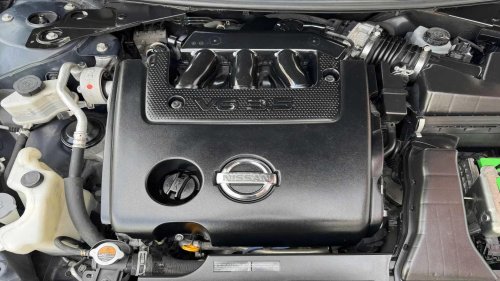
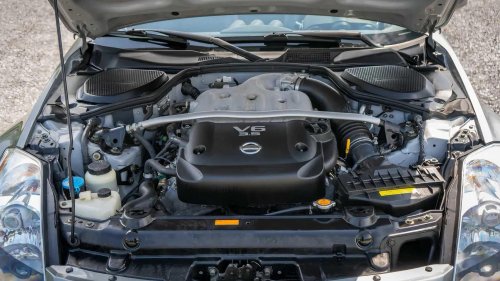
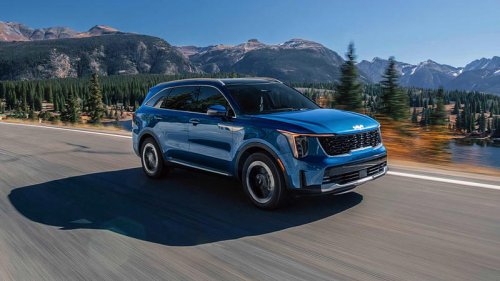
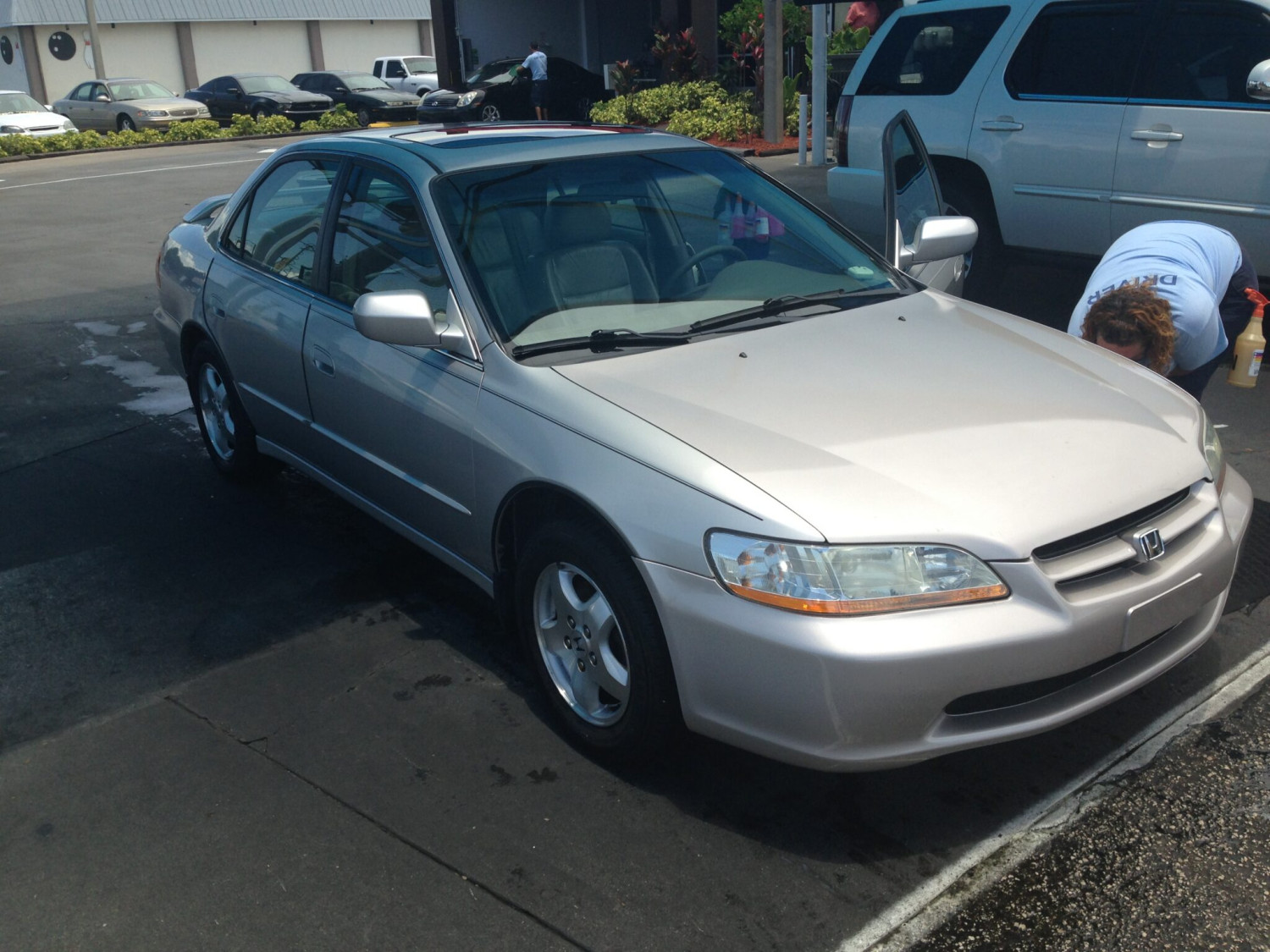
Here at CleanTechnica, we prefer fully electric cars to hybrids. I’ve driven electric for 16 years, but I like to meet people where they are and many people just aren’t ready to make the change, even though it might work fine if they were willing. I wrote about that 3 months ago here, and wrote about it from the automakers’ point of view a month ago here. This article is from the consumers point of view. I Want A Luxury Car At A Discount For a hundred years, the upgrade path was simple: You wanted more power, you bought a bigger gas engine. More cylinders, more displacement, more money — and worse fuel economy as the price of admission. I made that exact trade in 1998. I had an older Toyota Camry, I had a new job with a pay increase, and I had always been concerned about fuel economy after growing up during the 1973 oil embargo. I test drove a couple of Lexuses (the GS300 and GS400 at about $40,000 and $50,000), and they were smooth and powerful and refined. But they were twice what I normally spent on a car. So I looked at the Camry and the Honda Accord, both around $20,000 for the top 4 cylinder model with leather. They were similar, but I liked the Accord because it was a little sportier. I was about ready to buy the four-cylinder when I asked the dealer if I should test drive the V6. He said everybody who test-drives the V6 ends up buying it. I didn’t know if that was sales talk or reality, but I test drove it, and I bought it. It was about $2,500 more, and it got lower fuel economy. Here’s what actually convinced me: at $25,000, it drove very similarly to those $40,000 and $50,000 Lexuses. Smooth, powerful, refined. The four-cylinder met my needs — it would have gotten me from place A to place B. But it didn’t feel like a luxury car. The V6 did. That was the upgrade path working exactly as designed. More money, more power, less fuel economy. The motive was never really about fuel economy anyway. It was about smoothness, refinement, and the feeling that the car wasn’t straining. 2027 Situation, Everything Has Changed Fast forward almost thirty years. I was listening to “Talking Cars,” the podcast from Consumer Reports, and they were talking about the new 2027 Kia Telluride Hybrid. The thesis was simple: it only costs a couple thousand more than the non-hybrid, but it drives so much better — smoother, better acceleration — and it dramatically increases fuel economy. It reminded me of my story from almost thirty years ago, when I’d made the same upgrade. I’d paid more for the smoothness, the power, the refinement, and I’d even put up with reduced fuel economy. Now you get the best of both worlds. You get the refinement and greatly increased fuel economy. The numbers back it up. The Telluride Hybrid makes 329 horsepower from a turbocharged 2.5-liter four paired with electric motors — versus 274 for the gas version. The front-wheel-drive EX is rated at 35 mpg combined, versus 22 for the gas EX. That’s 13 mpg better while making 55 more horsepower. The hybrid starts at $46,490, about $7,300 more than the base gas LX — but the hybrid skips the two cheapest trims entirely, so comparing like-for-like EX trims, the gap is only about $2,700. But the fuel economy isn’t the whole story. The part that really matters is the passing. When you need to go from 45 to 65 to pass a car, a gas car makes you press the pedal, wait for the downshift, wait for the engine to spool up. With a hybrid or electric, the power is just there. It can take half the time to get up the speed to pass, which is a lot better than a few extra horsepower would make you think. And there’s the sound. A gas car’s engine makes an annoying noise — a groan that tells you the engine is straining. A good hybrid is almost silent. Power without effort. That’s the same refinement I was buying with the V6 Accord in 1998. The 4 cylinder Accord made the straining sound. The hybrid makes it disappear. The hybrid isn’t really replacing the bigger engine. It’s replacing the upgrade path. The old path was displacement. The new path is electrification. Same motive — smoothness, power, refinement — opposite outcome. In 1998, you paid $2,500 more and 4 mpg less fuel economy. Now, you pay about $2,700 more and get both more power and 13 mpg better economy. Conclusion Obviously, this is just a path to full electrification, but I call hybrids the gateway drugs to electric cars, so they are a step in the right direction! For the first time in a hundred years, the thing that makes a car feel refined doesn’t cost you at the pump. Disclosure: I am a shareholder in Tesla [TSLA] and XPeng [XPEV]. But I offer no investment advice of any sort here.



















 +75 others