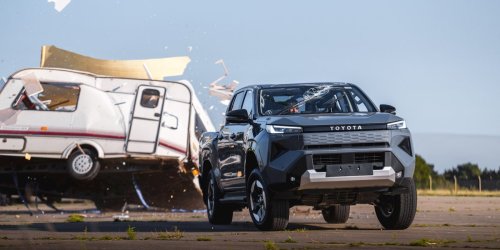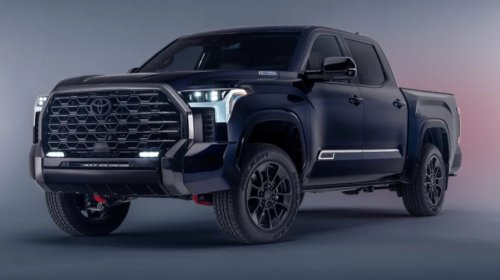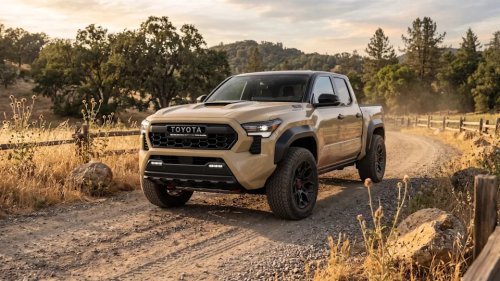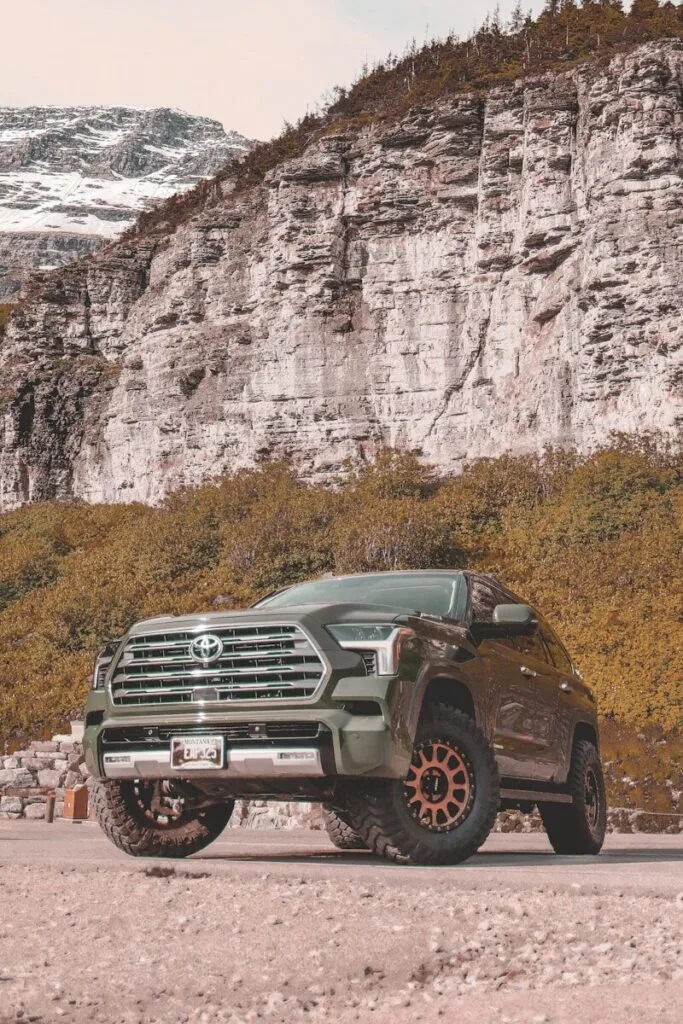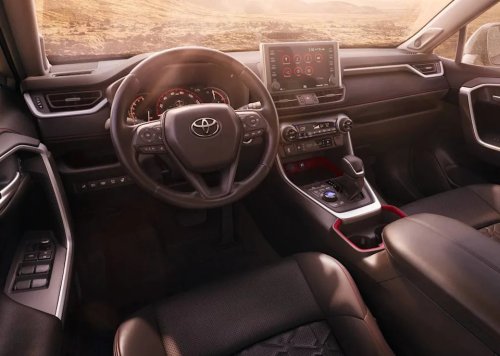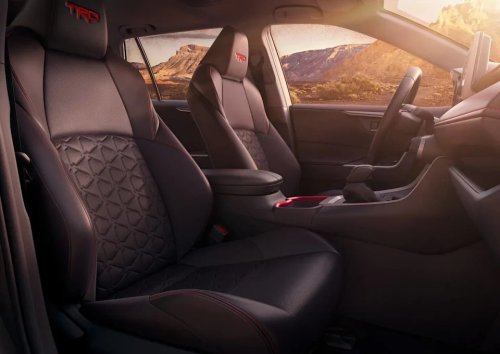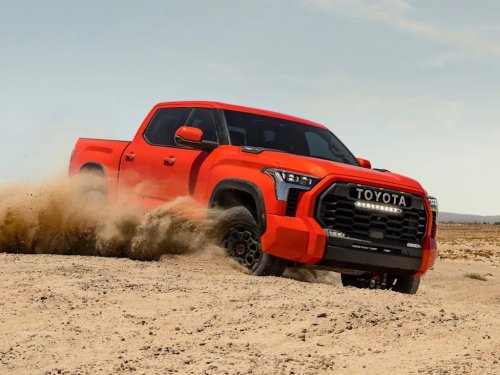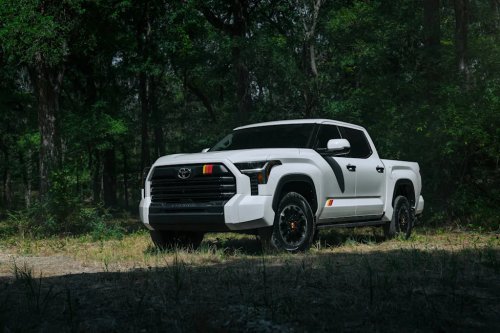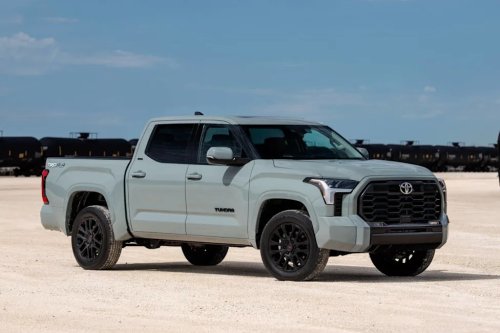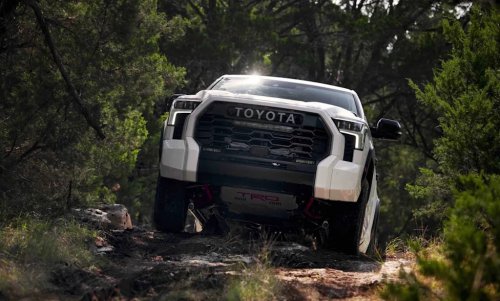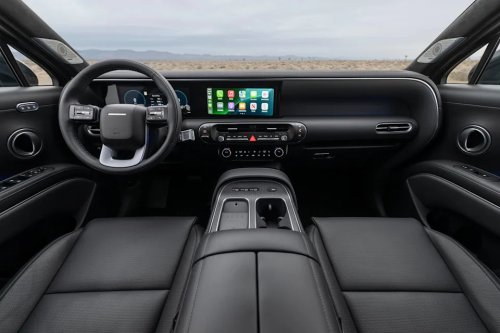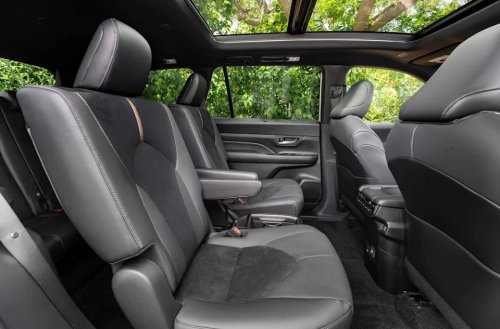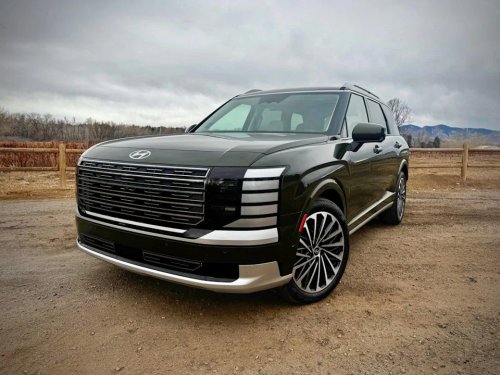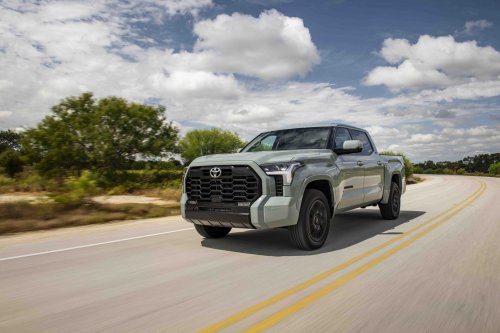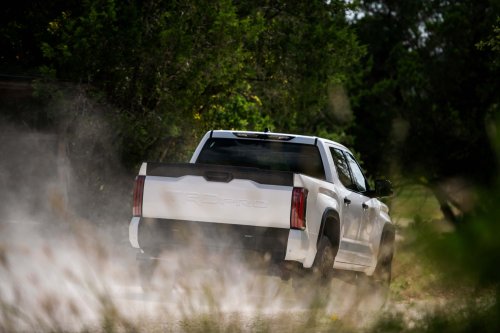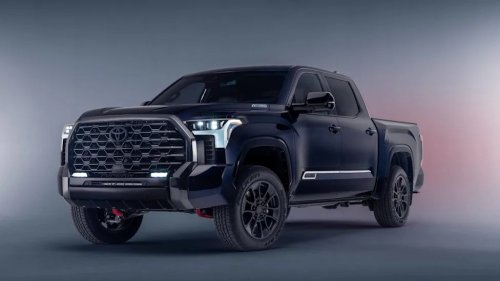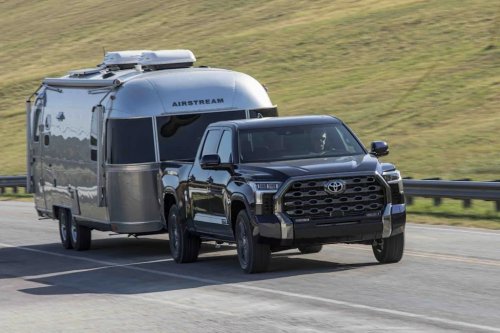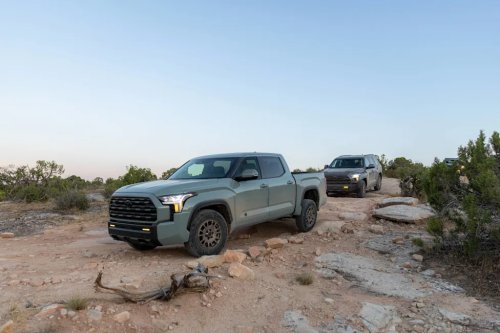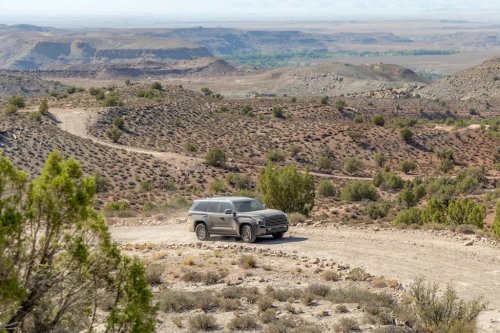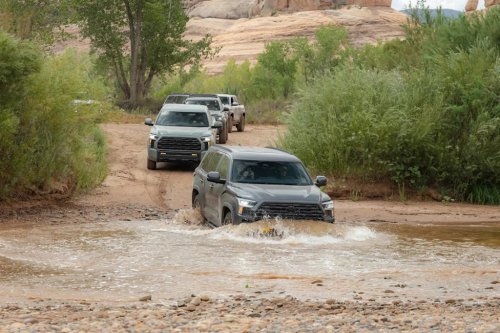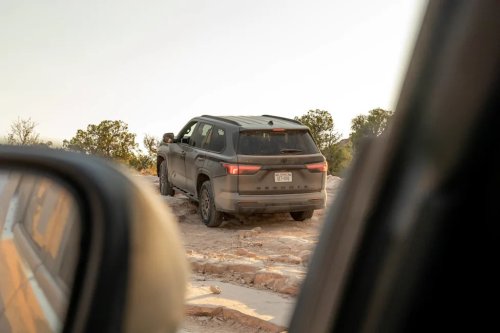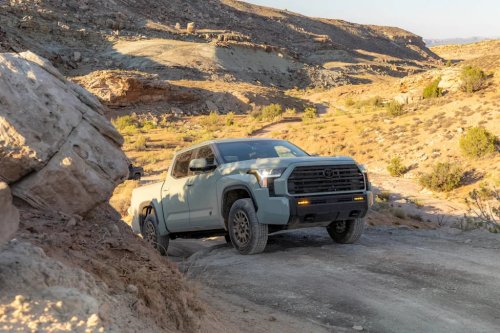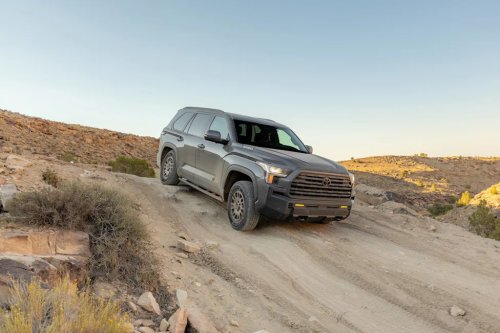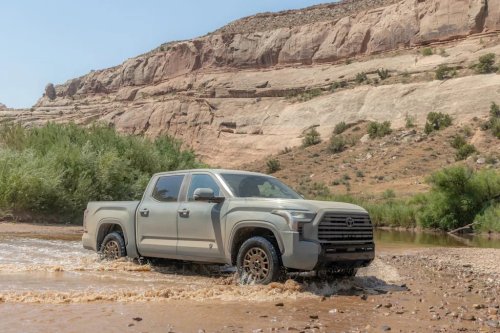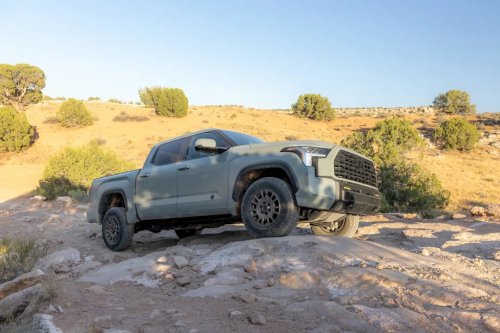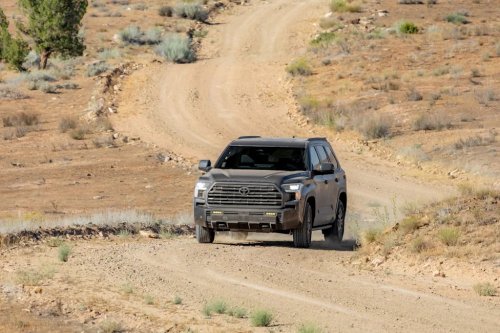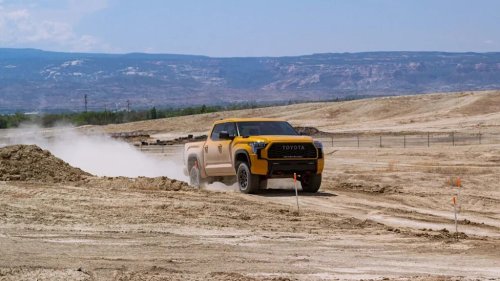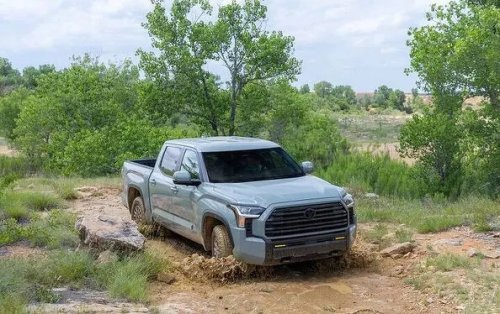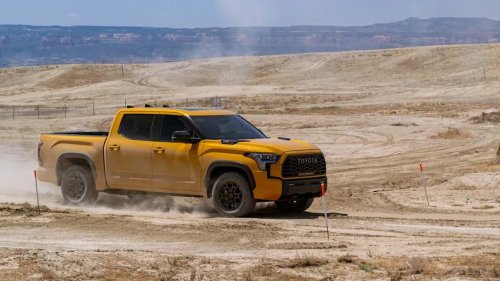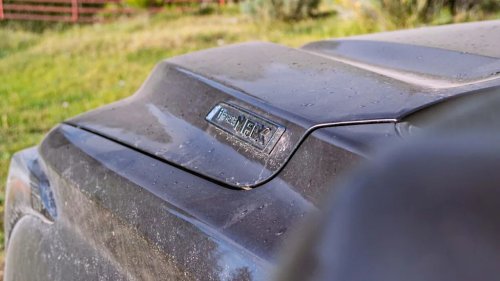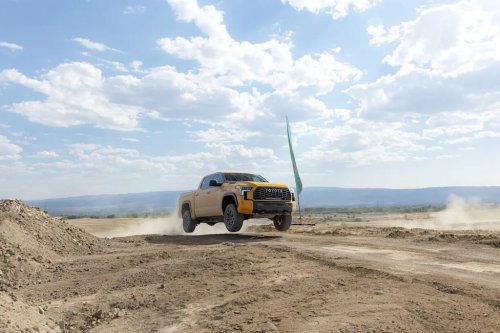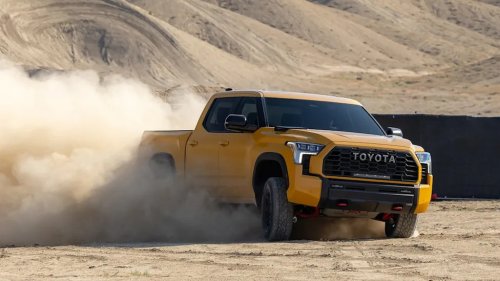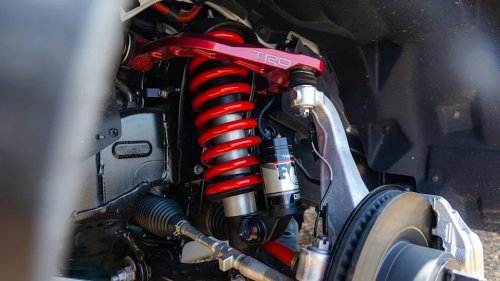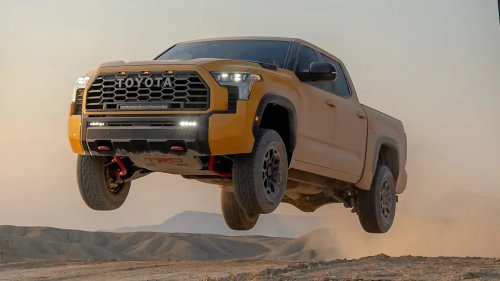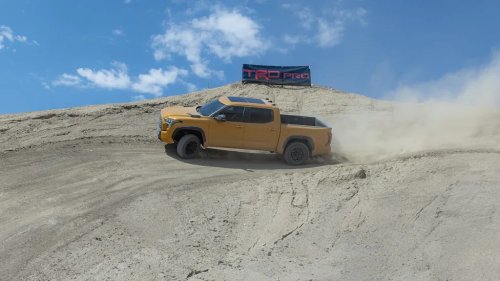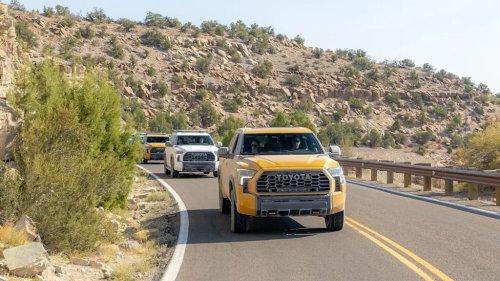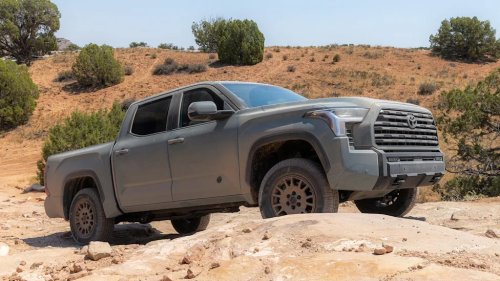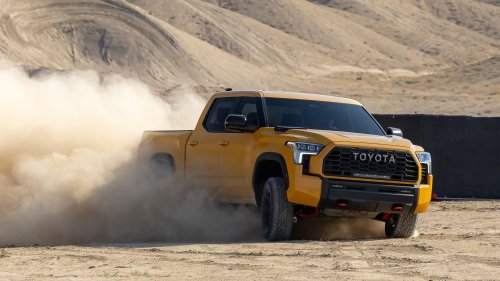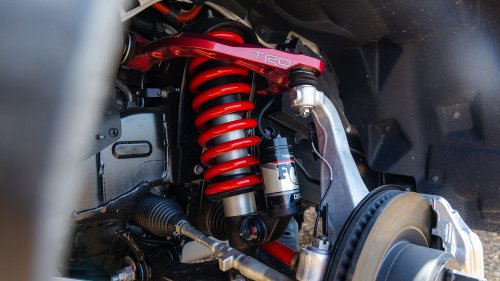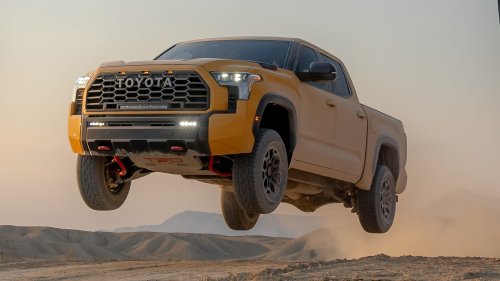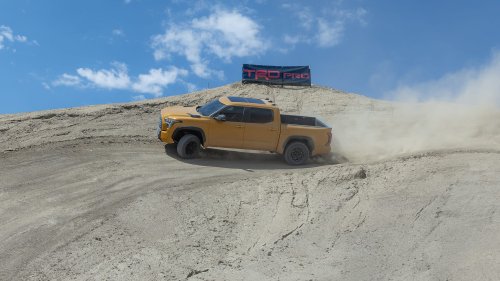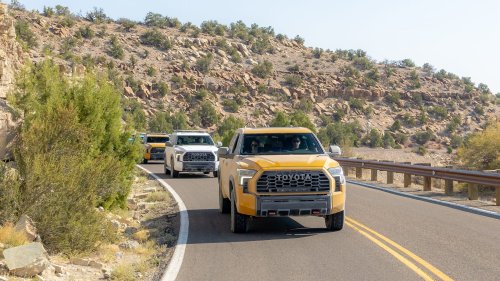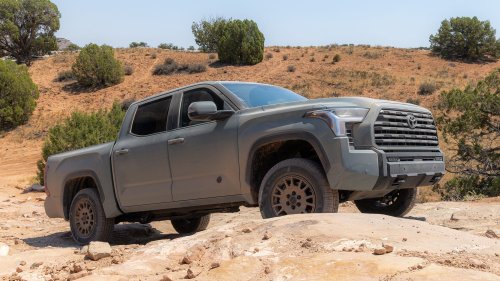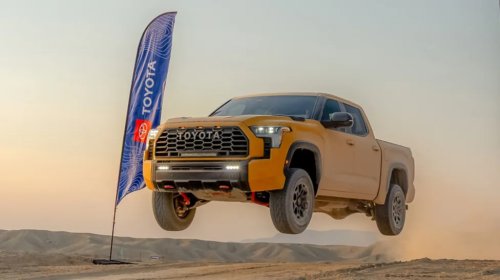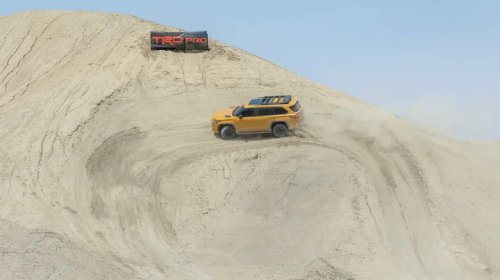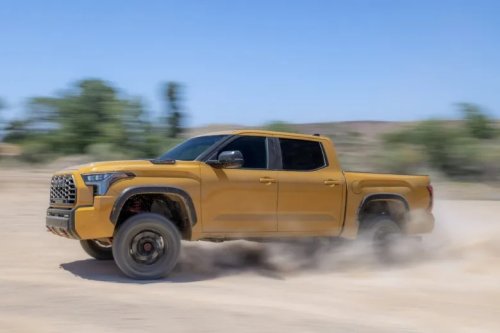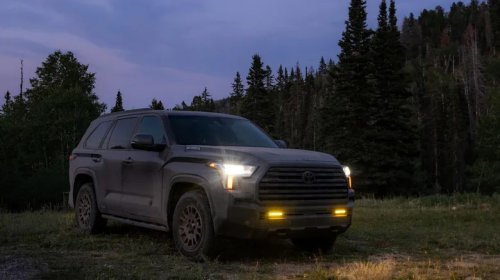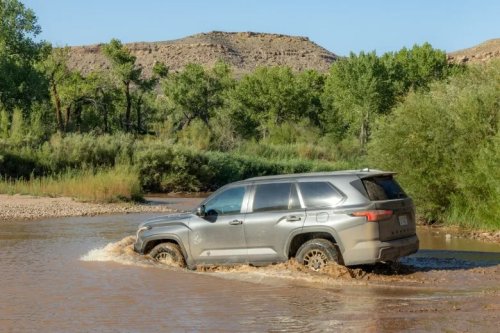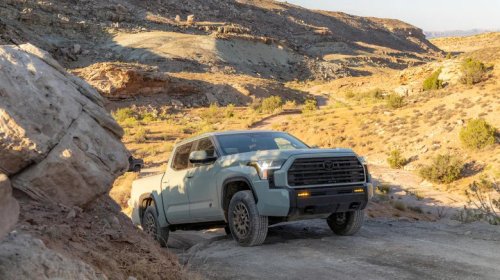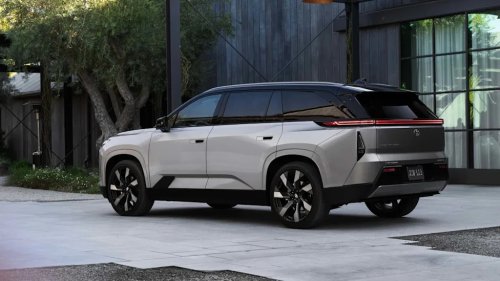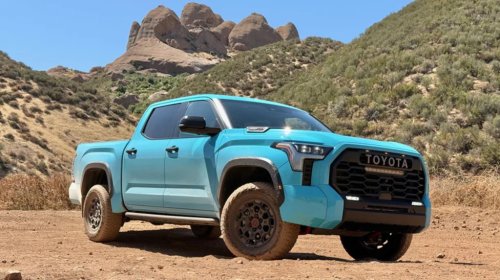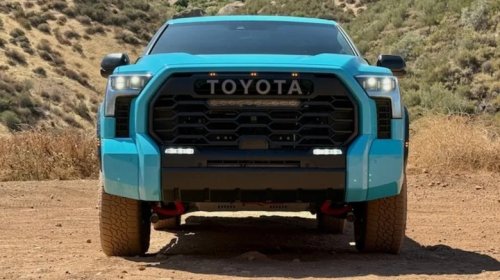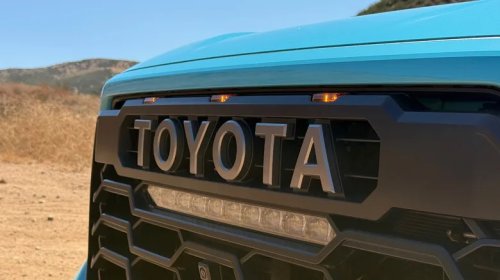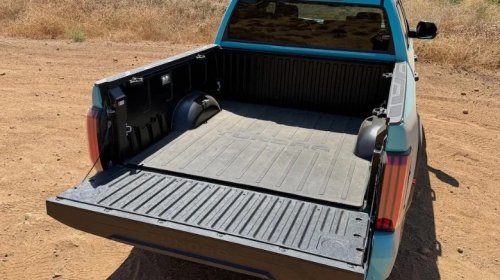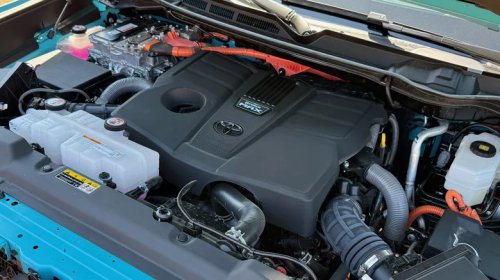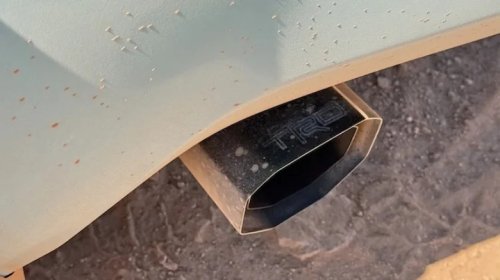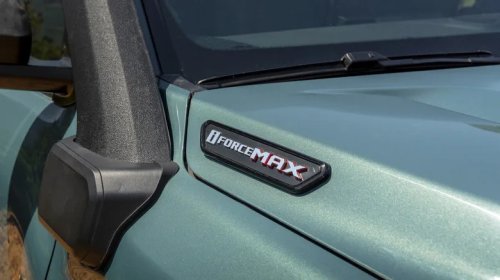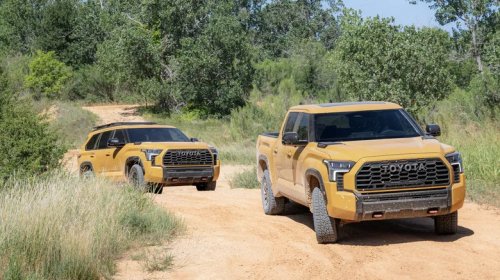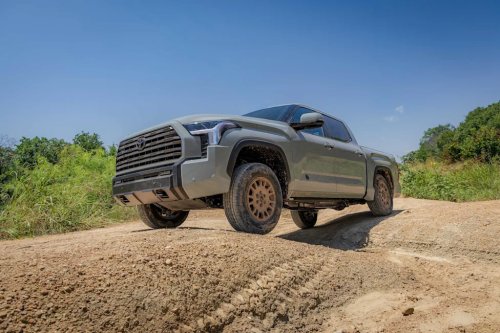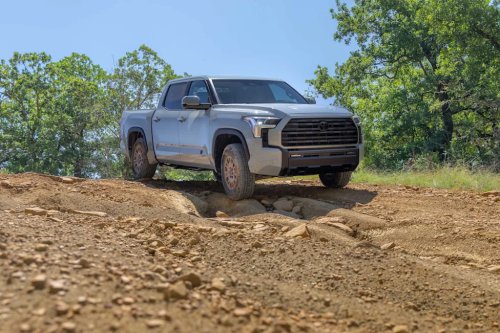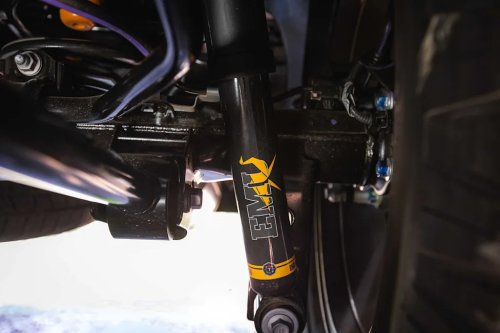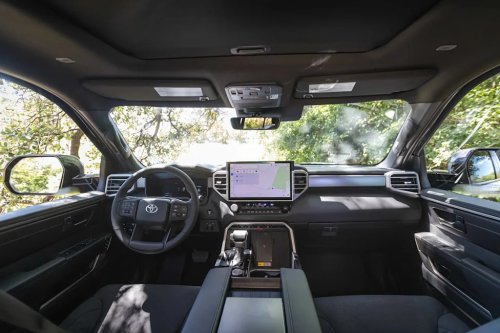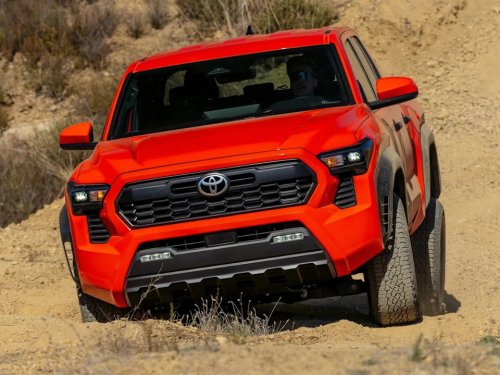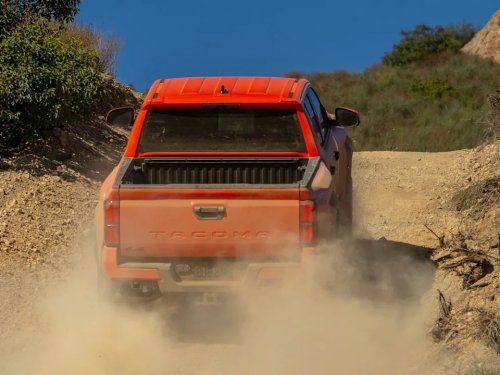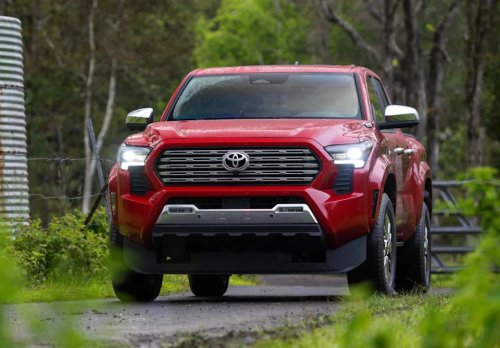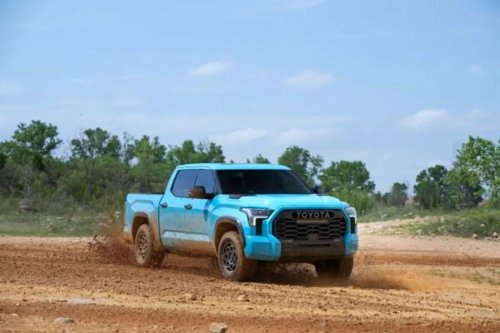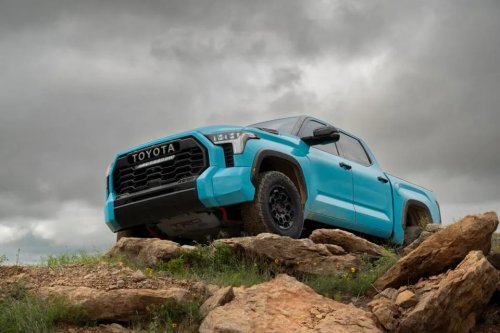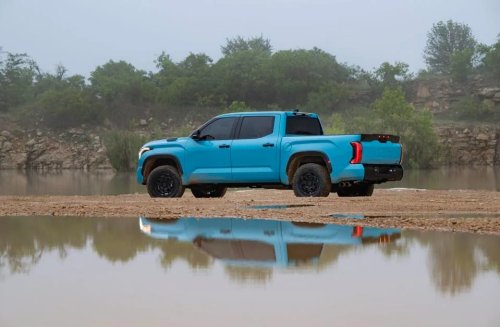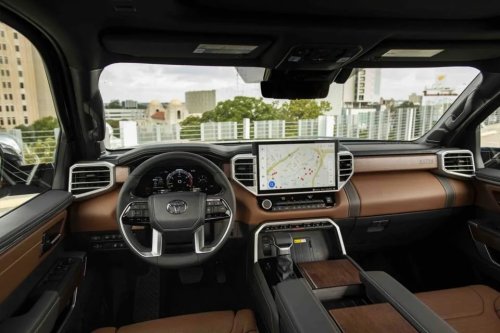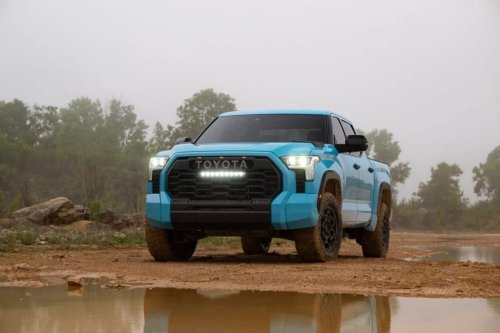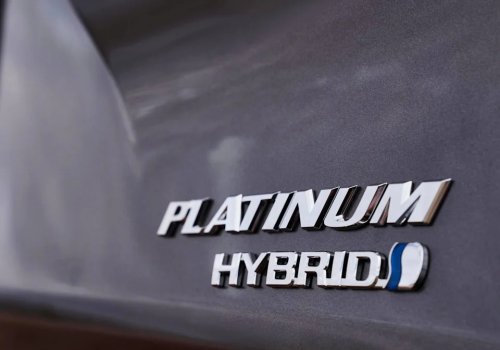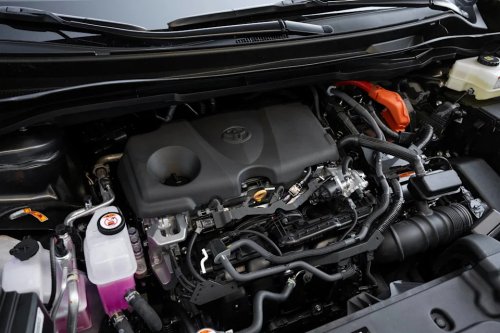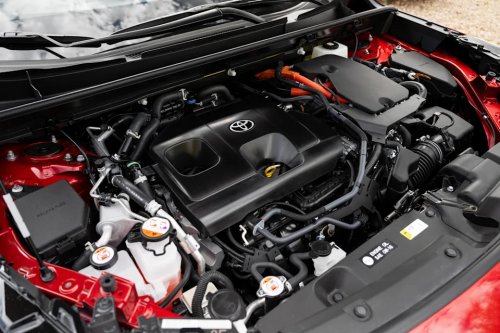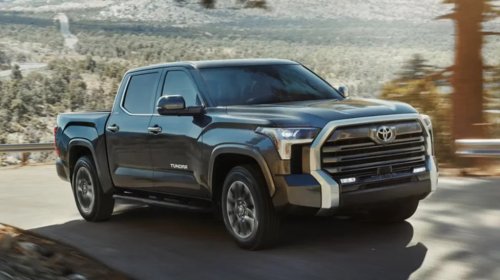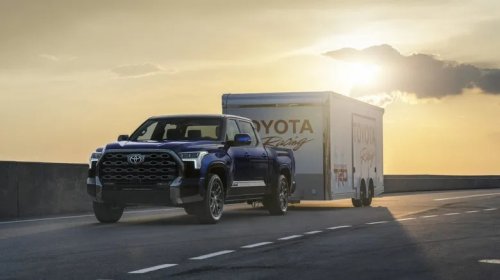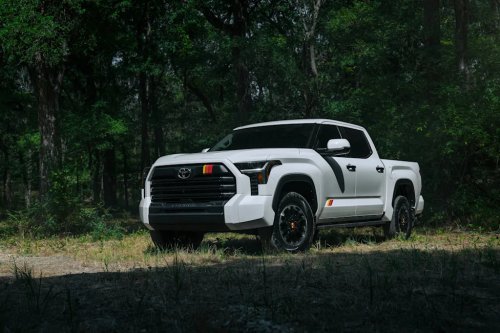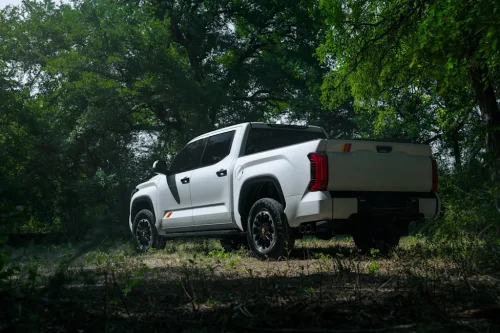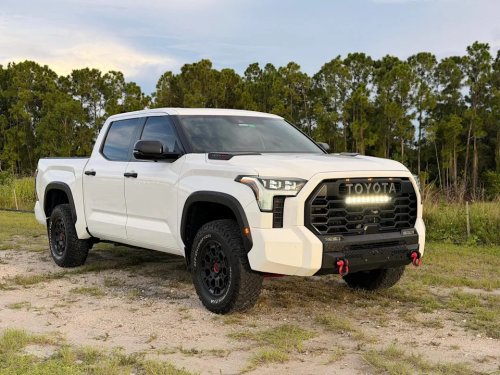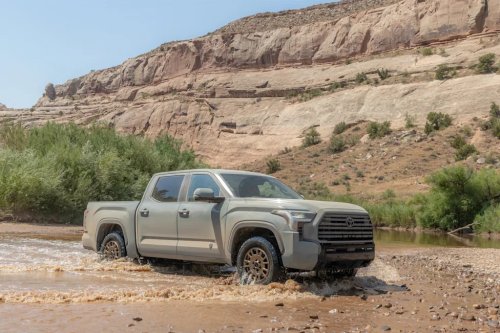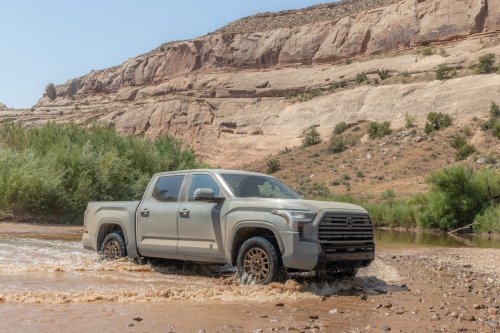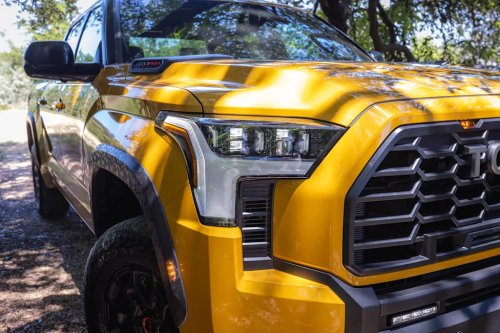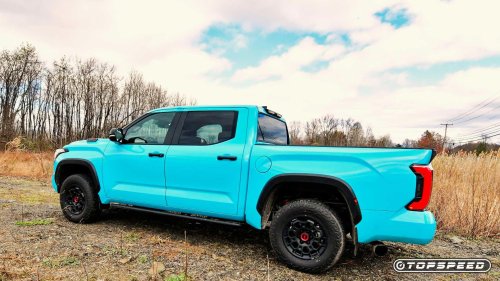
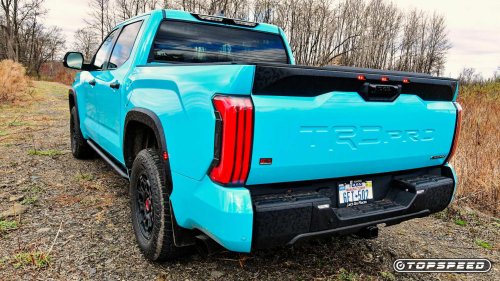
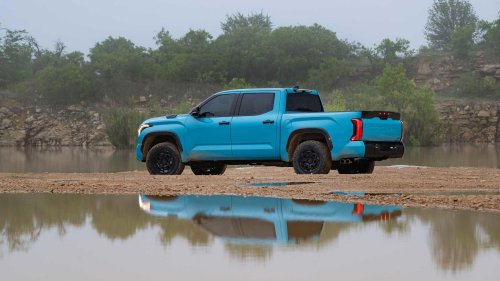
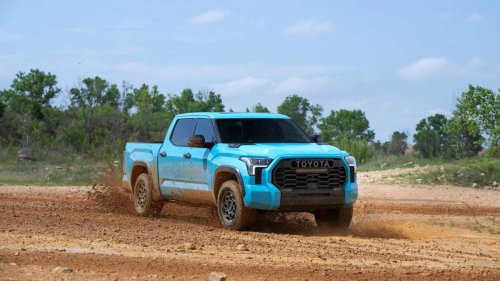
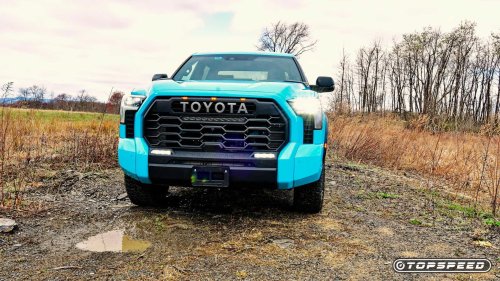
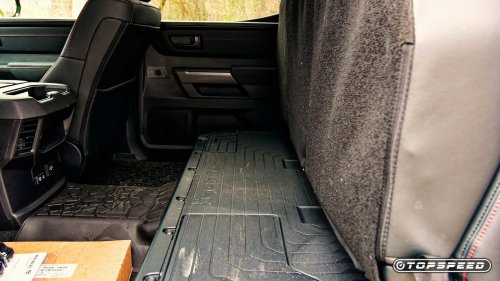
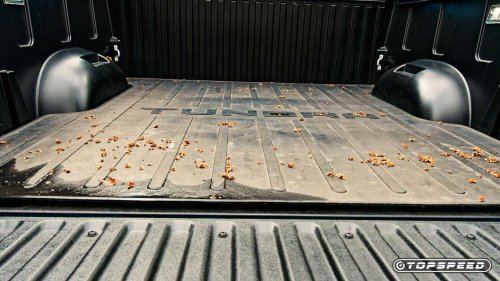
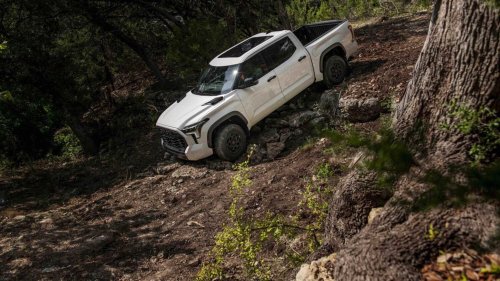
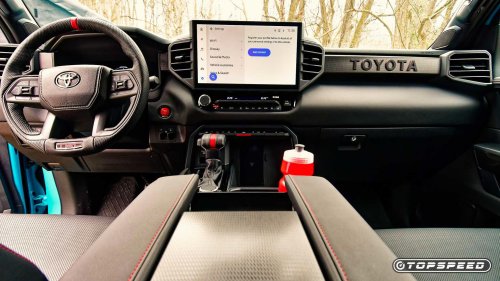
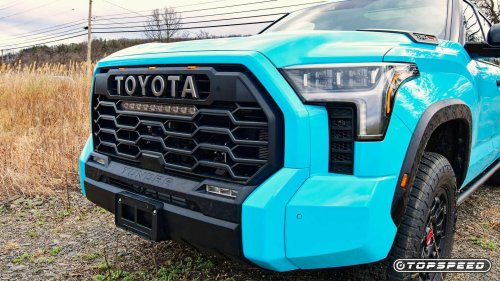



















The TRD Pro Toyota Tundra I just finished testing has dual air intakes and a cat-back exhaust, allowing its twin-turbo V-6 to spit out 29 more horsepower than the already potent, 437-horsepower 3.4-liter powerplant in the base Tundra hybrid. The prodigious 583 foot-pounds of torque remains unchanged, and it's already plenty, largely because its hybridization provides 184 of those foot-pounds immediately from idle.This biggest-of-all Toyotas, the TRD Pro 5.5, also comes with a specially tuned Fox suspension, 10.9 inches of ground clearance, and the pickup I tested came festooned with extras, like $625 rock sliders. And… it stickers for $74,660 even without the extras. Don’t look now, but I’ve also just gotten out of a Ram 1500 that also stickered for the same price.But the Ram outsold the Tundra last year by a factor of more than two to one—and Ram significantly trails Ford F-150 sales, which outsold the Tundra by a factor of nearly six to one. Basically, this is one rare segment where Toyota isn’t crushing its rivals. And although the hybrid model I’ve just tested is quick and poised, it’s an acquired taste. That doesn’t mean it’s without merits. Hardly. But the who-it’s-for question is part of the reason for this review, because the Tundra hybrid is a “fits-some,” not-all breed of full-sized pickup. A Very Nice Suspension TopSpeed | Michael FrankDriving the TRD Pro back-to-back against the Ram Laramie was instructive. The Ram gets an independent rear suspension, which Toyota also went to in the latest Tundra (and certain Tacomas). To oversimplify the matter, there are upsides and downsides to ditching leaf springs and going to a more "car-like,” modern rear end.The “con” is that leaf springs generally work better for managing heavier payloads and maximum towing. But coil-over shocks and a fully-independent rear suspension offer better daily handling for what amounts to a four-door crew cab luxury SUV that happens to also offer a short, 5.5-foot bed. I’m just guessing here, but given the high sticker and the accommodations, Toyota seems to know that the average buyer isn’t consistently hauling the maximum-rated payload of 1,940 pounds. (A figure I’ll get into, shortly.) Nor are they daily-towing the allowable 11,175 pounds.As such, like with the Ram, the ride is nearly always smooth, and the TRD Pro, despite sporting an off-road tuned suspension with Fox shocks and a 1.1-inch front lift kit, proves pretty agile on twisting pavement, and it swallows highway miles with zero drama, too. A Quick and Smooth Powertrain TopSpeed | Michael FrankHere’s a dirty little secret: You don’t buy the Tundra hybrid for fuel economy. I’ll dig into that a bit more below. But the motive for going hybrid is torque. There’s 583 pound-feet on tap, and 466 horsepower with the cat-back exhaust option. That’s 133 horsepower more than with the gas Tundra, and 104 foot-pounds more than the gas-only Tundra’s powertrain.The Tundra TRD Pro snaps to accelerate even at a partial press of the throttle, and boasts a sports-car-like 5.7-second 0–60 time. Outside of pickups like the Ford Raptor and the Ram RHO, that’s very fast. I’ve heard some critics moan about the ten-speed transmission’s tendency to hunt gears, but during my test, I never experienced anything but buttery step changes. I’ve got zero beef with the powertrain or the mojo. However… An Incessant Exhaust TopSpeed | Michael FrankIn order to gain its extra horsepower, Toyota revised both the intake and exhaust of its twin-turbocharged V-6. This is pretty common for the aftermarket, but if you go the in-house route, you’re not risking voiding your very pricey truck’s warranty. So far, so good. However, this is a LOUD truck. FWIW, the Hemi in the Ram 1500 is even louder, especially at idle, but that Ram’s V-8 grows quieter at Interstate pace. The Tundra’s back beat is bass-heavy and incessant. To the extent that you’re gaining all of 6.6 percent in horsepower, my money says skip this $2,999 upgrade.Meh Fuel Economy, Despite Hybridization ToyotaYou want a glass-half-full spin on the TRD Performance Package? Well, you still get 18 city/20 MPG highway fuel economy, which is only marginally worse than the 19/22 MPG of the standard hybrid. But a base in-line six Ram 1500 gets a superior, 18/24 MPG. Then again, if we’re talking muscle full-sizers, then the Toyota shines (relatively speaking), since the Ford F-150 Raptor’s 14 city/18 highway is miserable, and the Ram RHO’s 14/16 numbers stink, too. Off-Road Bona Fides ToyotaThis version of the Tundra, with a hair less than a foot of ground clearance, would be capable of reasonably serious off-roading, save that its nearly 50-foot turning radius and 19.5-foot length would prove a serious handful for plying tightly forested two-track. Desert running, a la why Ford made the Raptor, would be a lot less of a chore, and to that end, Toyota includes a front skid plate and armoring beneath the motor, fuel tank, and transfer case. Multi-Terrain Select (Toyota’s proprietary tech for off-roading) enables dialing out stability and traction control and dialing in throttle and braking specific to different kinds of grit, mud, sand, snow, etc. You can also switch 4WD modes and electronically lock the rear diff. Strong Lighting Game TopSpeed | Michael FrankThe TRD Pro also gets some very handy auxiliary LED lighting that’s brighter than most. One bank of these illuminated the bed, while another shot a laser-beam-level beacon out of the grille. You could use the latter to square away an off-grid campsite, or cut through a white-out snowstorm. There Are Reasons Why Ford Is Still The Undisputed King 2026 Toyota Tundra TRD Pro 6As with the Tacoma hybrid, the hybrid powertrain in the Tundra needs a battery to power its electric motor. That nickel-metal hydride unit gets stuffed beneath the rear seat, and that chews into the under-seat utility.And while the cabin’s hardly cramped, if you’re buying a five-seat full-size truck with off-roading chops for this kind of money, you’re almost surely comparing it to the big kahuna of the category, the Ford F-150 Raptor. That Ford offers the same 5.5-foot bed. But it’s also just a bit roomier inside. Is 41.6 inches of rear-seat knee room “bad?” Hardly. We’re in luxury limo territory with those specs. But full-sized trucks sell to American buyers who want their American-made trucks to fit American-sized lifestyles. Hence, Ford is always going a bit bigger. By the way, don’t think the Tundra is “American?” Wrong. This truck is made in the Republic of Texas, in San Antonio, to be precise. Ford F-150 vs. Toyota Tundra TRD Pro Legroom Rivals Tow More And Carry More TopSpeed | Michael FrankDespite a race for horsepower, I don’t think Toyota’s actually pitting the TRD Pro against the Raptor. I think they know that some of their customers want more muscle and are turning to the aftermarket for it, and Toyota is wisely widening TRD parts-bin offerings, keeping tunes and suspension bits under warranty and ensuring the upgrades are actually up to Toyota standards.Sure, Ford has more loyal customers than Toyota when you stack the Tundra vs. the F-150. Ford’s a single-legged stool when it comes to their cash-cow truck. The Tundra’s a rounding error in sales if you look at Toyota’s product portfolio. A Play Truck, Not A Work Truck ToyotaBut even so, if you’re shopping by payload or towing capacity, you might turn your nose up at the Tundra. Yes, you can tow a massive 12,000 pounds with the Tundra. That’s a lot. Hardly anyone tows that much unless you’re pulling an RV. And yet you can get an F-150 that’ll tug 14,000-pounds, or a Silverado that’ll yank along 13,300 pounds. Even if towing isn’t as huge an issue, you’re probably stunned that the Tacoma’s max payload of 1,710 pounds exceeds a hybrid Tundra’s 1,680 pounds. Ford's F-150 SuperCrew has the edge here, at 1,980 pounds. Though, yep, the Raptor's payload is a tepid 1,410 pounds. Seamless Infotainment TopSpeed | Michael FrankOne big plus with Toyota is their know-how around in-car tech. They slap a very large, 14-inch touchscreen at the center of the Tundra, and they situate it high and use oversized iconography and a stupid-easy menu structure. They pair this with enough buttons and knobs as redundancies, and crucially don’t bury climate functions in sub-menus (cough, Ram, cough), but instead retain hard buttons for these controls. Basic functionality wins the day in the big Tundra’s cabin, which de-stresses the experience of piloting this big beast. Layer in wireless Android Auto/Apple CarPlay that pairs snappily and gives the driver very simple on-steering-wheel controls and not too many of these, and Toyota gets a 10/10 on my scorecard for function over flash. TopSpeed’s Take TopSpeed | Michael FrankThe rub for me isn’t whether to Tundra or not to Tundra. Sure, if you need yet more rear-seat legroom, I get that argument, but I’m more in the camp of skipping the hybrid, since you can get a non-hybrid version with AWD that gets 17 city/22 highway fuel economy and will run you as little as $48,355. Sure, 19/22 digits for the AWD hybrid are better, but even with skyrocketing gas prices, it’s going to take a long time to make up the more than $13,000 price gap between hybrid and non-hybrid.I massively respect Toyota’s policy of hybridizing so many of their vehicles, and it pays huge dividends on car-based models; a RAV4 hybrid gets a remarkable 42 combined MPG. But with the Tundra, the better question really isn’t whether you need the extra punch of the hybrid—but whether the Tacoma is the better option. Sales of the Tacoma smoke everything else in the mid-size category, and also, by the way, bested Tundra sales by over 100,000 in 2025. Somehow, Toyota has to bottle that magic and sprinkle more of it onto its full-sized model.