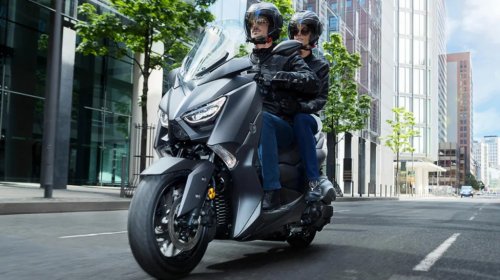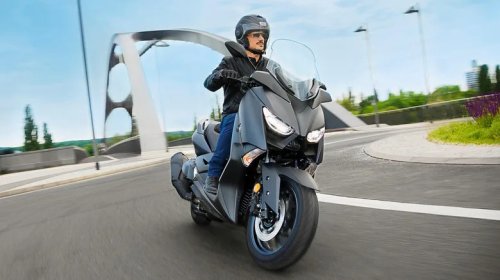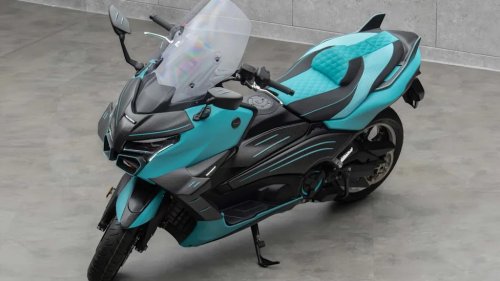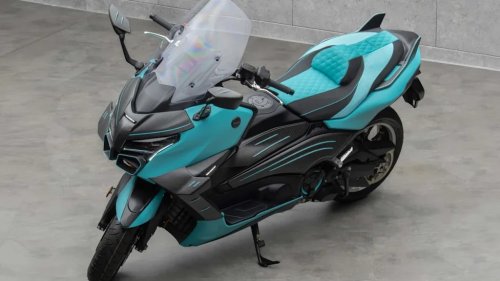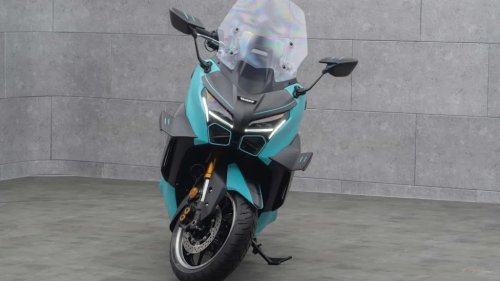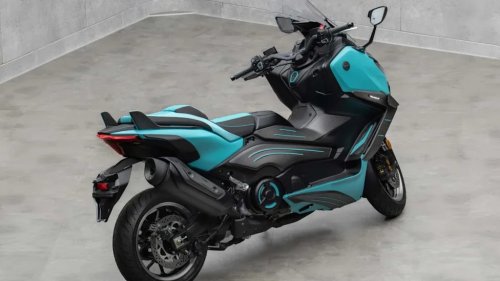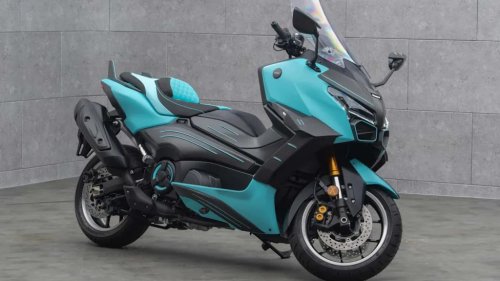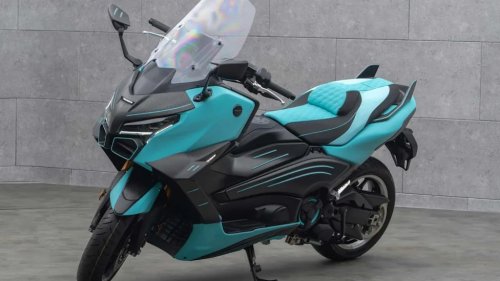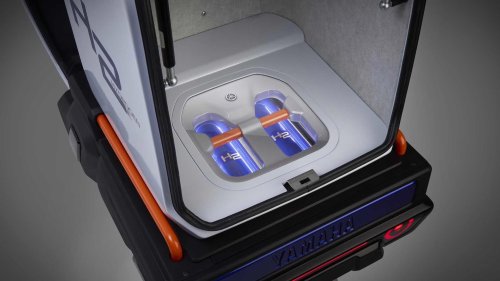
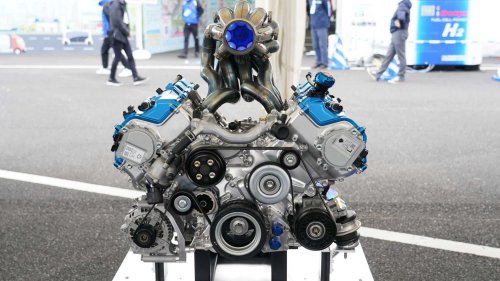
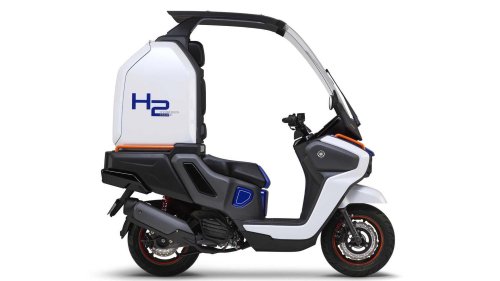
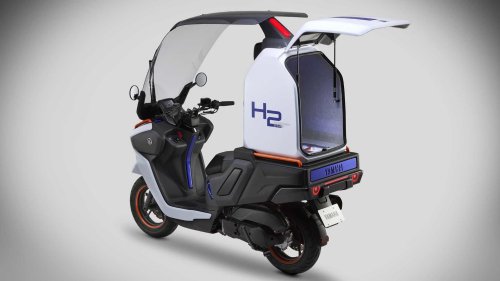
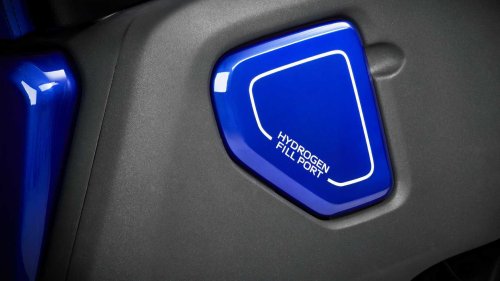
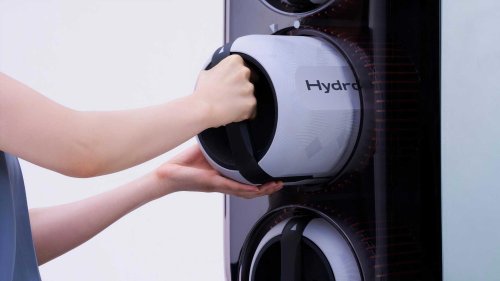
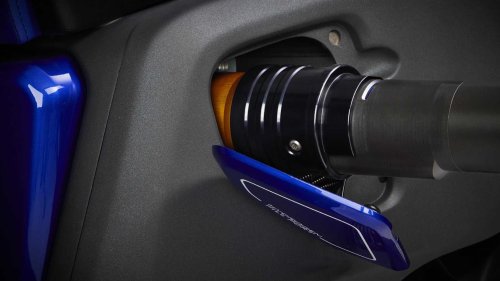
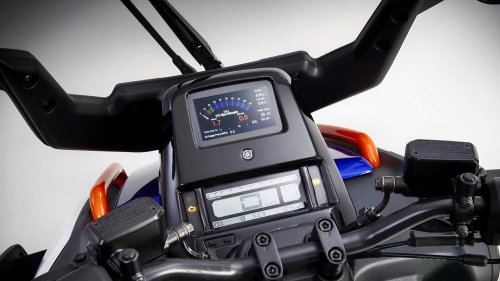



















Once heralded as the fuel of the future, hydrogen has since hit several roadblocks, especially when it comes to using it in an internal combustion engine. This has not stopped manufacturers – most especially the big Japanese manufacturers – from trying to overcome these obstacles. From Toyota's numerous attempts to bring the alternative fuel source to the light through commuter cars and performance machines, to Yamaha dabbling in the H2 sphere, we're not starved for proof of concept.A couple of years ago, Kawasaki brought out a hydrogen motorcycle concept, but this year it is Yamaha’s turn, and although it might not be the most exciting-looking motorcycle, it might actually have the most potential. The H2 Buddy Porter is a futuristic-looking scooter concept that has clearly been built with the commercial segment in mind. While it certainly is not as exciting as the previous Yamaha/Toyota hydrogen collaboration, this concept actually makes a degree more sense, and might actually see the light of day. The Yamaha H2 Buddy Porter Represents The Next Chapter In The Yamaha/Toyota Hydrogen Story Yamaha The first hydrogen project Yamaha and Toyota collaborated on was something decidedly more interesting. A 450-horsepower Lexus V8 was converted into a hydrogen-burning lump a few years back. Unfortunately, that served more as a proof of concept than anything else, as it has no practical application in the real world. At least, not at present. As a regular gas-powered lump, the Lexus V8 is relatively efficient, but once converted to run on hydrogen, all that changes.Yamaha The conversion is not overly complex; the engine gets different injectors that work with gas as opposed to liquid fuel, and the internals need to be strengthened. The head gasket also has to be made with stronger material, largely thanks to the added heat from hydrogen combustion. The cost involved is not exorbitant either, but the method of storing hydrogen fuel within the vehicle proves to be the biggest stumbling block. Even getting just 100 miles of range would require the hydrogen tank to be more than twice the size of the existing fuel tank you would find in the Lexus RC F. But this is where the little Buddy Porter steps in. The H2 Buddy Porter Has A Range Of About 60 Miles Yamaha Yamaha has not released any engine specifications for the Buddy Porter, but looking at the scoot from the side shows that it is a dead ringer for the ubiquitous 155cc single. It can be found in a wide range of scooters and motorcycles sold throughout Asia, and would be a logical choice for such an application. It makes around 15 horsepower, not much compared to a Lexus V8, but a respectable amount for a small scoot like this. This is important because smaller engines tend to lose more efficiency than larger engines once converted to run on hydrogen. 10 horsepower is a conservative estimate, but that is enough for a little delivery bike. As A Commercial Vehicle, This Makes Sense In A Congested Urban Environment Yamaha We say delivery bike, but it could be used for just about any small business that operates in a congested city. Several cities around the world are clamping down on the use of high-emissions vehicles operating within the city limits. Carbon taxes add up over time, and a low-emissions vehicle like the Buddy Porter will become an asset. 60 miles of range might not seem like much, but this is actually comparable to what you would get with most electric scooters.Yamaha Those e-bikes converted for commercial use are limited in terms of load capacity and are also pretty much useless at climbing hills, rendering them impractical in certain parts of the world. Electric bikes also require a fair bit of downtime to recharge, whereas a hydrogen tank can be refilled in the same amount of time needed to refuel a regular ICE vehicle. The engineering achievement here has nothing to do with the powertrain, but rather the fuel storage. This is, by some margin, the smallest hydrogen vehicle, and if these tanks – which have already been approved for public road use – can work here, a couple more can certainly work on a slightly bigger scooter, or even potentially a motorcycle that doesn’t look quite as ridiculous as Kawasaki’s hydrogen-powered Ninja H2. The Pitfalls Of Hydrogen Toyota Burning hydrogen is not the most efficient way to use it. As it stands, hydrogen fuel cells are a lot more efficient, but also complex and expensive to manufacture. This is the main reason why big companies like Yamaha and Toyota are exploring the use of hydrogen in internal combustion engines. It also presents itself as a far more natural direction for companies already well-versed in building ICE vehicles on a large scale. Burning hydrogen is also not completely emissions-free. While there are no carbon emissions, it does result in the production of some oxides of nitrogen, which are still a pretty harmful byproduct. Production And Environmental Challenges Cummins By far the biggest issue is the production of the fuel itself. Currently, hydrogen is not well regulated, but there are three distinct types of hydrogen, and those are green, blue, and grey hydrogen. Essentially, the only emissions-free hydrogen is green, produced by means of electrolysis with renewable electricity. It is currently not feasible to only produce green hydrogen, and both blue and grey hydrogen both introduce fossil fuels into the equation. Naturally, this is undesirable. Hydrogen Is Part Of The Solution, Not THE Solution Yamaha Storing the fuel is also proving difficult. Storing it in gas form is impractical, but storing it as a liquid requires significant investment from the owner of whatever gas station elects to sell hydrogen. These are all challenges the oil and gas industry faced with petroleum (or gasoline) in the early years, all of which were overcome and normalized. The same can be true for hydrogen, which certainly is not the silver bullet some purported it to be, but it certainly can be part of the broader green energy solution.Yamaha With the definitive leaders in the hydrogen field sticking by their commitment to seeing the fuel source succeed in some form or another, only time will tell if the investments will benefit the larger consumer. One day, hydrogen tanks might even be small enough to be sold as a kit to enthusiasts keen on keeping a classic car or motorcycle on the road. Even if that means limited range and spending more on literal gas.Sources: Yamaha, Toyota