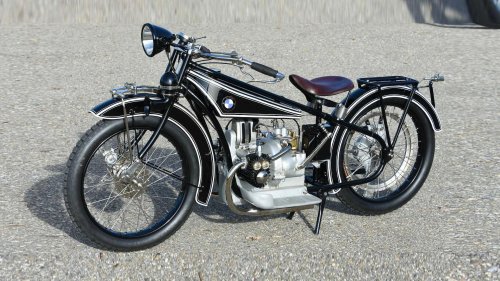
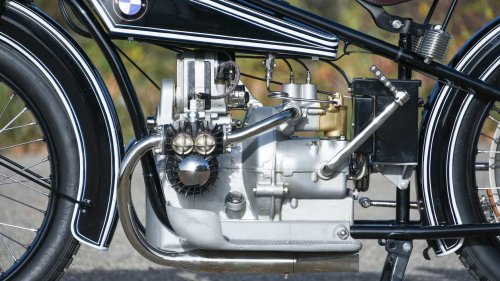
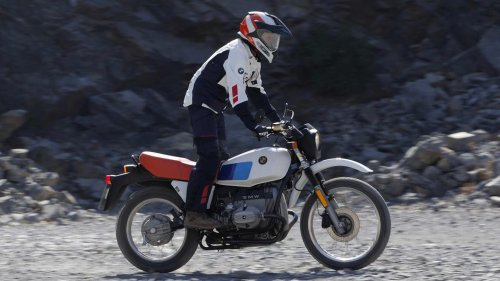
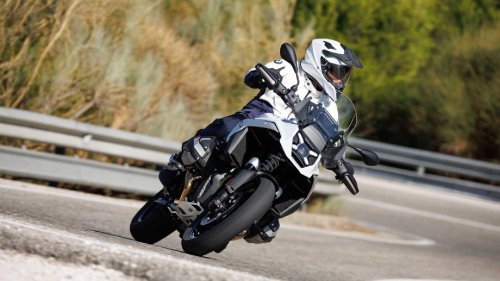
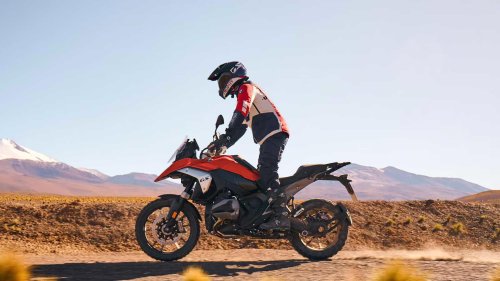
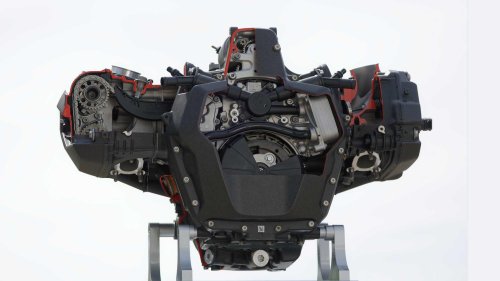
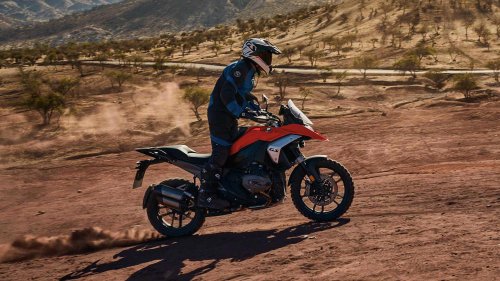
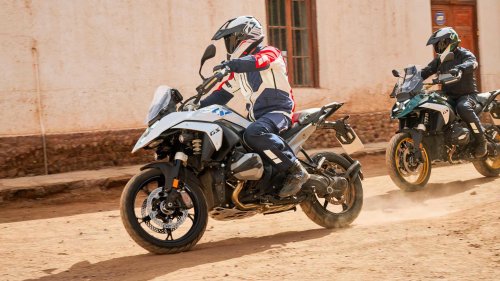
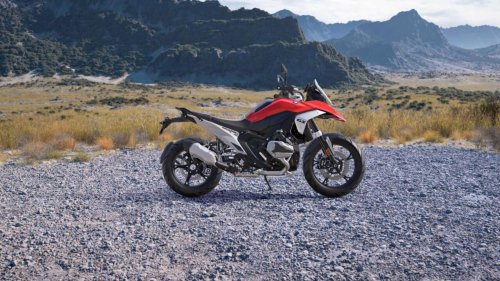
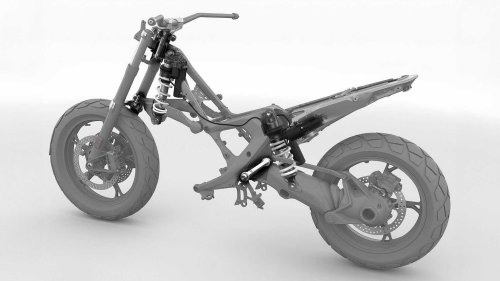
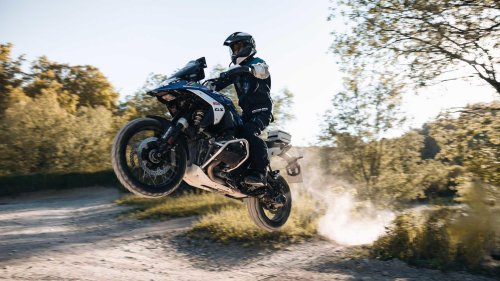
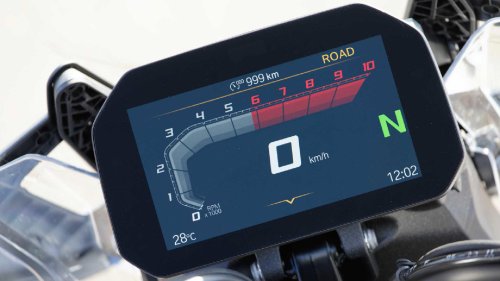
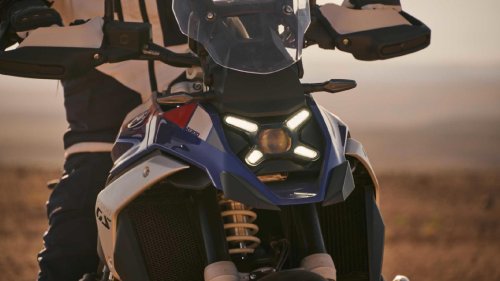



















In the motorcycling world, certain things from manufacturers set the standards. Take the Italian jaw-dropping design of Ducati, or the rock-solid reliability of the Japanese big four, for instance. In the same league, German bikes are world-renowned for their precision and bulletproof engineering.Speaking of which, the advantage you get isn't just about a bike that runs flawlessly. It’s about a machine that works perfectly under every condition you can throw at it. Today, those decades of technical mastery have culminated in a flagship machine that sets a new benchmark, representing the pinnacle of German precision. Why German Engineering Remains The Global Standard Mecum AuctionsBefore we move on to the machine in question, let's dig deeper into German engineering and how it became the global standard. When you think of German motorcycles, BMW inevitably comes to mind, delivering some of the best performance sports bikes and robust adventure machines. Interestingly, the brand didn’t enter motorcycle production until after WW I, due to the Treaty of Versailles restricting aircraft engine manufacturing. As a result, the brand adapted aviation-level precision to two wheels. Over A Century Of Precision Mecum AuctionsBMW's engineering reputation didn’t come about without over a century of relentless precision and quality, starting with the R 32 in 1923. That first motorcycle introduced two engineering choices that have remained consistent: a longitudinally mounted horizontally opposed twin-cylinder boxer engine, and a shaft drive in place of the chain. Just over a decade later, in 1935, BMW followed up with the R12 and R17, the first production bikes to feature oil‑dampened telescopic forks, a setup the rest of the industry continues to follow.BMWFast-forward to the late 1980s, and German engineering was at its prime, introducing Paralever rear suspension and a single-sided swingarm on the R 80 G/S that set the standard for future GS models. However, the most impactful safety tech, Anti-Lock Braking (ABS), was first brought to production models of the K75 and K100. This has become a quintessential standard feature on every bike. Then, in the early 90s, the R 1100 RS debuted Telelever front suspension, separating steering from braking and suspension functions to eliminate fork dive under hard braking. Now, on to the machine that encapsulates this precision prowess. BMW R 1300 GS Is The New Benchmark For German Precision BMW MotorradIt is widely known that R 80 G/S essentially invented the adventure touring category we know today by proving itself in the brutal Paris Dakar Rally. Moving through many successful generations, such as the R 1150 GS and R 1250 GS, the latest R 1300 GS represents a giant leap in engineering perfection. BMW didn’t just tweak the formula of four decades. They re-engineered it entirely, with upgraded suspension, a lighter and more compact chassis, and a refined engine that delivers more power and efficiency. Flagship GS ADV Commands Premium BMW MotorradWith a starting price of $20,395, the R 1300 GS is the flagship GS and sits just under its globe-trotting sibling, the GS Adventure, which costs $23,795, offering more range and ruggedness. However, it does face stiff competition from the likes of Ducati’s Multistrada V4, priced at $19,995, Harley‑Davidson’s Pan America 1250 Special, costing $19,999, and Triumph’s Tiger 1200 GT Pro at a higher $22,095. Yet the GS continues to stand out, not only for its tech and features but also for its proven record of reliability and versatility. Most Powerful Boxer Twin Engineered For Endurance BMW MotorradRight from the beginning, BMW’s boxer twin has always been the heart of the GS series, and the R 1300 GS is equipped with the most potent version yet. As an evolution of the outgoing 1,254cc engine, it features a larger 106.5mm bore and a shorter 73mm stroke for greater versatility. Beyond the GS, this 1,300cc motor also powers the R 1300 R naked roadster, the R 1300 RS sport tourer, and the R 1300 RT grand tourer.BMW MotorradEven with the increase in displacement, the engine is more compact and 8.6 pounds lighter. Furthermore, this liquid-cooled DOHC motor uses four valves per cylinder and BMW’s ShiftCam technology. The latter uses a dual-profile camshaft that varies valve timing and stroke depending on throttle input, ensuring optimal performance across the rev range. Balanced Power And Torque For All Terrain BMW MotorradThe GS churns out 145 horsepower at 7,750 rpm and 110 pound-feet of torque at 6,500 rpm. A bump of nine horsepower and five pound-feet over the R 1250 GS, but with smoother power delivery and an abundance of low-end grunt. Moreover, the six-speed manual transmission is paired with an assist and slipper clutch set below the engine, while BMW’s hallmark shaft final drive delivers power to the rear wheel. In addition, you can upgrade to the optional BMW’s Automated Shift Assistance with the Dynamic package, allowing shifts without engaging the clutch. Compact And Lighter Chassis With German Agility BMWThe R 1300 GS gets a two-part frame with the engine serving as the stressed member. BMW moved away from the old tubular steel frame and introduced a new sheet metal shell main frame paired with a die-cast aluminum rear subframe. This setup helped reduce the weight to 523 pounds and deliver a more compact form factor with a 59.8-inch wheelbase, while still being significantly stiffer. Meanwhile, you also get a 33.4-inch seat height and a taller package that feels balanced and predictable when tackling technical trails. Upgraded Precision Underpinnings For Stability BMW MotorradThe suspension is where you experience precision. The new 37mm EVO Telelever front end offers 7.5 inches of travel, and the EVO Paralever rear, with fully adjustable spring preload, delivers 7.9 inches of travel. What’s more, if you opt for the Dynamic package, you gain the Dynamic Suspension Adjustment (DSA) option that actively monitors your riding and adjusts the spring rate and damping automatically on the fly.BMW MotorradThe package also includes the Adaptive Vehicle Height Control, which can lower the seat height automatically at a stop, making it easier to plant your feet. Brembo brakes with dual 310mm discs with four-piston calipers up front and a 285mm disc with a two-piston caliper at the rear ensure stopping power. Meanwhile, BMW’s Integral ABS Pro adds lean‑sensitive control for safety. On top of that, the bike rolls on 19-inch front and 17-inch rear cast alloy wheels, shod with knobby tubeless tires. Tech Loaded To Brim Without Losing Tradition GS Styling BMW MotorradAs expected from BMW, it has packed the R 1300 GS with all the modern tech you could ask for. Starting with a 6.5-inch TFT display with smartphone connectivity. You also get four riding modes, including Eco, Rain, Road, and Enduro, along with Dynamic Cruise Control and heated grips. Safety features include Dynamic Traction Control, Hill Start Control, Dynamic Brake Control, Engine drag torque control, and BMW's full integral ABS Pro.BMW MotorradComplimenting the tech is the unmistakable GS styling. The highlight, however, is the X-shaped Matrix LED headlight, giving it a modern face. You get an aerodynamic fairing with an adjustable windscreen, while angular and narrow bodywork adds an athletic stance. Its high front fender, sculpted fuel tank, and upright riding position put you in a purposeful stance. Additionally, with choices like GS Trophy, Triple Black, and Option 719 Tramuntana, you can personalize your ride further. When you sum it all up, the R 1300 GS shines as the peak of accumulated German engineering precision, that you can keep for life.Sources: BMW Motorcycles