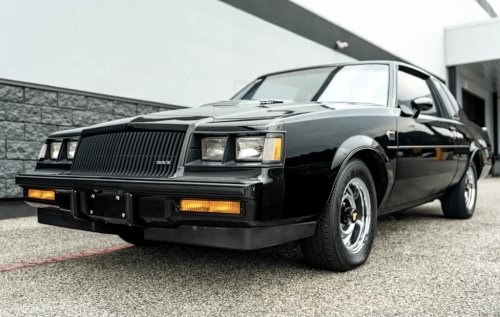
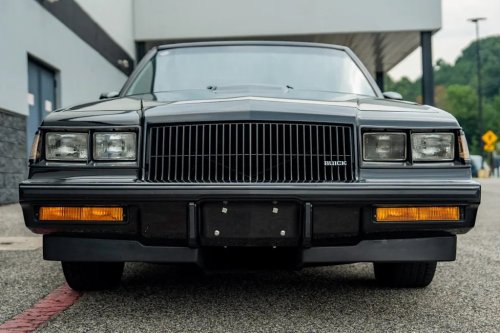
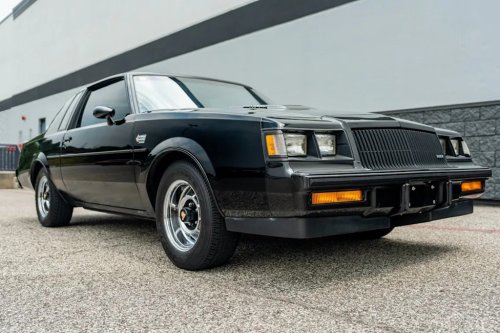
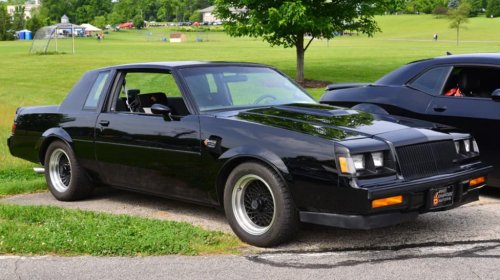
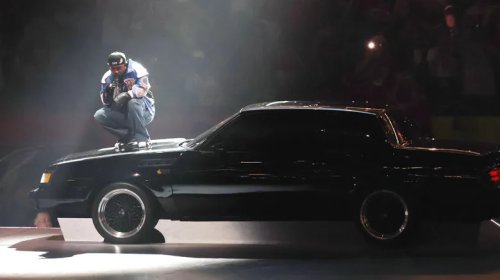
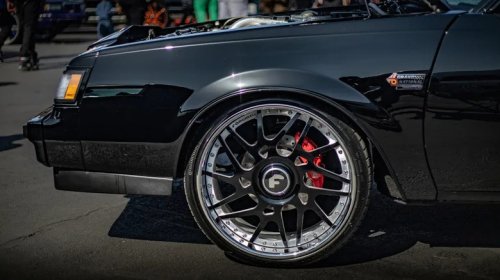
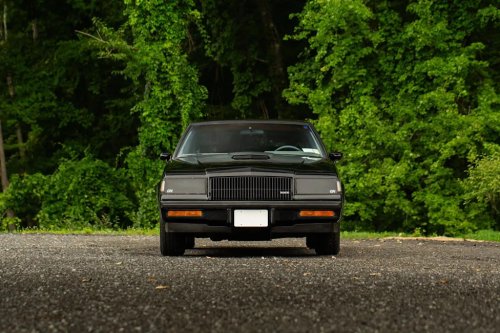
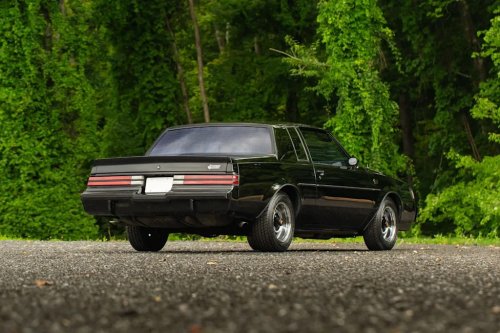
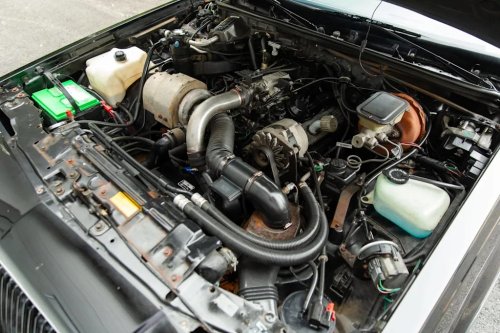
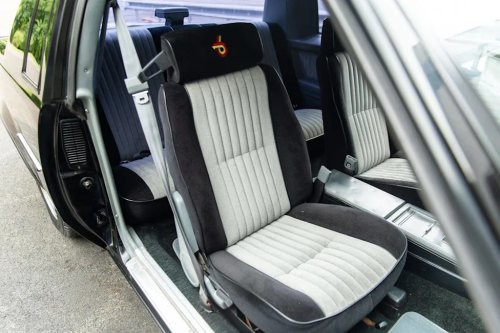
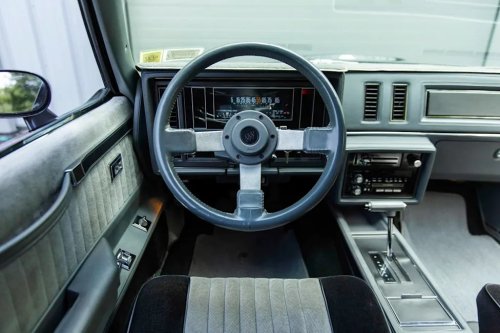
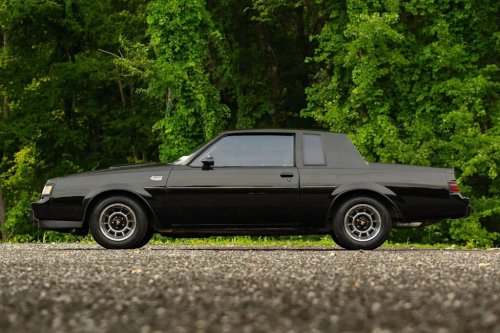
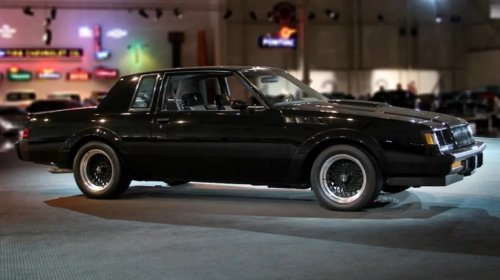
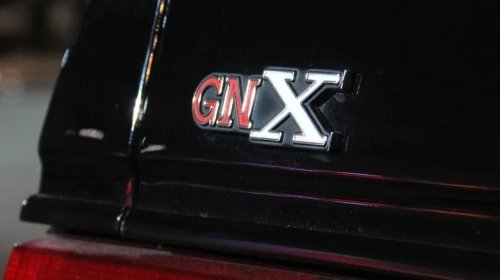
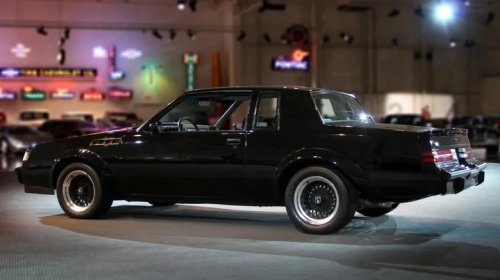
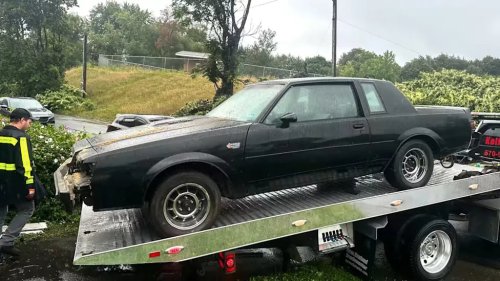
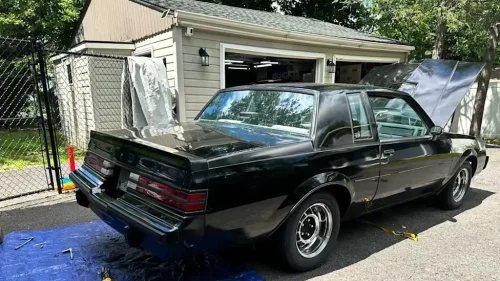
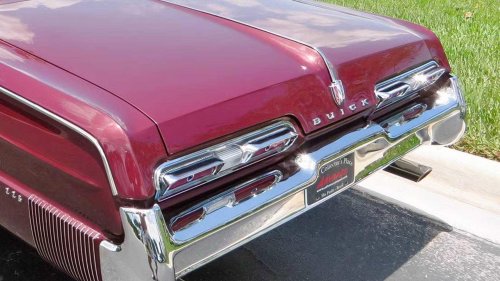
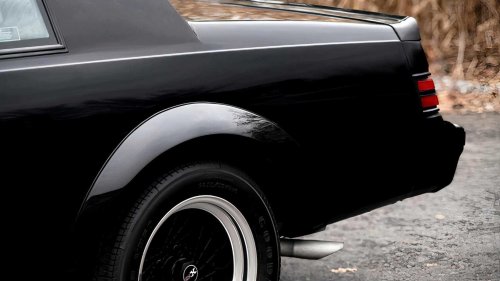
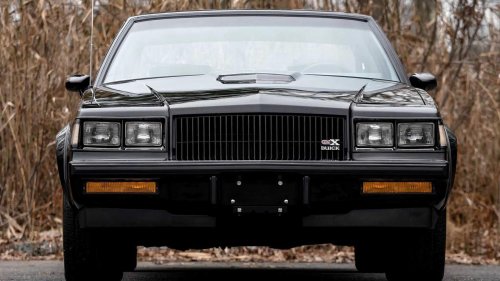
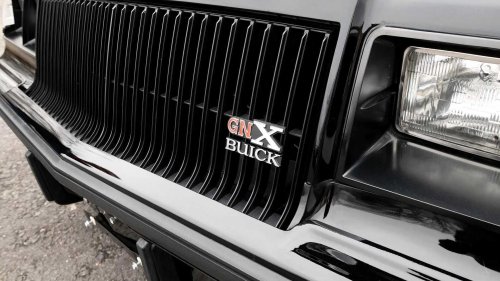
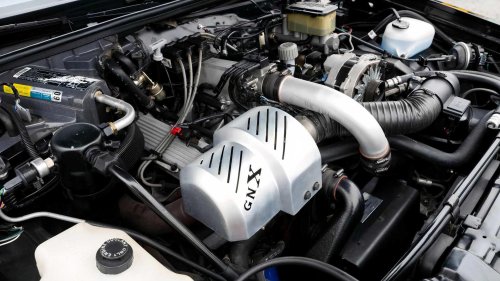
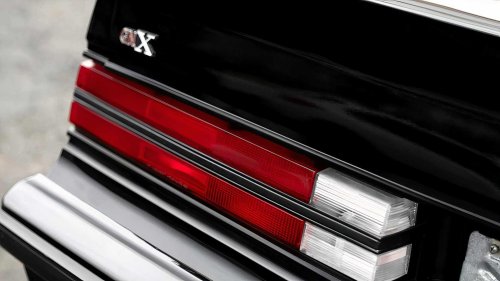
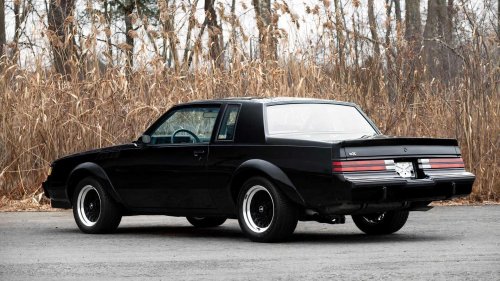
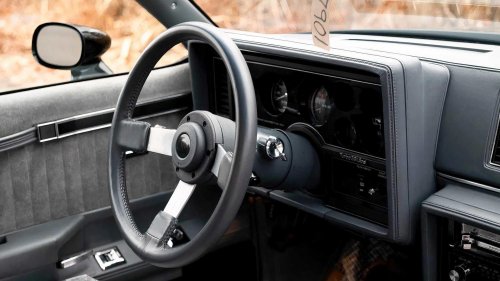
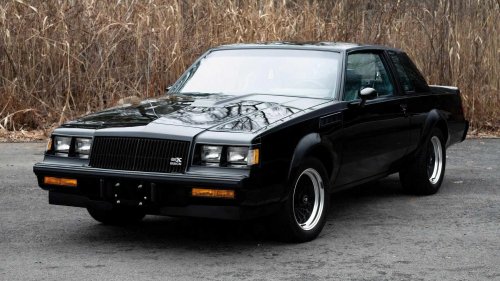
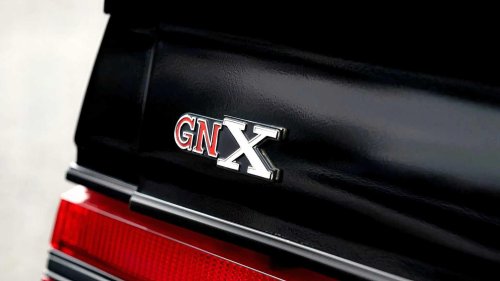
It's a big hat-tip to Buick that it had already stumbled onto a truth back in the '80s that a lot of traditional muscle-car diehards weren’t exactly eager to celebrate. Horsepower claims looked great in ads, sounded even better at diners, and gave everybody something to brag about at stoplights, but the cars that really mattered were the ones that delivered when the light turned green. In that world, theory didn’t mean much. Numbers on paper were nice, but numbers on a drag strip were better.That’s where this sinister black coupe entered the chat like it owned the place. It arrived in tiny numbers, carried a turbo V6 instead of the expected V8 thunder, and somehow turned into one of the nastiest performance cars General Motors built in the '80s. Better yet, it managed to embarrass some machinery with a lot more cubes and a lot more chest-beating. Somewhere, a Camaro fan probably still hasn’t fully recovered. Buick’s Dark Coupe Started As A Rebellion Bring A TrailerThe Buick GNX didn’t come out of nowhere. It was the final, meanest evolution of Buick’s turbo Regal formula, a line that had already shown there was real pace hiding in what looked like a squared-off personal coupe. Buick’s own history page describes the GNX as an evolved version of the Grand National, itself rooted in the Regal, and that's key because the car was built to take a weirdly good recipe and crank the heat.And there as no doubting how deliberate the whole thing was. Buick built just 547 of them for 1987, then the cars were sent to American Specialty Cars and McLaren Performance Technologies for the final transformation. In itself, that gives the GNX a different kind of aura. Buick knew it had something serious on its hands and treated the car like a last shot at building the nastiest version possible before the curtain dropped.The styling helped seal the deal. Everything came finished in black, with GNX badging, 16-inch black mesh wheels, and subtle details that made the car look more serious the longer you stared at it. The vented fenders, the stance, and the numbered dash plaque all reinforced the same idea: this was the one you didn’t want lining up next to you at a red light. The Buick GNX Was An Incredibly Potent Machine Bring A TrailerOn paper, the GNX already looked strong. Buick rated the turbocharged 3.8-liter V6 at 276 horsepower and 360 lb-ft of torque, which was plenty for the time. But even back then, people knew those numbers were conservative. Independent testing suggested the real output was closer to 300 horsepower and 380 lb-ft, and the way the car actually moved backed that up.It could hit 60 mph in just 4.7 seconds and run the quarter-mile in 13.5 seconds at 102 mph. For a 1987 Buick with an automatic transmission, that was scorching pace. This wasn’t one of those cars that felt quick for its size or quick for its category. It was just quick, full stop. Less Is More Bring A TrailerNow what really drives the point home. The 1969 Chevrolet Camaro SS 396 came armed with a 375-horsepower big-block V8 and all the attitude that came with it. It sounded mean, looked the part, and carried the kind of reputation that still gets people excited today. But in terms of raw numbers, it ran 0-60 mph in 6.8 seconds and covered the quarter-mile in 14.8 seconds.That means the GNX, with fewer cylinders and less displacement, beat it to 60 and through the quarter-mile. It’s the kind of comparison that makes you double-check the stopwatch, but the results hold. The Buick showed up and decimated classic muscle. Turbocharging Replaced Cubic Inches As The Winning Formula Bring A TrailerThe real story behind the GNX is how it made that speed. Under the hood sat a turbocharged and intercooled 3.8-liter V6, backed by a Garrett T3 turbocharger with a ceramic impeller and a larger intercooler. Buick also revised the engine management and increased boost levels, turning what was already a strong setup into something far more aggressive.Perhaps the bit that was really surprising was how the power came in. The torque arrived early, built quickly, and hit with authority. That made the GNX feel brutally effective in real-world driving, where instant shove matters more than peak numbers. No high-revving antics here. Ignoring Tradition Bring A TrailerPeak torque showed up low in the rev range, which meant the car didn’t need drama to feel fast. You didn’t have to wind it out or wait for something special to happen. You just pressed the throttle, and the GNX responded like it had been waiting for that moment all day.That approach marked a shift in how American performance could work. Instead of relying on cubic inches and raw displacement, Buick leaned into forced induction. What you got was a car that proved V8s were nice but unnecessary to dominate a straight line. You just needed the right setup and the willingness to ignore tradition. Straight-Line Speed Came At The Expense Of Refinement Bring A TrailerAs impressive as the GNX was in a straight line, it wasn’t trying to be everything at once. The car delivered around 0.80 g of lateral grip, which was respectable but not class-leading, and the chassis setup made it clear where the priorities were. This was a car built to launch hard and go fast in a straight line, not to carve up corners with surgical precision.The suspension upgrades focused on putting power down effectively, with components designed to improve traction and stability under acceleration. That worked brilliantly when the road was straight and the throttle was wide open, but it also meant the car could feel less composed when pushed in other ways. One-Trick Pony Bring A TrailerRide quality could, reportedly, get a little unsettled on imperfect surfaces, especially when the turbo was doing its thing. The GNX had a bit of attitude baked into its dynamics, and it didn’t try to smooth everything out for the sake of comfort. It felt alive, sometimes a little rough around the edges, but always interesting.There’s something appealing about that, honestly. The GNX was a street bruiser with a clear focus. It did one thing exceptionally well, and it didn’t pretend otherwise. Limited Production Turned The GNX Into A Collector’s Wet Dream Bring A TrailerThe fact that only 547 examples were built plays a huge role in how the GNX is viewed today. Scarcity always helps, but in this case, it amplifies a car that was already special. The GNX was rare, sure, but it was genuinely fast, which is a combination collectors tend to chase hard.The proof comes in the way of values today. Average values sit around $196,000, with top sales pushing past $250,000. Even recent transactions have continued to land well into six-figure territory, which says a lot about how the car is perceived decades after it first appeared. The Best Of The Exceptions Bring A TrailerThe GNX truly was a special specimen; a (blisteringly) quick view of a moment when Buick decided to do something unexpected and followed through all the way. People sometimes tend to view the '80s as a time of slow, emissions-choked cars. There were exceptions, however, and this was one of the best of them.In the end, the GNX’s legacy feels well-earned. It outran a Camaro SS from the classic era, proved that turbocharging could go toe-to-toe with big-block power, and did it all while looking like it meant business. For a car that started as a strange idea from Buick, that’s a pretty wicked outcome.Sources: Buick, Hagerty, American Muscle Car Museum, Classic.



















 +39 others