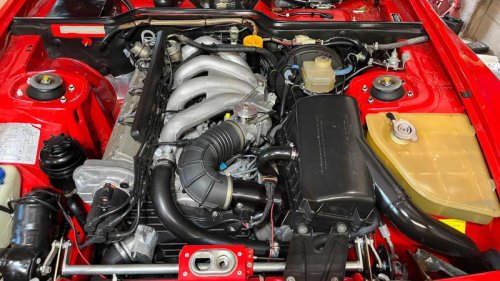
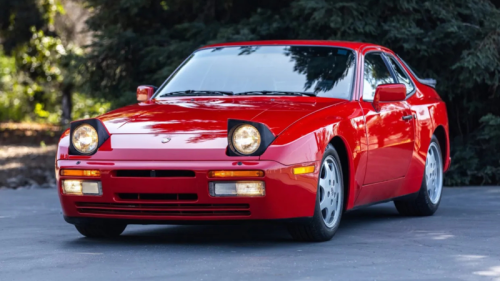
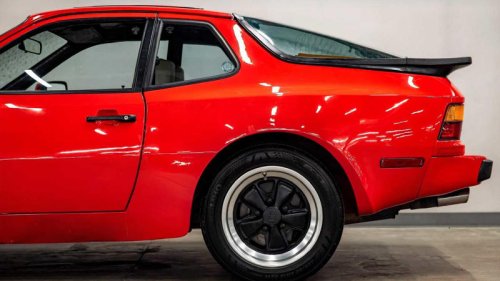
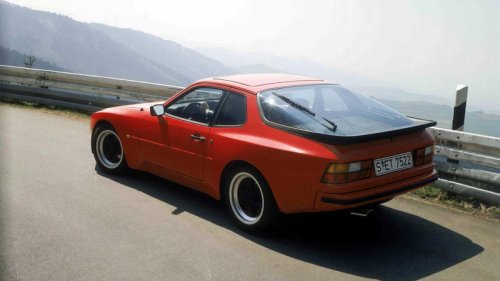
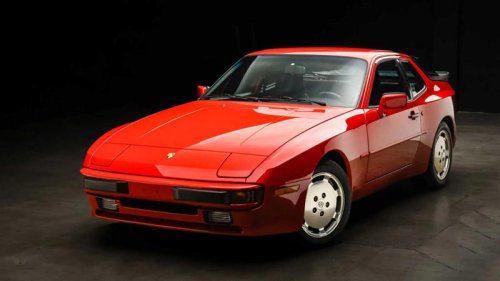
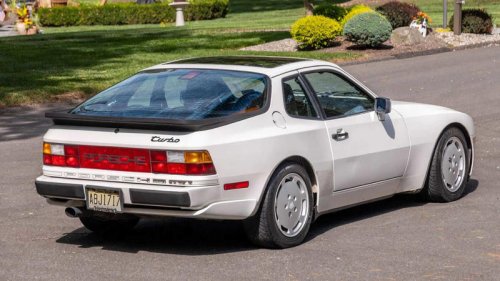
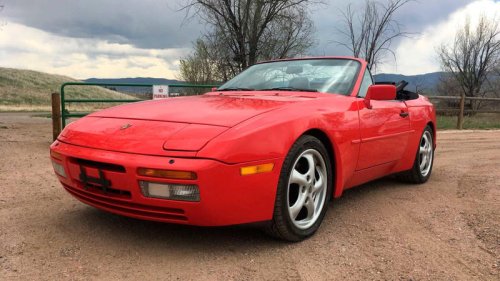
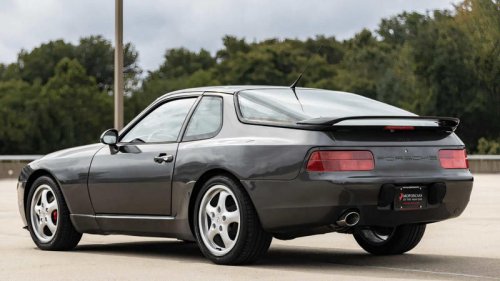
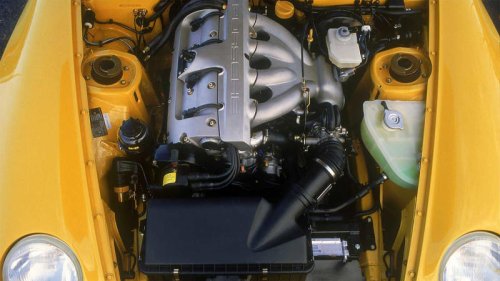
There is a big difference between a car that is merely old and one that still feels alive the second a driver turns the wheel. Plenty of vintage coupes look good in photos, smell like nostalgia, and then drive like worn-out furniture with a title. The best budget driver’s cars avoid that fate – they speak through the steering, settle into a corner without drama, and reward skill more than bravery. They come from a time when balance mattered, controls had real weight, and engineers chased feel instead of giant power figures.That is the kind of performance machine this story is about. It wears a badge that still scares off many buyers who assume it belongs in the same financial bracket as private schools and boats no one uses. But the real charm has nothing to do with showing off – it comes from balance, steering feel, and the sort of mechanical honesty that modern performance cars often bury under layers of speed and software. In a market full of old coupes that trade mostly on style, this one still has substance where it counts. Right in the driver’s hands. The Real Secret To Driver Engagement Is Not More Power Porsche Driver engagement has less to do with huge horsepower and more to do with clear communication. A great driver’s car tells the truth – the steering loads up naturally, the brakes feel easy to read, and the shifter has a rhythm to it. None of that sounds flashy on paper, which is probably why so many people chase power first and ask questions later.That approach misses the point, though. Big speed can be exciting, but it can also cover up weak fundamentals. A car with modest output and sharp responses often feels more alive than something far quicker but far less talkative. When a driver can use most of the car on a normal road, the experience gets richer. The fun comes from timing, precision, and confidence, not just from watching the speedometer swing like it got bad news.That is why many older enthusiast cars still hold such a strong pull. They came from a time when engineers cared deeply about steering feel, chassis balance, and mechanical honesty. The sweet spot is exactly balance. A well-sorted coupe does not need wild power if it has poise, feedback, and a sense of connection. That is what separates a car that is merely old from one that still feels alive in a driver’s hands. The best budget driver’s cars understand that – they make ordinary speeds feel special, and that is a trick no horsepower figure can buy on its own. The Budget Coupe That Nails The Recipe Is The Porsche 944 via Bring A TrailerThat is exactly why one old Porsche still stands out in the bargain-performance crowd. No, it’s definitely not huge on numbers. And it did not become a poster car for every teenager with a bedroom wall in 1987, though the pop-up headlights certainly did their part. The real surprise is that the Porsche 944 delivers the stuff enthusiasts actually care about most – balance, clarity, and the feeling that the car is working with the driver instead of just showing off.The 944 arrived in the early 1980s and followed a very different path from the rear-engine legend that usually grabs all the attention. It placed its engine up front and its transmission at the rear, which helped give it excellent weight distribution and a calm, planted feel in corners. That layout, along with its wide stance and predictable chassis, made the car feel approachable and rewarding at the same time.That is what still makes the 944 such a smart enthusiast buy. It offers a premium badge that many assume sits out of reach, yet its best quality has never been status. It is the way the car comes alive on a good road, how it turns in with confidence, and how it makes a driver feel involved without needing reckless speed. In a market full of old coupes that look promising but drive flat, the 944 still feels genuinely awake. Not A Budget 911 BaT The 944 makes more sense when it stops pretending to stand in the 911’s shadow. A rear-engine 911 carries its weight and personality in a very different place – it asks for a different rhythm, a different set of habits, and a little more respect when the road tightens up. The 944, in turn, does not chase that flavor – it delivers its own. The balance feels flatter, calmer, and easier to trust, which is exactly why so many drivers come away surprised by how quickly it covers a road.That difference also explains why calling the 944 a “cheap 911” misses the point by a country mile. The Turbo version eventually reached performance that sat alongside the contemporary 911 Carrera, but the naturally aspirated 944 never needed to copy the 911 to earn respect. It won people over with feel – its responses feel tidier and more linear, and the car prizes a clean line over drama. A buyer chasing that formula will understand the car. A buyer chasing only the badge probably will not. That buyer may also miss one of Porsche’s most honest road cars.Porsche Then there is the everyday side. The 944’s opening tailgate and folding rear seat make it one of the most usable old Porsches of its era. A 911 can make a grocery run, sure, but a 944 can make a grocery run, carry a weekend bag, and still look ready for a blast down a two-lane road. The rear seats remain best for small humans, soft bags, or unresolved family tension, but the point stands. If You Want One, Better Hurry Up Bring A Trailer Yes, the 944 is still relatively affordable, but the market has already started to wake up. Hagerty says the average Condition 3 value for a 944 is up 75 percent since 2020, landing at $21,200, while Classic.com pegs the overall average sale price for the 944 at $23,072. That is still far from air-cooled 911 money, but it is no longer the sleepy bargain bin some buyers remember. The secret is out, and secrets tend to get expensive once everyone at the car meet knows them. Deferred maintenance and attrition have also thinned the field, so genuinely sorted cars now stand out fast.Current asking prices back that up. Classics on Autotrader lists an average asking price of $22,883 for the 944, with inventory stretching from $9,750 to $52,499. On the same marketplace, recent live examples included a 1986 coupe with 102,895 miles at $14,439, a 1988 coupe with 338,661 miles at $11,500, a 1987 944 S coupe at $22,000, and a 1990 944 S2 Cabriolet at $17,300.Bring A TrailerHemmings shows a similar spread as of March 2026. Its marketplace included a 1986 944 at $10,750, a 1987 at $14,750, a 1989 at $18,989, and a 1990 at $23,500, while cleaner or more unusual examples reached much higher. That range tells the story better than any trend graph – a buyer can still get in without taking out a second mortgage, but the gap between a usable car and a really good one is getting wider.Auction results show why shoppers should move with purpose. A rougher 1984 944 sold on Bring a Trailer for $8,400 on February 25, 2026, while a 9,000-mile 1984 car brought $35,000 on January 15, 2026. A 32-years-owned 1987 944 Turbo sold for $21,000 on February 5, 2026, and an ’88 Turbo brought $17,550 on March 12, 2026. Which 944 Makes The Most Sense Bring A Trailer For most enthusiasts, the smartest buy is a late naturally aspirated car or a well-kept S2. The late (after 1985) base 944 makes a lot of sense because Porsche bumped power to 163 hp and gave the car a bit more everyday shove. Potential buyers should also remember the mid-1985 interior update, because the later “oval dash” cars feel more modern and pleasant to use.The S2 is the stretch choice for buyers who can spend more without wandering into Turbo money or Turbo complexity. Classic.com lists an average sale price of $25,928 for the S2 coupe, and that premium makes sense. It packs 208 hp from the big 3.0-liter four, Turbo-style bodywork, and what many owners still regard as the best all-around mix of speed, torque, and usability in the range. It feels like the range learned a few lessons and then finally aced the test.Via: Mecum Auctions Needless to say, if you have the money, definitely go for the Turbo. It boosts power to well past 200 hp and is the most lively model of the entire range. Word on the street is the 944 Turbo was faster than the contemporary 911 Carrera 3.2 around the track in the late 1980s. We can’t confirm that, but even if it isn’t true, we can totally assure you the 944 Turbo had the better weight balance and was easier to drive fast.The cheapest purchase rarely becomes the cheapest ownership story, so paperwork matters more than shiny paint. Technical guidance still points owners to 30,000-mile timing-belt intervals on the 944S, with inspections in between, and a belt service often grows into a “while you’re in there” job that includes the coolant pump. The 968 Is The 944's Most Refined Version Bring a trailer The 968 sits at the end of this family tree, and it shows. Porsche says more than 80 percent of its components were new or heavily revised, even though the car began life as a planned 944 update. It moved production to Zuffenhausen, picked up smoother styling, and gained a 3.0-liter four with VarioCam, 236 hp, and a six-speed manual. In simple terms, it took the 944’s recipe and cooked it longer. It is the same song with cleaner production, better polish, and a little more muscle.On the road, the 968 feels like the same idea with sharper tailoring. The strong low-end torque, added polish, and six-speed gearbox make it the grown-up version of the 944 experience. The 968’s front-end design also previewed the later 993, which is the kind of trivia that wins exactly one free coffee at a cars-and-coffee event, but it does show how modern the car looked for its time. Even now, the 968 carries itself with quiet confidence rather than retro novelty. It looks less Eighties wedge, more Nineties GT, and that changes the whole mood.Porsche.de The problem, at least for bargain hunters, is that the 968 no longer lives in the same price neighborhood. Classic.com lists the average 968 sale at $35,846 and the average manual-coupe sale at $31,028. Classics on Autotrader shows an even higher average asking price of $45,556, with current examples ranging from $18,490 to $89,900, including a 1994 968 at $23,995 and another 1994 car at $18,490. That is the price of refinement.That leaves the 944 in a sweet spot that keeps getting harder to find. It still gives an enthusiast the core transaxle Porsche virtues – balance, clarity, usable performance, and real day-to-day practicality. It still carries a badge people assume costs too much, but most importantly, it still feels alive in a way many cheaper classics simply do not. That is the whole trick.Source: Porsche, Classic.com, Bring a Trailer, Hemmings