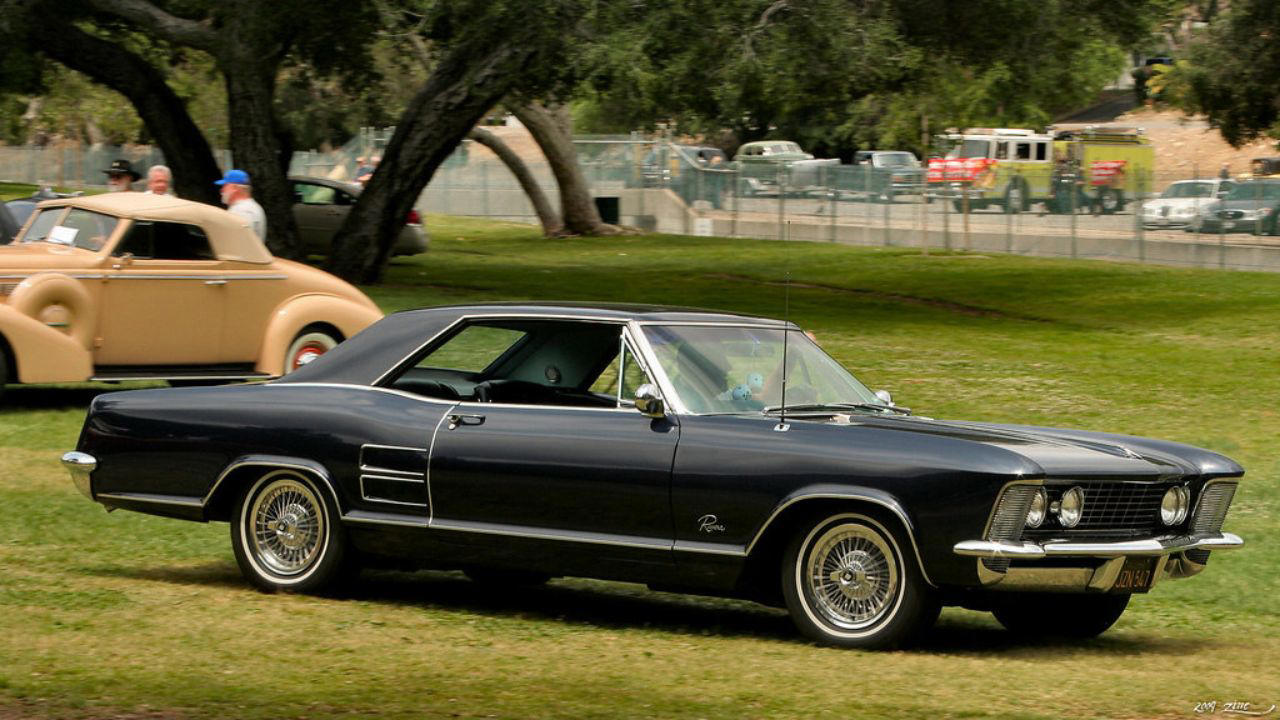



















The 1963 Buick Riviera was styled to be remembered and it workedThe 1963 Buick Riviera arrived as a sharp-edged rebuttal to Detroit excess, a personal luxury coupe shaped with such restraint and confidence that it still looks contemporary more than sixty years later. Its blend of crisp lines, hidden muscle and tailored luxury was no accident but the result of a tightly controlled design program that treated styling as an identity statement. The car was drawn to be unforgettable, and the proof is that enthusiasts, collectors and designers still study its surfaces as a benchmark for American elegance. The personal luxury gamble that Buick had to win By the early sixties, General Motors was watching Ford’s Thunderbird pull away with what one source describes as 73,000 units a year, while GM had nothing comparable in showrooms. Executives wanted a personal luxury car that could match the Thunderbird’s glamour but speak with a different accent. Buick, traditionally conservative, became the unlikely spearhead for that move upmarket, and the Riviera name was chosen to project a mix of American confidence and European sophistication. Inside GM, design projects explored a long hood, short deck coupe that would look at home outside a country club or a city jazz club. The goal was not a brute muscle car but a low, poised grand touring machine that could carry four adults in comfort while still feeling intimate. That ambition shaped every inch of the 1963 Buick Riviera, from its proportions to its interior layout and even its marketing. Bill Mitchell’s razor-edged vision The Riviera’s shape grew out of a clean-sheet program that General Motors design chief Bill Mitchell used to push the corporation away from chrome-laden excess. In one account, Mitchell commissioned two XP92 proposals, and Mitchell chose the version that emphasized a crisp roofline and a taut body side, elements that would become signatures of the production Riviera. Seen in profile, the car’s long hood and short rear deck read as almost European, a point echoed in later commentary that the 1963 Buick Riviera debuted with sharp, European inspired styling blended with American V8 power. One analysis notes that Its body was carefully sculpted to project understated performance rather than showy aggression. The design team also made a decisive break from GM habit by giving the Riviera its own body shell. As one interior specialist notes, the 1963 Riviera was a departure from the typically conservative styling of General Motors and, Uniquely, its body shell was exclusive rather than shared with other models. That decision preserved the purity of the proportions and helped the car stand apart in traffic. Details that made a “Styling Masterpiece” Enthusiasts often describe the 1963 to 1965 Buick Riviera as one of the most beautiful vehicles General Motors ever produced. A detailed retrospective calls the early Riviera a Styling Masterpiece, and that judgment rests on a series of disciplined design choices. The car’s front end avoided the era’s towering grilles in favor of a low, horizontal opening framed by quad headlamps. The lamps sat outboard, visually widening the car, while the grille itself was recessed, giving the nose a subtle, predatory look. The body sides carried a single, sharp crease that ran from the front fender to the rear quarter, breaking only to acknowledge the wheel openings. Chrome was used as an accent rather than a costume, confined to thin window surrounds, discreet rocker trim and delicate bumpers. At the rear, the roofline flowed into a short deck with a slight boat-tail hint, though the full dramatic taper would not appear until later generations. The taillamps were integrated into the bumper, which wrapped around the corners and visually pinched the car’s stance. A detailed design history notes that the 1963 Buick Riviera’s frameless side glass and pillarless hardtop structure, documented in a Riviera overview, enhanced the clean, floating roof effect that is so central to its presence. Marketing a new kind of American luxury Buick and General Motors did not intend the Riviera to be just another coupe. They positioned it as a design object and a lifestyle accessory. One analysis of factory material highlights a 1963 Riviera promotional image in which the car appears in a refined setting, and notes that the marketing campaign targeted as well as men. That choice signaled a broader ambition. The Riviera was not pitched solely as a performance toy or a status symbol for executives, but as a tasteful, manageable luxury car that could appeal to buyers who valued style and comfort in equal measure. Advertising leaned into the car’s clean lines, its manageable size compared with full-size sedans, and its promise of quiet speed. Social media retrospectives now describe The Buick Riviera, introduced in 1963, as an American luxury icon with sleek styling, a long hood and powerful V8 engines. One enthusiast group notes that The Buick Riviera quickly earned a reputation as both a classic car and a symbol of muscle and luxury, confirming that the original positioning stuck. Inside, a lounge for four The Riviera’s cabin was as carefully curated as its sheetmetal. Contemporary descriptions emphasize that the tasteful interior could be upholstered in all vinyl, cloth and vinyl, or leather, and that front bucket and created a four place environment that felt more like a private lounge than a typical bench seat coupe. Big spenders could add real walnut inserts on the doors and below the rear side windows, details that one analysis highlights as part of the Riviera’s push into near bespoke territory. That same source notes that Big spenders who opted for such trim could arrive at the local jazz club in a car that felt as tailored as a custom suit. Surviving cars show how well that approach aged. A detailed walkaround of an original example notes that the leather upholstery is still intact and that every interior detail, from the console to the dash, feels considered. The observer remarks that the amazing interior is worth showing off, and that all the intricate trim pieces are present, in a Curbside Classic style profile that underlines the car’s lasting craftsmanship. From a layout perspective, the Riviera anticipated later personal luxury coupes. A period inspired description of a showroom car notes that the personal luxury features include driver and passenger bucket seats with a center console and floor shifter, while Rear seat passengers also enjoyed sculpted seating and generous legroom. The dashboard was elegant but simple, as one fact sheet puts it, with clear instruments and restrained ornamentation that matched the exterior’s calm authority. Engines, chassis and the promise of quiet speed Under the Riviera’s hood, Buick engineers backed up the styling with serious power. A period fact sheet lists Two V-8 Engines for Riviera, with displacements of 401 and 425 CID. These “Nailhead” V8s were tuned for strong torque and smooth delivery rather than high rev theatrics, perfectly aligned with the car’s grand touring brief. The Riviera’s suspension used Buick’s standard layout of double wishbones in front and a live rear axle located by trailing arms and a panhard rod, as documented in enthusiast breakdowns of 1963 Buick Riviera production details. That arrangement, combined with a relatively narrow track and careful weight distribution, produced a ride that owners praised for its blend of comfort and control. Later commentators argue that regardless of changing tastes, Buick’s first generation Riviera from 1963 through 65 is not just a styling landmark but also a dream driver. One retrospective notes that Regardless of era, the car’s steering, brakes and power delivery combine to make it a truly comfortable cruiser that still feels capable on modern roads. Color, trim and the art of restraint The Riviera’s exterior palette further reinforced its sophisticated image. Paint code records associated with interior specialists show that buyers could specify deep finishes such as Regal Black, linked to a 1963 Buick Riviera entry that identifies Regal Black as a Buick color for that year. Lighter shades such as Arctic White and Silver Cloud were also offered, each designed to highlight the car’s sharp creases rather than drown them in metallic flake. Interior trim combinations were equally curated. Commentators note that the tasteful interior could be trimmed in conservative hues that matched the exterior or contrasted subtly, avoiding the loud two tone schemes seen in some contemporaries. The result was a car that looked expensive without shouting, a quality that helps it photograph as well today as it did in period brochures. From showroom star to enduring icon Period footage introducing the 1963 Buick Riviera frames it as one of Bill Mitchell’s finest efforts as General Motors vice president of design, and notes that Today the car is remembered as a highlight of GM styling that could hold its own on prestigious stages such as the Paris Motor Show. That external validation matters because it shows the Riviera was not just a domestic hit but a design that resonated internationally. Enthusiast communities now treat the early Riviera as a touchstone. One social media post describes 1963 Buick Riviera, an American luxury and performance car, as a model that set the tone for personal coupes for years to come, reinforcing that The Riviera shaped expectations well beyond its production run. Design historians also point out that the second generation Riviera grew larger and abandoned some of the creased edges that defined the 1963 to 1965 cars. An analysis of the model’s evolution notes that the later body was bigger in every dimension and that Since the redesign softened the lines, many enthusiasts continue to favor the original generation as the purest expression of the idea. Why the Riviera still feels modern Part of the Riviera’s lasting appeal lies in how closely it aligns with contemporary tastes. Modern luxury coupes often chase the same formula: a long hood, short deck, four place cabin and restrained ornamentation. The 1963 Buick Riviera anticipated that template decades earlier, which is why it still looks at home in current photo shoots and design essays. Commentators who revisit the car today emphasize that the 1963 to 65 Buick Riviera is pretty unquestionably one of the most beautiful vehicles ever produced by General Motors. A popular video essay on strange facts and features of the model notes that the 65 continuation of the first generation only refined the original theme, further cementing its status as a design classic. Another enthusiast overview of classic American car design describes the 1963 Buick Riviera as combining sharp, European inspired styling with American V8 muscle, and concludes that Buick Riviera remains a reference point for understated performance. That blend of influences, executed with discipline, is what keeps the car from feeling trapped in its decade. A design that keeps inspiring Photographers, illustrators and restorers continue to return to the Riviera’s shape. Online galleries and enthusiast blogs celebrate the car’s stance and surface development, while social media accounts dedicated to American classics highlight its profile as often as icons from more exotic brands. One enthusiast site that profiles the 1963 to 1965 Riviera calls it a Styling Masterpiece and notes that few classic American cars possess the same mix of timeless elegance and bold design, a judgment supported in detail by the earlier Styling Masterpiece analysis of promotional imagery and marketing strategy. More from Fast Lane Only Unboxing the WWII Jeep in a Crate 15 rare Chevys collectors are quietly buying 10 underrated V8s still worth hunting down Police notice this before you even roll window down