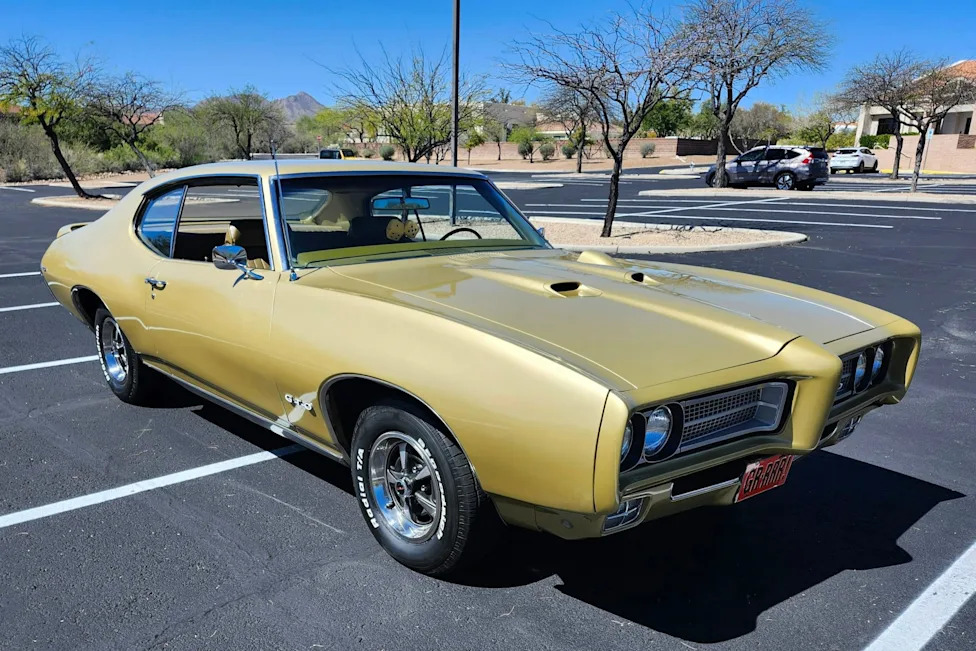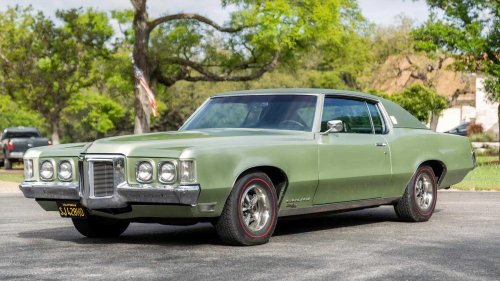
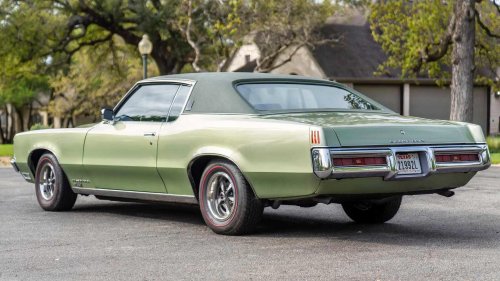
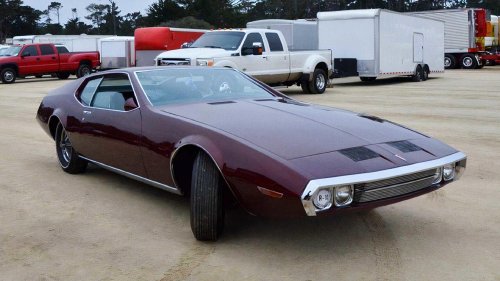
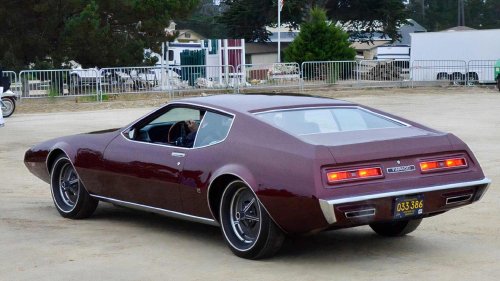
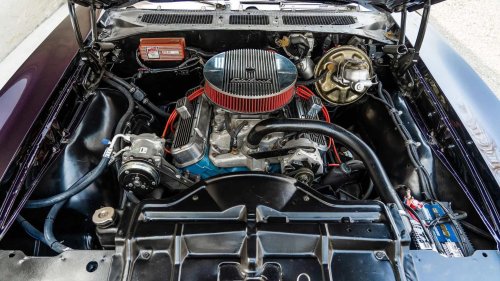
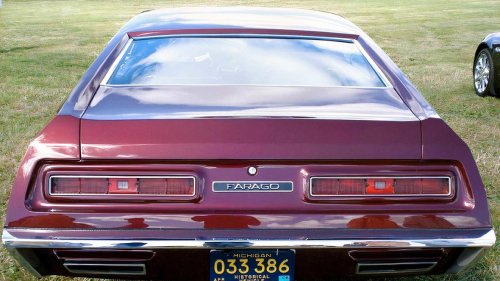
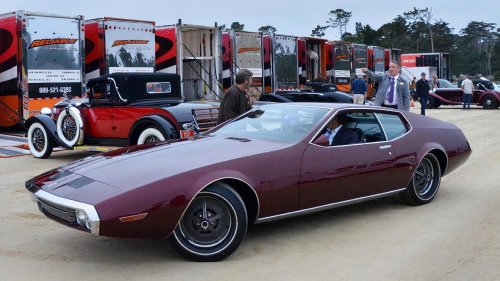
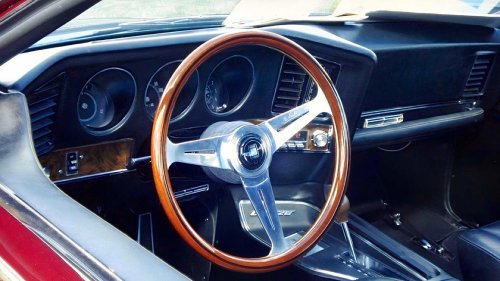
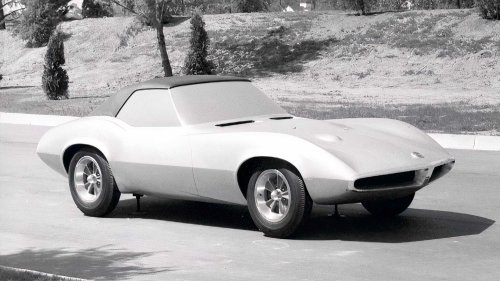
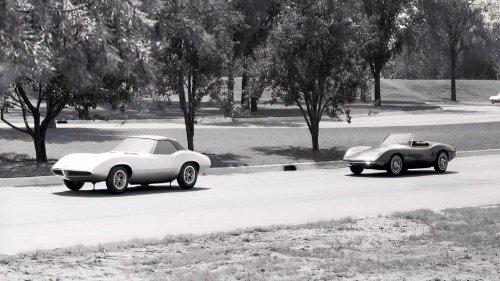



















Late-1960s Detroit loved excess. Big-inch V8s, bright paint, hood scoops, stripes, spoilers, and names that sounded ready to start a bar fight all wanted big showroom attention. Every division wanted the loudest car, the sharpest image, and the biggest slice of the youth market. Pontiac knew how to sell speed, but by 1969, the whole game had grown bigger than quarter-mile times. Style had become horsepower’s sidekick.John Z. DeLorean saw that early. Pontiac had strong cars and sales, yet he still wanted one machine that could stop a crowd cold and make the division feel larger than life. He wanted a true halo car, one built from real Pontiac hardware but styled far outside the usual Detroit sketch room. That ambition set up one of the boldest design swings of the muscle-car era, and one of its most fascinating dead ends. Muscle Cars Became A Style War As Much As A Power War Bring A Trailer By the end of the 1960s, muscle cars no longer sold on engine specs alone. Buyers still cared about torque, carburetors, and rear gears, of course, but they also wanted theater. A fast car had to look fast while standing still, and that shift changed how divisions built attention. Pontiac understood that better than most, and the 1969 Grand Prix itself arrived as a car meant to sell an image of performance as much as the real thing.That pressure grew even sharper inside General Motors. Pontiac, Chevrolet, Oldsmobile, Buick, and Cadillac all lived under the same roof, but each one fought for a clear identity. DeLorean had already helped Pontiac become the exciting division with the GTO and Firebird, and the redesigned Grand Prix turned into a major success, with a total of 112,486 Grand Prix sold for 1969. Even that win did not solve Pontiac’s bigger image problem. The division still lacked a singular halo machine that sat above the regular lineup and made the whole brand feel hotter.Bring a Trailer The Grand Prix showed why DeLorean kept pushing. For 1969, Pontiac moved the car onto a new 118-inch platform derived from the Tempest/GTO A-body. Designers gave it the longest hood in Pontiac history and wrapped the cabin around the driver with a “Command Seat” layout and Strato bucket seats. It looked dramatic, sold well, and pushed the brand deeper into the personal-luxury-performance space that the Eldorado and Toronado had helped define. It also proved Pontiac already had the bones for something special. What it did not have was the nerve, or permission, to go fully exotic in public.So, DeLorean looked outside the usual route. He turned to Paul Farago, a Detroit coachbuilder and engineer with deep ties to Ghia and the old Dual Motors world. Farago had worked as a bridge between Detroit and Italy for years, and he still kept close ties with former Ghia people in the late 1960s. He then teamed with Sergio Coggiola, who had recently opened his own carrozzeria after a long run at Ghia. That trio gave Pontiac something rar: Detroit mechanical confidence mixed with Italian coachbuilt imagination. On paper, that sounds risky. On four wheels, it was the good kind of trouble. The Pontiac Farago Redefined What A Muscle Car Could Look Like Carrozzeria Coggiola The car was the 1969 Pontiac Farago CF 428, and even its name told the story. “CF” stood for Coggiola and Farago, while “428” pointed straight at the big Pontiac engine under the hood. DeLorean supplied a new Grand Prix chassis, shipped it to Italy, and let Farago and Coggiola shape a one-off statement car around it. This was the first project for Carrozziere Coggiola, from which just one prototype emerged.What they created barely looked like a Detroit muscle car at all, at least not in the usual 1969 sense. The Farago wore a long, sharp nose, a low greenhouse, a narrow front fascia with quad headlights and a recessed grille, and a sleek fastback tail that looked more Turin than Woodward. Critics have spotted hints of the De Tomaso Mangusta, Maserati Ghibli, Lamborghini Espada, and even Chrysler’s later fuselage-era shapes in the car. That mash-up is part of the fun.Carrozzeria Coggiola That design choice is what makes the Farago important. It proved a muscle-era Pontiac could chase exotic style without giving up Pontiac identity under the skin. Enthusiasts often talk about the era as if every fast American coupe had to wear scoops, stripes, and a square jaw. The Farago argued the opposite. It suggested that a muscle car could also dress like a grand touring concept, keep its V8 heart, and still feel honest.The production Grand Prix had the hardware, but the Farago gave those bones a far cleaner and more dramatic body, especially at the rear, where the stock car’s simpler tail gave way to a much sleeker fastback treatment. That was a radical thought in 1969, when most American performance coupes still leaned on bulk and ornament. Proven Grand Prix Foundation Under The Pretty Clothes Bring a TrailerThe Farago’s trick worked because it started with very solid hardware. Underneath the hand-built body sat a 1969 Pontiac Grand Prix platform. The same 118-inch setup Pontiac had just launched for the new model year. The Grand Prix already offered serious power, including 428-cubic-inch V8 choices rated at 370 and 390 horsepower, plus rear-wheel drive and either automatic or manual transmissions.That production base also explains some of the details sharp-eyed people notice first. The Farago kept much of the Grand Prix’s interior, along with several production pieces such as the door handles, back glass, tail lights, engine, and drivetrain. Inside, that meant Pontiac’s driver-focused cockpit stayed in place, complete with the wraparound dash and bucket-seat layout that already made the 1969 Grand Prix feel more special than most domestic coupes.Carrozzeria Coggiola DeLorean already liked the new Grand Prix interior, and the team saw no reason to replace something that worked so well. The money and effort went where they mattered most: on the body, the stance, and the overall stance. The car also wore special Firestone wheels and tires, a small detail that showed how serious the whole exercise was. Those were custom units unique to the car. Why It Never Reached Production Carrozzeria Coggiola The short answer sits in the same place it often sits in old Detroit stories, corporate politics. When DeLorean, Farago, and Coggiola presented the Farago, GM executives treated it more like an interesting curiosity than the start of a program. Pontiac already had a full lineup, and top management saw no reason to fund another specialty car. That alone hurt the project, but it was only part of the problem. The bigger issue was order. GM liked order almost as much as Pontiac liked compression ratios.The Farago also landed in an awkward slot between divisions. It was more stylish and more exclusive than anything Pontiac sold. That made it dangerous inside a company obsessed with keeping brands in their lanes. GM had already shown little patience for concepts that threatened the internal pecking order, and management had no interest in letting a mid-level division upstage Cadillac’s luxury image. A few decades earlier, Buick’s brief coachbuilt ambitions in the 1930s got squeezed over fears they might step on Cadillac. Something similar also happened with Pontiac.There was also the matter of scale. A limited-production run in the spirit of the old Dual-Ghia might have made sense, and that was part of the dream behind the collaboration. The hope was that a fresh styling exercise could lead to a small production program, much like the old Dual-Ghia arrangement.But hand-built specialty cars create headaches. They cost money, upset internal hierarchies, and raise awkward questions about who gets to sell what. GM had the factories, the dealers, and the brand map already in place, and none of those systems welcomed a low-volume Italian-American boutique coupe wearing a Pontiac badge.Carrozzeria Coggiola Still, the Farago avoided the fate that swallowed many concept cars. Because it was not an official GM concept in the usual sense, it escaped the crusher, stayed with Paul Farago, and later remained in family hands. The car became a rolling calling card for Farago’s shop, and his family has maintained it and shown it publicly for years. It appeared at Pebble Beach in 2017, where it reminded people that some of the wildest American dream cars did not come from a giant styling dome at all.The story even has a neat coda. Coggiola later became best known for the Saab Sonett III, a car that looked a bit like a downsized Farago. That survival may be the best part of the story. The car still exists, which means the idea still gets to argue for itself. Before The Farago, Pontiac Stunned The Industry With The Banshee GM Of course, the Farago did not appear out of nowhere. A few years earlier, Pontiac had already shocked the industry with the Banshee XP-833, a compact two-seat sports car developed under DeLorean’s watch. Bill Collins of Pontiac Advanced Engineering later recalled that he had pushed DeLorean to let Pontiac build a two-passenger sports car. By late 1963, DeLorean approved funding for the program. That car looked like a direct shot at the idea that only Chevrolet got to have a halo sports machine. In spirit, the Banshee and the Farago chased the same goal, to give Pontiac a true image car that could lift the whole division.The Banshee was important because it showed how practical Pontiac could be, even when it dreamed big. The car aimed at affordable sports-car territory, used many existing GM pieces, and planned to run Pontiac’s overhead-cam inline-six as the base engine with a 326 V8 as an option. Collins also said the shape took far more inspiration from the 1963 Corvair Monza GT than from the later Mako Shark II.GM The engineering followed the same logic. Collins said the team started with sections of the 1964 Tempest perimeter frame and live rear axle rather than some exotic clean-sheet layout. Two working XP-833 prototypes were built, and both used familiar mechanical pieces instead of exotic hardware. Pontiac learned early that the easiest way to sell a wild idea inside GM was to wrap it around parts the corporation already understood.Then the corporate ceiling dropped, again. When the Banshee reached top GM leadership in February 1965, chairman James Roche killed it. Chevrolet simply feared the new Pontiac would bite into Corvette territory. Collins and master mechanic Bill Killen hid the surviving prototypes rather than watch them disappear, and years later, they were able to buy them. Because those cars had VINs, they survived as legally drivable pieces of history rather than museum-only sculptures.