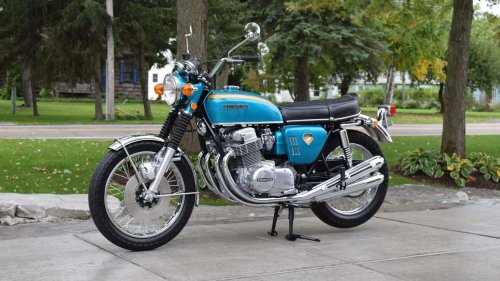
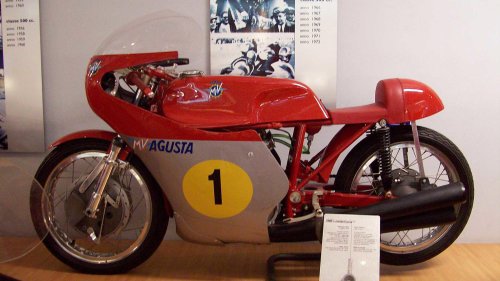
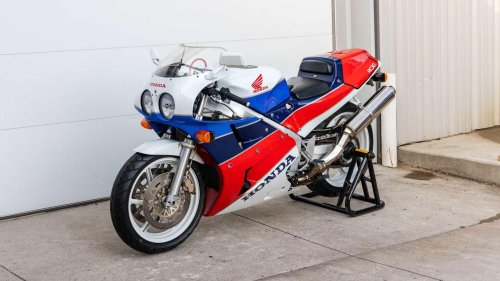
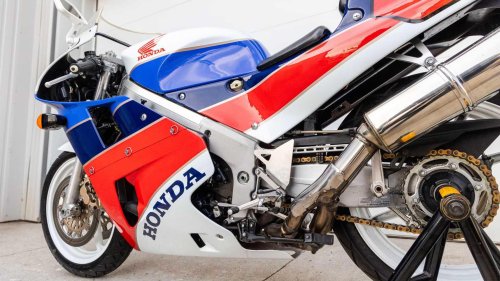
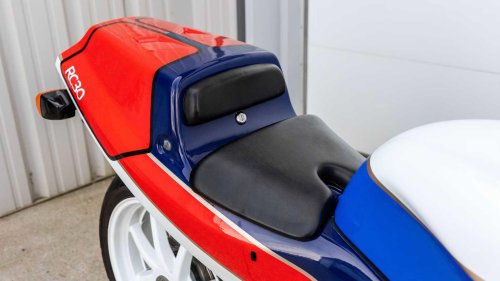
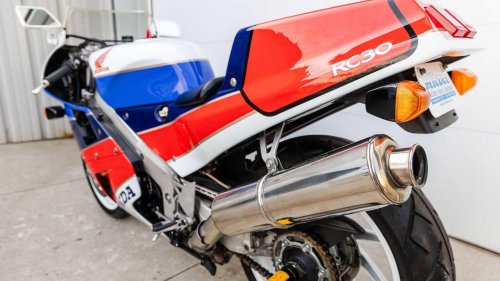












Japan has never been content to simply make good motorcycles — they’ve wanted to create the best motorcycles, taking on long-established manufacturers and beating them at their own games. While the Honda CB750 took on the British industry, Honda had another motorcycle that didn’t just take on a country — it took on an entire continent. UPDATE: 2026/03/01 20:54 EST BY MAGDAN DANIEL CVITESIC We've updated this article with a comparison between the Honda RC30 and its main superbike rivals and added more technical information on what made it so dominant when it first hit the streets. Japan’s Impact On European Motorcycling MecumEurope had more than its fair share of motorcycle brands in the 1950s. From the UK, there were heavy-hitters including BSA, Triumph, Norton, Royal Enfield, and Vincent, while Italy boasted Ducati, Moto Guzzi, MV Agusta, and Benelli, among others. Then Germany had the mighty BMW.These brands were helped by the post-war world, as people needed cheap, effective transport at scale and weren’t as fussed by mechanical issues. As the world moved on, though, it was cars that became preferred, and motorcycling became more of a hobby and less of a viable mode of transport. Meanwhile, Japan was slowly developing a motorcycle industry, with Honda being the first to shake up the status quo with the CB750.MecumOften thought of as the first superbike, the CB750 was a revelation, being reliable, quick, and affordable. Suddenly, the outdated, leaky, unreliable bikes produced by British manufacturers weren’t cutting it, and the bike, almost overnight, earned Japanese bikes a reputation for being cheap and reliable — two things that the rapidly-shifting market needed.British industry couldn’t compete, and almost collapsed entirely in the coming decade, though European brands fared better. That was until Japanese manufacturers looked to the other crucial area of motorcycling — the track. The Grand Prix Motorcycle Racing (now MotoGP) series had been a stronghold of European manufacturers, with Italian brand MV Agusta winning the title in 1956, then every year from 1958 to 1974.Wikimedia While MV was winning, though, the Japanese were starting their ascent — with the first signs of trouble coming in 1970. While Giacomo Agostini won all but one race (not competing in the final race, having already taken the title), Australian Ginger Molloy came in second in the championship on a Kawasaki, with that being the first shot across the bow of Europeans.From here, Japanese manufacturers would take at least one win per season for over 50 years, winning a race in every campaign from 1971 to 2024, and effectively forcing everyone else out.Mecum Ducati withdrew from the series in 1972 due to the two-stroke Japanese bikes outpacing their four-strokes. MV Agusta stepped out after 1976 — the same year that nine of the top ten riders were on Suzukis (Giacomo Agostini being the sole MV rider in the top ten, finishing the season seventh).By the late 1980s, European roads were teeming with Japanese bikes. European tracks were dominated by Japanese bikes. And a new series — World Superbike — was created with the goal of racing modified, homologated production bikes that fans could buy. In stepped Honda. The Honda RC30 Was A Race Bike For The Street MecumThe inaugural World Superbike season took place in 1988, and it drew big attention from manufacturers who wanted to showcase their high-performance street bikes on the world stage (unlike MotoGP, which used prototypes). From Japan were Honda, Yamaha, Kawasaki and Suzuki, and Ducati and Bimota flew the Italian flag.The first season was a competitive one, too, as all six manufacturers took at least one win across the 17 races. Bimota would take the most with seven. However, it would be Honda who took the spoils — winning both the riders’ championship (American Fred Merkel taking the top spot) and the manufacturers’ title, beating Bimota by just 9.5 points across the season with the RC30.The RC30 would retain its title in 1989, taking first and second in the riders’ championship and extending its winning margin (helped by a different points system) in the manufacturers’ to 33 points over Yamaha, with Ducati being the first non-Japanese brand in third, some 98 points behind.MecumIt wasn’t just in World Superbike that the RC30 excelled, though — it won on street tracks, too. Robert Dunlop, part of the Dunlop dynasty and five-time Isle of Man TT winner, won the 1989 Macau Grand Prix, while 11-time TT winner Steve Hislop won the race in 1990.The bike even set the then-fastest lap time on a motorcycle around the Nürburgring in 1993, in the hands of German motorcycle racer Helmut Dähne, who completed the lap in 7:49.710. A Racing Bike With A Reg Plate MecumBeing a homologation bike, the RC30 was essentially a street-legal version of the bike Honda competed with. It featured a 748cc V4 engine, which was good for 118 hp at 11,000 rpm everywhere except Japan, where it was limited to 76 hp. Peak torque was 51 lb-ft at 7,000 rpm, while top speed was 153 mph.Unlike some other homologation specials, Honda didn’t skimp on the road-faring version. The race-inspired parts included titanium connecting rods to save 1.8 oz, with magnesium and carbon parts also making an appearance. The bike also had an incredibly high first gear ratio, meaning riders could take first all the way from 0 - 82 mph. How The RC30 Stacked Up Against Europe’s Best Bring a TrailerThe RC30 wasn’t just fast on paper – it went head-to-head with Europe’s finest, primarily the Ducati 851 and Bimota YB4, two of the era’s most advanced superbikes. When it hit the streets, it had a bit more power and out-revved them both.On the track, the RC30 claimed both the 1988 World Superbike riders’ and manufacturers’ titles and scored decisive wins at endurance-style circuits like the Macau Grand Prix, while its European competitors struggled to keep pace early on. It goes further than just raw specs, too. The RC30 was conceived as a race bike first, road bike second.Ducati’s desmo system was ingenious but heavier and prone to reliability issues in endurance conditions, while the Bimota was brilliant but lacked the industrial-level precision Honda brought. The RC30 came with gear-driven cams for millisecond-accurate timing, a close-ratio gearbox for rapid acceleration, hand-built tolerances, flat-slide carbs for instant throttle response, and a quick-change rear wheel. Every component was honed for racing dominance, giving Honda a level of refinement, reliability, and speed that European manufacturers simply couldn’t match. Why Europe Couldn't Respond Europe had heritage, craftsmanship, and racing pedigree, but Honda had something different: industrial scale, Formula 1-level engineering resources, and the kind of corporate racing budget boutique Italian manufacturers simply couldn’t match. Don't get us wrong, European sports bikes were incredible, but when the RC30 arrived, it wasn’t just competing — it was executing a perfectly funded, relentlessly engineered campaign that Europe wasn’t equipped to counter. It took Ducati a few seasons of rapid development to respond in kind. By 1990, the fuel-injected Ducati 851 had matured into a genuine title contender. The 851 grew into the 888, and by the early 1990s, riders like Doug Polen were dominating the series. 40 Years Later, Prices Keep Going Up MecumBeing an essentially race-ready homologation bike, and with only 3,000 created, they commanded a strong asking price of $15,000 in 1990 (over $37,000 in today’s money).That’s cheap compared to today, though. A 1988 bike with just 62 miles sold for $62,167 at auction in December 2025, and while the low mileage does make it more expensive, it’s not by a massive amount.Prices start at $30,000, but realistically, anyone wanting one should be prepared to pay closer to $40,000. A sub-5,000-mile bike sold for $53,500 in February 2026, so prices are still staying strong as the bike heads towards 40 years old.MecumDue to its racing pedigree, it goes for much more than its counterpart, the Suzuki GSX-R750RK. The Suzuki and the Honda both competed in that first 1988 season, but the Suzuki secured just one win and finished bottom of the table. Prices are still more than a new bike, but, at around $25,000, they don’t have the same cache as the RC30 it competed against. Japan Embarrassed European Brands In Their Own Backyard MecumThe RC30 wasn’t just a fast bike — it was a bike that took the competition to the greatest motorcycle marques in Europe and won. The 1988 World Superbike championship raced in nine countries, with two rounds in Japan, two in Australia, two in New Zealand, and the remaining 11 across Europe. And while the two European brands won the battles, taking nine of the 17 possible wins, they lost the war.In taking the title, Japan, and Honda in particular, proved that they were better than every European superbike that year. Those decades of iteration, engineering, progress, testing, and racing weren’t a match for the RC30.In 1969, Honda’s CB750 embarrassed one country when it almost killed the British motorcycle industry. With a country in the bag, Honda returned 18 years later with the goal of embarrassing an entire continent with the RC30 — and it succeeded. And it created one of the most prestigious bikes in doing so.Source: Honda