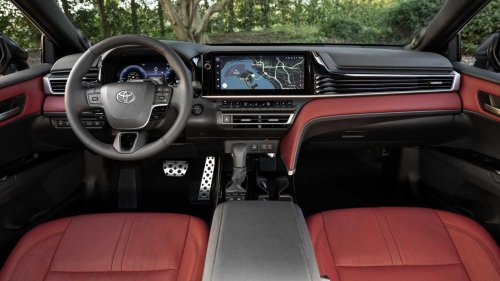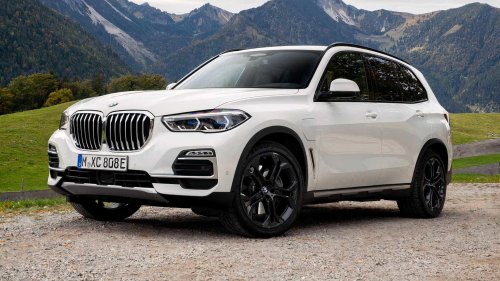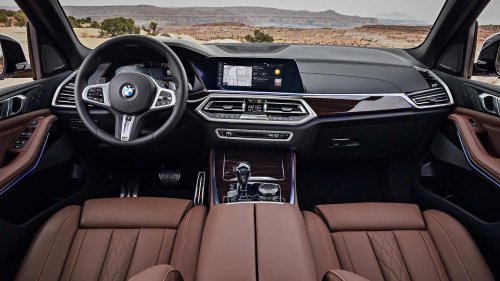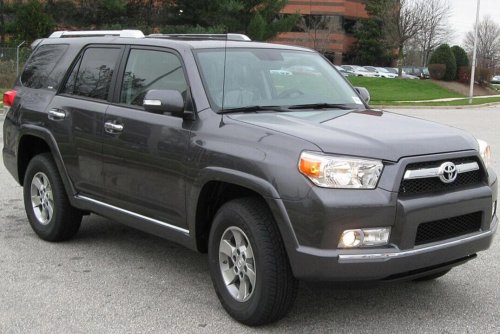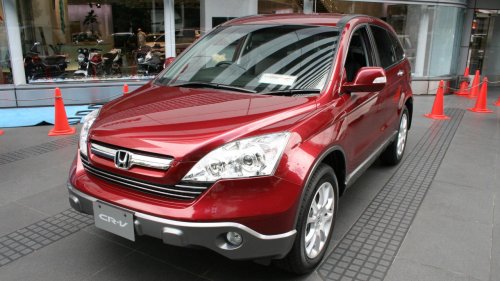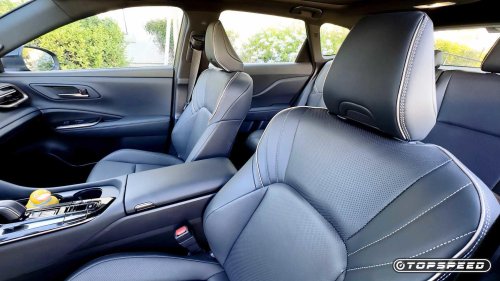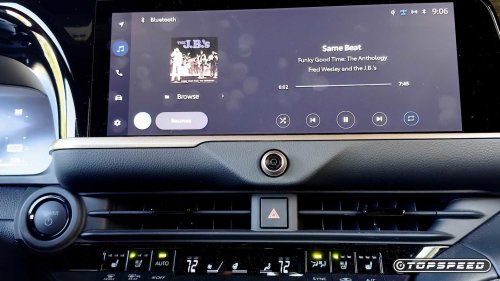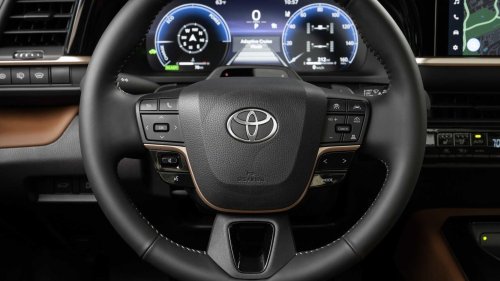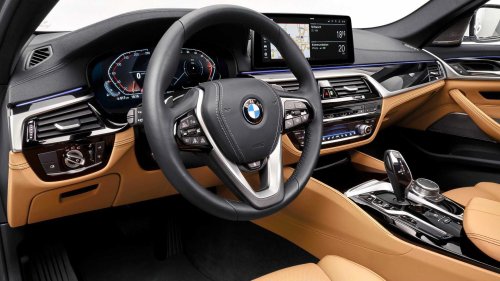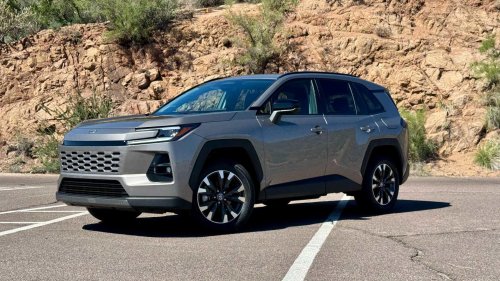
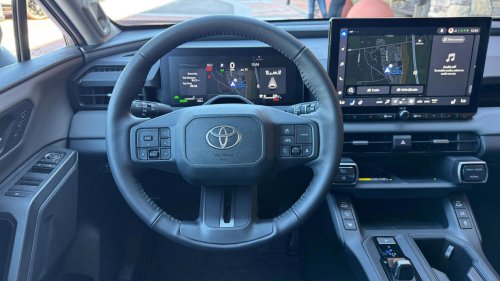
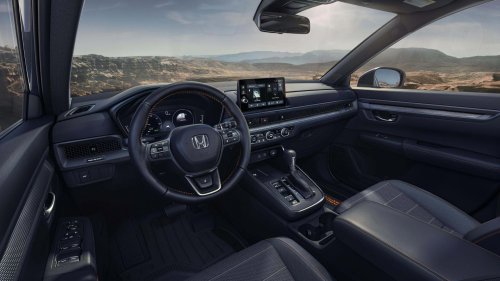
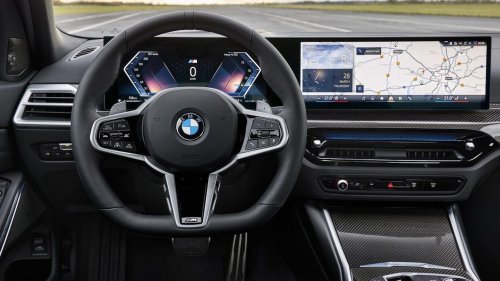
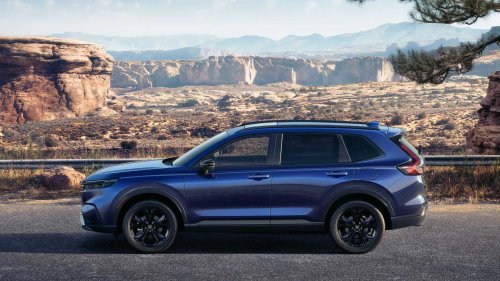
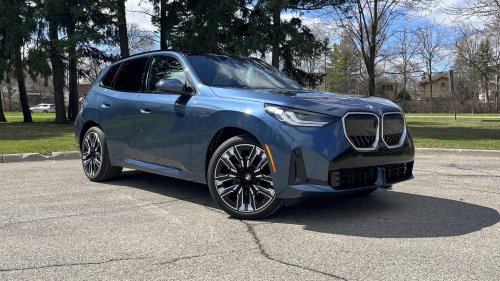



















If you are deep into the research stage of shopping for a new car, right about now, you feel that money is burning a hole in your pocket. Eager to study your price range and options available, you’ve discovered that you could stretch your budget to afford two types of cars. A fully-optioned mainstream crossover like the Toyota RAV4 or Honda CR-V, or an entry-level luxury crossover—say the BMW X3, for example. Certain features might come on either, which warrant a stronger case for one or the other, but first, take a look at what else might come with choosing one segment over the other. Let's Talk Money 2026 Toyota RAV4There’s a slight gap between where the Toyota and Honda drop off, and the BMW steps in. Factoring in accessories, taxes, and any additional fees could push prices closer together, especially if there are incentives at BMW. We know, despite the chasm that may exist, there are a handful of buyers who have considered taking the leap and exploring their options with a luxury brand. At face value, there’s not a lot of convincing to be done by just equating sale prices, so we’ve got to dig deeper into this puzzle to explain the costs attached to each vehicle.Buying a luxury car doesn’t just provide a luxurious car; it provides a luxurious purchasing and servicing experience, too. The people who spent $55,000 get to share the same high-end espresso machine as the folks who spent three times as much. At a mainstream store, the folks who spent $20,000 on a compact sedan and $70,000 on an SUV stare at the same broken soda machine. The added value stretches beyond the vehicle you’ve purchased, making the case to look into both segments.Be wary of how much the “consumables” cost when they need to be replaced. This includes tires, brakes, drive belts, filters, and various fluids. Service performed at the dealer for luxury vehicles tends to cost more on average, but you certainly get what you pay for. Fuel costs are another consideration. Both the Honda and Toyota can run on regular unleaded gasoline. Still, the BMW requires premium to perform at its best, which, according to AAA’s fuel price tracker, is sitting at a national average of $4.49 per gallon compared to regular at $3.63/gallon. Creature Features 2026 Toyota RAV4 steering wheelToyota RAV4 In the Toyota, infotainment is provided through a 12.9-inch center screen with a small array of physical buttons at its base to easily change the temperature, activate front and rear defrosters, and adjust the stereo volume. Running along the bottom of the screen are the other climate controls that stay put even when moving through different menus and displays. A 12.3-inch digital gauge cluster displays all relevant driving information. Leather is off the bill for the RAV4 this generation, with faux-leather SofTex seats as the premium material option. A JBL sound system is available, which, if it’s anything like Toyota models in the past, should be a blast.2026 Honda CR-V TrailSport Hybrid Honda CR-V The CR-V gets a Bose premium sound system to head bang to, controlled through a small 9-inch center infotainment screen. I don’t see that as a downside, but you might. Honda has been killing it with interiors lately, and the CR-V is no exception. It definitely sits between the RAV4 and X3 in terms of premium-feeling materials and classy styling. A refreshing change of pace to the RAV4’s massive screen, the CR-V is by no means low-tech. A 10.2-inch digital gauge cluster is employed here as well—a parallel between all three cars. The physical climate controls are a nice change of pace, providing a more familiar experience. Leather seats come in this trim, besting the Toyota and BMW both in this category.BMW-3-Series_Sedan-2025-1280-cdc1432b7566cb7253b7bc1f5167db3756 BMW X3 Fortunately, you don’t have to settle for BMW’s Veganza vegan leather if you don’t frequent your local natural food co-op or Whole Foods; leather can be added for $1500. The most reliant on screens of the three, the X3 gets a large, curved screen that serves as both the 12.3-inch instrument cluster and 14.9-inch center infotainment screen. All basic functions, save for the volume scroll and gear selector on the center console, are controlled from the screen. This would normally warrant a rant from your author. Still, as far as expansive displays and screen-heavy controls, BMW provides a devil you won’t mind dancing with its ultra-high definition resolution and neat graphics. A central dial and menu buttons in the center console can be used to control the system, but when the screen isn’t as far away as older Bimmers, it quickly becomes moot. The Best To Live With HondaAll three will perform the same basic duties asked of a crossover without complaint, each with its own faults, just as each has its own area of expertise. The RAV4 and the CR-V are both hybrids, while the X3 has a gas-only powertrain. Each comes standard with AWD, with Honda and Toyota using a hybrid AWD system that mounts an electric motor to the rear axle to send power rearward when the front two are slipping. The X3’s xDrive AWD system is rear-biased, actively distributing power to the front at all times for better balancing.Since you might be shopping for a crossover and not a sports car, we can't harp on the driving dynamics too much. But we are a bit disappointed that the X3 doesn’t deliver on the brand’s iconic moniker as “the ultimate driving machine” compared to its price. Joel Stocksdale reported the four-cylinder to be unremarkable and was quite buzzy when stressed. Of course, there’s the X3 M50, which packs a 393-horsepower straight-6, but that starts at $66,500. The X3 would still be more fun to drive than the other two, but in this segment, being great on the back roads is an extracurricular treat if it can perform the basics well, which it can’t match compared to the other two.The Honda is supple in every sense of the word. It doesn’t require any thought to drive, nor will it return anything to think about. The CR-V is built for purpose and works beautifully as a comfy cruiser, but suffers from a coarse engine that kicks in to recharge the hybrid battery. Neither the RAV4 nor the CR-V is tearing up tarmac in these forms, unless, of course, we enlist the plug-in hybrid GR Sport to tango with the Bimmer. Mainstream crossovers are judged by how well they can swallow cargo, carry people, and return stellar miles per gallon. The Honda earns a combined 37 MPG, with the Toyota earning 42 MPG. The BMW scores only 29 MPG combined. Indecisiveness is a Virtue Joel Stocksdale/CarBuzz/ValnetIf it came down to choosing a vehicle with a high driving position and a comfortable cabin in a money-no-object setting, the BMW would treat you well. However, factoring in all the additional costs that apply to vehicles by way of maintenance, fuel, insurance, and more. The added value of the BMW includes a premium dealership experience and a badge to flaunt when you put your keys on the table.Where that money goes further is in top-spec mainstream vehicles. More of the available features can be crammed into each before they bust down the door of the comparable base-level luxury vehicle. Both the Honda CR-V and Toyota RAV4 have proven reliability records, which means you shouldn’t have to visit the dealer too often, something you could be doing with the BMW if you keep it for a while.The average mainstream brand buyer has different needs than someone shopping for a luxury vehicle. Sometimes that disparity leads to not considering all the available options, but it also highlights crossover buyers who don’t require specific utility needs. As far as price is concerned, both want to see their dollars stretch as far as possible. In tip-top mainstream cars, the price can only go down. In entry-spec luxury vehicles, the ceiling is vertigo-inducing.