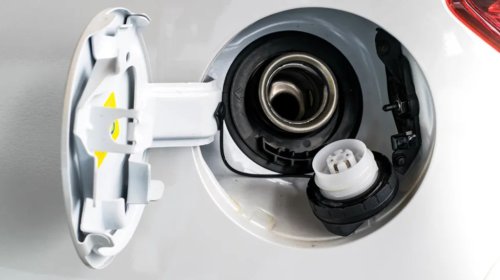
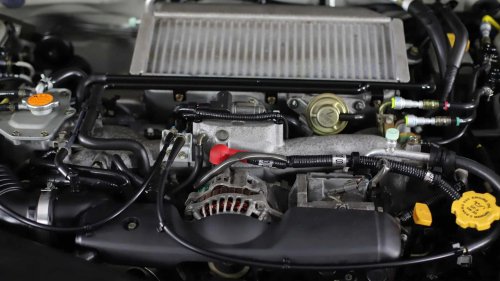
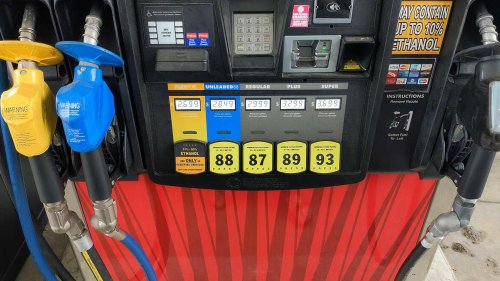
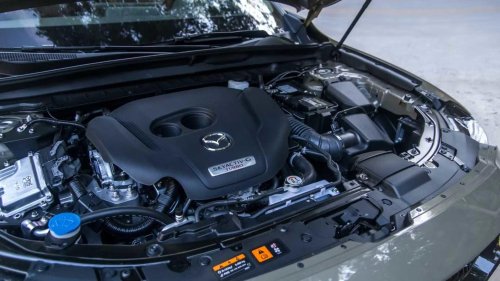
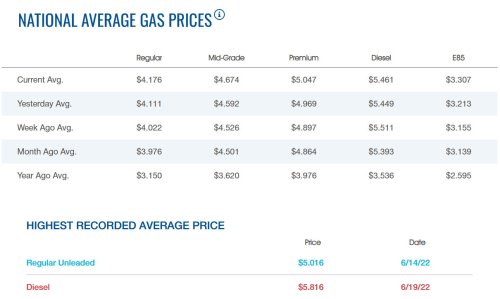
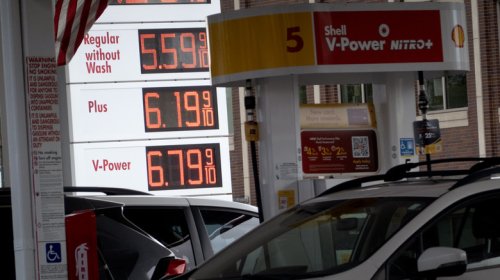
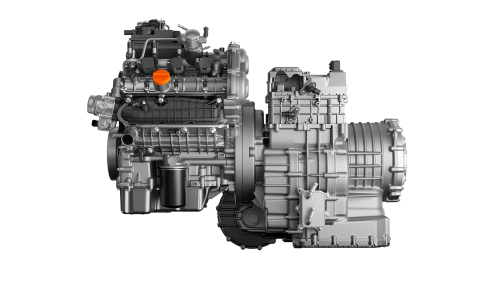
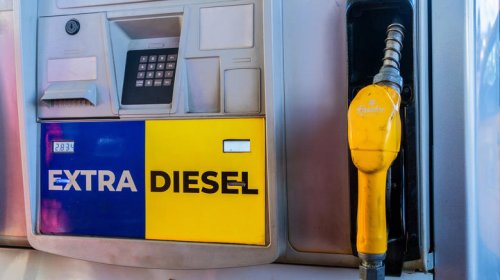
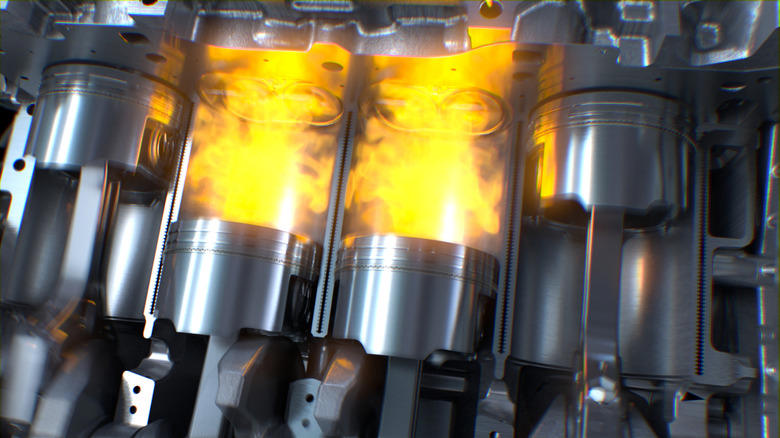
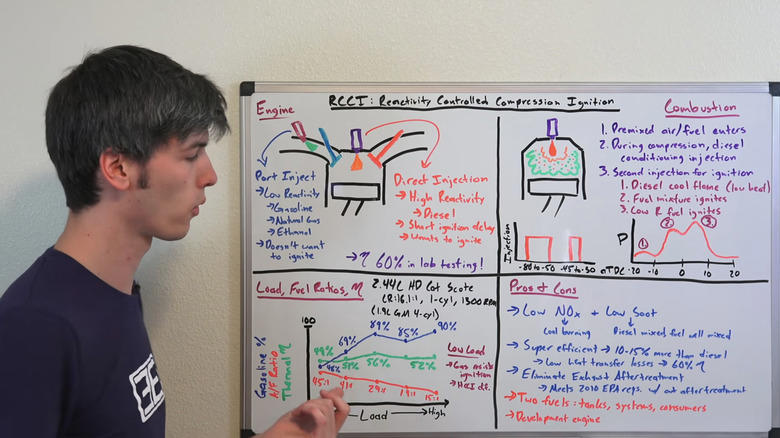
A visualization of pistons undergoing internal combustion.Despite gasoline and diesel fuels both being used for internal combustion, they're different enough that they require entirely different engines. You can't pull up to the pump in a diesel pickup and fill it with regular just because gas prices aren't as bad; big repair bills can follow if you do. However, folks in lab coats love to experiment. Some years back, a few of them figured out a very unique engine design. Not only could it use both gasoline and diesel — it could actually use them at the same time, thanks to how it cleverly handles their different reactivity levels. Sure, it's possible, but why would you want to use both gasoline and diesel simultaneously in the same engine in the first place? The answer is, ironically, efficiency. Engines that run on both gas and diesel are called Reactivity Controlled Compression Ignition (RCCI) engines, and the idea was created by the University of Wisconsin-Madison. An engine that burns two different fuels at the same time can be more efficient than an engine that only burns one because of how their differences allow for more optimized combustion. How does an RCCI engine actually work?Detailed breakdown of the RCCI engine by Jason Fenske on Engineering Explained.The RCCI engine developed by the University of Wisconsin essentially works the same as a traditional internal combustion engine, except that it burns two different fuels at the same time. Those fuels don't necessarily have to be gasoline and diesel; they just need to be one low-reactivity fuel and one high-reactivity fuel. In this case, gasoline is the low-reactivity fuel and diesel is the high-reactivity one, but gas can be swapped out for things like ethanol or even natural gas. The video above breaks down how this RCCI engine uses port injection for gasoline and direct injection for diesel, and it's fascinating. On the intake stroke, as the piston travels down and the intake valves open, air and gasoline enter the cylinder. During the compression stroke, as the piston rises and the intake valves close, the diesel is sprayed into the cylinder in two different stages. The first spray occurs before the air/fuel mixture is compressed much, so it isn't too hot. That first spray creates a sort of layered effect, where there's a lower layer of just gasoline and a layer of top that's mixture of both fuels. The second spray occurs as the piston nears the top of the cylinder, where the air/fuel ratio is already quite compressed and hot. Since diesel is high-reactivity, the heat from that compression is enough to ignite the second spray of diesel fuel. That ignition in turn ignites the mixture of diesel and gasoline, which then ignites the lower layer of just gasoline. By changing the timing and amounts of fuel, engineers can wildly change the power curve of each ignition cycle. What's the point of all of this, and how is it more efficient?Gasoline and diesel fuel nozzles at a gas station.The University of Wisconsin tested the RCCI technology on both a 2.44-liter single-cylinder Caterpillar engine and a 1.9-liter GM-sourced four-cylinder, so it can be used in both commercial work-duty and typical passenger car-duty. The point of seeing if engines can run both fuels simultaneously comes from the fact that internal combustion engines are wildly inefficient. A typical gasoline engine has a thermal efficiency of about 35% (even though Formula 1 engines are far more efficient). However, when you combine the two differently-reactive fuels, you can maximize their efficiency by varying how much of each fuel the engine uses at ideal rpm. Since the engine uses both diesel and gas, it can operate at a much higher air-to-fuel ratio than a typical engine at low rpm. That allows for much greater fuel efficiency. At its worst, it operates at around 49%, which is already much better than the average piston engine. At it's best, though, it's at around 56%. That makes if far more efficient than even Mazda's fantastic SPCCI engine, which is claimed to be reach 43%.Another upside of the RCCI engine is that it produces far fewer emissions than a standard engine, be it gas or diesel. Since the fuels mix together and burn relatively cool, RCCI engines produce extremely low nitrous oxides and soot. In fact, Wisconsin Engine Research Consultants claim that the RCCI engine actually passes the Environmental Protection Agency's 2010 diesel particulate emissions regulations without the use of any aftertreatment, such as diesel DPF cleaners. It should be noted that this engine is not ready for production yet, but it still proves that mixing different fuels can be hugely beneficial. Want more like this? Join the Jalopnik newsletter to get the latest auto news sent straight to your inbox, and add us as a preferred search source on Google.




















 +56 others