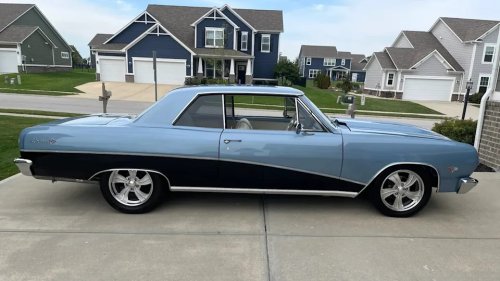
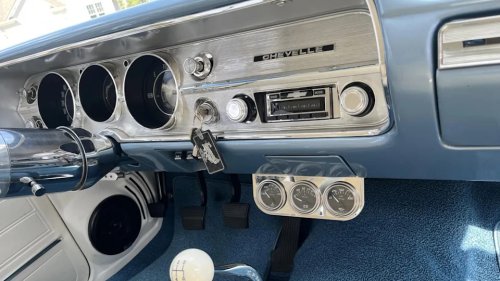
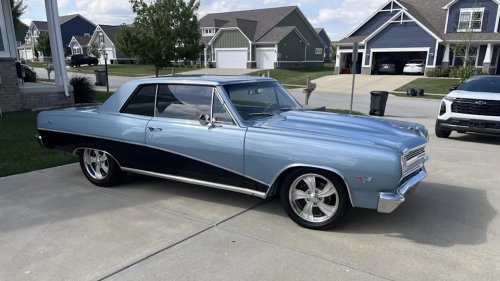
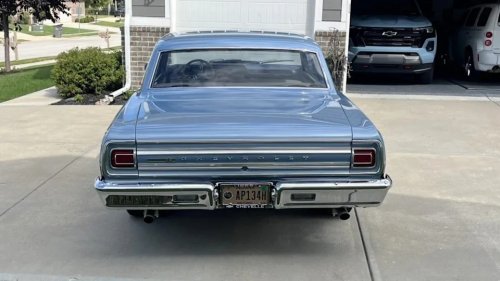
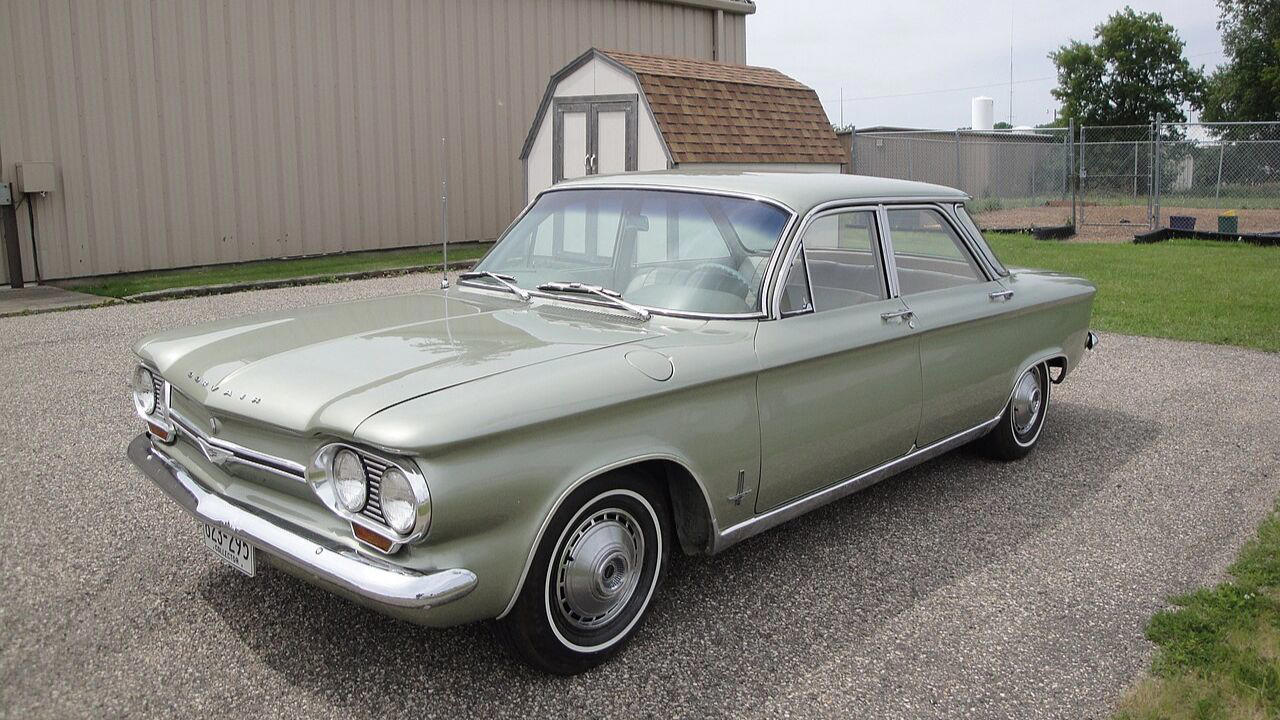
The 1960 Chevrolet Corvair made engineers nervous and drivers curiousThe 1960 Chevrolet Corvair arrived as a compact American outlier, with an air cooled engine in the back and no radiator grille up front, and it immediately unsettled the engineers who had to justify it and the drivers who lined up to try it. Its story became a collision of daring design, misunderstood physics and a safety debate that helped reshape how cars are built and regulated. The Corvair’s first model year now reads like a case study in how one car can be both a technical experiment and a cultural lightning rod. A radical compact in an era of chrome When Chevrolet launched the Corvair, the company was not simply adding another trim line. It was trying to answer a new wave of small cars with something that did not feel like a scaled down sedan. Contemporary accounts describe how, in 1959, Chevrolet made a large bet that challenged what the American industry believed a family car should be, especially where the engine sat and how the car handled. Instead of the usual front mounted iron block, the Corvair used a flat six at the rear, a layout that immediately set it apart from domestic rivals and aligned it more with European thinking. Video histories such as the one from Oct describe the Chevrolet Corv as an American oddity, radically different from its peers in the early 1960s. At a time when full size models dominated, the Corvair’s compact footprint, low beltline and minimal ornamentation made it look almost imported. It was Chevrolet’s answer to cars like Lark, Falcon and Valiant, which, as another period analysis notes, were essentially full size formulas trimmed down, while Motors tried something more adventurous with its rear engine project. Design that thrilled stylists and worried engineers Styling was central to the Corvair’s early appeal. Enthusiast groups point to how its distinctive body featured a stubby nose that was insolently free of any unnecessary radiator grille and an extended tail that emphasized the rear engine layout. One retrospective notes that Its clean surfaces and lack of chrome clutter made it look modern next to the towering fenders of other American cars. Underneath that styling, however, the engineering choices created both fascination and anxiety. The rear mounted flat six promised good traction and a quiet cabin, but it also shifted weight distribution heavily to the back. To keep costs down and packaging simple, early Corvairs used a swing axle rear suspension. Owners and mechanics later debated that layout intensely, with one discussion reminding readers that 64 was a 1 year only rear suspension and that Thomas Miller They were still discussing how that single year setup differed from other iterations. Engineers inside and outside Chevrolet worried about how the swing axle would behave at the edge of grip. The layout could produce sudden camber changes and jacking effects, especially if the driver lifted off the throttle abruptly in a fast corner. Those dynamics would later become the centerpiece of a national argument about whether the car was inherently dangerous or simply demanded more respect than the average American sedan. On the road, agile and unnerving Contemporary and modern tests agree on one basic point: the Corvair felt very different to drive. One detailed video evaluation explains that The Corvair was a revelation when compared to the lumbering oafs of the day, with lighter steering and a more playful rear end, but that its Achilles heel was that rear suspension, which depended heavily on correct tire pressures of 15 psi in the front and 26 psi in the rear for stable behavior. That assessment comes from a piece that bluntly asks, The Corvair kill you, and the nervous tone captures how even experienced drivers approached the car with caution. That same outlet later notes that, Despite decades of experience racing and testing cars, the test driver felt nervous before pushing an early Corvair on track, and that the reputation created by later books and lawsuits had clung to the model ever since. The car demanded that owners follow the manual exactly, especially regarding tire inflation and load, at a time when most drivers treated those details casually. For some, that made the Corvair a rewarding machine that rewarded skill. For others, it turned the car into a source of anxiety every time the road turned wet or the speedometer crept higher. Ralph Nader enters the story The Corvair might have remained a quirky footnote if not for a young lawyer who turned it into a symbol of corporate indifference. In Ralph Nader emerged in the mid 1960s as a fierce critic of American car safety. His book, often cited simply as Unsafe at Any Speed, argued that automakers prioritized style and cost cutting over occupant protection and predictable handling. The work is widely associated with the rear engined Chevrolet Corvair, which it examined in Chapter 1 under the pointed label The Spo, a section that framed the car as an example of designed in danger. The reference edition of that book, Unsafe at Any, laid out a broader case against the American Automobile industry. It argued that features like sharp dashboard edges, weak door latches and unstable suspensions were not accidents but the result of deliberate tradeoffs. The Corvair’s swing axle and weight distribution made it a prime exhibit. A detailed entry on Chevrolet Corvair notes that the car is the subject for which the book is probably most widely known, and that the chapter in question focused on the handling of the early rear suspension with one or more passengers in the car. Nader’s argument was not limited to one model. He portrayed the Corvair as an example of how a company could release a car with known quirks and then shift blame to drivers when crashes occurred. That framing resonated with a public that had rarely seen automotive safety discussed so bluntly. It also set the stage for intense legal and political scrutiny of General Motors and the industry at large. How unsafe was it, really? The question that has haunted the Corvair since 1960 is simple to state and hard to answer: was it truly more dangerous than its peers, or did it merely behave differently? Later investigations tried to quantify that. A federal study, summarized in a report on Jul, concluded that the handling and stability performances of the 1960 to 1963 Corvair were at least as good as the performance of some contemporary vehicles, including a 1960 Ford Falcon, a 1960 Plymouth Valiant, a 1960 Volkswagen and a 1963 Renault. That analysis, which appeared in a Corvair safety charge story, directly disputed Nader’s claim that the car was uniquely hazardous. Enthusiast groups and historians have echoed that more measured view. One discussion framed under the question Was the Corvair Really That Unsafe argues that, In the 1960s, Ralph Nader took the American industry by storm with his book Unsafe, but that the Corvair’s real world crash record compared to other compacts was more mixed than the public perception suggested. Another community post titled, Corvair Really That, emphasizes that the car could become tricky when overloaded or driven at high speeds, but that many drivers used it safely for years. Another retrospective on a fan page states that, While it is undeniable that early Corvairs had their share of design flaws, many of these issues were exaggerated or misunderstood. That post, shared under an Apr tag, reflects a broader reassessment that separates the car’s actual engineering from the mythology that grew around it. A book that changed the rules Regardless of where one lands on the Corvair’s objective safety, there is little dispute about the impact of Nader’s work on regulation. In Ralph Nader’s book, UNSAFE, ANY, SPEED, as one historical post recalls, critiqued both interior and exterior design, industry cost cutting and the lack of meaningful standards. That same summary notes that the book helped spur the National Traffic and Motor Vehicle Safety Act, which passed in 1966 and created a new framework for federal oversight. A later video about Ralph Nater, which revisits the saga, explains how his publication titled Unsafe, Any Speed became a harsh critique of automotive safety practices and pushed companies to add features like collapsible steering columns and better seat belts. A remembrance shared by a nostalgia group under the heading Who remembers the Chevy Corvair and RalphNader’s book, In Unsafe, notes that Nader railed in particular against the Chevy Corvair, a sporty car with a swing axle and rear mounted engine, and that he later went on to run for president four times. The book’s reach extended beyond English. Editions and discussions appear in Spanish as Peligroso a cualquier velocidad, in Italian as Discovered Unsafe, Any Speed, and in other languages such as Russian and Swedish. Entries on Discovered Unsafe, Any Speed and related pages on The Designed, In Dangers, Wikipedia and its counterparts in multiple languages show how the Corvair debate became part of a global conversation about vehicle safety and corporate responsibility. From showroom curiosity to cultural symbol On the showroom floor in 1960, the Corvair’s appeal was simple. It was compact, modern and different. A community post titled 1960 Chevrolet Corvair: Innovative Design and Controversial Safety remembers that on Oct 2’nd 1959, Chevrolet introduced the Corvair as the only mass produced, air cooled, rear engined American car, and that the pictured example was a 64 model. That same post, shared under a Sep tag, ties the car directly to the burgeoning auto safety movement that followed. Another nostalgic reflection describes how the Corvair was Chevy’s infamous, exceedingly dangerous rear engined 1960s car, then adds that it was Born in 1960 as a wildly different model for GM. That same piece notes that later versions received revised suspension for more predictable handling, suggesting that Chevrolet responded to criticism even as the public debate intensified. The phrase Born Corvair captures how the model’s birth year became part of its identity. Not everyone who lived with the car saw it as a death trap. A MotorTrend social post recounts how testers got behind the wheel of a 1960 Chevrolet Corvair to separate fact from myth, and includes comments from Lyle Fogerty and Steve Kraak. One of them notes that, at his age, he would not have one as a daily driver but enjoyed having one to drive on weekends, a sentiment that reflects both lingering caution and enduring affection. That discussion, shared under an Oct tag, shows how the car still inspires mixed feelings among enthusiasts. Myth, memory and the first Corvair’s legacy Six decades after it first appeared, the 1960 Corvair sits at a crossroads of engineering history and public memory. Some enthusiasts joke about it in lists of worst cars ever, like a short video shared in Jun that calls the Corvair the first terrible car the host strangely loves. Others, like the Corvair Chronicles series introduced in Nov, focus on what the car can do on the road and how its quirks can be managed with proper setup. More from Fast Lane Only Unboxing the WWII Jeep in a Crate 15 rare Chevys collectors are quietly buying 10 underrated V8s still worth hunting down Police notice this before you even roll window down



















 +49 others