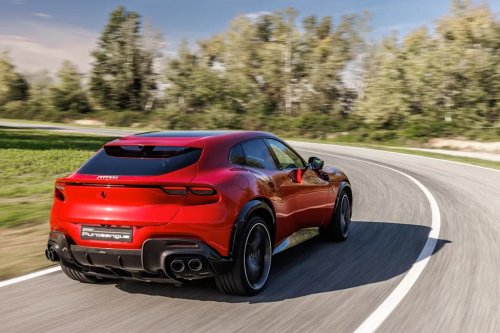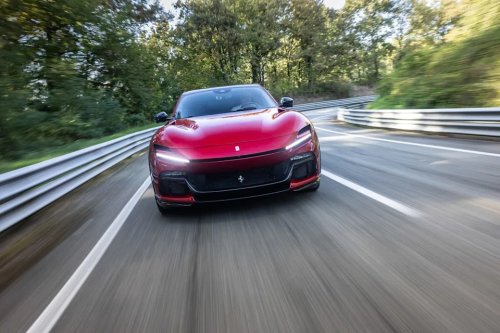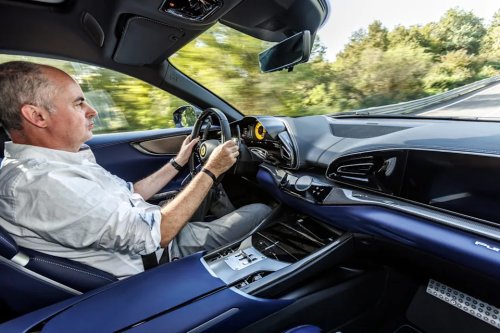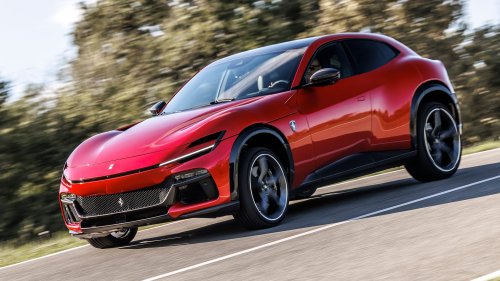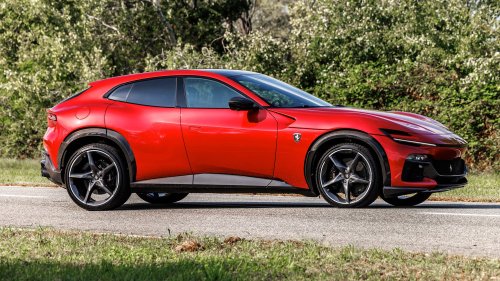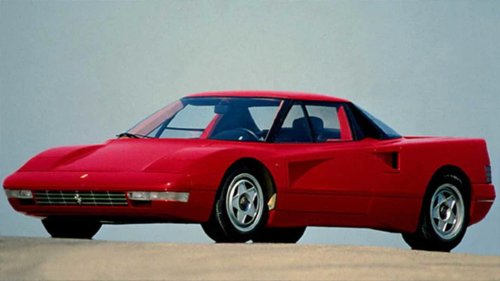
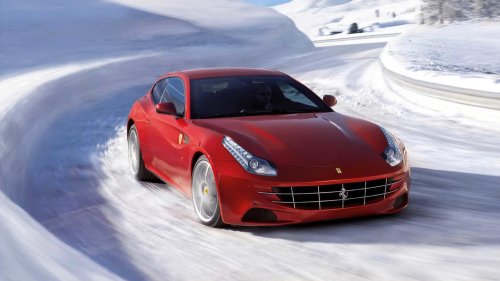
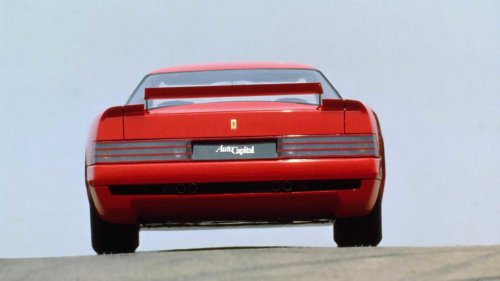
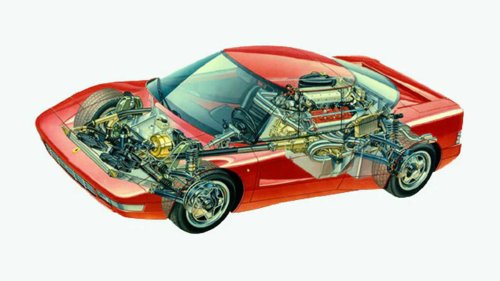
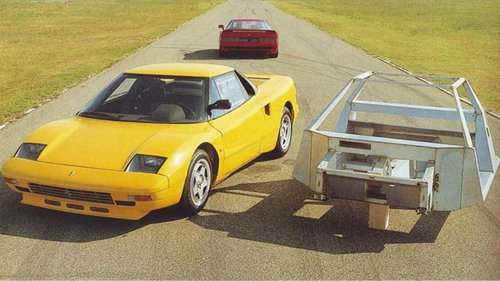
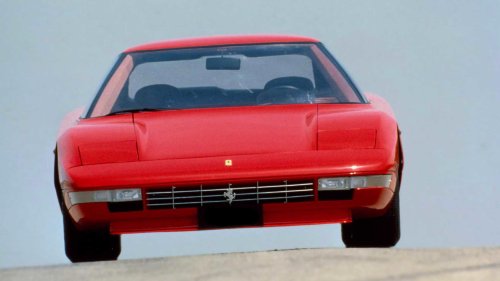
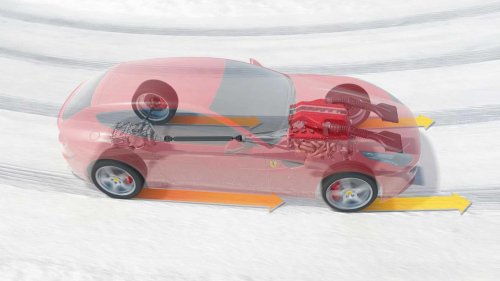
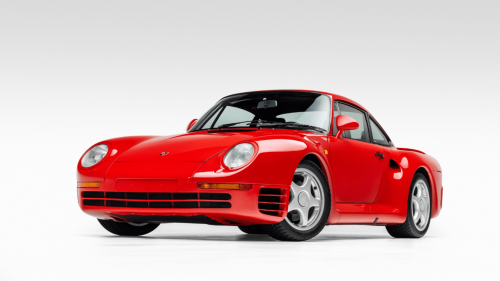
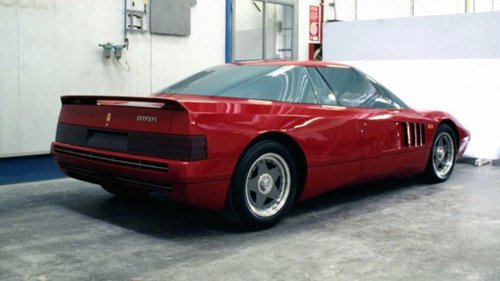
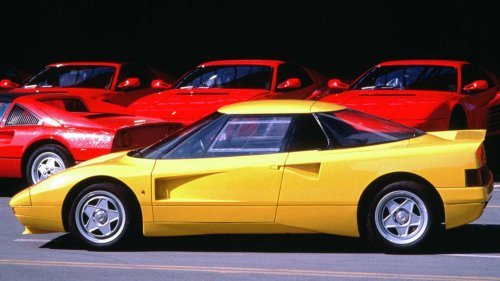
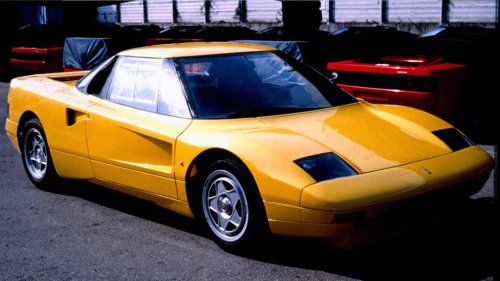

















Plenty of Ferrari sports cars were so beautiful, they were turned into posters, but every so often, the factory cooks up something wild that was never meant for a showroom. Deep in the late eighties, the team built a secret project with a 4.0-liter V8, oddball aero, and an all-wheel-drive setup as a pure engineering flex – a four-wheel-drive setup the brand wouldn’t touch again until 2011. Most enthusiasts missed it because Ferrari only built two working models and kept them tucked away. This experiment stayed buried, but the tech left fingerprints all over modern AWD Ferrari models. The reveal starts in the next section. This Strange 1987 Prototype Was Ferrari’s First Real Attempt At AWD Performance Via: Ferrari Ferrari’s first crack at an AWD Ferrari wasn’t the FF, and it didn’t involve a V12. The real story starts with a quiet project inside Maranello in 1987, built under the same roof that produced icons like the Testarossa and the 328. The engineers called it the 408 4RM Prototype, and it was the first all-wheel-drive Ferrari. The name spelled out the intention. Four liters, eight cylinders, four-wheel drive.This was an internal experiment, shaped by Pininfarina, fueled by Enzo-era engineering culture, and never meant to wear a price tag. Two cars came out of the program, a red one in 1987 and a yellow one in 1988. The yellow car eventually landed in the Galleria Ferrari, where it sits today like a time capsule that most visitors walk right past.Via: Ferrari The 408 4RM carried ideas Ferrari would not revisit until decades later, when they introduced the FF in 2011. It was followed by the GTC4Lusso in 2016. Today, there are two all-wheel-drive Ferraris on sale, including the Purosangue and the SF90.The V8 engine in the 408 4RM used Weber-Marelli injection, the body lines hinted at late-eighties aerodynamic obsession, and the drivetrain was nothing like what fans expected from Maranello at the time. While the 328 GTB of the same era relied on a lighter, simpler layout, this prototype chased traction and stability through a hydraulic AWD setup meant to explore future packaging. Ferrari wanted to see if it could future-proof high-power V8s by pushing torque to all four wheels. Why Ferrari Even Bothered With AWD In The Eighties Via: Ferrari Racing influence played a role in this experiment, fueled by curiosity. Group B had collapsed, but AWD interest stayed hot inside engineering departments. Ferrari wanted to study weight distribution, cooling, and front-axle load with a V8 shoehorned into a compact footprint. The 408 4RM acted as a rolling lab and carried the seeds of every AWD Ferrari that followed, even if the brand shelved the idea for more than twenty years. The Ferrari 408 4RM Packed Strange Tech That Maranello Never Tried Again Via: Ferrari Once you get into the guts of the Ferrari 408 4RM, it becomes clear why this experiment was left forgotten. The drivetrain was the headline act. Instead of a mechanical center differential, the car used a hydraulic AWD system that pushed roughly 29 percent of the torque to the front wheels. The setup came straight from Ferrari’s desire to test how a mid-front V8 with unusual packaging could handle slippery conditions. The 4.0-liter V8 made around 300 hp and 275 lb-ft, routed through a 5-speed manual that sat longitudinally but slightly offset to make room for the hydraulic plumbing.The adjustable hydraulic ride height added another layer of weird. Ferrari didn’t hide that the team was experimenting. Composite body panels, a magnesium bulkhead, and a drag target near 0.27 Cd turned the aircraft-style engineering vibe up even further. Where the 328 GTB stayed simple and focused on weight, the 408 4RM ballooned to around 2,960 lbs because of all the hydraulics and structure. Even the wheels added character. The prototype ran chunky Speedline wheels wrapped in Goodyear Eagle tires, the kind of setup that made it look ready for rally action rather than Maranello's usual focus on LeMans or Formula 1 endeavors. The Chassis Experiments That Looked Like Sci-Fi In 1987 Via: Ferrari Ferrari built the first prototype with a folded stainless-steel chassis that used welded sheet sections instead of stamped components. The second car switched to an adhesively bonded aluminum frame created with Alcan research. The goal was to test strength, vibration control, and fatigue across two radically different approaches. Both methods worked, but neither made sense for production. The labor, cost, and weight penalties killed any chance of seeing this style again. Still, the experiments fed the knowledge bank that shaped later Ferrari production models. Ferrari 408 4RM Prototype Specifications (Source: Ferrari)The closer you look, the clearer it becomes. This Ferrari prototype took big swings, hit a few ideas that survived, and carried enough quirks for Maranello to quietly walk away from the project. The 408 4RM Was A Science Experiment That Influenced Future Ferraris Via: Ferrari The 408 4RM was loaded with experimental hardware compared to Ferrari’s production models of the time, such as the 328 GTB or the Testarossa. The hydraulic all-wheel-drive system, front-drive components, and the network of pumps and hydraulics were designed to measure how a V8 package could support torque delivery at both axles.The known technical layout makes Ferrari’s intentions clear. The 4RM system allowed engineers to test torque split behavior, weight distribution changes, and cooling challenges in a compact V8 platform. With a curb weight of around 2,960 lbs and a drivetrain that could send roughly 29 percent of available torque to the front, the 408 4RM focused on understanding traction strategies long before Ferrari revisited the concept.Via: Ferrari The knowledge Ferrari gained in the 80s was directly integrated into later projects. The all-wheel-drive FF introduced a front transaxle and electronically managed power delivery. The GTC4Lusso refined the system even further. The Purosangue applied AWD principles to a V12 layout, and the SF90 used electric motors to create a far more advanced torque-management scheme. Why The 408 Feels Like The Missing Link In Ferrari’s AWD Timeline Bring A Trailer The 408 4RM fills the gap between Ferrari’s rear-drive traditions and the modern era of AWD performance. It mapped out the packaging issues, structural demands, and engineering trade-offs that Maranello would face decades later. Rivals like the Porsche 959 and Lamborghini Diablo VT explored AWD around the same time, but Ferrari kept its own research under wraps. When the brand eventually returned to AWD with new technology, the groundwork laid by the 408 4RM made the transition possible. Even though the prototype stayed hidden, it became the conceptual starting point for every AWD Ferrari that followed. Only Two Ferrari 408 4RM Were Built Via: Ferrari Ferrari built only two examples of the 408 4RM, placing it in the same rare engineering lineage as the Modulo, or the F90 and Mythos from the Brunei collection, and other experimental models that never reached customers. The first prototype, chassis 70183, debuted in 1987 with a stainless-steel folded structure. The second, chassis 78610, followed in 1988 with an adhesively bonded aluminum frame. The yellow car now resides at the Galleria Ferrari, surrounded by icons that overshadow it despite its importance as the company’s first exploration into all-wheel-drive architecture.Via: Ferrari Collectors remain divided about its significance. Some see the 408 4RM as a key technical milestone because it represents the earliest stage of Ferrari’s AWD research. Others view it as a fascinating footnote—an in-house project that never evolved beyond testing duty. Since Ferrari never intended to sell the 408, it never received the finish or refinement of a production-bound prototype. Would The 408 4RM Have Worked As A Production Car? Via: Ferrari A production future of the first all-wheel-drive Ferrari in the 80s was unlikely. The hydraulic AWD system was heavy, expensive, and complex. At the time, Ferrari customers demanded lighter, sharper cars like the 328 GTB and Testarossa. The late eighties market didn’t ask for AWD Ferraris, and the brand didn’t need the added traction until outputs reached new levels in the 2000s. Ferrari committed to AWD using an evolved 4RM system in 2011 with the FF because the technology was finally mature, and for a 2+2 Shooting Brake Grand Tourer, and the performance targets justified it. As the V12 in the FF made 504 lb-ft, Ferrari deemed all-wheel drive necessary to help with grip for a GT on loose traction surfaces.Decades earlier, the 408 4RM supplied the data. It answered the questions Ferrari had, even if the car itself never left the test program. Despite its limited footprint, it remains one of Maranello’s most influential hidden projects.Sources: Ferrari.